

+2 More

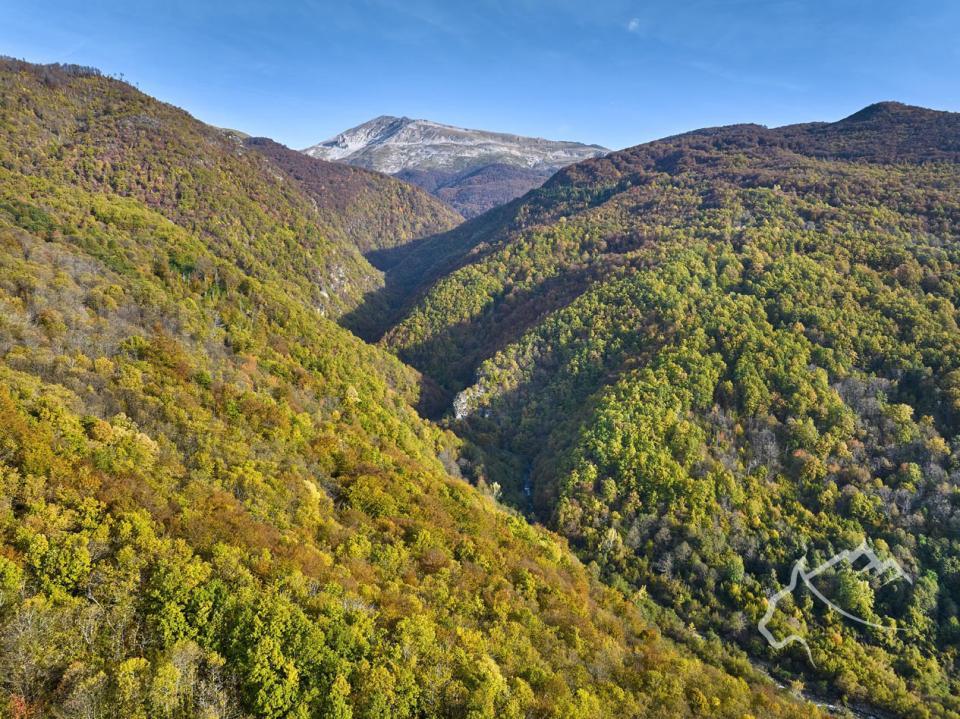
Šar Mountains
Location | North Macedonia–Kosovo Border | ||||||||
|---|---|---|---|---|---|---|---|---|---|
Coordinate(s) | 42°00′N 20°45′E | ||||||||
Length(s) | ~80 km | ||||||||
Highest Peak | Titov Vrv (2,747 m) | ||||||||
Geology | Paleozoic/Mesozoic Rocks, Glacial Lakes | ||||||||
Climate(s) | Continental Climate (Harsh Winters Cool Summers) | ||||||||
Major Rivers | Pena, Lepenac | ||||||||
Endemic Plants | Macedonian Pine (Pinus Peuce), 200+ Endemic Species | ||||||||
Wildlife | Balkan Lynx, Brown Bear, Golden Eagle | ||||||||
Protected Areas | Mavrovo National Park (MK), Šar Mountains National Park (XK) | ||||||||
Settlements | Tetovo (MK), Prizren (XK) | ||||||||
Traditions | Yörük (Nomadic) Culture, Traditional Festivals | ||||||||
Economy | Animal Husbandry Ecotourism | ||||||||
Activities | Trekking, Winter Sports (Popova Shapka Ski Resort) | ||||||||
Trails | TransShar Trail, Popova Shapka Summit | ||||||||
Šar Mountains (Macedonian: Шар Планина, Albanian: Mali i Sharrit, Serbian: Шар Планина) is a prominent mountain range located in the Balkan Peninsula, stretching between North Macedonia and Kosovo. Geographically extending from southeast to northwest, its complex geological structure, high peaks, and rich biodiversity play a critical role in shaping the region's natural systems. The highest peak is Titov Vrv, standing at 2,747 meters. The Šar Mountains are notable not only for their natural heritage but also for their cultural diversity, traditional land use, and climate-regulating functions.

The Šar Mountains are located in Southeastern Europe, spanning a broad area across both Kosovo and North Macedonia. A small portion of the range also extends into northeastern Albania. Geographically, the range lies among the central mountain systems of the Balkans, forming a transitional zone between the east-west oriented Dinaric Alps and the southern Pindus Mountains.
These figures indicate that the majority of the range lies within North Macedonian territory. In Kosovo, key sections of the mountains fall within the municipalities of Prizren, Dragash, and Štrpce, which contain areas of both natural and cultural significance.
The Šar Mountains stretch approximately 160 kilometers, beginning near Prizren in Kosovo and extending eastward to the Vardar Valley in North Macedonia. This orientation makes the range a defining feature of the region's hydrology and climate. The topography includes deep valleys, steep slopes, plateaus, and high ridges. With an average elevation of around 2,200 meters, the range’s northwest-southeast alignment plays a major role in shaping the orographic structure of the Balkans.
Situated within the Alpine-Himalayan orogenic belt, the Šar Mountains are primarily composed of metamorphic rocks such as granite, gneiss, schist, and marble. Ultramafic and mafic rocks are also found in some areas. These formations provide valuable insights into the tectonic history of the region. The mountain system acquired its present form through uplift processes that began during the Neogene period.
During the Pleistocene epoch, glacial activity sculpted the landscape, resulting in U-shaped valleys, cirques, and moraine deposits. Glacial lakes such as Livadičko, Belo, and Golemo Ezero are clear examples of this glacial past. These glacial formations have a direct impact on the region's landscape and water cycle, contributing to the creation of local microclimates.
The Šar Mountains are rich in water resources, with numerous rivers and streams originating from the range. Notable watercourses include the Pena River, Lepenac River, and Vrutočka Stream, all of which flow from the mountain slopes into surrounding settlements and larger basins. A total of 39 glacial lakes have been identified, most of which were formed by retreating glaciers and are located at high altitudes. Key lakes include Bogovinsko Ezero, Jazhincë Lake, and Šutmansko Ezero. In addition, the Beloviška Waterfall, with a height of 43 meters, stands out as the highest waterfall in the range.
An Alpine climate influences the Šar Mountains. Climatic zones vary with elevation, leading to significant differences in temperature and precipitation. Annual precipitation ranges between 1,000 and 1,800 mm, and snow cover can persist for up to 200 days in higher zones. Summers are cool and humid, while winters are long, cold, and snowy. This climatic structure directly affects the distribution of flora and fauna in the region.

Popova Šapka in Summer (Flickr)
The Šar Mountains are among the most biologically diverse regions in the Balkans. Vegetation is stratified by elevation, with oak and beech forests at lower altitudes, pine and spruce forests at mid-elevations, and alpine meadows and cushion-forming herbaceous plants at higher altitudes. Endemic species such as Dianthus scardicus (Šar carnation), Ramonda nathaliae, and Pinus peuce (Macedonian pine) are noteworthy. More than 2,000 vascular plant species have been identified in the region, approximately 20% of which are Balkan endemics.
The Šar Mountains provide important habitats for both large mammals and invertebrates. Brown bear (Ursus arctos), wolf (Canis lupus), Alpine ibex (Capra ibex), and the endangered Balkan lynx (Lynx lynx balcanicus) are key species of the terrestrial wildlife. The area also hosts 147 butterfly species, over 200 bird species, and 27 endemic invertebrate species. In terms of biodiversity, the range sits at the intersection of terrestrial and semi-aquatic ecosystems.
The section of the range within North Macedonia was declared Šar Planina National Park in 2021. Covering an area of 62,705 hectares, the park is planned to be included in the European Natura 2000 network. In addition to its conservation role, the park plays a key role in environmental monitoring, ecotourism, and sustainable resource management. The park's candidacy for UNESCO Biosphere Reserve status reflects its global natural significance.
Major settlements along the mountain range include Tetovo, Gostivar, Prizren, and Brezovica. In these areas, Albanian, Macedonian, Turkish, and Bosniak communities have historically coexisted. Traditional economic activities include transhumance (seasonal pastoralism), beekeeping, and small-scale agriculture. Although these traditional practices have declined in modern times, some communities continue to practice seasonal livestock herding.
Tourism in the Šar Mountains is primarily centered around winter sports and nature-based activities. On the North Macedonian side, Popova Šapka is a ski resort equipped with cable car lines and mountain hotels. On the Kosovan side, Brezovica is a popular destination for skiing and snowboarding. During the summer, hiking, camping, and wildlife observation are widespread activities. However, the environmental impacts of tourism highlight the need for sustainable planning.

Brezovica Ski Resort (Pexels)
Access to the mountainous region is primarily via roadways. From Tetovo, both road and cable car connections lead to Popova Šapka. On the Kosovan side, roads from Prizren to Brezovica remain open for most of the year. However, heavy snowfall can cause temporary closures during winter. While there is no railway infrastructure in the area, new transportation projects aimed at improving access to tourism centers are under discussion.
Caushi, Dylber. Snowmen in Forest. Pexels. Accessed May 14, 2025. https://www.pexels.com/tr-tr/fotograf/kar-insanlar-orman-kis-22609048/
Macedonian Ministry of Environment and Physical Planning. Management Plan for Shar Mountains National Park for the Period 2021–2030. Skopje: Government of North Macedonia, 2021. Accessed May 14, 2025. https://www.moepp.gov.mk/wp-content/uploads/2020/07/Management-plan-NP-Shar-mountains_EN-final.pdf
Melovski, Dime, et al. “Biodiversity Hotspots in the Šar Mountains: Distribution, Endemism, and Conservation Challenges.” Macedonian Ecological Society Bulletin 17 (2014): 21–34. Accessed May 14, 2025. https://mes.org.mk/en/wp-content/uploads/sites/2/2020/11/2015-namalen.pdf
Mihajloski, Nikola. Misty Mountain Landscape. Pexels. Accessed May 14, 2025. https://www.pexels.com/tr-tr/fotograf/peyzaj-manzara-doga-sis-6360580/
Mircovski, Vojo. “Geological Map of the Šar Mountains.” Geologica Balcanica 38, no. 3–4 (2009): 43–58. Accessed May 14, 2025. https://eprints.ugd.edu.mk/4181/1/geologica_balcanica_v.mircovski.pdf
NP Shar Planina. “General Information.” Sar Mountain National Park. Accessed May 8, 2025. https://www.sarmountain.org.mk/en/park/general-information
Rantaşa, Bojan. Shar Mountain Range in Winter. Flickr. Accessed May 21, 2025. https://www.flickr.com/photos/rante/31951315836
Ski Macedonia. “Popova Shapka.” Accessed May 14, 2025.
Šar Mountain National Park. “Photo Galleries.” Šar Mountain National Park. Accessed May 21, 2025. https://www.sarmountain.org.mk/en/multimedia/foto-galerii

Šar Mountains
Location | North Macedonia–Kosovo Border | ||||||||
|---|---|---|---|---|---|---|---|---|---|
Coordinate(s) | 42°00′N 20°45′E | ||||||||
Length(s) | ~80 km | ||||||||
Highest Peak | Titov Vrv (2,747 m) | ||||||||
Geology | Paleozoic/Mesozoic Rocks, Glacial Lakes | ||||||||
Climate(s) | Continental Climate (Harsh Winters Cool Summers) | ||||||||
Major Rivers | Pena, Lepenac | ||||||||
Endemic Plants | Macedonian Pine (Pinus Peuce), 200+ Endemic Species | ||||||||
Wildlife | Balkan Lynx, Brown Bear, Golden Eagle | ||||||||
Protected Areas | Mavrovo National Park (MK), Šar Mountains National Park (XK) | ||||||||
Settlements | Tetovo (MK), Prizren (XK) | ||||||||
Traditions | Yörük (Nomadic) Culture, Traditional Festivals | ||||||||
Economy | Animal Husbandry Ecotourism | ||||||||
Activities | Trekking, Winter Sports (Popova Shapka Ski Resort) | ||||||||
Trails | TransShar Trail, Popova Shapka Summit | ||||||||
Geographical Location and Boundaries
Regional Distribution
Extent and Topography
Geology and Geomorphology
Geological Structure
Glacial Features
Hydrography
Climatic Characteristics
Flora and Vegetation Types
Fauna (Animal Diversity)
Protected Areas and National Parks
Demographics and Settlements
Tourism
Transportation and Infrastructure
This article was created with the support of artificial intelligence.