+2 More

Sheesh Mahal (Lahore Fort)
Location | Lahore Pakistan Punjab | ||||||||
|---|---|---|---|---|---|---|---|---|---|
Type of Structure | Palace section / Royal residence | ||||||||
Architectural Style(s) | Mughal Architecture | ||||||||
Construction Year | 1631–1632 | ||||||||
Commissioned by | Shah Jahan (Mughal Emperor) | ||||||||
Material(s) | Marble Red Sandstone Mirrors Inlaid Stones | ||||||||
Ornamentation | Mirror Mosaics Pietra Dura Stucco Tracery Gold Leaf | ||||||||
Historical Period | Mughal Empire | ||||||||
Part of Structure | Lahore Fort (Shah Burj section) | ||||||||
UNESCO World Heritage | 1981 | ||||||||
Listed as Endangered | 2000–2012 (removed after restoration) | ||||||||
Restoration | Phased restoration between 2006–2016 Supported by UNESCO and Aga Khan Trust | ||||||||
Use(s) | currently a cultural heritage and tourist site Royal private quarters | ||||||||
Sheesh Mahal is a prominent structure within the Lahore Fort, located in the city of Lahore, Pakistan. Built during the Mughal Empire, it exemplifies the advanced aesthetic and technical achievements in palace architecture, particularly during the reign of Shah Jahan. Known as the "Palace of Mirrors," Sheesh Mahal is notable for its use of mirror work, marble, inlay, and mosaic decorations. It is regarded as one of the finest examples of intricate interior craftsmanship in Mughal palace architecture.

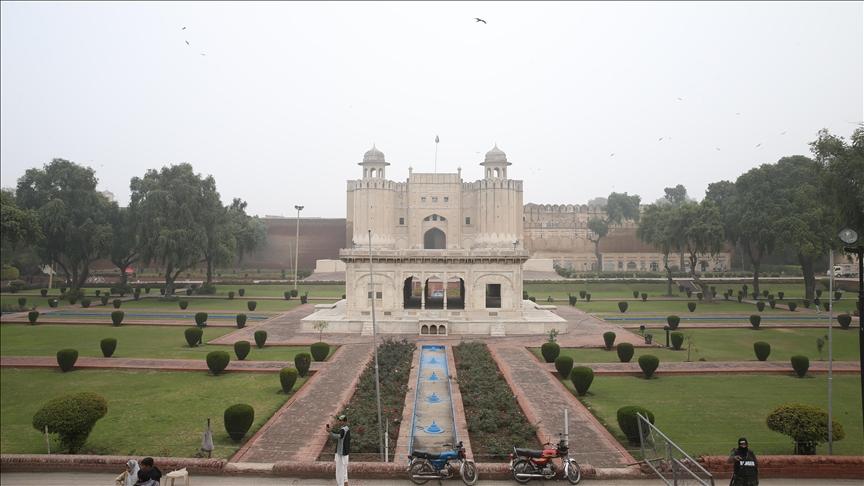
Image of Lahore Fort (AA)
Sheesh Mahal was constructed between 1631 and 1632 during the reign of Mughal Emperor Shah Jahan. It is situated within the Lahore Fort, specifically in the Shah Burj section. The structure served as Shah Jahan’s private residence during his stays in Lahore and functioned as his private chamber as well as a retreat area for the royal household. The architectural supervision was overseen by Abdul Karim, a notable statesman of Shah Jahan’s reign.
The architecture of Sheesh Mahal features elements that highlight the refinement of Mughal aesthetics. The extensive use of small convex mirrors in the interior led to its designation as the “Palace of Mirrors.” Key decorative elements in the walls and ceilings include:
Additionally, a small central pool and a cascading fountain, decorated with colorful marble, are present. The materials used include veined and colored marbles, as well as yellow and black stones.
Sheesh Mahal is located in the northwestern corner of Lahore Fort, within the Shah Burj complex, and is directly connected to the wide stairway known as Hathi Paer (Elephant Path). This ceremonial passage was one of the primary routes used by royalty to enter the palace on elephants. The structure can also be accessed through the Shah Burj Gate, which was reserved exclusively for the emperor and his family.
Following the Mughal era, Sheesh Mahal underwent several alterations under different rulers. During the Sikh regime (1799–1849) and the subsequent British colonial administration, the structure experienced significant damage. By the mid-19th century, the central fountain was deactivated, parts of the building were repurposed for storage or kitchens, and the wall and ceiling decorations were damaged. Restoration efforts by the British did not fully preserve its original form.
Sheesh Mahal, along with Lahore Fort, was inscribed on the UNESCO World Heritage List in 1981. Due to ongoing deterioration, it was added to the List of World Heritage in Danger in 2000. Following extensive restoration efforts starting in 2012, the structure was once again placed under protection. Restoration activities included:
These restoration efforts were supported by international organizations such as the Norwegian Government and the Aga Khan Trust for Culture.
Sheesh Mahal exemplifies the technical sophistication and aesthetic refinement of Mughal architecture. The extensive use of mirrorwork makes it a distinctive example within Mughal palace design. The geometric order, manipulation of light, and elaborate decorative elements contribute to its significance as both a residence and an architectural achievement.
Sheesh Mahal was constructed as part of the unified design of Lahore Fort. It is located in the Shah Burj complex in the northwest quadrant and forms the imperial private quarters, alongside structures such as the Diwan-e-Khas (Hall of Private Audience), Naulakha Pavilion, and Lal Burj. Corridors connect these areas to the harem and other royal chambers.
To the west lies Hathi Paer, a path with both ceremonial and practical significance. It provided a direct route for the emperor and his retinue to reach Sheesh Mahal via elephant procession, emphasizing the palace's central functional and symbolic role.
Sheesh Mahal represents an advanced example of construction and decorative techniques of its time. Key materials and techniques include:
Over time, Sheesh Mahal has experienced structural and aesthetic damage due to political transitions, neglect, and inadequate restorations. During British colonial rule, parts of the palace were repurposed as kitchens and storerooms, mirrors were removed, and fountains were sealed. These alterations resulted in the loss of original ornamentation.
Although restoration efforts in the 2000s helped preserve the palace’s form, limitations in expertise and resources hindered the full recovery of the original mirrorwork and inlays. Environmental factors such as humidity, pollution, and wear from tourism continue to pose ongoing threats to the structure.
Sheesh Mahal is not only an architectural monument but also a symbol of the Mughal Empire's vision of power, wealth, and aesthetic ideals. The interplay of light through mirrors reflects the Islamic aesthetic concept of divine illumination. The mirrored ceilings and niches evoke celestial imagery, aligning with metaphysical interpretations of paradise in Islamic art.
Artistically, the palace exemplifies the technical maturity and multicultural synthesis of the Mughal era. Its ornamentation blends influences from Iran, Central Asia, and India, highlighting the diversity of artistic taste and the opulence of court life.
Sheesh Mahal stands as one of the finest examples of Mughal architectural legacy, showcasing elegance, craftsmanship, and symbolic meaning. Built during the reign of Shah Jahan, it is an essential part of Lahore Fort’s functional and aesthetic integrity and serves as a tangible expression of Islamic artistic values—light, geometry, and ornament. The mirror mosaics, stone inlays, and marble craftsmanship represent the pinnacle of decorative arts during the era.
Despite its damage and multiple restorations, Sheesh Mahal remains historically and culturally significant. Its inclusion in the UNESCO World Heritage list and the subsequent conservation efforts have led to a renewed appreciation of the structure. Preserving its authenticity requires not only physical restoration but also a deep understanding of its historical context, symbolic meanings, and original techniques. Sheesh Mahal is more than just a palace chamber—it is a crystallized embodiment of Mughal art and aesthetics, standing as one of the most exquisite architectural treasures of Lahore and Islamic South Asia.
Gezgin Yüzler. “Lahor Kalesi (Lahor, Pakistan) – Gezgin Yüzler.” GezginYuzlerSitesi.com. Accessed July 16, 2025.
https://gezginyuzlersitesi.com/gidilen/lahor-kalesi-lahor-pakistan-gezgin-yuzler/
Halıcı, Gülseren. “Pakistan’da Baburlular Dönemi Mimari Eserleri.” Türkler, pp. 179–183. PDF file. Accessed July 16, 2025.
Iftikhar, Rukhsana. “Lahore Fort – A Mughal Monument on the Verge of Decline.” Journal of the Research Society of Pakistan 56, no. 1 (January–June 2019): 27–40. Accessed July 16, 2025.
https://pu.edu.pk/images/journal/history/PDF-FILES/3_56_1_19.pdf
MughalGardens.org. “Fortress Gardens.” Mughal Gardens Heritage. Accessed July 16, 2025.
UNESCO World Heritage Centre. “Fort and Shalamar Gardens in Lahore.” UNESCO. Accessed July 16, 2025.

Sheesh Mahal (Lahore Fort)
Location | Lahore Pakistan Punjab | ||||||||
|---|---|---|---|---|---|---|---|---|---|
Type of Structure | Palace section / Royal residence | ||||||||
Architectural Style(s) | Mughal Architecture | ||||||||
Construction Year | 1631–1632 | ||||||||
Commissioned by | Shah Jahan (Mughal Emperor) | ||||||||
Material(s) | Marble Red Sandstone Mirrors Inlaid Stones | ||||||||
Ornamentation | Mirror Mosaics Pietra Dura Stucco Tracery Gold Leaf | ||||||||
Historical Period | Mughal Empire | ||||||||
Part of Structure | Lahore Fort (Shah Burj section) | ||||||||
UNESCO World Heritage | 1981 | ||||||||
Listed as Endangered | 2000–2012 (removed after restoration) | ||||||||
Restoration | Phased restoration between 2006–2016 Supported by UNESCO and Aga Khan Trust | ||||||||
Use(s) | currently a cultural heritage and tourist site Royal private quarters | ||||||||
No Discussion Added Yet
Start discussion for "Sheesh Mahal (Lahore Fort)" article
Historical Context and Construction Process
Architectural Features
Structural Placement and Connections
Alterations and Damage Over Time
Preservation and Restoration Efforts
Artistic and Architectural Significance
Sheesh Mahal’s Position within Lahore Fort and Its Relation to Other Structures
Materials and Construction Techniques
Preservation Challenges and Current Status
Cultural and Symbolic Value
This article was created with the support of artificial intelligence.