+2 More

Location | Silifke Mersin Türkiye | ||||||||
|---|---|---|---|---|---|---|---|---|---|
Building Type | Two-Story Masonry Mansion | ||||||||
Construction Year | 1914 | ||||||||
Restoration | 1983–1986 | ||||||||
Museum Opening | January 2, 1987 | ||||||||
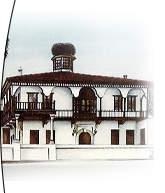
Silifke Atatürk House Museum is a two-story masonry building located in the Saray District of Silifke. Known as the Hacı Hulusi Mansion, it covers a total area of 329 square meters. The mansion was built in 1914 using a combination of wood and stone materials.

Silifke Atatürk House Museum (Türkiye Kültür Portalı)
During the Turkish War of Independence, the Silifke Defense of National Rights Society (Silifke Müdafaa-i Hukuk Cemiyeti) was one of the first organizations in the İçel region to respond promptly with both financial and moral support. On June 1, 1920, the society delivered 1,350 liras in cash aid to the necessary recipients and organized the storage of weapons, ammunition, and clothing needed for the war in central depots located in the mountain villages. This effective organization was one of the main reasons why Atatürk gave special importance to Silifke.
On January 20, 1925, Atatürk set out from Ankara with his wife Latife Hanım, Second Army Commander Fahreddin Altay, and others, following the Konya–Adana–İçel route to reach Mersin. Intending to establish a farm in the southern region, Atatürk was offered the state-owned Olukbaşı Farm in the village of Tekir. On January 27, 1925, he arrived in Silifke and spent the night at the Hacı Hulusi Mansion. The following day, he visited the proposed land, inspected the farm, and decided to purchase it.
During his stay in Silifke, Atatürk visited the Turkish Hearth (Türk Ocağı) and the Sports Club Lounge (İdman Yurdu Lokali). In Taşucu, he was hosted by Sadık Taşucu. He established close relations with the local population and social institutions, demonstrating his interest in Silifke and its surrounding areas through these visits.
Due to its historical and architectural significance, the Hacı Hulusi Mansion was targeted for expropriation in 1974 to be converted into the Atatürk House. This process was completed in 1982 by the General Directorate of Antiquities and Museums of the Ministry of Culture and Tourism. Restoration and renovation works took place between 1983 and 1984, followed by exhibit and layout preparations in 1985–1986.
The Hacı Hulusi Mansion was officially opened to the public as the Silifke Atatürk House Museum on January 2, 1987. The museum displays personal items from Atatürk’s stay in Silifke, visit documents, materials related to his cooperative initiatives, and ethnographic artifacts specific to the region. As such, the museum stands as a cultural heritage site that reflects both Atatürk’s ties with Silifke and the historical and cultural richness of the area.
Kaya, Mürsel. “Silifke Atatürk House and Ethnography Museum.” Türkiye Tourism Encyclopedia, 2019. Accessed June 30, 2025. https://turkiyeturizmansiklopedisi.com/silifke-ataturk-evi-ve-etnografya-muzesi.
Ministry of Culture and Tourism. Silifke Atatürk House and Ethnography Museum. Republic of Türkiye Ministry of Culture and Tourism. Accessed June 30, 2025. https://muze.gov.tr/muze-detay?SectionId=MSL01&DistId=MRK.
Ministry of Culture and Tourism. “İçel - Silifke Atatürk House.” Official Website of the Republic of Türkiye Ministry of Culture and Tourism. Accessed June 30, 2025. https://www.ktb.gov.tr/TR-96370/icel---silifke-ataturk-evi.html.
Türkiye Culture Portal. “Silifke Atatürk House Museum - Mersin.” Accessed June 30, 2025. https://www.kulturportali.gov.tr/turkiye/mersin/gezilecekyer/silifke-ataturk-evi-ve-etnografya-muzesi

Location | Silifke Mersin Türkiye | ||||||||
|---|---|---|---|---|---|---|---|---|---|
Building Type | Two-Story Masonry Mansion | ||||||||
Construction Year | 1914 | ||||||||
Restoration | 1983–1986 | ||||||||
Museum Opening | January 2, 1987 | ||||||||
No Discussion Added Yet
Start discussion for "Silifke Atatürk House Museum" article
Historical Significance During the War of Independence
Atatürk’s Visit to Silifke and His Plan to Establish a Farm
Expropriation and Restoration of the Mansion
Opening as a Museum and Exhibitions
This article was created with the support of artificial intelligence.