

+2 More

Türkiye Kültür Portalı. “Sırçalı Kümbet - Kayseri.” Erişim tarihi 19 Haziran 2025. https://www.kulturportali.gov.tr/turkiye/kayseri/gezilecekyer/sircali-kumbet.
Location | Melikgazi Türkiye Kayseri | ||||||||
|---|---|---|---|---|---|---|---|---|---|
Date(s) | 14th Century | ||||||||
Commissioned by | Cafer Bey | ||||||||
Plan | Rectangular Base Cylindrical Body | ||||||||
Material(s) | Cut Stone | ||||||||
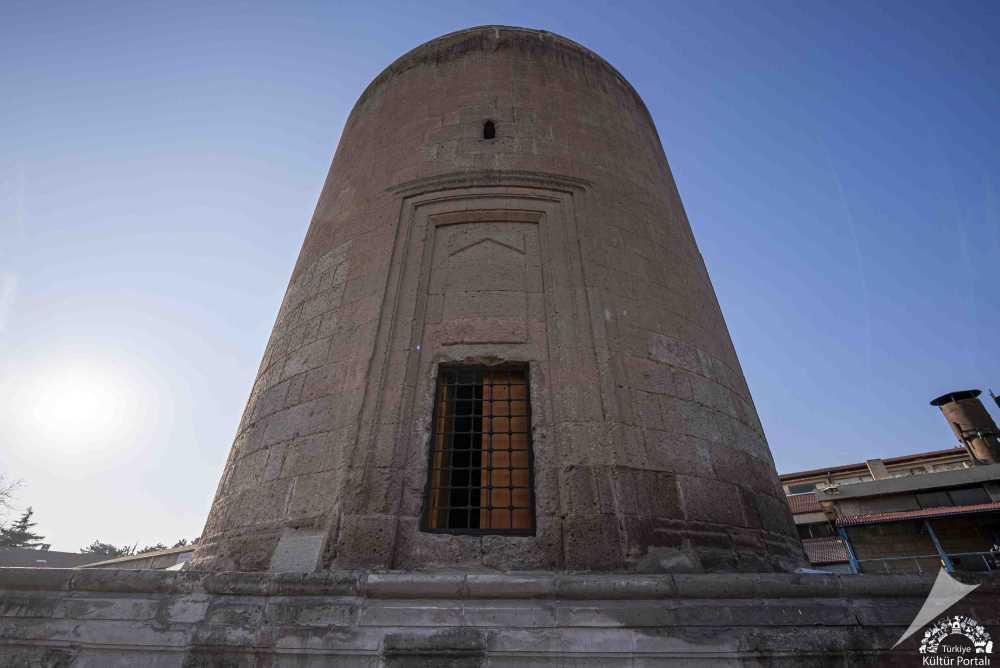
Sırçalı Kümbet is a structure located in the Hunat Neighborhood, within the Melikgazi district of Kayseri province, Türkiye. Although the construction inscription has not survived, architectural features and historical context suggest that it was built in the second quarter of the 14th century. It is widely accepted that the tomb belongs to Cafer Bey, the father of Alaeddin Eretna, founder of the Eretnaid Beylik in Anatolia.
Sırçalı Kümbet (Türkiye Kültür Portalı)
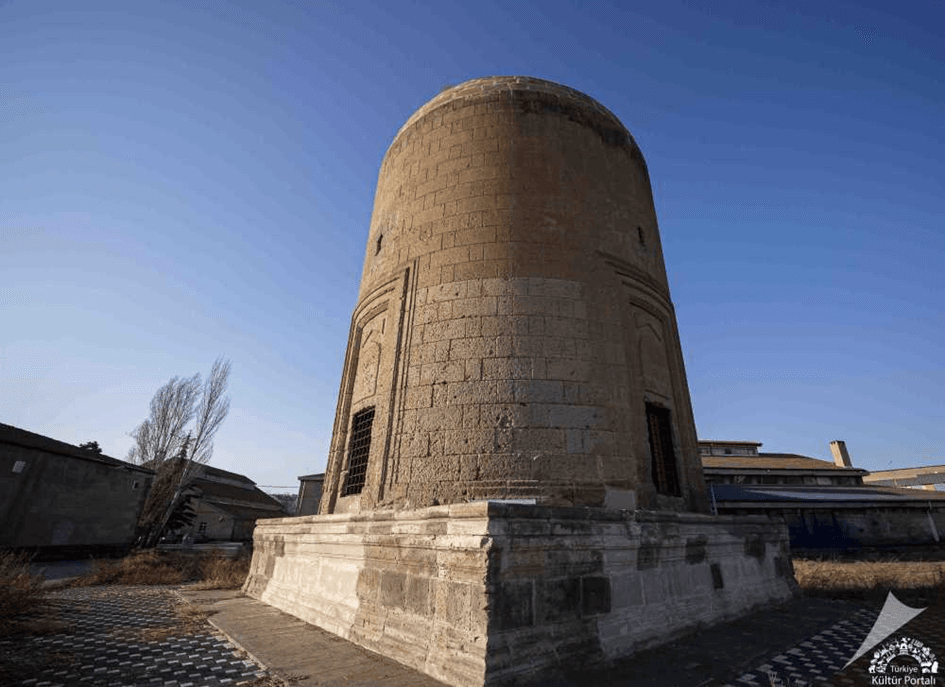
The tomb is known as “Sırçalı Kümbet,” which roughly translates to “Glazed Tomb,” likely due to the belief that it once featured tile decorations. The exterior is constructed with finely cut stone blocks, exhibiting meticulous craftsmanship.
Sırçalı Kümbet (Türkiye Kültür Portalı)
Sırçalı Kümbet stands on a broad rectangular base. Above this base is a circular chamber, which is interpreted as either a mescit (prayer room) or a burial chamber. The entrance, located on the northern side, is accessed by a two-way staircase. The entrance itself is plain and symmetrical. It has been noted that the burial chamber's upper covering has collapsed and the prayer room floor is entirely missing. There are three windows in the chamber.
The base of Sırçalı Kümbet resembles that of the Cafer Ali Kümbet. The cylindrical body is constructed from uniformly cut stones. The entrance and window frames are harmoniously integrated into the cylindrical form, reflecting the architectural sensibilities of its era. The entrance frame is designed taller than the window frames. The doorway features a depressed arch with column elements at the corners of its niche. The pediment above the door is pointed-arched, and each side of the inscription panel is adorned with embossed rosette motifs.
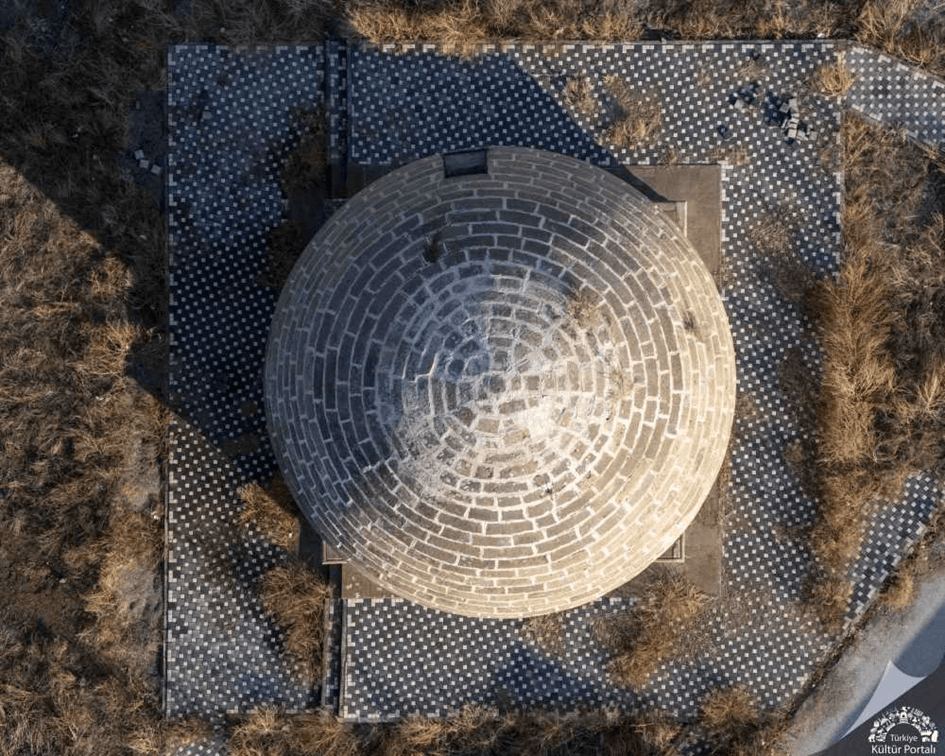
The interior chamber contrasts the cylindrical exterior, being polygonal with flat walls. Transition to the drum of the dome is achieved via small scalloped pendentives located at the upper sections of the walls. The interior showcases fine craftsmanship. In a 1940 restoration by architect Macit Kural, the kümbet was covered with a hemispherical dome. However, researchers suggest that the original roof was likely a conical spire, similar to the Tugay Hatun Kümbet in Kemah.
It is assumed that a band of inscription made of tile plaques may have once existed beneath the eaves cornice. The detailed stonework around the door and windows highlights the architectural sophistication of the structure.
Akok, Mahmut. “Kayseri’de Dört Mezar Anıtı.” Türk Etnografya Dergisi, no. 62 (January 1, 1969): 17–54. Accessed June 19, 2025. https://dergipark.org.tr/tr/pub/turketnografyadergisi/issue/67077/1047760.
Kayseri Metropolitan Municipality. “Sırçalı Kümbet.” Accessed June 19, 2025. https://www.kayseri.bel.tr/kesfet-listeleme/sircali-kumbet.
Republic of Türkiye Ministry of Culture and Tourism. “Sırçalı Kümbet - Kayseri.” Accessed June 19, 2025. https://www.kulturportali.gov.tr/turkiye/kayseri/gezilecekyer/sircali-kumbet.

Türkiye Kültür Portalı. “Sırçalı Kümbet - Kayseri.” Erişim tarihi 19 Haziran 2025. https://www.kulturportali.gov.tr/turkiye/kayseri/gezilecekyer/sircali-kumbet.
Location | Melikgazi Türkiye Kayseri | ||||||||
|---|---|---|---|---|---|---|---|---|---|
Date(s) | 14th Century | ||||||||
Commissioned by | Cafer Bey | ||||||||
Plan | Rectangular Base Cylindrical Body | ||||||||
Material(s) | Cut Stone | ||||||||
Name and Construction Materials
Plan and Structural Features
Architectural Style and Comparisons
Interior and Roof Structure
Ornamentation
This article was created with the support of artificial intelligence.