

+2 More

Location | Şahinefendi Village Türkiye Nevşehir Province Ürgüp District | ||||||||
|---|---|---|---|---|---|---|---|---|---|
Geographical Setting | Near the source of the Damsa Stream, in the area known as “Örencik” | ||||||||
Period of Occupation | From the 4th century CE to at least the 10th century CE | ||||||||
Key Structures | Residential villas, bath complex, chapel, cemetery area | ||||||||
Historical Significance | Listed as a bishopric in the reign of Emperor Leo VI (886–912 CE) | ||||||||
Important Structure(s) | Church of the Forty Martyrs (9th–13th centuries) carved into rock | ||||||||
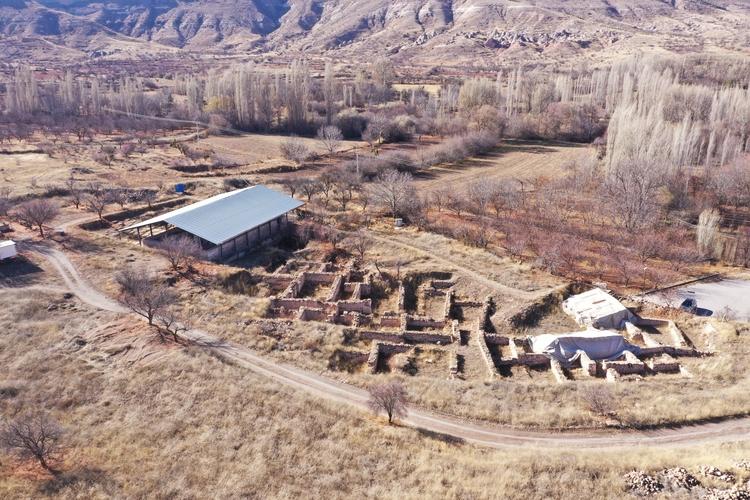
The Sobesos Ancient City is located within the borders of Şahinefendi Village in the Ürgüp district of Nevşehir Province, in the Cappadocia region of central Turkey. It lies southeast of the village, near the source of the Damsa Stream, in an area locally known as “Örencik.” Archaeological excavations carried out by the Nevşehir Museum Directorate between 2002–2005 and 2010–2011 revealed a settlement containing residential structures, a bath complex, religious buildings, and burial areas.
Sobesos Ancient City- Anadolu Ajansı
The name "Sobesos" appears only in episcopal lists from the reign of Byzantine Emperor Leo VI (r. 886–912), suggesting the site was an episcopal center during this period. Although it is absent in later records, this reference indicates that the site likely remained inhabited until at least the 10th century. The name itself is thought not to be of Greek origin and may instead have Anatolian roots, possibly Hittite or Luwian, although this remains speculative.
The site contains numerous structures, including at least two villas, a bath complex, a cemetery chapel, and a church. One villa, initially constructed in the 4th century CE, exhibits a rectangular plan with an entrance vestibule, mosaic-decorated rooms, and an internal courtyard. It was later transformed into a church, likely in response to the Christianization of the region. The conversion involved architectural alterations such as the addition of a single-nave chapel in the courtyard. Another villa, with a peristyle courtyard, dates to the same period and appears to have been used continuously through several architectural phases.

Sobesos Ancient City- Anadolu Ajansı
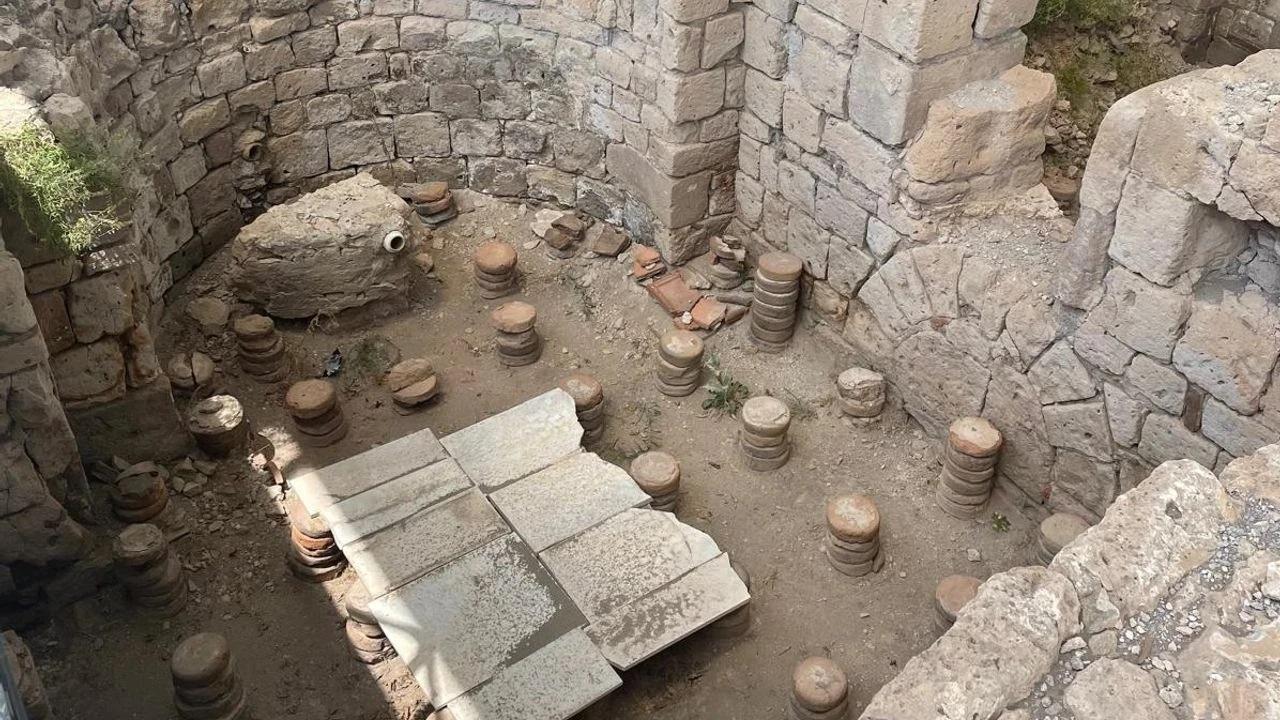
Located at the northern end of the settlement, the bathhouse follows a modified row-type plan with an “L”-shaped layout. It includes standard Roman bath components: an apodyterium (changing room), frigidarium I and II (cold rooms), tepidarium (warm room), caldarium (hot room), and sudatorium or laconicum (steam room). Heating was provided by a hypocaust system, and the structure was constructed using a combination of cut stone and rubble masonry.
The apodyterium floor featured mosaics in the opus tessellatum technique, though many have been damaged. Surviving motifs include stars, rhombi, crosses, partridges, flowers, and a pair of sandals at the entrance to frigidarium II. The bath appears to have undergone functional changes during the Arab and Sasanian incursions in the 7th to 9th centuries and was partially repurposed as a residential or utilitarian space.
Following the Christianization of the settlement, a church was created from one of the villas. Around and within this structure, multiple burials were found, including inscribed tombs mentioning deacons Karterios and Antiochos, as well as a person named Eugenios. A nearby cemetery chapel, built with fine ashlar masonry, features a single nave, a narthex, and a courtyard. Its architectural quality surpasses that of the chapel added to the villa courtyard.
Sobesos was first occupied in the 4th century CE and continued to function as a rural Christian community through the Middle Byzantine period. In the northwestern part of the settlement, a rock-cut complex contains the Church of the Forty Martyrs, tomb chapels, wineries, storage rooms, and spaces for agricultural processing—elements characteristic of Cappadocia’s rural centers. The church has three construction phases, with the earliest dating to the 9th–10th centuries, the second to the 11th century, and the final painted layer to 1216/1217.
Anadolu Ajansı. “Definecilerin Ortaya Çıkardığı Mozaikler Kapadokya'nın Sanat Tarihine Işık Tutuyor.” Erişim tarihi 11 Haziran 2025.https://www.aa.com.tr/tr/anadolu-mozaigi/definecilerin-ortaya-cikardigi-mozaikler-kapadokyanin-sanat-tarihine-isik-tutuyor/2799904.
Anadolu Ajansı. “Türkiye'de Yıl Sonuna Kadar 750 Arkeolojik Kazı ve Araştırma Yapılacak.” Anadolu Ajansı. Erişim tarihi 11 Haziran 2025.https://www.aa.com.tr/tr/kultur/turkiyede-yil-sonuna-kadar-750-arkeolojik-kazi-ve-arastirma-yapilacak/2940041.
Erpek, Can. “Şahinefendi (Sobesos) Geç Antik Çağ Hamamı.” Nevşehir Hacı Bektaş Veli Üniversitesi Sosyal Bilimler Enstitüsü Dergisi 12, no. 3 (2022): 1621–1637. Erişim tarihi 11.06.2025. https://dergipark.org.tr/tr/download/article-file/2301520.
Türkiye Turizm Ansiklopedisi. “Sobesos Antik Kenti.” Türkiye Turizm Ansiklopedisi. Erişim tarihi 11 Haziran 2025.https://turkiyeturizmansiklopedisi.com/sobesos-antik-kenti.

Location | Şahinefendi Village Türkiye Nevşehir Province Ürgüp District | ||||||||
|---|---|---|---|---|---|---|---|---|---|
Geographical Setting | Near the source of the Damsa Stream, in the area known as “Örencik” | ||||||||
Period of Occupation | From the 4th century CE to at least the 10th century CE | ||||||||
Key Structures | Residential villas, bath complex, chapel, cemetery area | ||||||||
Historical Significance | Listed as a bishopric in the reign of Emperor Leo VI (886–912 CE) | ||||||||
Important Structure(s) | Church of the Forty Martyrs (9th–13th centuries) carved into rock | ||||||||
No Discussion Added Yet
Start discussion for "Sobesos Ancient City " article
Historical Context
Urban Layout and Architectural Features
The Bath Complex
Religious Structures and Burial Practices
Occupation and Transformation
This article was created with the support of artificial intelligence.