

+2 More

The Statue of Liberty holds immense global significance as one of the most recognizable and symbolic monuments of the United States. Rising from Liberty Island in New York Harbor, the statue has become a symbol of universal values such as freedom, democracy, and human rights. Gifted by France to the United States in 1886, the statue was designed at the suggestion of French historian Édouard de Laboulaye and sculpted by Frédéric-Auguste Bartholdi. With engineering support from Gustave Eiffel, the monument portrays a woman holding a torch in one hand and a tablet inscribed with the date of the American Declaration of Independence—July 4, 1776—in the other. The seven spikes of the crown represent the seven seas and seven continents, while the broken chains at her feet signify the end of slavery.
The design of the Statue of Liberty reflects influences from ancient colossal statues. It is believed that Bartholdi drew inspiration from the giant figures of the Abu Simbel Temples in Egypt. Initially, the statue was planned to be erected at the entrance of the Suez Canal, but this idea was abandoned due to potential controversy in Egypt. Completed in France in 1881, the statue was shipped to America aboard a French vessel. Constructed of copper and steel, it is a remarkable blend of modern engineering and artistic design. Gustave Eiffel played a critical role in the engineering aspect, creating a flexible internal structure that allows the copper exterior to withstand wind and weather conditions.
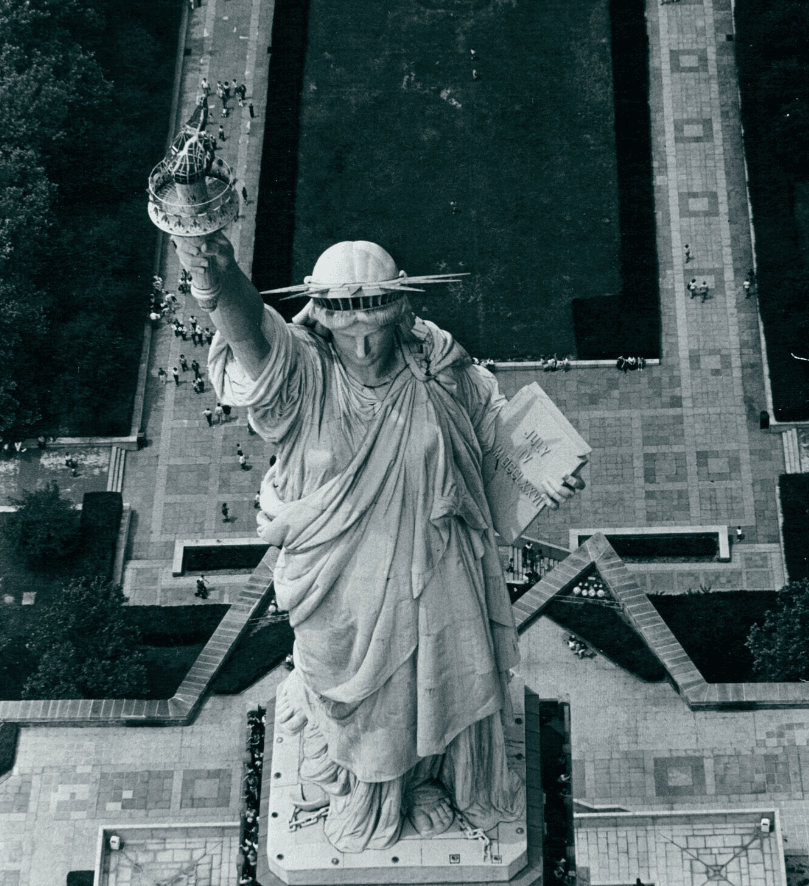
Statue of Liberty (Source: The Statue of Liberty)
The construction of the Statue of Liberty was a joint venture between France and the United States. While the French were responsible for building the statue, the Americans undertook the task of constructing the pedestal. Fundraising efforts in the United States included theatrical performances, art exhibitions, and charity events. Most notably, journalist Joseph Pulitzer encouraged public participation through his newspaper, successfully raising the necessary $100,000. This collaborative effort not only financed the monument but also symbolized the friendship between the two nations.
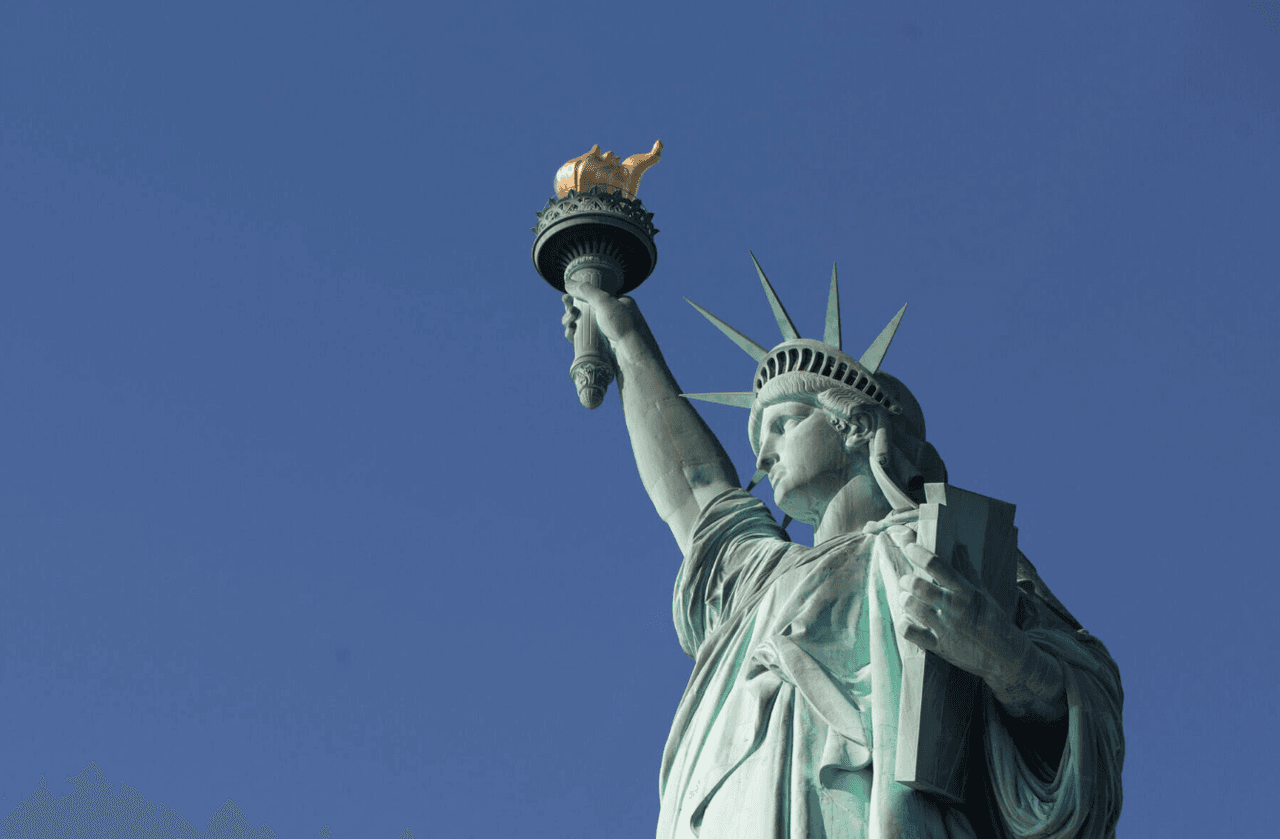
Statue of Liberty (Source: The Statue of Liberty)
Originally intended to commemorate the 100th anniversary of the American Declaration of Independence, the statue gradually acquired a broader meaning. It became a beacon of hope for immigrants arriving in the United States. With the addition of Emma Lazarus’s famous poem The New Colossus to the pedestal in 1903, the statue began to convey a powerful message to the world’s oppressed:
"Give me your tired, your poor,
Your huddled masses yearning to breathe free..."
These lines reinforced the statue’s role as a symbol of hope for the poor and downtrodden. Over time, the Statue of Liberty has come to represent not only American ideals but also global aspirations for freedom, justice, and opportunity.
Since its dedication, the Statue of Liberty has undergone several restorations. A major restoration in 1984 included the replacement of the original torch and improvements made in accordance with Bartholdi’s original design. Interior renovations and additional safety features have been added over the years to ensure structural integrity and visitor safety. Thanks to meticulous maintenance, the statue continues to stand tall as an enduring symbol.
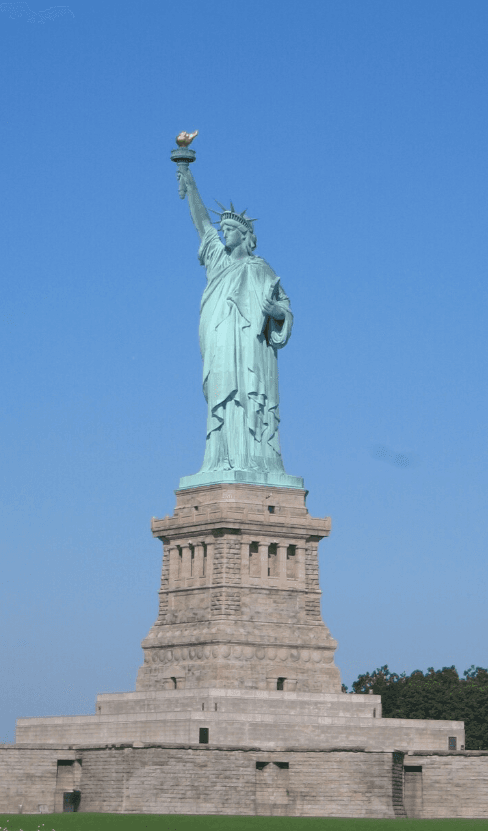
Statue of Liberty (Source: UNESCO)
In 1984, the Statue of Liberty was inscribed on the UNESCO World Heritage List, recognized not only as an American icon but as a part of the world's cultural heritage. Millions of tourists visit the statue each year. It has become a universal symbol with which people around the world associate values such as liberty, democracy, and human rights. The statue continues to serve as a powerful emblem of the most important social and cultural transformations in history.
Aksoy, Cansın. “The History of the Statue of Liberty.” International Relations Student Journal, 2012. Accessed April 3, 2025. https://www.uiodergisi.com/wp-content/uploads/2012/05/ozgurluk.pdf.
CNN. “Statue of Liberty: History.” CNN Style. Accessed April 3, 2025. https://edition.cnn.com/style/article/statue-of-liberty-history/index.html.
EDSITEment. “The Statue of Liberty: Meaning and Use as a National Symbol.” National Endowment for the Humanities. Accessed April 3, 2025. https://edsitement.neh.gov/lesson-plans/statue-liberty-meaning-and-use-national-symbol.
Museum of the City of New York. “Myths Surrounding the Origin of the Statue of Liberty.” Museum of the City of New York. Accessed April 3, 2025. https://www.mcny.org/story/myths-surrounding-origin-statue-liberty.
The Oriental Institute of the University of Chicago. “Danh Vo Labels.” Institute for the Study of Ancient Cultures. Accessed April 3, 2025. https://isac.uchicago.edu/sites/default/files/uploads/shared/docs/danh_vo_labels.pdf.
UNESCO. “Statue of Liberty.” World Heritage List. Accessed April 3, 2025. https://whc.unesco.org/en/list/307/.

Design and Construction
Funding
Meaning and Symbolism
Changes and Restorations Over Time
Cultural and Universal Significance
This article was created with the support of artificial intelligence.