

+2 More

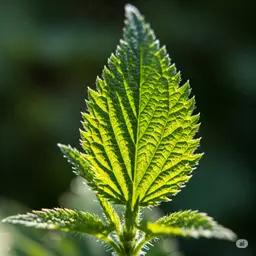
Urtica Dioica
Scientific Name(s) | Urtica Dioica L. | ||||||||
|---|---|---|---|---|---|---|---|---|---|
Family | Urticaceae (Nettle family) | ||||||||
Plant Type | Perennial Herbaceous | ||||||||
Distribution(s) | Holarctic Region | ||||||||
Habitat | Nitrogen-Rich Soils Moist Soils | ||||||||
Key Phytochemicals | Phytosterols Phenolic acids Flavonoids | ||||||||
Nutritional Value (Per 100 Grams of Fresh Leaves) | 3.7 g protein 42 kcal | ||||||||
Stinging Nettle is a perennial herbaceous plant that grows naturally in temperate climate regions. It is covered with stinging hairs and has been widely distributed throughout much of Europe, vast areas of Northern Asia, the Mediterranean regions of North Africa, and the North American continent. It is commonly found in dense clusters along forest edges, near water sources, and by roadsides. It prefers moist environments with fertile, nitrogen-rich, and slightly shaded soils; therefore, it is often encountered in meadows, abandoned fields, and gardens.
The nutritional and medicinal value of stinging nettle has been recognized and utilized by many societies throughout history. Due to its rich nutritional content, it has been used in traditional cuisines in soups, salads, and various dishes. The plant is rich in vitamins (especially vitamins A, C, and K), minerals (such as iron, magnesium, and calcium), and antioxidants.
Stinging nettle is a perennial herbaceous plant that typically grows between 50 and 150 cm in height. Its stem is characteristically quadrangular and densely covered with hairs. These hairs release chemical substances such as formic acid and histamine upon touch or contact, causing a burning sensation on the skin. The plant reproduces through horizontal underground shoots (rhizomes), allowing it to spread rapidly over large areas. The leaves are oval-shaped with clearly serrated edges and are usually arranged oppositely along the stem.
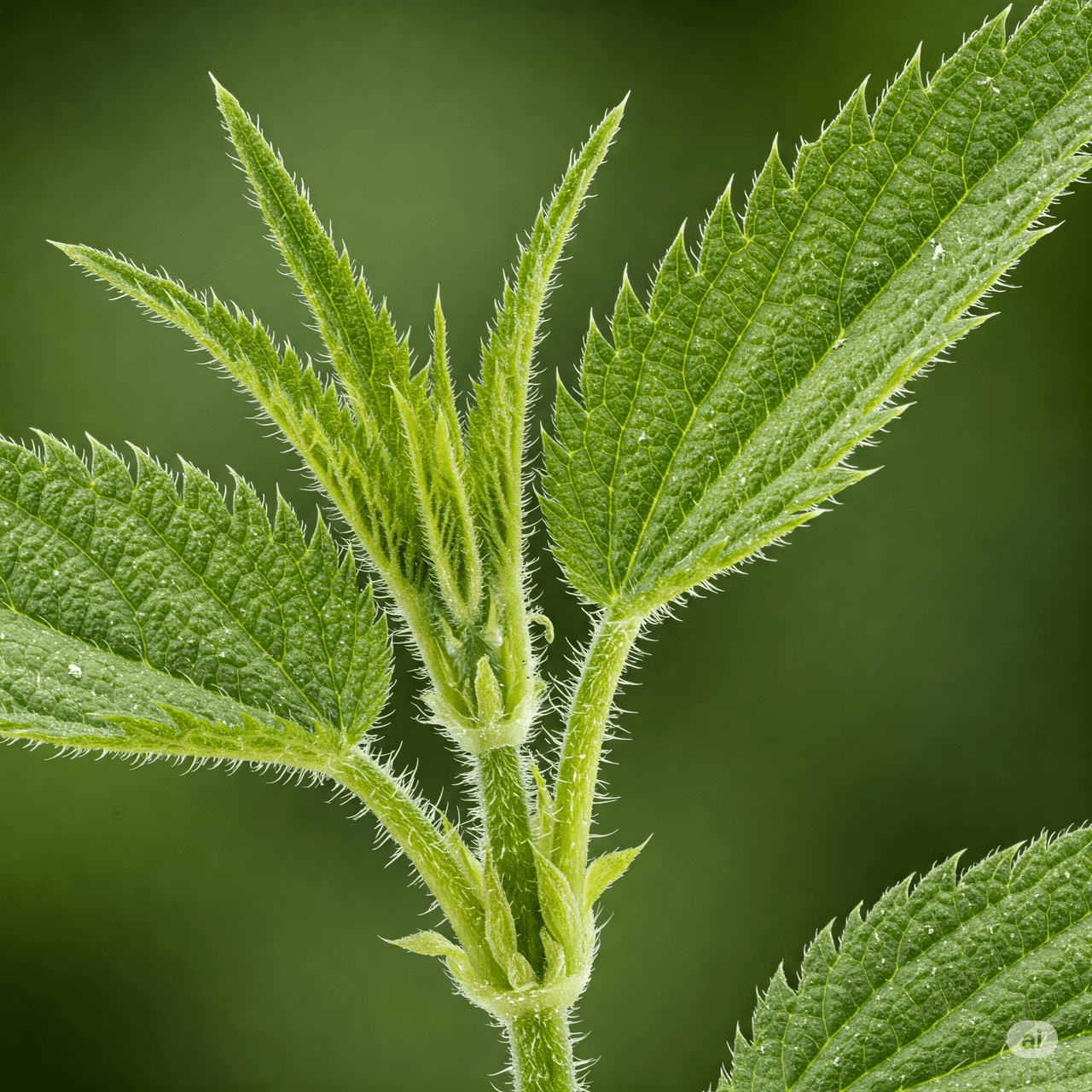
Stinging Nettle Morphology Structure (Generated by Artificial Intelligence)
The plant’s flowers are small, inconspicuous, and greenish; male and female flowers are usually found on separate individuals (a dioecious plant). This condition promotes cross-pollination and increases genetic diversity. Pollination occurs mainly through the wind, though in some cases insects may also contribute. The seeds are small and lightweight, dispersed by the wind and the movement of animals. In addition to seed propagation, the plant also spreads through underground stems, making it difficult to control and enhancing its rapid spreading potential.
Stinging nettle is botanically classified within the genus Urtica of the family Urticaceae, and is one of the most well-known representatives of this genus. There are various subspecies and varieties within the species that have adapted to different geographic regions. In particular, populations of stinging nettle observed in Anatolia show morphological similarities to those in Europe; however, individuals found in the Eastern Black Sea and Caucasus regions exhibit some differences in leaf shape, hair density, and stem structure. These regional differences have arisen due to geographic isolation and adaptation to environmental conditions.
The subspecies of stinging nettle are distinguished using morphological criteria such as leaf size, the density of stinging hairs, and stem height. Due to its wide geographic distribution, genetic diversity, and adaptability, the species holds a significant place in plant taxonomy and phylogenetic studies. Recent molecular biology research has begun to yield supportive results through genetic analyses of different nettle populations, further validating these classifications. Therefore, the plant continues to be an important subject of research in botanical science.
Stinging nettle has a wide geographical distribution and can be found in various regions from sea level up to approximately 2,500 meters in elevation. Its preferred natural habitats include forest edges, the banks of streams and rivers, areas surrounding wetlands, and expansive meadows. The plant is highly sensitive to the nitrogen content of the soil; it grows more rapidly and vigorously in soils enriched with animal manure. For this reason, it may become dominant in the peripheral zones of cultivated lands or in abandoned plots, potentially reducing the habitat available to other plant species.
Easily rooting in moist and humus-rich soils, stinging nettle can cover large areas through its horizontally growing rhizomes and is thus considered a highly invasive species. This expansive characteristic both increases its ecological significance in maintaining environmental balance and affects biodiversity in its habitat. While the dominance of stinging nettle in ecosystems can provide shelter and food for various animal species, its uncontrolled spread can threaten the existence of some plant species. Therefore, the balanced management of its ecological effects is crucial for the conservation of natural habitats.
The leaves, stems, seeds, and roots of stinging nettle possess a rich and diverse chemical composition, making the plant a valuable resource for nutrition, health, and medicinal purposes. Its leaves contain abundant phenolic acids, flavonoids, chlorophyll, and carotenoids.
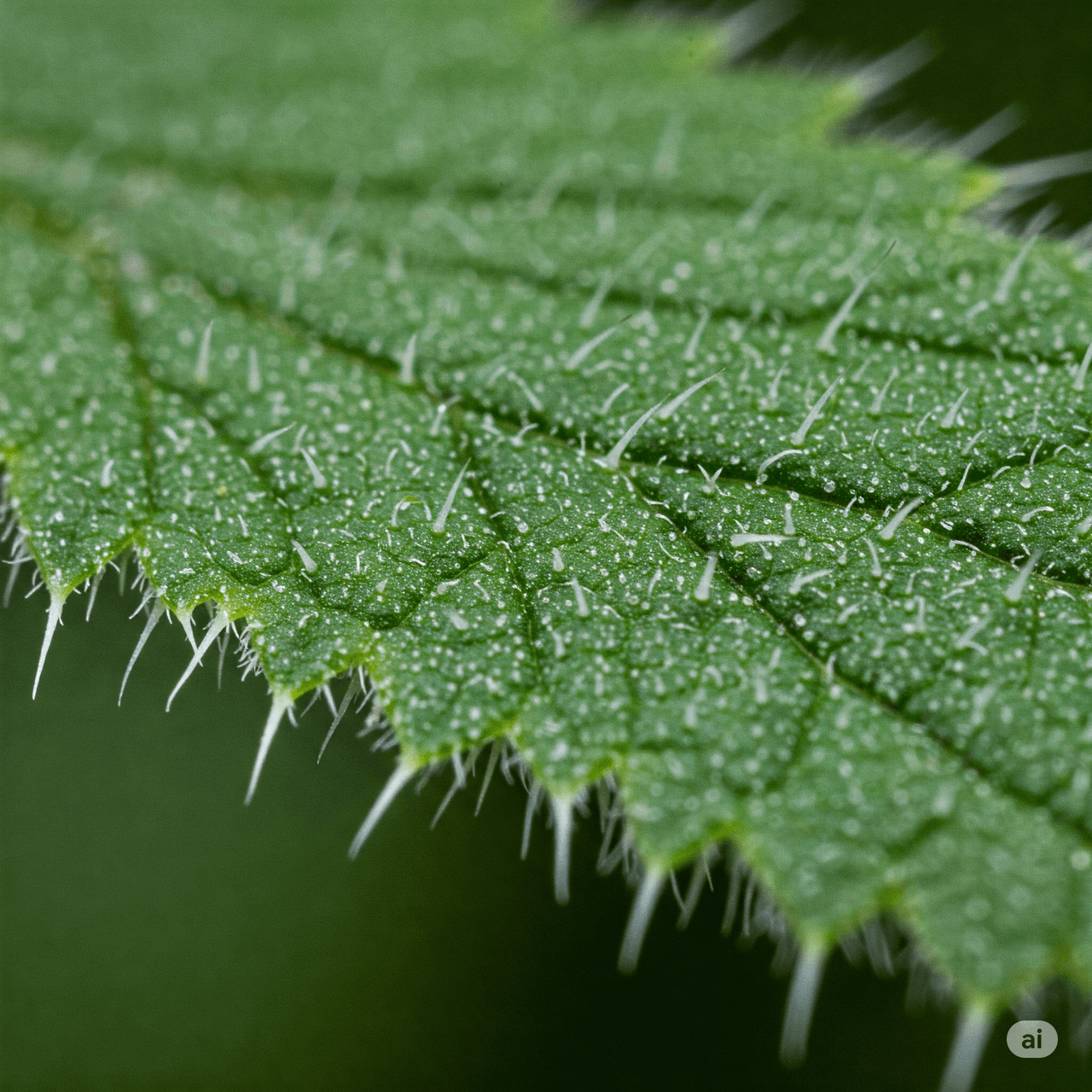
Leaf Structure (Generated by Artificial Intelligence)
The roots of stinging nettle contain different types of beneficial compounds; they are particularly rich in phytosterols and lignans. Fresh nettle leaves are notable for their protein content, which can reach up to 30%, making the plant stand out in terms of nutritional value. However, nettle is not a plant that can be consumed directly; when it is to be eaten, it must undergo specific processing, typically after boiling.
Warning: The content presented in this entry is intended solely for general encyclopedic purposes. The information provided here should not be used for diagnosis, treatment, or medical guidance. Always consult a physician or qualified healthcare professional before making decisions regarding health-related matters. Neither the author of this entry nor KURE Encyclopedia assumes any responsibility for outcomes resulting from the use of this information for diagnostic or therapeutic purposes.
Ali, J. R. “Geological Data Indicate That the Interpretation for the Age-Calibrated Phylogeny for the Kurixalus-Genus Frogs of South, South-East and East Asia (Lv et al., 2018) Needs to Be Rethought.” Molecular Phylogenetics and Evolution 145 (2018): 106053. Accessed 30 May 2025. https://doi.org/10.1016/j.ympev.2018.02.011.
Colegate, S. M., M. Boppré, J. Monzón ve J. M. Betz. “Pro-Toxic Dehydropyrrolizidine Alkaloids in the Traditional Andean Herbal Medicine ‘Asmachilca.’” Journal of Ethnopharmacology 172 (2015): 179–194. Accessed 25 May 2025. https://doi.org/10.1016/j.jep.2015.06.012.
Markiewicz-Keszycka, M., M. P. Casado-Gavalda, X. Cama-Moncunill, R. Cama-Moncunill, Y. Dixit, P. J. Cullen ve C. Sullivan. “Laser-Induced Breakdown Spectroscopy (LIBS) for Rapid Analysis of Ash, Potassium and Magnesium in Gluten Free Flours.” Food Chemistry 244 (2017): 324–330. Accessed 30 May 2025. https://doi.org/10.1016/j.foodchem.2017.10.063.

Urtica Dioica
Scientific Name(s) | Urtica Dioica L. | ||||||||
|---|---|---|---|---|---|---|---|---|---|
Family | Urticaceae (Nettle family) | ||||||||
Plant Type | Perennial Herbaceous | ||||||||
Distribution(s) | Holarctic Region | ||||||||
Habitat | Nitrogen-Rich Soils Moist Soils | ||||||||
Key Phytochemicals | Phytosterols Phenolic acids Flavonoids | ||||||||
Nutritional Value (Per 100 Grams of Fresh Leaves) | 3.7 g protein 42 kcal | ||||||||
No Discussion Added Yet
Start discussion for "Stinging Nettle (Urtica Dioica)" article
Botanical Characteristics and Classification
Morphological Structure
Distribution and Habitat
Chemical Composition
This article was created with the support of artificial intelligence.