
+2 More

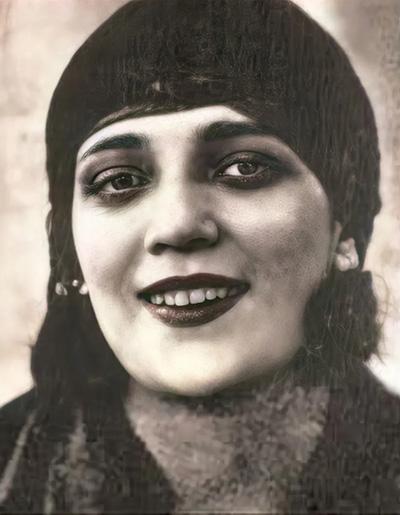
Suat Derviş is a writer, journalist, translator, and political activist known for her works focusing on women’s representation, class differences, and social justice in 20th century Turkish literature. Her novels and journalistic efforts particularly examine the living conditions and social marginalization of urban women. Derviş maintained a strong connection between her literary output and political stance, and for a long time her work was evaluated outside the mainstream literary structures; however, since the 1990s it has been reexamined especially through feminist literary and socialist realism perspectives.
Suat Derviş grew up in an intellectual family environment. Her mother was an educated woman and her father was one of the prominent physicians of his time. She learned French and German at an early age and received classical music training. In 1919 she traveled to Berlin, where she first pursued musical education and later enrolled in literature and philosophy courses at the University of Berlin. During her studies in Germany, she encountered socialist thought and closely observed labor movements.
Derviş entered the literary world in 1920 with her novel Kara Kitap, and continued her writing career in subsequent years with works such as Hiçbiri (1921) and Ne Bir Ses, Ne Bir Nefes (1923). In her writings she primarily explored the psychology, social position, and personal conflicts of female characters.
In the 1930s she turned to journalism and published interviews in newspapers such as Cumhuriyet, Son Posta, Yedigün, and Tan. Her interviews focused especially on Istanbul’s impoverished neighborhoods, unemployment, and female workers. With her reality-based, observation-driven narrative style, she became one of the most significant interview writers of her era.
In 1944 she was arrested due to her article titled “Why Am I a Friend of the Soviet Union?” and was prosecuted on grounds of her association with the Communist Party of Turkey. During this period her husband, Reşat Fuat Baraner, was also arrested for his political activities. In 1953 she moved to Paris, where she published articles in various French newspapers and engaged in translation work. She returned to Türkiye in 1963.
In Derviş’s novels, female characters often appear as individuals encircled by social pressures. In her novel Fosforlu Cevriye, she addresses class conflict through the figure of a woman rejected by society, while in Bu Roman Olan Şeylerin Romanıdır she portrays the lives of working-class women. In this regard, her works hold an important place in feminist literary studies.
In her narratives, which align closely with socialist realism, the conflicted relationship between the individual and society is examined particularly through the lens of female identity. Moral dilemmas, class inequality, and patriarchal structures are recurring themes. Derviş adopted a universalist and critical approach distinct from traditional nationalist literary conceptions.
After her death in the 1970s, her works remained unpublished for many years and received insufficient attention in literary criticism. This neglect has been interpreted as resulting from her status as a female writer and her political stance, which led to her exclusion from mainstream literary structures.
From the 1990s onward, within the context of the emerging feminist literary criticism in Türkiye, Suat Derviş’s works were reintroduced to public discourse and analyzed in terms of women’s representation and class analysis. In 2013, a comprehensive collected works project initiated by İthaki Yayınları led to the republication of her writings and broadened their readership.
Married to Reşat Fuat Baraner, Derviş defined her identity as a writer through a personal and independent stance. In interviews about herself, she consistently addressed her literary production and political consciousness as interconnected. As one of the founding members of the Türkiye Devrimci Kadınlar Derneği, she made direct contributions to women’s movements.
Suat Derviş died in Istanbul in 1972, remaining a figure who consistently pursued both literary and political struggle throughout her life. Since the 21st century, her works have been reevaluated in academic circles and have become an important source for studies on social gender and early women’s literature.
Demirsel, Şevval. "Unutuluştan Kanona: Suat Derviş ve Romanları." MSGSÜ Sosyal Bilimler Dergisi 28 (2023): 105–114.
Erkoç, Gülçin Oktay. "Başını Eğmeyen Celileler, Cavide’ler, Cevriye’ler: Suat Derviş’in Romanlarında Ahlâk Meselesi." Dil ve Tarih-Coğrafya Fakültesi Dergisi 60, no. 2 (2020): 803–831.
Saygılıgil, Feryal. "Sokakta Bir Gazeteci: Suat Derviş." Fe Dergi: Feminist Eleştiri 6, no. 1 (2014): 18–26.

Education and Early Life
Literary Career and Journalistic Activities
Political Repression and Exile Years
Thematic Features and Literary Contributions
Position in Literary History and Later Reception
Personal Life and Identity
Death and Legacy