
+2 More

Name(s) | Sukhoi Su-47 Berkut (Golden Eagle) | ||||||||
|---|---|---|---|---|---|---|---|---|---|
Category | Experimental Fighter Aircraft / Technology Demonstration Platform | ||||||||
Origin(s) | Russia (Sukhoi) | ||||||||
Engine(s) | 2 x Solovyev D-30F6 turbofan engines | ||||||||
First Flight(s) | 25 September 1997 | ||||||||
Crew | 1 | ||||||||
Length(s) | 22.6 m | ||||||||
Wingspan | 16.7 m | ||||||||
Maximum Speed | Mach 2.3 (approximately 2,450 km/h) | ||||||||
Maximum Takeoff Weight | 35.000 kg | ||||||||
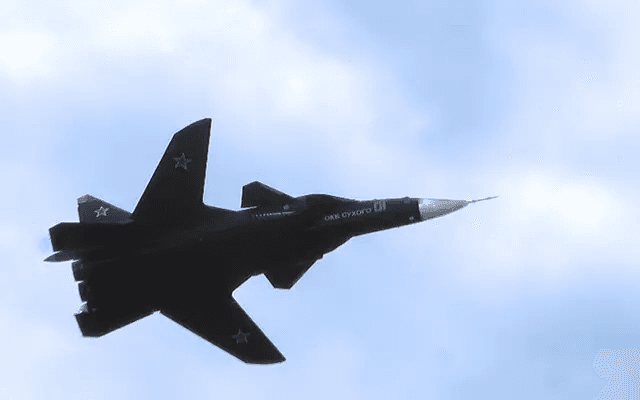
The Sukhoi Su-47 Berkut is an experimental fighter aircraft developed by the Russian aviation company Sukhoi, featuring a forward-swept wing design. Initially introduced as the S-37 and later named the Su-47, the aircraft was designed under a project initiated in the late Soviet era. The purpose of the project was to test the necessary aerodynamic and material technologies for new-generation fighter aircraft. The Su-47 was evaluated as a technology demonstrator platform within this scope.

Sukhoi Su-47 Berkut (Lenny Flank)
The Su-47 project was developed to investigate the potential of a fighter aircraft design with features such as high maneuverability and short runway performance. The forward-swept wing design used in the aircraft contributes to a more stable airflow over the wing, especially at high angles of attack. This increases controllability even at low speeds and allows the aircraft to perform sharper maneuvers.
The forward-swept wing design also introduces a structural problem known as "aeroelastic divergence." While aerodynamic forces in conventional wings tend to reduce bending, in forward-swept wings, these forces can increase bending, creating a loop that may lead to loss of control. To solve this problem, strong and light carbon fiber composite materials were used in the Su-47's wings. These materials maintained structural integrity by keeping wing deformation under control.
The aircraft features a three-surface aerodynamic configuration, consisting of forward-swept main wings, canard surfaces placed in front of the cockpit, and conventional horizontal and vertical tail surfaces. This design helps maintain the aircraft's stability even in situations requiring high maneuverability.
Sukhoi Su-47 Berkut (Haci Producitons)
The S-32/S-37 project began as a program aimed at meeting the needs of the Russian Navy and Air Force during the final period of the Soviet Union. However, with the dissolution of the Soviet Union, funding was largely cut, and the project ceased to be a major state program. This forced the Sukhoi Design Bureau to rely on its own resources to continue the project. Only one prototype was ever produced, and this aircraft was used as a testbed.
The prototype conducted its maiden flight on September 25, 1997. The aircraft's initial engines were the Solovyev D-30F6 turbofan engines taken from the MiG-31. This was used as a temporary solution until the intended next-generation engines were ready. These engines provided the Su-47 with the ability to reach a high speed of Mach 2.3. In 2000, the aircraft's name was changed to Su-47 to improve its recognition in the international market and emphasize its potential.

Sukhoi Su-47 Berkut (Anna Zvereva)
Despite being a technology demonstrator aircraft, the Su-47 was designed to showcase its full potential as a fighter jet. To maintain its stealth characteristics, internal weapons bays for carrying air-to-air missiles and other ordnance were planned to be located under the fuselage. This would prevent the increased radar cross-section caused by external weapons. Armament systems included current Russian missiles such as the R-77 and R-73.
The aircraft's cockpit utilized glass cockpit technology to increase the pilot's situational awareness, and the pilot was able to manage the aircraft's unique flight control system.
Sukhoi Su-47 Berkut (Tactical Wings)
The Su-47 project did not proceed to serial production due to Russia’s economic conditions and the engineering challenges posed by forward-swept wing technology. Although the aerodynamic advantages of the forward-swept wings were confirmed during testing, it was not possible to produce these wings cost-effectively and suitable for mass production.
The project is not viewed as a failure but as a technology development process. The data gathered during the Su-47's test flights played a significant role in the development of Russia’s fifth-generation fighter jet, the Sukhoi Su-57. The advanced flight control systems and composite material technologies used in the Su-47 were applied at a more advanced level in the Su-57 design. In this respect, the Su-47 is regarded as an experimental platform that guided future projects in the Russian aviation industry. The project's single prototype is currently exhibited at the Gromov Flight Research Institute near Moscow.
Aero Corner. “Sukhoi Su-47.” Aero Corner. Accessed: October 20, 2025. https://aerocorner.com/aircraft/sukhoi-su-47
Alemdar, Ahmet. “MAKS 2019’da Sürpriz Gösterim: Sukhoi Su-47 Berkut Savaş Uçağı.” DefenceTurk. Accessed: October 20, 2025. https://www.defenceturk.net/maks-2019da-surpriz-gosterim-sukhoi-su-47-berkut-savas-ucagi
CNRP Fandom Wiki. “Sukhoi Su-47.” CNRP Fandom Wiki. Accessed: October 20, 2025. https://cnrp.fandom.com/wiki/Sukhoi_Su-47
Emily. “Sukhoi S-37.” Fighter-Planes. Accessed: October 20, 2025. https://fighter-planes.com/info/s37.htm
Flank, Lenny. "Sukhoi Su-47 Berkut." Flickr. Accessed: October 20, 2025. https://www.flickr.com/photos/lennyflank/54456513216/in/photolist-5VXdwi-cxMmTo-2ixiYBd-2qY8S9h
Globalsecurity.org. “Su-47.” Globalsecurity.org. Accessed: October 20, 2025. https://www.globalsecurity.org/military/world/russia/su-47.htm
Haci Producitons. "Sukhoi Su-47 Berkut." YouTube. Accessed: October 20, 2025. https://www.youtube.com/watch?v=Y8Vm-A_m5Wg&list=RDY8Vm-A_m5Wg&start_radio=1
İstanbul Teknik Üniversitesi. “Berkut.” İTÜ. Accessed: October 20, 2025. https://web.itu.edu.tr/~dalyanda/berkut.html
Jonson, Rewben. “Russia’s Sukhoi Su-47 Berkut Fighter Was Destined for Failure.” 19FortyFive. Accessed: October 20, 2025. https://www.19fortyfive.com/2025/02/russias-sukhoi-su-47-berkut-fighter-was-destined-for-failure
Kokpitteyiz. “Sukhoi Su-47 Berkut.” Kokpitteyiz. Accessed: October 20, 2025. https://www.kokpitteyiz.com/sukhoi-su-47-berkut
Military Factory. “Sukhoi Su-47 Berkut.” Military Factory. Accessed: October 20, 2025. https://www.militaryfactory.com/aircraft/detail.php?aircraft_id=783
RUAVIA. “Su-47 Experimental Aircraft with Forward Swept Wing.” RUAVIA. Accessed: October 20, 2025. https://ruavia.su/su-47-experimental-aircraft-with-forward-swept-wing
Seitz, Isaac.“Russia's Super-Maneuverable Su-47 Fighter Had 1 Fatal Flaw That Doomed It.” National Security Journal. Accessed: October 20, 2025. https://nationalsecurityjournal.org/russias-super-maneuverable-su-47-fighter-had-1-fatal-flaw-that-doomed-it
Sukhoi Design Bureau. “Sukhoi Su-47 Berkut Multipurpose Fighter.” Redstar.gr. Accessed: October 20, 2025. https://www.redstar.gr/en/russian-aerial-means/aircraft/sukhoi/su-47-berkut-multipurpose-fighter.html
Tactical Wings. "Sukhoi Su-47 Berkut in Action." YouTube. Accessed: October 20, 2025. https://www.youtube.com/watch?v=c9sIkvwVkN0
Tayyareci. “Su-47 Berkut.” Tayyareci. Accessed: October 20, 2025. https://www.tayyareci.com/v2/rus-ucaklari/suberkut.asp.html
UAS Vision. “Sukhoi Su-47: Russia’s Plane With Backward Wings.” UAS Vision. Accessed: October 20, 2025. https://www.uasvision.com/2022/12/09/sukhoi-su-47-russias-plane-with-backward-wings
War Wings Daily. “10 Unusual Facts About the Sukhoi Su-47 Berkut.” War Wings Daily. Accessed: October 20, 2025. https://warwingsdaily.com/10-unusual-facts-about-the-sukhoi-su-47-berkut
War Wings Daily. “Sukhoi Su-47 Berkut Golden Eagle.” War Wings Daily. Accessed: October 20, 2025. https://warwingsdaily.com/experimental/sukhoi-su-47-berkut-golden-eagle
Zvereva, Anna. "Sukhoi Su-47 Berkut." Flickr. Accessed: October 20, 2025. https://www.flickr.com/photos/130961247@N06/49581076306/in/photolist-2ixiYBd


Name(s) | Sukhoi Su-47 Berkut (Golden Eagle) | ||||||||
|---|---|---|---|---|---|---|---|---|---|
Category | Experimental Fighter Aircraft / Technology Demonstration Platform | ||||||||
Origin(s) | Russia (Sukhoi) | ||||||||
Engine(s) | 2 x Solovyev D-30F6 turbofan engines | ||||||||
First Flight(s) | 25 September 1997 | ||||||||
Crew | 1 | ||||||||
Length(s) | 22.6 m | ||||||||
Wingspan | 16.7 m | ||||||||
Maximum Speed | Mach 2.3 (approximately 2,450 km/h) | ||||||||
Maximum Takeoff Weight | 35.000 kg | ||||||||
Design and Aerodynamic Structure
Development Process and Financial Obstacles
Technical Specifications
Operational Potential and Equipment
Fate of the Project and Future Legacy
This article was created with the support of artificial intelligence.