Type(s) | Protected Designation of Origin (Kebab – Traditional Product) | ||||||||
|---|---|---|---|---|---|---|---|---|---|
Registration Number | 197 | ||||||||
Registration Date | 03.07.2012 | ||||||||
Application Number | C2012/081 | ||||||||
Applicant | Taşköprü Municipality | ||||||||
Production Area | Taşköprü District Boundaries (Kastamonu) | ||||||||
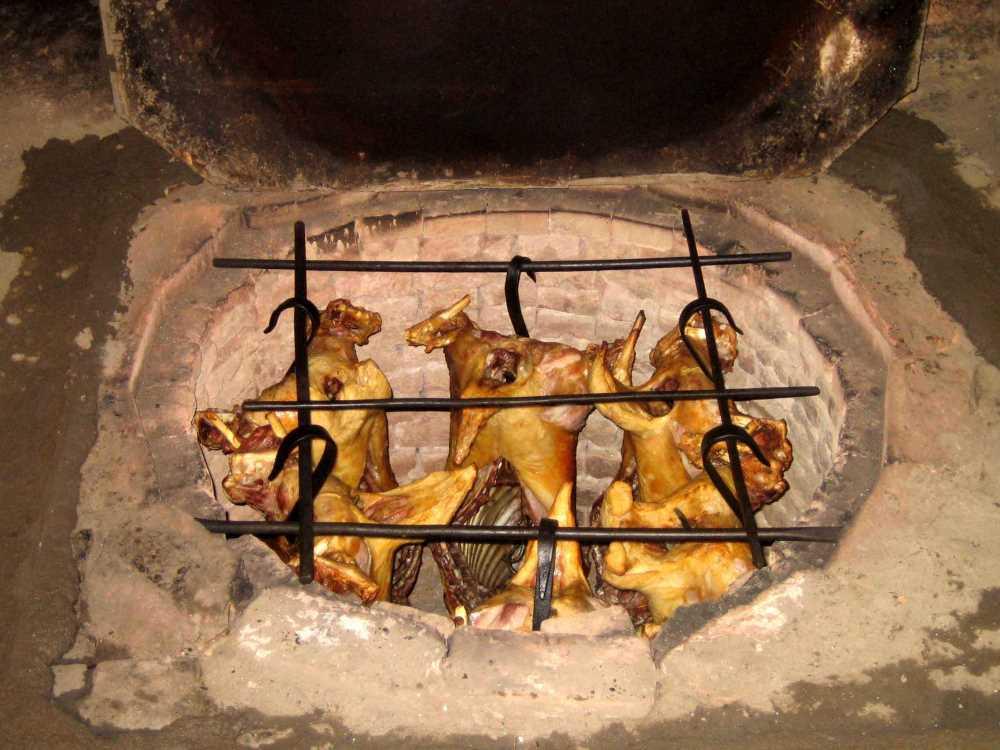
Taşköprü Kuyu Kebabı is a traditional type of kebab unique to the Taşköprü district of Kastamonu. This kebab is prepared by cooking lambs in a pit, where the bricks are heated by a fire made from pine kindling, ensuring even heat distribution. It was registered with a geographical indication in 2012 and recorded as a protected designation of origin.
Taşköprü kuyu kebabı has a history of approximately 160–170 years and was introduced to the region by immigrants who settled in Taşköprü from the Bahçesaray area of Crimea after the Russo-Turkish War of 1877–78. This cooking technique spread across Anatolia through soldiers who came to or departed from the region.
The main elements that distinguish Taşköprü kuyu kebabı from other kebabs are:

Taşköprü Kuyu Kebabı (Kültür Portalı)
The production and sales processes of Taşköprü kuyu kebabı are inspected at least twice a year. These inspections are carried out in cooperation with the Taşköprü Municipality, Kastamonu Governorship, Provincial and District Directorates of Food, Agriculture and Livestock, and the Chamber of Commerce and Industry. Inspections focus on slaughter reports, registration documents, and compliance with hygiene standards. The ultimate inspection authority is the Ministry of Food, Agriculture, and Livestock.
Taşköprü kuyu kebabı is not only a dish but also a cultural heritage of Taşköprü. Especially during holidays, weddings, and special occasions, this kebab symbolizes social solidarity and unity. As one of the key elements of Kastamonu cuisine, it is also a local delicacy that attracts the interest of visitors to the region.
T.C. Kültür ve Turizm Bakanlığı. “Taşköprü Kuyu Kebabı.” Kültür Portalı. Erişim Temmuz 15, 2025. https://www.kulturportali.gov.tr/turkiye/kastamonu/neyenir/taskopru-kuyu-kebabi
Türk Patent ve Marka Kurumu. “Taşköprü Kuyu Kebabı.” Coğrafi İşaretler ve Geleneksel Ürün Adı Bilgi Sistemi. Erişim 2 Ağustos, 2025. https://ci.turkpatent.gov.tr/cografi-isaretler/detay/38069
Kastamonu Belediyesi. “Taşköprü Kuyu Kebabı.” Kastamonu Belediyesi Resmî Web Sitesi. Erişim 15 Temmuz 2025. https://www.kastamonu.bel.tr/taskopru-kuyu-kebabi/

Type(s) | Protected Designation of Origin (Kebab – Traditional Product) | ||||||||
|---|---|---|---|---|---|---|---|---|---|
Registration Number | 197 | ||||||||
Registration Date | 03.07.2012 | ||||||||
Application Number | C2012/081 | ||||||||
Applicant | Taşköprü Municipality | ||||||||
Production Area | Taşköprü District Boundaries (Kastamonu) | ||||||||
No Discussion Added Yet
Start discussion for "Taşköprü Kuyu Kebabı" article
Distinctive Features
Production Process
Inspection
Traditional and Cultural Importance
This article was created with the support of artificial intelligence.