

+2 More

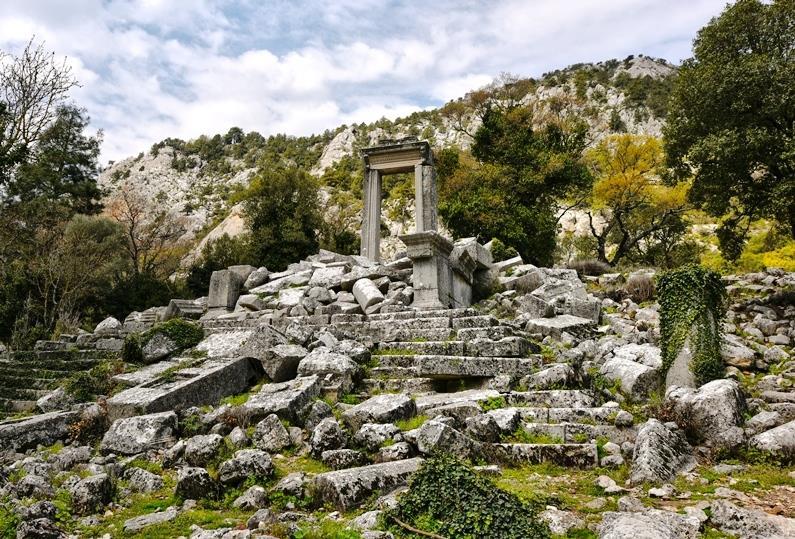
Location | Güllük Mountain Antalya Türkiye | ||||||||
|---|---|---|---|---|---|---|---|---|---|
Ancient Region | Pisidia | ||||||||
Founder(s) | Solymi people (Luwian origin) | ||||||||
Foundation Period | Before the 4th century BCE | ||||||||
Altitude | Between 1000 and 1665 meters | ||||||||
Notable Structures | Theater Agora Gymnasium Bouleuterion Temples | ||||||||
Tomb Types | Sarcophagus Rock-cut tomb Monumental tomb (e.g., Alketas Tomb) | ||||||||
Termessos Ancient City is located in the northwest of Antalya, on the steep slopes of Mount Güllük, and is one of the important cities of the Pisidia region. According to ancient sources, the city was founded by the Solymian people of Luwian origin. Homer mentions the Solymi people in the Iliad, and the city's name first appears as "Termessos" in inscriptions in the Lycian language.
Termessos became particularly famous for its resistance to Alexander the Great's siege in 333 BCE. Despite the efforts of Alexander’s army, the city’s difficult geographical location forced them to abandon the siege, highlighting the military and strategic significance of Termessos.
After Alexander's death, the city came under the control of the Ptolemaic dynasty for a short period, followed by the influence of various Hellenistic dynasties, including the Seleucids and Attalids. In 189 BCE, Termessos was punished by the Roman general Manlius Vulso, but by 71 BCE, the Roman Senate granted the city the status of "free city" (civitas libera et immunis), allowing it to maintain political and administrative independence compared to other cities under Roman rule.
While there are limited findings from the Byzantine period, it is believed that the settlement continued until the 5th century AD. However, due to the drying up of the water sources on Mount Güllük, the city was gradually abandoned and forgotten over time.

Termessos Ancient City-Türkiye Kültür Portalı
Termessos is one of the highest ancient cities in Anatolia, a feature that provided both natural protection and military superiority. The city is surrounded by strong city walls and has numerous cisterns to meet its water needs. The main settlement area is organized with structures connected by terraces and paths.
Key structures in the city include:
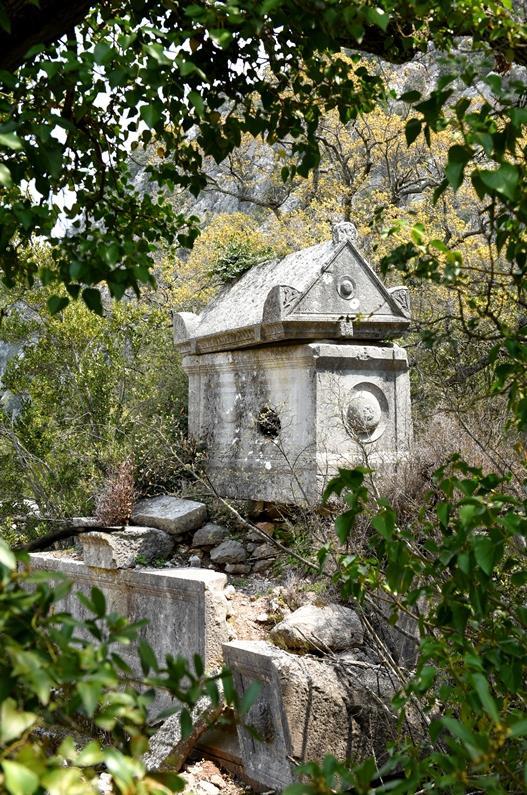
Termessos is also notable for its necropolises. The city contains various types of tombs, including sarcophagi, rock-cut tombs, and monumental mausoleums. Among the tomb inscriptions, one of the most notable is a monumental tomb believed to belong to Alketas, who took refuge in Termessos in 319 BCE and was killed there, being honored by the people.
Additionally, the "Dog Sarcophagus," housed in the Antalya Museum, is an intriguing artifact that provides insights into Termessos' social life and its relationship with animals.
Termessos Ancient City-T.C. Kültür ve Turizm Bakanlığı
Termessos offers a rich epigraphic record, with hundreds of Greek inscriptions that provide valuable information about the city's political structure, citizenship institutions, religious beliefs, family life, and social relations.
No systematic archaeological excavations have been conducted due to the challenging terrain and the city's location within the Mount Güllük National Park, which prioritizes its protection. However, surface surveys and epigraphic studies continue to shed light on the city’s history.
In addition to its archaeological remains, Termessos holds a special place due to its natural environment. It is home to endemic plant species, wildlife (such as mountain goats and eagles), and a protected ecosystem, making it an important area of natural heritage. For this reason, it has been included on the UNESCO World Heritage Tentative List.
Today, Termessos is considered one of the rare ancient cities in Türkiye that harmoniously blends with nature, attracting many local and foreign tourists each year. Visitors can reach the city by walking through the Mount Güllük National Park.
Anadolu Ajansı. “Termessos Antik Kenti Tarih ve Doğa Tutkunlarının Uğrak Noktası Oldu.” Anadolu Ajansı. https://www.aa.com.tr/tr/kultur/termessos-antik-kenti-tarih-ve-doga-tutkunlarinin-ugrak-noktasi-oldu/2904683 (erişim 14 Mayıs 2025).
T.C. Kültür ve Turizm Bakanlığı. “Termessos Antik Kenti.” Türkiye Kültür Portalı. https://www.kulturportali.gov.tr/turkiye/antalya/gezilecekyer/termessos- (erişim 14 Mayıs 2025).
T.C. Kültür ve Turizm Bakanlığı. “Termessos Örenyeri.” Müze Kart. https://muze.gov.tr/muze-detay?sectionId=TRM01&distId=TRM (erişim 14 Mayıs 2025).
T.C. Kültür ve Turizm Bakanlığı. “Termessos.” Antalya İl Kültür ve Turizm Müdürlüğü. https://antalya.ktb.gov.tr/TR-310935/termessos.html (erişim 14 Mayıs 2025).

Location | Güllük Mountain Antalya Türkiye | ||||||||
|---|---|---|---|---|---|---|---|---|---|
Ancient Region | Pisidia | ||||||||
Founder(s) | Solymi people (Luwian origin) | ||||||||
Foundation Period | Before the 4th century BCE | ||||||||
Altitude | Between 1000 and 1665 meters | ||||||||
Notable Structures | Theater Agora Gymnasium Bouleuterion Temples | ||||||||
Tomb Types | Sarcophagus Rock-cut tomb Monumental tomb (e.g., Alketas Tomb) | ||||||||
No Discussion Added Yet
Start discussion for "Termessos Ancient City " article
Topography and Architectural Features
Necropolises and Monumental Tombs
Epigraphic and Archaeological Status
Natural and Cultural Heritage Status
This article was created with the support of artificial intelligence.