


Eric J. Hobsbawm’s The Age of Capital: 1848-1875 analyzes the transformation of Europe during the rise of industrialization and capitalism. Focusing on the economic, social, and political changes that shaped the world after the French Revolution and the 1848 revolutions, the book examines the emergence of capitalism as a global system and the profound transformations it triggered in historical context. Hobsbawm portrays this period not only as an era of economic growth but also as one marked by class struggles and heightened social inequalities.
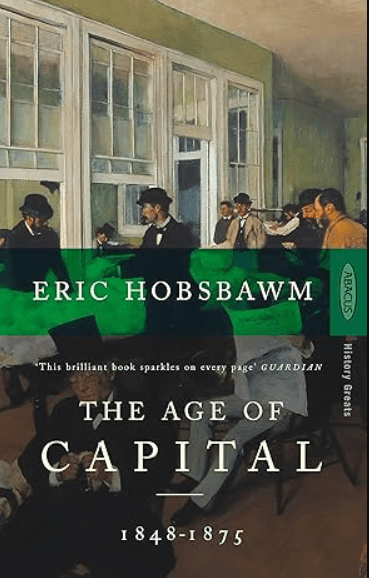
The Age of Capital
During this period, industrial capitalism spread rapidly, bringing about fundamental changes in Europe’s economic structure. Hobsbawm emphasizes the impact of the widespread use of steam power and the expansion of railways, which fueled an increase in industrial production. These transformations in production processes accelerated capital accumulation and centralized the capitalist economy. Hobsbawm provides an in-depth analysis of how industrial capitalism shaped the working class and its broader effects on the social fabric.
The book thoroughly examines Europe’s economic growth in the mid-19th century and its influence on global trade. Hobsbawm pays particular attention to how Britain emerged as the leading economic power during this period. The development of banking, finance, and corporate structures accelerated the integration of international trade. He explains how these developments positioned Europe as the hub of the global economy while asserting economic dominance over its colonies.
Politically, the period following the 1848 revolutions saw a relative era of stability in Europe. However, this stability often masked underlying tensions as ideologies such as liberalism, nationalism, and socialism gained strength. Hobsbawm highlights how the rise of the bourgeoisie coincided with the increasing prominence of the working class's demands. The author examines the socialist movements that emerged during this period as a response to the inequalities created by capitalism, analyzing their impact on modern political ideologies.
Industrialization transformed not only the economic structure but also the social fabric of Europe. Hobsbawm provides a detailed examination of the living conditions of the working class and the class struggles between the bourgeoisie and workers. The book argues that while capitalism spurred economic growth, it also deepened social inequalities. The emergence of trade unions and socialist organizations is identified as one of the defining social dynamics of the period. Hobsbawm evaluates the historical context in which social movements and class consciousness developed.
Hobsbawm explains Europe’s rise as a global power and its consolidation of economic dominance during this period. Industrialization and capital accumulation enabled European states to exert significant influence over Asia, Africa, and the Americas. The book delves into how colonialism became integrated with economic systems and examines the impact of imperialist policies. Hobsbawm characterizes this era as one in which Europe solidified its dominance over the world. The Age of Capital: 1848-1875 offers a detailed exploration of the forces that shaped the modern world, analyzing the economic, social, and political transformations that defined a pivotal period in history. Hobsbawm’s insights provide a comprehensive understanding of capitalism’s ascent and its far-reaching consequences.
Eric Hobsbawm, The Age Of Capital: 1848-1875, Abacus, New York

No Discussion Added Yet
Start discussion for "The Age Of Capital (Book)" article
Content Overview
The Rise of Industrial Capitalism
Economic Growth and Global Integration
Political Stability and Ideological Turmoil
Social Changes and Class Struggles
Europe’s Global Dominance and Colonialism
This article was created with the support of artificial intelligence.