


This article was automatically translated from the original Turkish version.
Fenerbahçe Sports Club does not merely occupy a place in Türkiye’s collective memory as a sports club; it stands as a mighty oak tree shaped by the pain, joy, and love of independence of these lands. Founded in 1907 in the narrow streets of Kadıköy through the efforts of young visionaries such as Enver Yetiker, Nurizade Ziya Bey, Ayetullah Bey, Necip Okaner, and Asaf Beşpınar, the club from its very first day demonstrated its commitment to becoming the people’s team. Over time, yellow and navy ceased to be merely two colors and became an enduring symbol of a nation’s awakening, resistance, and unwavering loyalty to this country and homeland.
A History Lies in the Past - Nesrin Sipahi (FB TV)
The deepest and most meaningful traces of Fenerbahçe’s social identity are undoubtedly hidden in the most difficult years of the empire, during the occupation. While Istanbul was shrouded in darkness and melancholy between 1918 and 1923, Fenerbahçe’s battles against British occupation forces on the pitch made it the “Moral Source of the Captive City”【1】, as published in the press of the time. Every victory during those days was not merely a football achievement but an act of resistance and a story of national struggle that lifted the chests of an occupied people and instilled in them hope for independence. The club’s 1913 constitution, which included the goal of “preparing youth for the struggles of life and the hardships of military campaigns,” confirms that this resilient spirit carried a vision of defending the homeland.
One of the most significant chapters in this glorious and noble history of Fenerbahçe is its bond with Mustafa Kemal Atatürk, the founder of the Republic of Türkiye. Atatürk’s visit to the club’s Kuşdili clubhouse on May 3, 1918, marked a turning point in Fenerbahçe’s history. The lines he wrote in his memoir, praising the club’s work and describing the visit as a duty, have cemented Fenerbahçe’s role in the national struggle. Indeed, Atatürk watched only one club match throughout his life—the honor bestowed upon Fenerbahçe when they took to the pitch in Bursa in 1925. This closeness was far more than mere fandom; it was the unity of a leader and a community striving through sweat on the field to embody and popularize his modernization ideals among the people. Years later, inspired by this memory, the song “O Fenerbahçeli Mustafa Kemal” was composed and became one of the most cherished Fenerbahçe anthems, with countless fans chanting: “Our great ancestor, our great soldier. Our great commander, our great soldier. His love too is Fener, Fener. O Fenerbahçeli Mustafa Kemal.”
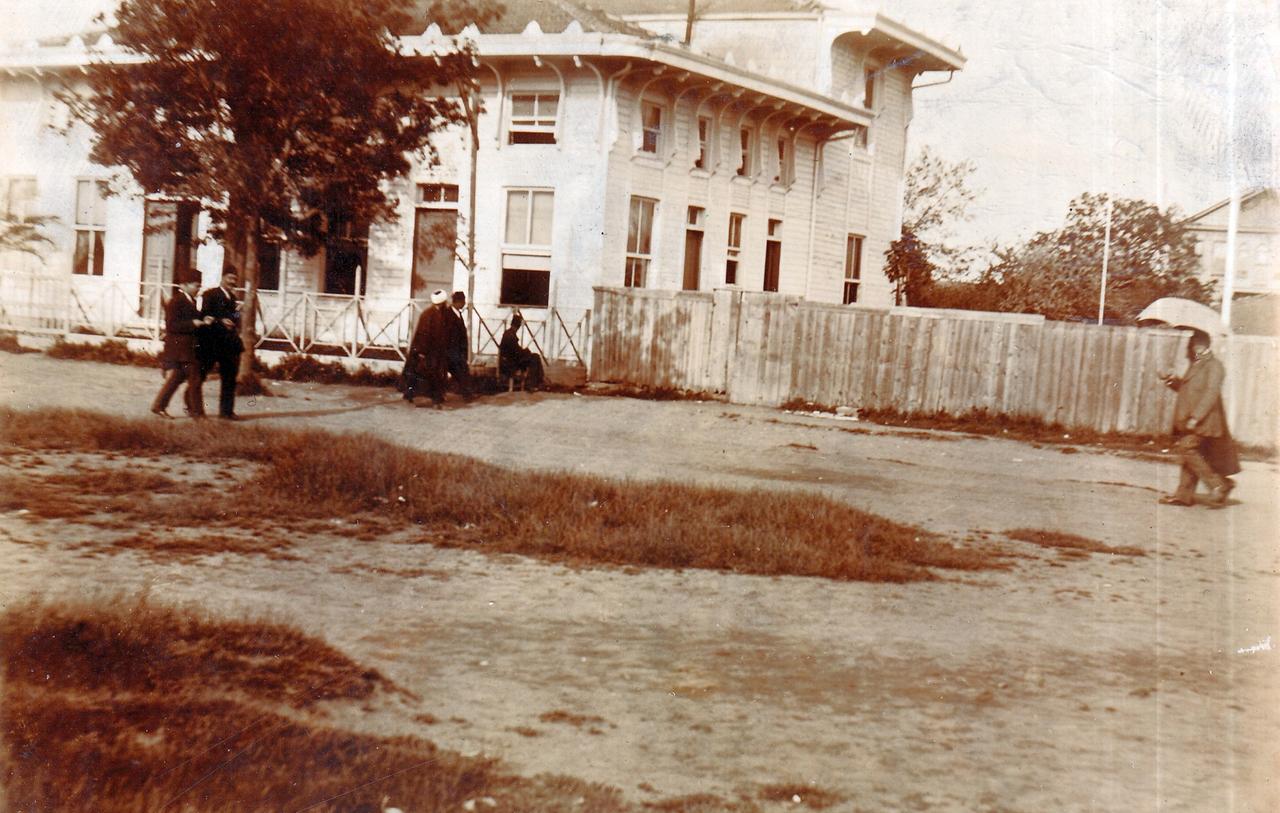
The Kuşdili Fire (Fenerbahçe Org)
The most sorrowful yet most pride-inspiring event that demonstrates why Fenerbahçe truly belongs to the people is the Kuşdili Fire of 1932. On the night of June 5–6, a fire destroyed all of the club’s 25 years of memories, trophies, and documents in a single night. Yet this disaster triggered an unprecedented wave of social solidarity. Atatürk, despite the dire conditions of the time, donated the enormous sum of 500 liras to the club, laying the first stone of its rebirth. Every segment of society, from students to shopkeepers, contributed from their own allowances and earnings to rebuild this home.
This event proclaimed to the entire world that Fenerbahçe’s ownership is not recorded in land registries but resides directly in the hearts of the people.
Today, to say Fenerbahçe is not merely to refer to championships or the trophies displayed in the Fenerbahçe Sports Club Museum. To say Fenerbahçe is to recall its role during the national struggle and the era of fires as the “Moral Source of the Captive City.” It is to remember how it rose from the ashes of fire, built by the people’s donations, and refused to bow under occupation. These colors, which conquered hearts, will continue to beat in rhythm with the heart of the Turkish nation.
A generation grew up singing this anthem, chanting it until their voices were hoarse on the stands. And our team still takes to the pitch with this anthem, wins with this anthem, lifts trophies with this anthem, and even loses with this anthem. No matter what happens, these calls always rise from every tongue:
A history lies in the past. Long live Fenerbahçe!
The heart of the Turk beats with you. Long live Fenerbahçe!
Happy is the one who loves you. Long live Fenerbahçe!【2】
Cabadak, Gözde. "Yayımlanmamış Blog Yazısı." Date Published March 24, 2026.
FB TV. "Mazinde Bir Tarih Yatar | Nesrin Sipahi." YouTube. Accessed March 24, 2026. https://www.youtube.com/watch?v=9nvwOLXDt24&t=91s
Fenerbahçe Org. "Tarihçe." Accessed March 24, 2026. https://www.fenerbahce.org/kulup/tarihce
[1]
Fenerbahçe Org. "History." Accessed March 24, 2026. https://www.fenerbahce.org/kulup/tarihce
[2]
Cabadak, Gözde. "Unpublished Blog Post." Written March 24, 2026.
