+1 More

Location | Beypazarı Türkiye Ankara | ||||||||
|---|---|---|---|---|---|---|---|---|---|
Building | Rüstem Pasha Bath, dating back to the 16th century | ||||||||
Opening Date(s) | 9 June 2012 | ||||||||
Purpose(s) | To document and transmit the Turkish bath and hygiene culture to future generations preserve | ||||||||
Founder(s) | Dr. Sema Demir | ||||||||
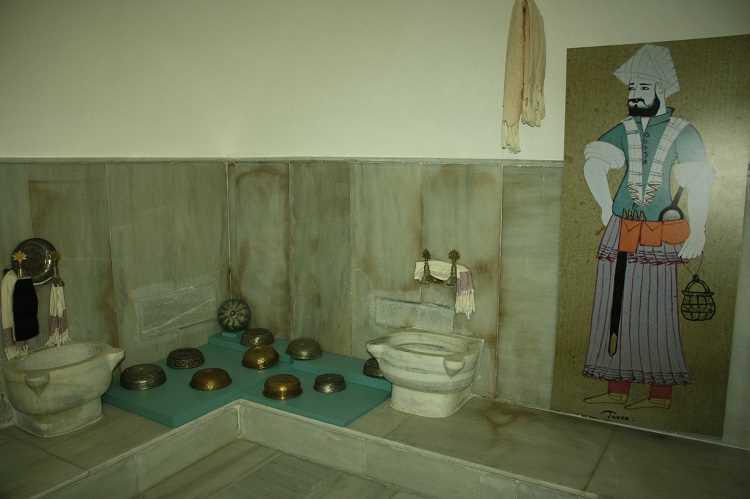
The Turkish Bath Museum is a museum established with the aim of systematically documenting, preserving, and passing on the Turkish bath and cleanliness culture to future generations. The museum is located in Beypazarı district of Ankara, Türkiye, inside the Rüstem Pasha Bath, which was built in the 16th century as an example of classical Ottoman architecture. After restoration works, it was opened to visitors on June 9, 2012. The project was supported by the Ankara Development Agency, with academic consultancy provided by Dr. Sema Demir.

Turkish Bath Museum (Türkiye Kültür Portalı)
The museum building, Rüstem Pasha Bath, is popularly known as the “Pasha Bath.” It is a typical Ottoman town bath, featuring traditional sections such as the soğukluk (cold room), ılıklık (warm room), sıcaklık (hot room), halvet (private bathing area), traşlık (shaving area), külhan (boiler room), and hazne (water reservoir). The bath was restored while preserving its architectural values, and its original structure was adapted for museum use without alteration. In this way, the building serves both as an architectural document and a cultural exhibition space.
The museum exhibits traditional bath textiles (such as peştemal, towels, and scrubs), metal and bone items (e.g., ewers, bowls, soap dishes), personal care tools, and hygiene-related accessories. Most of the collection was acquired through purchases, while valuable pieces have been loaned temporarily by Hamide Özalp, and a few donations are also included. All items have undergone conservation and cataloging by experts.
The museum not only displays objects but also brings traditional ceremonial life and oral culture to life through reenactments. Sections centered around the “bridal bath” theme feature period-appropriate objects and folk verses (manis) supported by theatrical narratives. Figures such as the “hamam mother”, “hamam father”, and “külhanbeyi” are portrayed by museum staff in costume, providing visitors with a visual, auditory, and emotional experience of historical lifestyle.
The museum is organized to accommodate different ages and learning levels. Labels and information panels are prepared in Turkish and English. Thematic tours led by museum experts and guides help visitors better understand cultural heritage. In addition, the museum hosts educational events such as theatrical performances, gallery talks, and conferences. Admission fees are set at an affordable level to encourage accessibility.
While the museum aims for easy accessibility, the historical architecture limits physical access for visitors with mobility impairments. However, visually impaired visitors can explore certain objects through guided tours with tactile experiences. The museum management plans to develop solutions in the future to accommodate all disability groups.
Bülbül, Sevil. “Ankara Türk Hamam Müzesi.” Türkiye Turizm Ansiklopedisi. Accessed August 16, 2025. https://turkiyeturizmansiklopedisi.com/ankara-turk-hamam-muzesi.
T.C. Kültür ve Turizm Bakanlığı. “Beypazarı Türk Hamam Müzesi.” Kültür Portalı. Accessed August 16, 2025. https://www.kulturportali.gov.tr/turkiye/ankara/gezilecekyer/turk-hamam-muzes.
Türk Hamam Müzesi. “Hikâyemiz.” turkhamammuzesi.com.tr. Accessed August 16, 2025. https://turkhamammuzesi.com.tr/hakkimizda/#hikaye.

Location | Beypazarı Türkiye Ankara | ||||||||
|---|---|---|---|---|---|---|---|---|---|
Building | Rüstem Pasha Bath, dating back to the 16th century | ||||||||
Opening Date(s) | 9 June 2012 | ||||||||
Purpose(s) | To document and transmit the Turkish bath and hygiene culture to future generations preserve | ||||||||
Founder(s) | Dr. Sema Demir | ||||||||
No Discussion Added Yet
Start discussion for "Turkish Bath Museum" article
Historical Building and Architectural Features
Collection and Artifacts
Exhibition and Cultural Interpretation
Education and Visitor Experience
Accessibility and Inclusivity
This article was created with the support of artificial intelligence.