+1 More

Kingdom(s) | Plantae (Plants) | ||||||||
|---|---|---|---|---|---|---|---|---|---|
Family | Rosaceae (Rose family) | ||||||||
Protection Status | Vulnerable (VU) | ||||||||
Name(s) | Malus sieversii | ||||||||
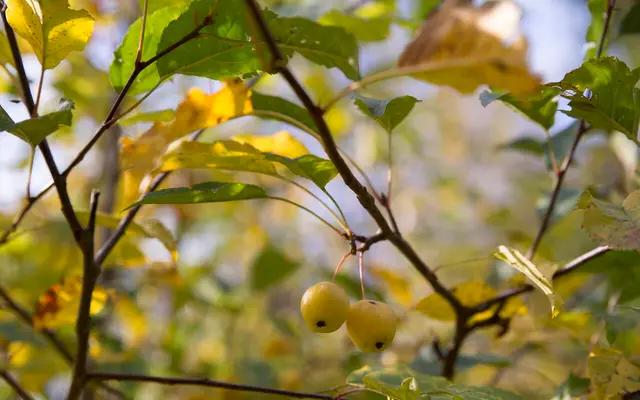
Malus sieversii is a tree species in the Rosaceae family that is believed to be the primary ancestor of domesticated apples (commercial apple varieties). This wild relative, which is of global importance as a genetic resource, is threatened in the wild, and its populations are rapidly declining.
Malus sieversii is taxonomically placed in the Plantae kingdom, Rosaceae family. The scientific name for this species is Malus sieversii M.Roem. The species is native to Central Asia, including Kazakhstan, Kyrgyzstan, Tajikistan, and Uzbekistan. Pure populations also occur in the Ili River Valley in the western part of the Tianshan Mountains in China (Xinjiang) and in the hills of western Junggar. Malus sieversii is found at altitudes ranging from 1,100 to 1,600 meters above sea level.
Malus sieversii is listed as Vulnerable (VU) on the IUCN Red List . The most recent assessment was conducted on 1 March 2007 and published the same year. The species was also classified as Vulnerable (VU) in a previous assessment in 1998. The classification as Vulnerable is based on an estimate that its population has declined by more than 30% over the last three generations. In Kazakhstan, the species' habitat has decreased by more than 70% over the last 30 years, indicating a decline in the species.
Major threats identified for Malus sieversii include habitat loss and degradation due to agricultural expansion and construction. Overgrazing is also a threat. Genetic erosion is also occurring due to grafting of commercial varieties and hybridization. These threats include residential and commercial development, agriculture and aquaculture, particularly annual and perennial non-woody crops, livestock grazing, and wood logging and collection. Hybridization is a continuing genetic problem for the species.
IUCN Red List of Threatened Species. “Leopardus tigrinus – e.T32363A9693009.” IUCN Red List of Threatened Species. Last accessed 25 October 2025. https://www.iucnredlist.org/species/32363/9693009.
Tegtmeier, Richard, Anže Švara, Dilyara Gritsenko, and Awais Khan. "Malus sieversii: a historical, genetic, and conservational perspective of the primary progenitor species of domesticated apples." Horticulture Research 12, no. 1 (2025). Accessed October 25, 2025. https://pmc.ncbi.nlm.nih.gov/articles/PMC11718403/.
Tyto alba. “Malus sylvestris – Miškinė obelis.” Tyto alba. Last access date 25 October 2025. https://tyt.lt/picture/17700/category/986-malus-sylvestris-miskine-obelis.

Kingdom(s) | Plantae (Plants) | ||||||||
|---|---|---|---|---|---|---|---|---|---|
Family | Rosaceae (Rose family) | ||||||||
Protection Status | Vulnerable (VU) | ||||||||
Name(s) | Malus sieversii | ||||||||
No Discussion Added Yet
Start discussion for "Wild Apple (Malus sieversii)" article
Taxonomy and Geographic Distribution
Conservation Status and Threats
This article was created with the support of artificial intelligence.