+2 More

Date(s) | July 11 | ||||||||
|---|---|---|---|---|---|---|---|---|---|
Year of Declaration | 1989 | ||||||||
Declaring Authority | United Nations Development Programme (UNDP) | ||||||||
Purpose(s) | To raise awareness on population and development issues | ||||||||
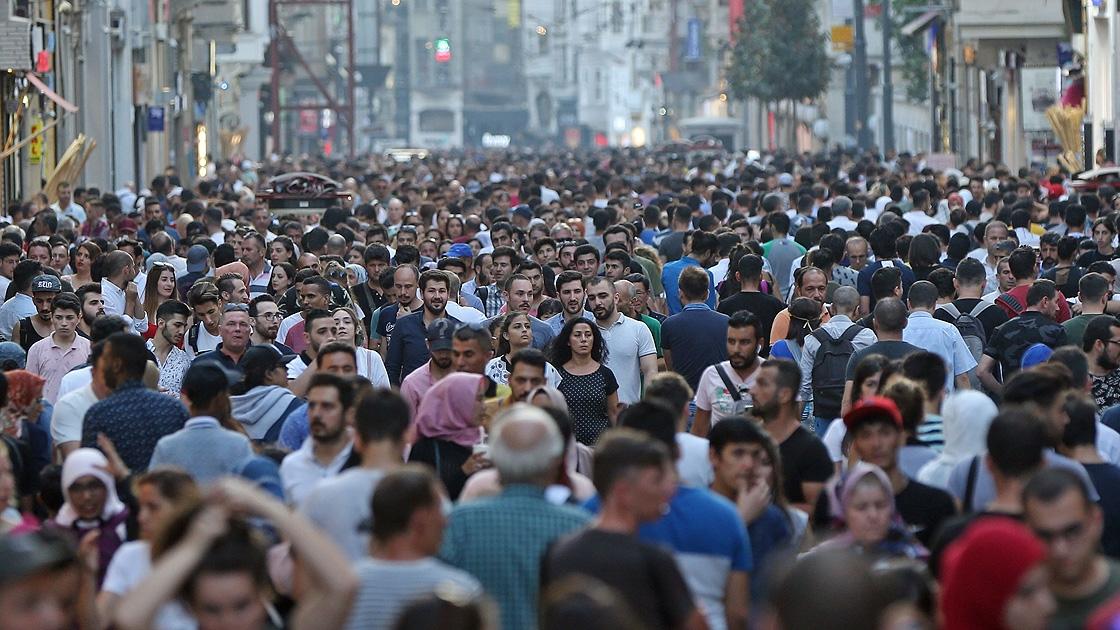
World Population Day is observed annually on July 11 to draw attention to population issues, support reproductive rights, and highlight the relationship between population and development. The day aims to raise awareness of the conditions necessary for individuals to have the number of children they desire and for the youth population to plan for the future.
World Population Day was established on July 11, 1989, by the United Nations Development Programme (UNDP). This date coincided with the period when the world population reached five billion. The day is commemorated annually by the United Nations Population Fund (UNFPA) through awareness and informational campaigns highlighting the importance of population and its role in development.
The purpose of World Population Day is to explain the relationship between population and development, support reproductive rights and the freedom to start a family, and ensure that policymakers make data-driven decisions on population issues. Global and national population changes directly influence health, education, social, and economic policies. Ensuring access to economic and social services for individuals to have the number of children they desire, and creating conditions for the youth population to plan for the future, are among the key objectives.
Historically, the world population grew slowly, but it accelerated significantly over the last two centuries. The population reached 7 billion in 2011, and it is projected to reach approximately 7.9 billion in 2021, 8.5 billion in 2030, 9.7 billion in 2050, and 10.9 billion in 2100. This growth is linked to the increase in individuals of reproductive age, urbanization and migration trends, and changes in fertility rates. The global fertility rate has declined from 5 children per woman in the 1950s to 2.3 children today, and it is expected to reach 2.1 children per woman by 2050, the level required for population stabilization.【1】
According to the UNFPA 2025 report, one in five people worldwide cannot have the number of children they desire due to economic and social barriers. These barriers include financial constraints, lack of job security, housing and childcare costs, difficulty finding a suitable partner, and concerns about the future. Young people are particularly affected by these challenges, facing economic difficulties, gender inequality, limited access to health and education services, climate change, and conflicts, all of which influence their reproductive decisions. 【2】

Population (Anadolu Ajansı)
As of 2024, Türkiye’s population is estimated at 85.7 million, ranking 18th in the world. The country’s share of the global population is 1.0%. The total fertility rate stands at 1.48 children per woman. In Türkiye, the desired number of children per family is approximately twice the number actually born. The child population (ages 0–17) constitutes 25.5% of the total, below the world average but higher than that of EU member states. The youth population (ages 15–24) accounts for 14.9%, slightly below the global average but higher than most EU countries. The elderly population (65 and over) is 10.6%, above the world average but lower than most EU countries. Life expectancy at birth is measured at 74.7 years for men and 80.0 years for women.【3】
According to 2024 data, countries with the highest child population include the Central African Republic, Niger, Somalia, and Mali, while the lowest are South Korea, Japan, and Singapore. The highest youth population is in Syria, the lowest in Monaco. The highest elderly population is in Monaco, the lowest in Qatar. Countries with the highest total fertility rates include Chad, Somalia, and the Democratic Republic of the Congo, and the lowest are South Korea, Singapore, and Ukraine. Within the EU, Bulgaria has the highest fertility rate, while Malta has the lowest.
Life expectancy at birth is highest in Monaco for both men and women, and lowest in Chad for men and Nigeria for women. In Türkiye, life expectancy for both sexes is above the global average, differing from most EU countries.
World Population Day provides governments and policymakers an opportunity to understand factors influencing individuals’ and especially young people’s ability to have their desired number of children and to develop long-term, sustainable solutions. Policies that protect reproductive rights, promote gender equality, and provide economic and social support enable individuals to make informed and free decisions. Key measures include housing support, safe and fair working conditions, parental leave, comprehensive reproductive health services, and access to reliable information. Countries can tailor strategies to their demographic, social, and economic dynamics, supporting family formation while contributing to sustainable development goals.
Historically, population has been considered a vital resource for states. Societies have benefited from population advantages across agricultural production, industrial output, defense, and open-field warfare. Skilled and sufficient human capital allows countries to utilize their existing resources efficiently and effectively, playing a critical role in economic growth and development.
Economic development aims to meet unlimited human needs with limited resources. A country’s development level is determined not only by per capita income but also by the proportion of skilled labor. A well-educated workforce enables significant gains across various sectors. Thus, along with economy and health, education—the foundation for both—is one of the most important infrastructure elements for development. Recently, the proportion of qualified skilled labor within a country has become a key indicator for assessing the level of national development.
KKTC İstatistik Kurumu. "Dünya Nüfus Günü, 2024." Accessed October 25, 2025. https://istatistik.gov.ct.tr/HABERLER/d252nya-n252fus-g252n252-2024
Taş, Hacı Yunus, ve Mahmut, Küçükoğlu. "İktisadi Kalkınmada Nüfus Faktörü." Hak İş Uluslararası Emek ve Toplum Dergisi 14, no. 39 (2025): 189-204. Accessed October 25, 2025. https://dergipark.org.tr/tr/pub/hakisderg/issue/94354/1659258
Türkiye İstatistik Kurumu (TÜİK). "Dünya Nüfus Günü, 2025." July 9, 2025. Accessed October 25, 2025. https://data.tuik.gov.tr/Bulten/Index?p=Dunya-Nufus-Gunu-2025-54078
United Nations Population Fund (UNFPA). "Dünya Nüfus Günü 2025." July 10, 2025. Accessed October 25, 2025. https://turkiye.unfpa.org/tr/news/dunya-nufus-gunu-2025
United Nations. "World Population Day 11 July." Accessed October 25, 2025. https://www.un.org/en/observances/world-population-day
Yıldız Ünal, Arife, ve Selda, Tolmaç. “Türkiye Nüfusu 85 Milyon 372 Bini Geçti.” Anadolu Ajansı, February 6, 2024. Accessed October 25, 2025. https://www.aa.com.tr/tr/gundem/turkiye-nufusu-85-milyon-372-bini-gecti/3128825
Çakır, Merve Özlem, Ayşenur, Sağlam, ve Zeynep, Kahveci. "Türkiye Nüfusunun Yüzde 49,8'ini Kadınlar Oluşturuyor." Anadolu Ajansı, March 7, 2019. Accessed October 25, 2025. https://www.aa.com.tr/tr/turkiye/turkiye-nufusunun-yuzde-49-8ini-kadinlar-olusturuyor/1410206
Çakır, Merve Özlem, ve Erhan Cihan, Ünal. "Türkiye'nin Nüfusu 84 Milyon 680 Bini Geçti." Anadolu Ajansı, February 4, 2022. Accessed October 25, 2025. https://www.aa.com.tr/tr/gundem/turkiyenin-nufusu-84-milyon-680-bini-gecti/2493725
[1]
United Nations Population Fund (UNFPA). "Dünya Nüfus Günü 2025." July 10, 2025. Accessed October 25, 2025. https://turkiye.unfpa.org/tr/news/dunya-nufus-gunu-2025
[2]
United Nations Population Fund (UNFPA). "Dünya Nüfus Günü 2025." July 10, 2025. Accessed October 25, 2025. https://turkiye.unfpa.org/tr/news/dunya-nufus-gunu-2025
[3]
Türkiye İstatistik Kurumu (TÜİK). "Dünya Nüfus Günü, 2025." July 9, 2025. Accessed October 25, 2025. https://data.tuik.gov.tr/Bulten/Index?p=Dunya-Nufus-Gunu-2025-54078

Date(s) | July 11 | ||||||||
|---|---|---|---|---|---|---|---|---|---|
Year of Declaration | 1989 | ||||||||
Declaring Authority | United Nations Development Programme (UNDP) | ||||||||
Purpose(s) | To raise awareness on population and development issues | ||||||||
No Discussion Added Yet
Start discussion for "World Population Day " article
History
Purpose and Significance
Global Population Trends
Population and Demographics in Türkiye
Global and Regional Comparisons
Policy and Sustainable Solutions
Population and Economic Development
This article was created with the support of artificial intelligence.