
+2 More

Date(s) | February 13 | ||||||||
|---|---|---|---|---|---|---|---|---|---|
Declaring Authority | In 2011 by UNESCO member states, In 2012 by United Nations General Assembly | ||||||||
World Radio Day is an international observance celebrated annually on February 13, highlighting the social, cultural, educational, and informational role of radio. Declared by UNESCO, this day aims to strengthen the collaboration and cultural-sharing mission of radio broadcasters and to emphasize the role of radio in informing societies.
Throughout history, radio has sustained its presence by adapting to new technologies. With its low cost, wide accessibility, and ability to provide information during crises, radio has served as a crucial communication tool at both global and local levels. Emerging after the telephone and telegraph in the late 19th century, radio enabled millions of people to access news. Today, integrated with internet radio, podcasts, and smartphone applications, radio has evolved from a medium that communities once listened to collectively into a multi-platform, universally accessible tool. Its affordability and accessibility continue to make radio one of the most powerful communication instruments.
The primary aim of World Radio Day is to highlight radio’s role in promoting democratic participation, freedom of expression, education, and societal discourse. Radio is particularly valuable as an economical communication tool capable of reaching remote and marginalized communities. During crises, it performs a critical function by delivering timely and reliable information, informing the public in emergency situations, and strengthening social cohesion.
The observance of the day seeks to promote international collaboration among radio broadcasters, raise public awareness of radio’s importance, and emphasize its historical, contemporary, and future contributions. UNESCO encourages broadcasters to participate in the celebrations through audio messages in multiple languages, community radio booklets, and free audio archives.
World Radio Day was proclaimed by UNESCO member states in 2011 and recognized as an international day by the United Nations General Assembly in 2012. The date, February 13, coincides with the establishment of the United Nations Radio. This day was chosen to underscore the historical significance of radio and its pioneering role in broadcasting. UNESCO’s resolutions promote participation in World Radio Day at national and international levels by media organizations, civil society institutions, schools, universities, municipalities, and cultural entities. Additionally, the resolutions encourage collaboration and content sharing among radio broadcasters.

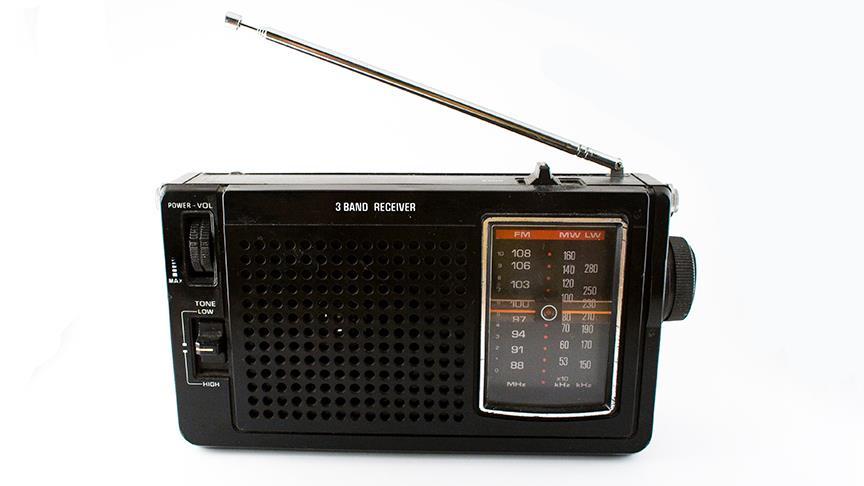
Radio (Anadolu Ajansı)
Radio is one of the most widely consumed and trusted media platforms globally. According to UNESCO, radio has the capacity to reach 95% of the world’s population, serving not only as a vital source of information during crises and emergencies but also as a fundamental tool for education, cultural activities, and public discourse. Due to its low cost and broad reach, radio is particularly important for remote and marginalized communities.
On World Radio Day, UNESCO invites radio broadcasters to participate in the celebrations while promoting the sharing of programs, guests, and audio archives between radio stations. These collaborations strengthen long-term cultural and technical partnerships beyond short-term events. Through audio messages and archival resources, UNESCO ensures that broadcasters can utilize historical and cultural content without copyright restrictions.
Radio has adapted to new technologies, becoming accessible through internet radio, podcasts, and smartphone applications, transforming it into a multi-platform medium. Moreover, radio contributes to societal solidarity through projects designed to provide information during humanitarian and disaster situations.
Each year, World Radio Day focuses on a specific theme. For instance, the 2025 theme is “Radio and Climate Change,” encouraging broadcasters to disseminate scientific information on climate change, promote climate activism, and share solutions. Within this framework, broadcasters are provided with reliable sources of information while maintaining editorial independence, aiming to raise public awareness.
In Türkiye, the UNESCO National Commission promotes the national celebration of World Radio Day. Key participants include radio and media organizations, civil society institutions, schools, universities, municipalities, associations, foundations, museums, and cultural organizations.
Radio broadcasters in Türkiye utilize audio messages and archival resources provided by UNESCO to communicate the purpose of World Radio Day through radio programs, cultural events, and social media. With its low cost and broad accessibility, radio reaches remote and marginalized communities, raises public awareness, and delivers critical information during crises.
World Radio Day in Türkiye is regarded as an opportunity to highlight the historical development, current operation, and societal contributions of radio. Through educational, informative, and cultural broadcasts, radio reaches wide segments of the population, enhancing access to information and promoting cultural participation.
Koca, Büşranur. “Dünya Radyo Günü, ‘Bilgilendiren, Eğlendiren ve Eğiten Bir Yüzyıl’ Temasıyla Kutlanıyor.” Anadolu Ajansı, February 13, 2024. Accessed October 25, 2025. https://www.aa.com.tr/tr/yasam/dunya-radyo-gunu-bilgilendiren-eglendiren-ve-egiten-bir-yuzyil-temasiyla-kutlaniyor/3134636
Süzer, İbrahim. “Radyo Merakı Koleksiyon Sahibi Yaptı.” Anadolu Ajansı, November 30, 2011. Accessed October 25, 2025. https://www.aa.com.tr/tr/pg/foto-galeri/radyo-meraki-koleksiyon-sahibi-yapti/0#
UNESCO Türkiye Millî Komisyonu. “13 Şubat Dünya Radyo Günü.” Accessed October 25, 2025. https://www.unesco.org.tr/Pages/194/32/13%20%C5%9Eubat%20D%C3%BCnya%20Radyo%20G%C3%BCn%C3%BC
UNESCO Türkiye Millî Komisyonu. “13 Şubat: UNESCO Dünya Radyo Günü’nü Kutlamaya Davet Ediyor.” Accessed October 25, 2025. https://www.unesco.org.tr/Pages/195/32/13%20%C5%9Eubat%3A%20UNESCO%20D%C3%BCnya%20Radyo%20G%C3%BCn%C3%BC%E2%80%99n%C3%BC%20Kutlamaya%20Davet%20Ediyor
UNESCO. “World Radio Day 2026.” Accessed October 25, 2025. https://www.unesco.org/en/days/world-radio
Ulucak, Zehra. “Norveç FM Radyo Yayınına Son Veren İlk Ülke Olacak.” Anadolu Ajansı, January 11, 2017. Accessed October 25, 2025. https://www.aa.com.tr/tr/bilim-teknoloji/norvec-fm-radyo-yayinina-son-veren-ilk-ulke-olacak/724804
United Nations. “World Radio Day 13 February.” Accessed October 25, 2025. https://www.un.org/en/observances/radio-day

Date(s) | February 13 | ||||||||
|---|---|---|---|---|---|---|---|---|---|
Declaring Authority | In 2011 by UNESCO member states, In 2012 by United Nations General Assembly | ||||||||
Radio and Technological Development
Purpose and Significance of the Day
History
Global Significance of Radio and World Radio Day
World Radio Day in Türkiye
This article was created with the support of artificial intelligence.