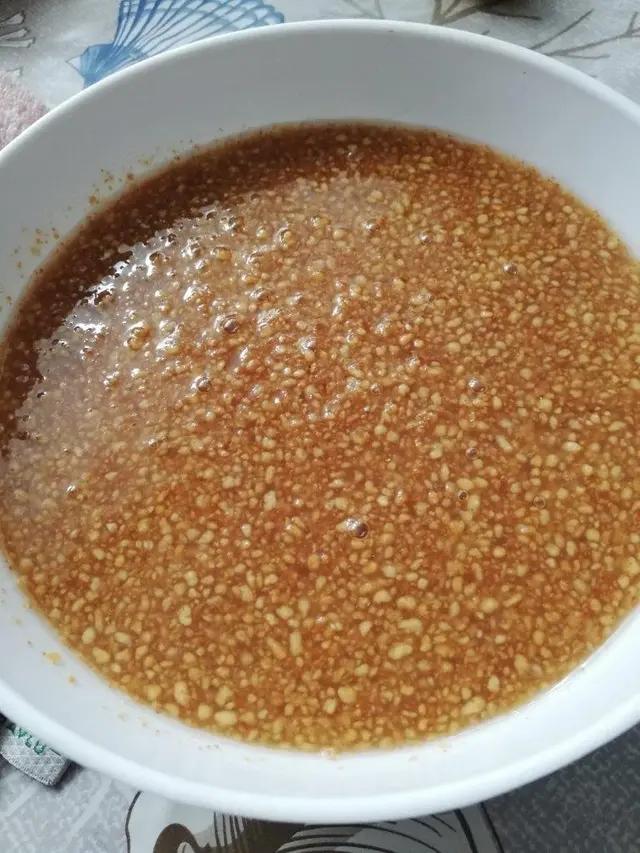



Yağlılar Basma Halva is a traditional type of halva produced in the İvrindi district of Balıkesir, Türkiye, and is registered as a geographical indication. The product was protected with a Protected Geographical Indication on February 27, 2023. Its name derives both from Yağlılar Neighborhood, where production first began, and from the shaping of the dough through a sieve.
Yağlılar Basma Halva holds a significant place in the culinary culture of İvrindi. It is traditionally prepared collectively for social events such as weddings, engagements, and circumcision ceremonies. For these events, the dry form of the halva is prepared one week before the celebration, and it is soaked in syrup and served on the event day. The method of preparation and the consumption ritual make this halva not only a dessert but also a carrier of local culture.
The main ingredients of the halva are full-fat milk, wheat flour, white sugar, and water. Full-fat milk is preferably sheep’s milk, though cow’s milk may be used seasonally. No additional fat is added due to the use of full-fat milk. The production process consists of four main stages:
The milk is boiled, preferably in copper cauldrons over a wood fire, while wheat flour is gradually added. It is stirred with a wooden spatula to achieve a smooth, thick mixture without lumps. The mixture is then spread on cloths to rest.
The rested dough is passed through a sieve with 3–4 mm openings. The resulting granules are sun-dried and sifted again. This sieving process is repeated only once.
The dried granules are roasted over glowing wood fire in special cauldrons called “black cauldrons,” where the halva develops its characteristic aroma.
The roasted halva is spread on trays and allowed to rest. For each kilogram of dry halva, a syrup prepared with 1 kg sugar and 1,000 liters of water is poured over it while warm. Once the halva absorbs the syrup, it is ready for serving.
The dry form can be stored for up to one year at -16 to -20 °C. The syruped form is consumed fresh and can be stored at room temperature for 4–5 days.
All stages of production for Yağlılar Basma Halva must take place within the boundaries of the İvrindi district. The product’s historical origin, production technique, and cultural context are directly linked to this geographic area.
Compliance with registration conditions is monitored by a four-member inspection board formed under the coordination of İvrindi Municipality. The board includes experts from the municipality, district agricultural directorate, public education center, and the head of Yağlılar Neighborhood. Inspections are conducted at least once a year, with additional checks carried out if necessary or upon complaint.

No Discussion Added Yet
Start discussion for "Yağlılar Basma Halva" article
Historical and Cultural Background
Production Characteristics
Dough Preparation
Syrup Soaking
Storage Conditions
Geographical Boundaries and Production Connection
Inspection Process
This article was created with the support of artificial intelligence.