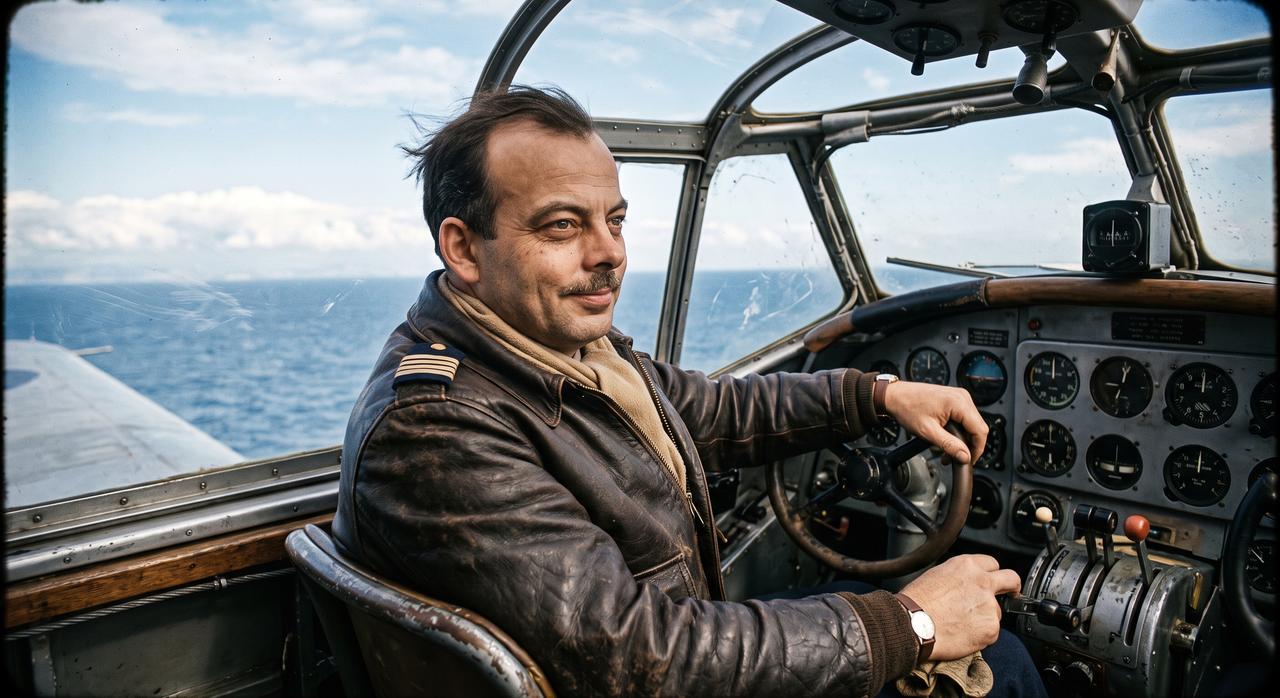




Antoine de Saint-Exupéry
One of the deepest, most poetic, and most imaginative voices in world children’s literature, French writer, poet, and pilot Antoine de Saint-Exupéry has left an indelible mark on the hearts of millions of children and adults through his masterpiece Le Petit Prince (The Little Prince). He was not only a courageous aviator who explored the boundless sky but also a storyteller with a philosopher’s soul, questioning human values such as love, friendship, responsibility, and loyalty. Through his drawings, childlike curiosity, and the idea that “what is essential is invisible to the eye,” he created a unique and timeless universe in literature.
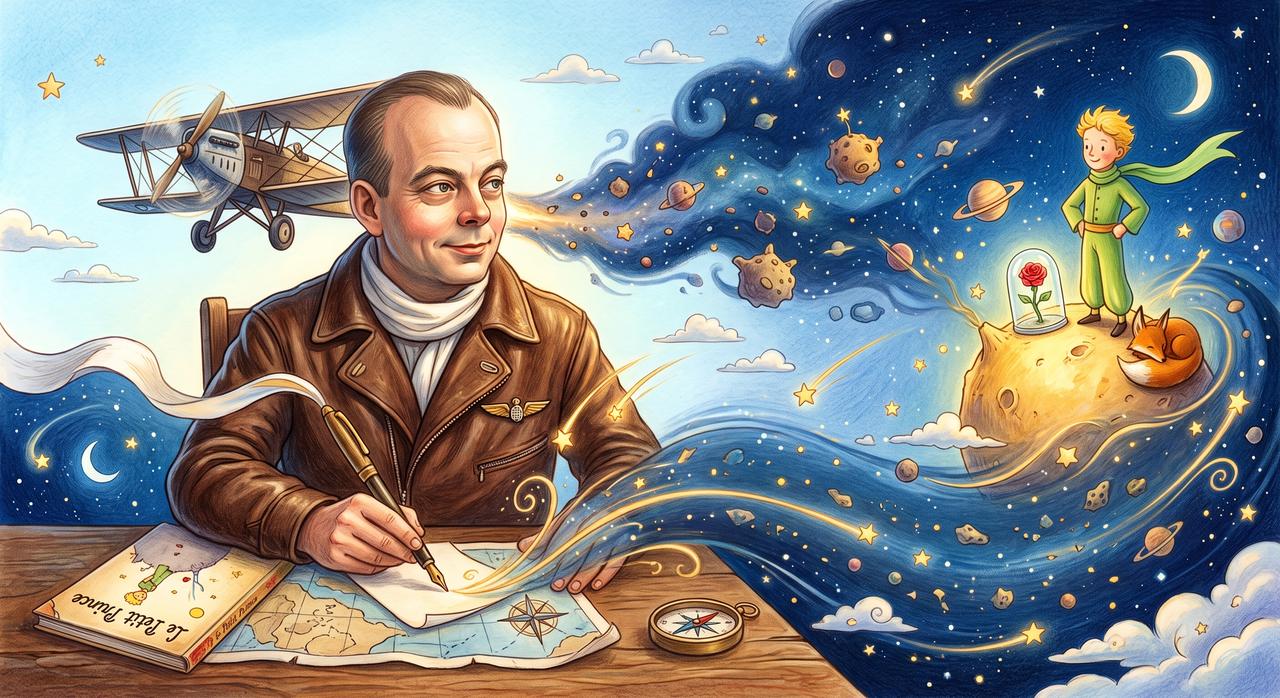
The adventure world designed by Antoine de Saint-Exupéry for children. (Generated by artificial intelligence)
A Passionate Childhood for the Sky and Stories
Antoine de Saint-Exupéry was born on 29 June 1900 in Lyon, France, into a noble but modest family. Despite losing his father at an early age, he grew up in a loving and creatively nurturing environment thanks to his mother’s passion for art and literature. As a child, he developed a deep fascination for writing poetry, drawing pictures, and designing mechanical inventions. At the age of twelve, he flew in an airplane for the first time, an experience that transformed his life. This early love for the sky would later become both his passionate career as a pilot and a rich source of inspiration for his works.
From the Clouds to World Literature
During his youth, Saint-Exupéry studied architecture but fulfilled his dream by receiving flight training during his military service, becoming one of the pioneers of civil aviation. He flew night mail routes between France, North Africa, and South America. His perilous journeys across the Sahara Desert and flights over the Andes Mountains inspired profound reflections on human endurance and solitude. In 1935, while attempting to break the Paris-Saigon flight record, he was forced to land in the Sahara Desert and endured a grueling struggle for survival amid days of thirst and desert mirages. This unforgettable desert experience became the central setting of his later work, Le Petit Prince. While in exile in New York during the Second World War, he wrote and painted watercolors for Le Petit Prince, which was published in 1943.
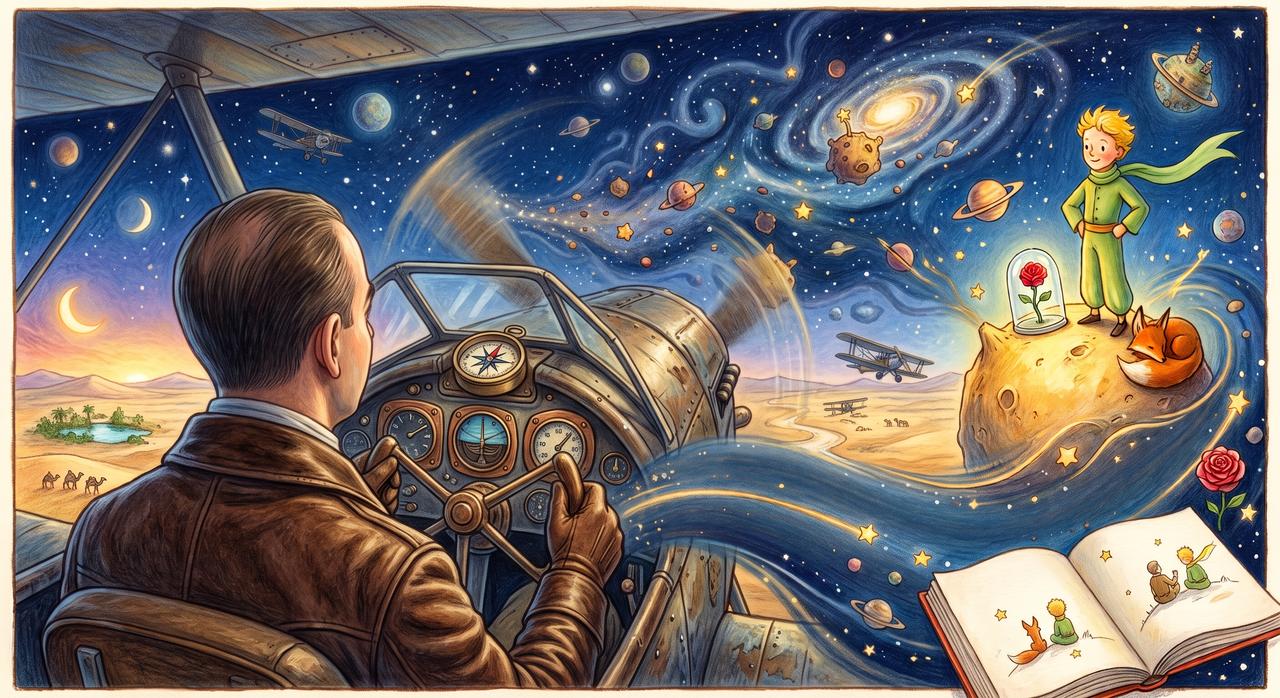
Yazarın "Küçük Prens" adlı eserini simgeleyen bir görsel. (Yapay zeka ile oluşturulmuştur)
Childlike Curiosity, Love, and Human Values
While criticizing the rigid, superficial, and number-obsessed world of adults, Saint-Exupéry championed the boundless imagination and innocent perspective of children. He emphasized that growing up should not distance people from their true selves and stressed that love and friendship demand effort.
He summarized the guiding principle of his works, which serve as a compass for children and those who have not lost the child within them:
- Effort and Responsibility: Through the Little Prince, who takes time for and protects his rose, he taught that attachment and “taming” something bring responsibility.
- Feeling the Invisible: Against the materialistic and superficial view of adults, he argued that true values can only be perceived with the heart.
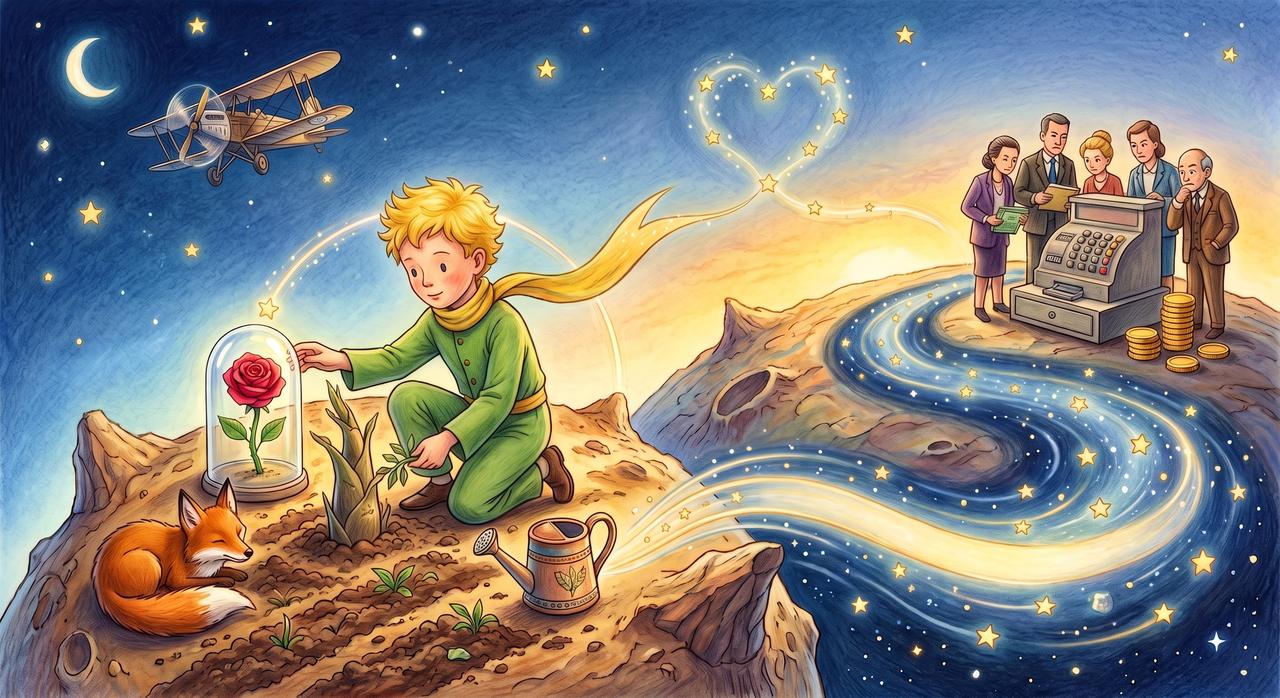
Values explored in the works of Antoine de Saint-Exupéry. (Generated by artificial intelligence)
Some of His Works
- Le Petit Prince (The Little Prince - 1943): A timeless fable recounting the encounter between a pilot stranded in the desert and a little prince who has left his planet to explore the universe, and the bonds he forms with a fox, a rose, and the inhabitants of different planets.
- Vol de Nuit (Night Flight - 1931): A compelling novel portraying the courage, sense of duty, and struggle against nature faced by pilots delivering night mail across South America.
- Terre des hommes (Wind, Sand and Stars - 1939): A profound autobiographical work inspired by his crash experience in the Sahara Desert and his years in aviation, exploring friendship, human dignity, and harmony with nature.
- Pilote de guerre (Flight to Arras - 1942): A powerful narrative of his dangerous reconnaissance missions during the Second World War and the human resilience he witnessed in the face of war’s devastation.