




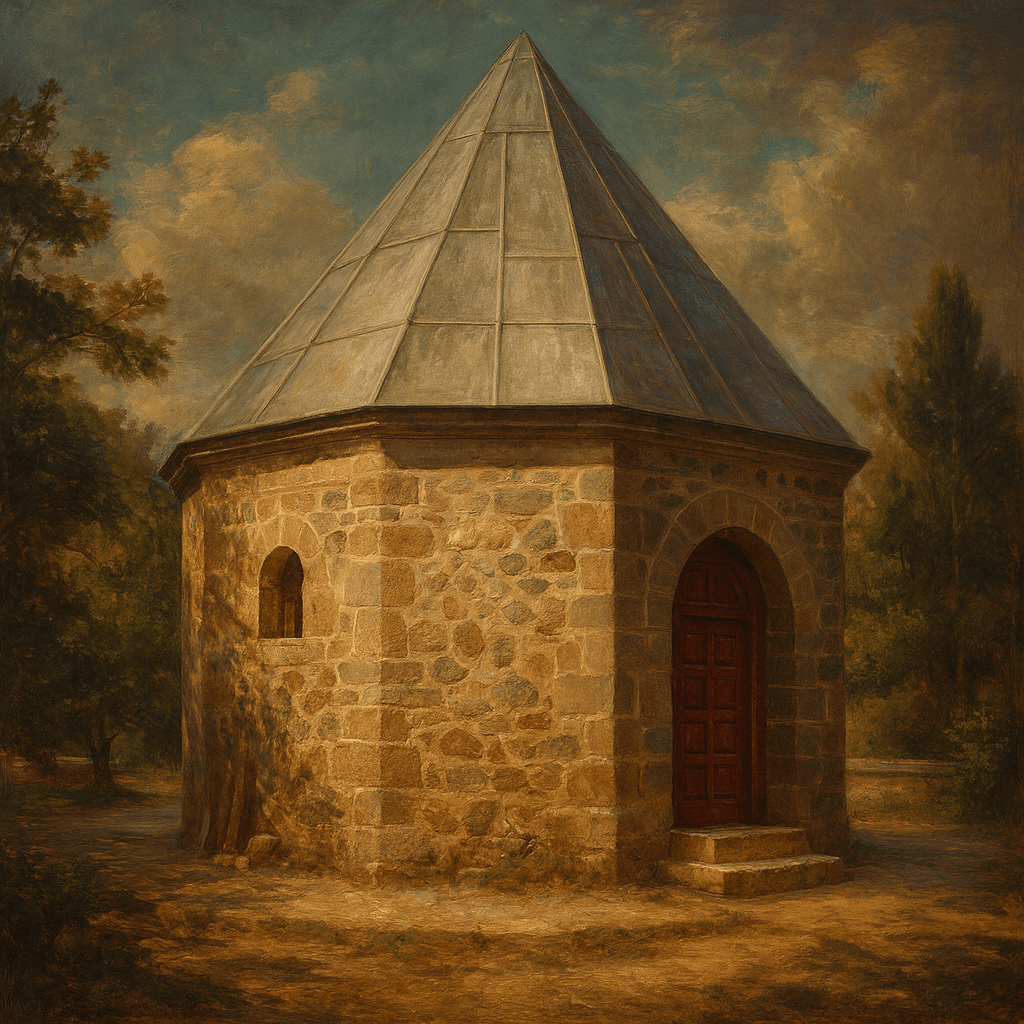
Koyunbaba Mausoleum
The Koyunbaba Mausoleum is situated on a elevated hilltop in the Osmancık district of Çorum. It was constructed during the reign of Ottoman Sultan Bayezid II in 1469. Koyunbaba is among the most revered and beloved saints of Anatolia, who in his time guided people and left deep impressions on their hearts. Today, the türbe continues to attract both visitors and researchers.

(Generated by Artificial Intelligence)
Structure of the Türbe
The türbe has an octagonal plan and is crowned with a conical roof. The entrance section features a two-part revak, a covered passageway. The two colored doors in its garden are adorned with floral motifs. The main door is a double wooden door crafted using deep carving techniques. This door is currently preserved at the Çorum Museum.
Who Was Koyunbaba?
It is said that Koyunbaba was one of the successors of Hacı Bektaş-ı Veli. In Evliya Çelebi’s Seyahatname, Koyunbaba is described as “the pilgrimage site of the entire world and the leader of the saints.” It is well known that Koyunbaba was especially beloved in Anatolia, particularly in Çorum and its surroundings.

(Generated by Artificial Intelligence)
The Türbe Through Time
When it was built, the türbe was not a standalone structure. It was accompanied by a mosque, an imaret (soup kitchen), a guesthouse, and rooms for dervishes. Over time, only the foundations of these auxiliary buildings remain. The türbe was restored in 1989 by the General Directorate of Foundations.