




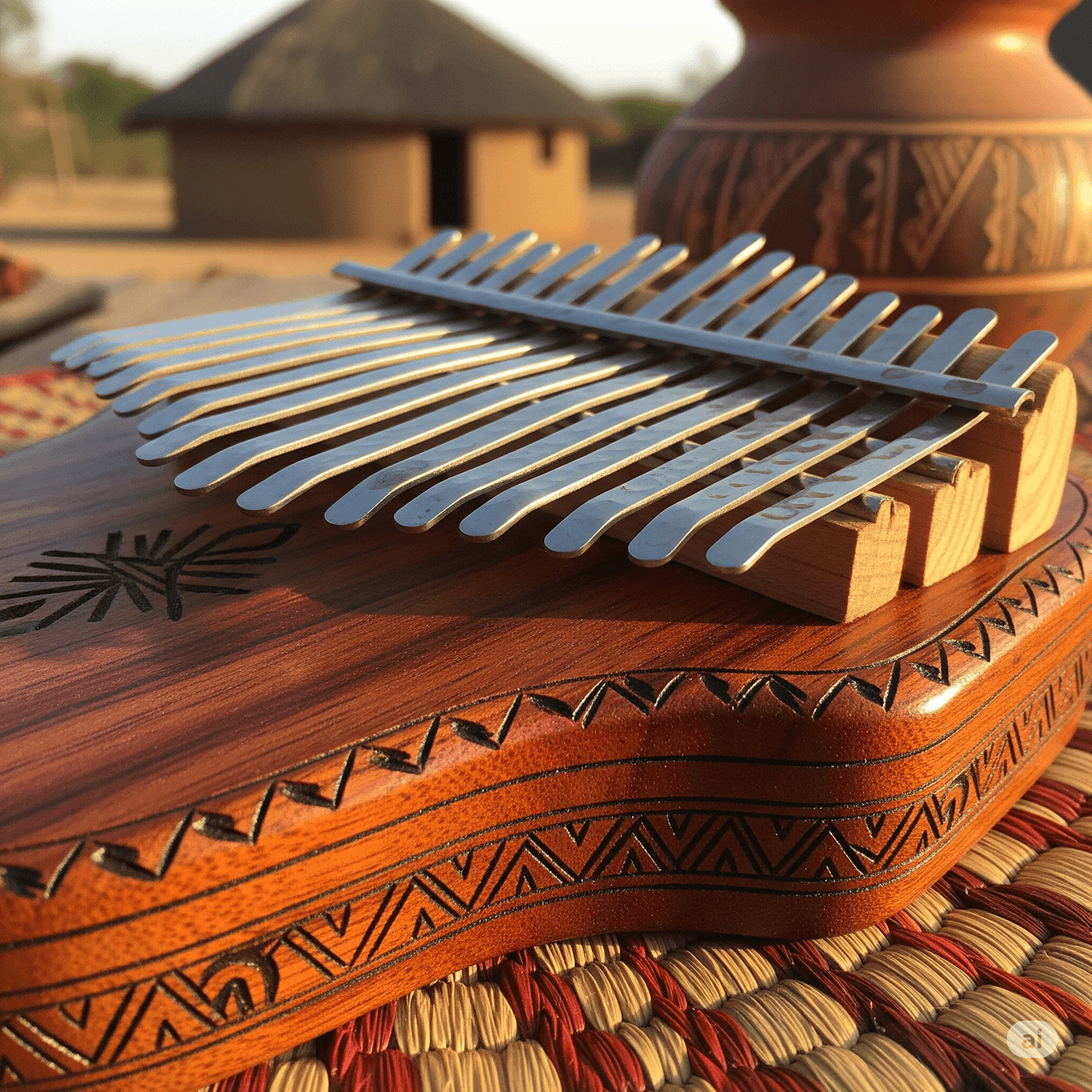
What is a Kalimba?
The kalimba is a small musical instrument played with the fingers. It is typically made of wood and features metal keys (tines). Music is produced by pressing these keys with the thumbs. The kalimba is sometimes called the “thumb piano.” Its sound is soft, calming, and melodic.

(Generated by Artificial Intelligence.)
Where Does the Kalimba Come From?
The kalimba is an African instrument. Its original name is “mbira.” Hundreds of years ago, people in Africa used this instrument in rituals, celebrations, and special occasions. Today, it has become a widely recognized and beloved instrument around the world.
How Is It Played?
To play the kalimba, only the thumbs are needed. When the keys are pressed, the wooden body vibrates and produces sound. Learning the notes is easy, and even young children can play it comfortably. For this reason, it is widely used in music education.
What Can Be Learned with the Kalimba?
The kalimba teaches children rhythm, melody, and a love for music. It develops hand-eye coordination and builds confidence because it is easy to play and children can produce songs quickly. It is frequently used in schools and private lessons.

(Generated by Artificial Intelligence.)
Modern Kalimbas: Hyper-Kalimba
Scientists are exploring new ways to enhance the kalimba. Through a project called “Hyper-Kalimba,” versions with digital features have been developed. These kalimbas include lights, sensors, and computer connectivity. As a result, the kalimba is transforming into a technological instrument!
Why Is the Kalimba Special?
The kalimba is a small, portable, and calming instrument. It is cherished by both children and adults. People of all ages can easily make music with it. Additionally, its production using eco-friendly materials makes it an environmentally conscious instrument.