


Karbon nanotüpler (CNT'ler), karbon atomlarının altıgen örgüyle düzenlenerek tüp şeklinde yapı oluşturduğu nanomalzemelerdir. Grafenin tek boyutlu tüplere dönüştürülmesiyle oluşurlar ve son derece dayanıklı, hafif ve iletken olmalarıyla dikkat çekerler.
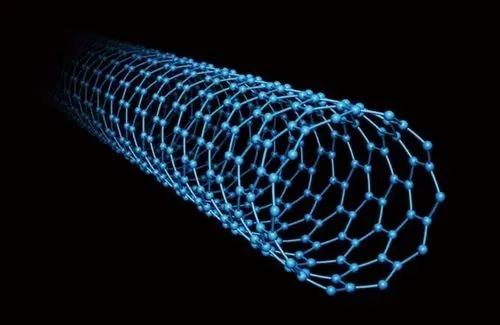
Karbon nanotüpler (CNT'ler), 1.000.000 dan daha büyük bir uzunluk-çap oranına sahip olabilen bir nano yapıya sahip karbon allotroplarıdır. Ark deşarjı, lazer ablasyonu ve kimyasal buhar biriktirme dahil olmak üzere büyük miktarlarda nanotüp üretmek için teknikler geliştirilmiştir. Son birkaç yıldaki gelişmeler, nanomalzemelerin, özellikle biyomedikal görüntüleme, ilaç dağıtımı, biyo algılama ve fonksiyonel nanokompozitlerin tasarımında potansiyel olarak devrim yaratan etkisini göstermiştir. Japon bilim adamı Iijima tarafından 1991 yılında keşfedilen karbon nanotüpler (CNT'ler), günümüzde akademik araştırmalarda en ilgi çeken araştırma konularından birisi olarak görülmektedir. Karbon nanotüpler karbon allotroplarıdır ve grafenden oluşmaktadırlar. Çapları nanometre ölçeğinde ve uzunlukları birkaç milimetreye kadar ulaşabilen silindirik tüpler şeklindedirler. Oldukça küçük boyutları ve kütleleri, güçlü mekanik dayanımları ve yüksek elektriksel ve termal iletkenlikleri ile sıradışı yapısal, mekanik ve elektronik özelliklere sahiptirler.
Özellikle karbon nanotüplerin insan vücudunda kullanımı ve çevresel etkileri hâlâ araştırma konusudur. Ancak nano ölçekli mühendislikte devrim niteliğinde bir malzeme olarak kabul edilirler.
Karbon nanotüpler (CNT'ler), yalnızca bir dizi yoğunlaştırılmış benzen halkası içinde boru şeklinde bir yapıya sarılmış karbon atomlarından oluşur. Bu yeni yapay nanomateryal, sırasıyla hem doğal sp2 (düzlemsel) hem de sp3 (kübik) formlar olan grafit ve elmas ile birlikte karbonun üçüncü allotropik formu olan fullerenler ailesine aittir. Katman sayısına bağlı olarak, CNT'lerin yapıları tek duvarlı karbon nanotüpler (SWCNT'ler) ve çok duvarlı karbon nanotüpler (MWCNT'ler) olmak üzere başlıca iki başlıkta incelenmektedir.
SWCNT'ler, çapları 0,4 ile 2 nm arasında değişen tek bir grafen silindirinden oluşur ve genellikle altıgen sıkı paketler halinde oluşur. MWCNT'ler, her biri içi boş bir çekirdeği çevreleyen tek bir grafen tabakasından oluşan iki veya daha fazla koaksiyel silindirden oluşur. MWCNT'lerin dış çapı 2 ila 100 nm arasında değişirken, iç çap 1-3 nm aralığındadır ve uzunlukları 0,2 ila birkaç μm arasındadır. Kimyasal reaktivite açısından, karbon naotüpler uçlar ve yan duvarlar olmak üzere iki bölgeye ayrılabilir: Sahip oldukları benzersiz özellikleri kontrol eden önemli bir faktör, grafen tabakasının bir tüpe sarılmasının neden olduğu çeşitli tübül yapılarından gelir.
SWCNT'ler ve MWCN'lerin üretimi için genel olarak kullanılan üç ana teknik şunlardır: Ark Boşaltma Yöntemi, Lazer Ablasyon yöntemi (grafit kullanılarak) ve Kimyasal Buhar Biriktirme yöntemleridir. Hazırlandıktan sonra, karbon nanotüpler, sentez sırasında katalizör olarak kullanılan amorf karbon, fullerenler ve geçiş metalleri gibi safsızlıkları ortadan kaldırmak için asitle muamele, yüzey aktif madde destekli sonikasyon veya hava oksidasyon prosedürü ile saflaştırmaya tabi tutulur.
Günümüzde karbon nanotüpler, dünya çapında birçok kimya firması tarafından standart kalitede sentezlenmekte ve pazarlanmaktadır.
Agnihotri, S., Rostam-Abadi, M., & Rood, M. (2006). Adsorption site analysis of impurity
embedded single-walled carbon nanotube bundles. Carbon, 44, 2376-2383. doi:10.1016/j.carbon.2006.05.038
Ahangari, A., Raygan, S., & Ataie, A. (2019). Capabilities of nickel zinc ferrite and its
nanocomposite with CNT for adsorption of arsenic (V) ions from wastewater. Journal
of Environmental Chemical Engineering, 7(6), 103493.
doi:https://doi.org/10.1016/j.jece.2019.103493
Alothman, Z. (2012). A Review: Fundamental Aspects of Silicate Mesoporous Materials.
Materials, 5, 2874-2902. doi:10.3390/ma5122874
Baikousi, M., Georgiou, Y., Daikopoulos, C., Bourlinos, A. B., Filip, J., Zbořil, R., . . .
Karakassides, M. A. (2015). Synthesis and characterization of robust zero valent
iron/mesoporous carbon composites and their applications in arsenic removal.
Carbon, 93, 636-647. doi:https://doi.org/10.1016/j.carbon.2015.05.081
Bethune, D., Kiang, C. H., De Vries, M., Gorman, G., Savoy, R., Vazquez, J., & Beyers, R.
(1993). Cobalt-catalysed growth of carbon nanotubes with single-atomic-layer walls.
Nature, 363(6430), 605-607.
Bower, C., Zhou, O., Zhu, W., Werder, D., & Jin, S. (2000). Nucleation and growth of carbon
nanotubes by microwave plasma chemical vapor deposition. Applied Physics Letters,
77(17), 2767-2769.
Burghard, M. (2005). Electronic and vibrational properties of chemically modified single-
wall carbon nanotubes. Surface Science Reports - SURF SCI REP, 58.
doi:10.1016/j.surfrep.2005.07.001
C. Yu, J., Zhang, L., & Yu, J. (2002). Rapid synthesis of mesoporous TiO 2 with high
photocatalytic activity by ultrasound-induced agglomeration. New Journal of
Chemistry, 26(4), 416-420. doi:10.1039/B109173E
Cao, H., Zhu, M., Li, Y., Liu, J., Ni, Z., & Qin, Z. (2007). A highly coercive carbon nanotube
coated with Ni0.5Zn0.5Fe2O4 nanocrystals synthesized by chemical
precipitation–hydrothermal process. Journal of Solid State Chemistry, 180(11), 3218-
3223. doi:https://doi.org/10.1016/j.jssc.2007.08.018
Chen, C.-H., Liang, Y.-H., & Zhang, W.-D. (2010). ZnFe2O4/MWCNTs composite with
enhanced photocatalytic activity under visible-light irradiation. Journal of Alloys and
Compounds, 501(1), 168-172. doi:https://doi.org/10.1016/j.jallcom.2010.04.072
Chen, W., Pan, X., Willinger, M.-G., Su, D. S., & Bao, X. (2006). Facile Autoreduction of
Iron Oxide/Carbon Nanotube Encapsulates. Journal of the American Chemical
Society, 128(10), 3136-3137. doi:10.1021/ja056721l
da Silva, S. S., Chiavone-Filho, O., de Barros Neto, E. L., & Foletto, E. L. (2015). Oil
removal from produced water by conjugation of flotation and photo-Fenton processes.
Deng, J., Shao, Y., Gao, N., Tan, C., Zhou, S., & Hu, X. (2013). CoFe2O4 magnetic
nanoparticles as a highly active heterogeneous catalyst of oxone for the degradation of
diclofenac in water. Journal of Hazardous Materials, 262, 836-844.
doi:https://doi.org/10.1016/j.jhazmat.2013.09.049
Ebbesen, T. W., & Ajayan, P. M. (1992). Large-scale synthesis of carbon nanotubes. Nature,
358(6383), 220-222.
Ebbesen, T. W., Lezec, H. J., Hiura, H., Bennett, J. W., Ghaemi, H. F., & Thio, T. (1996).
Electrical conductivity of individual carbon nanotubes. Nature, 382(6586), 54-56.
doi:10.1038/382054a0
Eder, D. (2010). Carbon Nanotube−Inorganic Hybrids. Chemical Reviews, 110(3), 1348-
1385. doi:10.1021/cr800433k
Ensafi, A. A., & Allafchian, A. R. (2013). Multiwall carbon nanotubes decorated with
NiFe2O4 magnetic nanoparticles, a new catalyst for voltammetric determination of
cefixime. Colloids and Surfaces B: Biointerfaces, 102, 687-693.
doi:https://doi.org/10.1016/j.colsurfb.2012.09.037
Fan, S., Chapline, M. G., Franklin, N. R., Tombler, T. W., Cassell, A. M., & Dai, H. (1999).
Self-oriented regular arrays of carbon nanotubes and their field emission properties.
Science, 283(5401), 512-514.
Fu, F., & Wang, Q. (2011). Removal of heavy metal ions from wastewaters: A review.
Journal of Environmental Management, 92(3), 407-418.
doi:https://doi.org/10.1016/j.jenvman.2010.11.011
Gabal, M. A., Al-Harthy, E. A., Al Angari, Y. M., & Abdel Salam, M. (2014). MWCNTs
decorated with Mn0.8Zn0.2Fe2O4 nanoparticles for removal of crystal-violet dye
from aqueous solutions. Chemical Engineering Journal, 255, 156-164.
doi:https://doi.org/10.1016/j.cej.2014.06.019
Gavalas, V. G., Andrews, R., Bhattacharyya, D., & Bachas, L. G. (2001). Carbon Nanotube
Sol−Gel Composite Materials. Nano Letters, 1(12), 719-721. doi:10.1021/nl015614w
Gharagozlou, M. (2009). Synthesis, characterization and influence of calcination temperature
on magnetic properties of nanocrystalline spinel Co-ferrite prepared by polymeric
precursor method. Journal of Alloys and Compounds, 486(1-2), 660-665.
Hirlekar, R., Yamagar, M., Garse, H., Vij, M., & Kadam, V. (2009). Carbon nanotubes and
its applications: a review. Asian journal of pharmaceutical and clinical research, 2(4), 17-27.
Houshiar, M., Zebhi, F., Razi, Z. J., Alidoust, A., & Askari, Z. (2014). Synthesis of cobalt
ferrite (CoFe2O4) nanoparticles using combustion, coprecipitation, and precipitation
methods: A comparison study of size, structural, and magnetic properties. Journal of
Magnetism and Magnetic Materials, 371, 43-48. doi:https://doi.org/10.1016/j.jmmm.2014.06.059
Hu, L., Hecht, D. S., & Grüner, G. (2010). Carbon Nanotube Thin Films: Fabrication,
Properties, and Applications. Chemical Reviews, 110(10), 5790-5844. doi:10.1021/cr9002962
Huang, Q., & Gao, L. (2003). Immobilization of rutile TiO2 on multiwalled carbon
nanotubes. Journal of Materials Chemistry, 13(7), 1517-1519. doi:10.1039/B303857B
Huixia, F., Baiyi, C., Deyi, Z., Jianqiang, Z., & Lin, T. (2014). Preparation and
characterization of the cobalt ferrite nano-particles by reverse coprecipitation. Journal
of Magnetism and Magnetic Materials, 356, 68-72. doi:https://doi.org/10.1016/j.jmmm.2013.12.033
Hutlova, A., Niznansky, D., Rehspringer, J.-L., Estournès, C., & Kurmoo, M. (2003). High
Coercive Field for Nanoparticles of CoFe2O4 in Amorphous Silica Sol–Gel.
Advanced Materials, 15(19), 1622-1625. doi:https://doi.org/10.1002/adma.200305305
Iijima, S. (1991). Helical microtubules of graphitic carbon. Nature, 354(6348), 56-58. doi:10.1038/354056a0
Iijima, S., & Ichihashi, T. (1993). Single-shell carbon nanotubes of 1-nm diameter. Nature,
363(6430), 603-605.
Jauhar, S., Kaur, J., Goyal, A., & Singhal, S. (2016). Tuning the properties of cobalt ferrite: a
road towards diverse applications. RSC Advances, 6(100), 97694-97719.
doi:10.1039/C6RA21224G
Jiang, L. Q., & Gao, L. (2005). Fabrication and characterization of ZnO-coated multi-walled
carbon nanotubes with enhanced photocatalytic activity. Materials Chemistry and
Physics, 91, 313-316. doi:10.1016/j.matchemphys.2004.11.028
Jitianu, A., Cacciaguerra, T., Benoit, R., Delpeux, S., Béguin, F., & Bonnamy, S. (2004).
Synthesis and characterization of carbon nanotubes–TiO2 nanocomposites. Carbon,
42(5), 1147-1151. doi:https://doi.org/10.1016/j.carbon.2003.12.041
Journet, C., Maser, W., Bernier, P., Loiseau, A., de La Chapelle, M. L., Lefrant, d. S., . . .
Fischer, J. (1997). Large-scale production of single-walled carbon nanotubes by the
electric-arc technique. Nature, 388(6644), 756-758.
Kafshgari, L. A., Ghorbani, M., & Azizi, A. (2017). Fabrication and investigation of
MnFe2O4/MWCNTs nanocomposite by hydrothermal technique and adsorption of
cationic and anionic dyes. Applied Surface Science, 419, 70-83. doi:https://doi.org/10.1016/j.apsusc.2017.05.019
Kalam, A., Al-Sehemi, A. G., Assiri, M., Du, G., Ahmad, T., Ahmad, I., & Pannipara, M.
(2018). Modified solvothermal synthesis of cobalt ferrite (CoFe2O4) magnetic
nanoparticles photocatalysts for degradation of methylene blue with H2O2/visible
light. Results in Physics, 8, 1046-1053. doi:https://doi.org/10.1016/j.rinp.2018.01.045
Kanagesan, S., Hashim, M., Tamilselvan, S., Alitheen, N. B., Ismail, I., Syazwan, M., &
Zuikimi, M. M. M. (2013). Sol-gel auto-combustion synthesis of cobalt ferrite and it's
cytotoxicity properties. Digest Journal of Nanomaterials and Biostructures, 8(4),
1601-1610. Retrieved from https://www.scopus.com/inward/record.uri?eid=2-s2.0-
84887420343&partnerID=40&md5=059a58cdfc64f41b55ec67d1cec19e20
Karcıoğlu Karakaş, Z., (2015) Nikel Ferrit (NiFe 2 O 4 ) Nanopartiküllerin Sentezi ve
Atıksuların Arıtımında kullanılabilirliğinin İncelenmesi, Atatürk Üniversitesi, Fen
Bilimleri Enstitüsü, Çevre Mühendisliği Anabilim Dalı, 205, Erzurum
Karakas, İ. H. (2021). The effects of fuel type onto the structural, morphological, magnetic
and photocatalytic properties of nanoparticles in the synthesis of cobalt ferrite
nanoparticles with microwave assisted combustion method. Ceramics International,
47(4), 5597-5609. doi:https://doi.org/10.1016/j.ceramint.2020.10.144
Karcioğlu Karakaş, Z., Boncukcuoğlu, R., & Karakaş, İ. H. (2018). Antimony removal from
aqueous solutions using magnetic nickel ferrite (NiFe2O4) nanoparticles. Separation
Science and Technology, 54(7), 1141-1158. doi:10.1080/01496395.2018.1532962
Kesarla, M. K., Fuentez-Torres, M. O., Alcudia-Ramos, M. A., Ortiz-Chi, F., Espinosa-
González, C. G., Aleman, M., . . . Godavarthi, S. (2019). Synthesis of g-C3N4/N-
doped CeO2 composite for photocatalytic degradation of an herbicide. Journal of
Materials Research and Technology, 8(2), 1628-1635. doi:https://doi.org/10.1016/j.jmrt.2018.11.008
Khan, L., Younas, M., Khan, S., & Zia ur rehman, M. (2020). Synthesis and Characterization
of CoFe2O4/MWCNTs Nanocomposites and High Frequency Analysis of Their
Dielectric Properties. Journal of Materials Engineering and Performance, 251-258. doi:10.1007/s11665-020-04572-9
Kim, H., & Sigmund, W. (2002). Zinc oxide nanowires on carbon nanotubes. Applied Physics
Letters, 81(11), 2085-2087. doi:10.1063/1.1504877
Kočí, K., Matějů, K., Obalová, L., Krejčíková, S., Lacný, Z., Plachá, D., . . . Šolcová, O.
(2010). Effect of silver doping on the TiO2 for photocatalytic reduction of CO2.
Applied Catalysis B: Environmental, 96(3), 239-244. doi:https://doi.org/10.1016/j.apcatb.2010.02.030
Kočí, K., Obalová, L., & Lacný, Z. (2008). Photocatalytic reduction of CO2 over TiO2 based
catalysts. Chemical Papers, 62, 1-9. doi:10.2478/s11696-007-0072-x
Kočí, K., Reli, M., Kozák, O., Lacny, Z., Placha, D., Praus, P., & Obalová, L. (2011).
Influence of reactor geometry on the yield of CO2 photocatalytic reduction. Catalysis
Today, 176, 212-214. doi:10.1016/j.cattod.2010.12.054
Kong, J., Cassell, A. M., & Dai, H. (1998). Chemical vapor deposition of methane for single-
walled carbon nanotubes. Chemical physics letters, 292(4-6), 567-574.
Köseoğlu, Y., Alan, F., Tan, M., Yilgin, R., & Öztürk, M. (2012). Low temperature
hydrothermal synthesis and characterization of Mn doped cobalt ferrite nanoparticles.
Ceramics International, 38(5), 3625-3634. doi:https://doi.org/10.1016/j.ceramint.2012.01.001
Kroto, H. W., Heath, J. R., O’Brien, S. C., Curl, R. F., & Smalley, R. E. (1985). C60:
Buckminsterfullerene. Nature, 318(6042), 162-163.
Kumar, M., & Ando, Y. (2003). Camphor–a botanical precursor producing garden of carbon
nanotubes. Diamond and related materials, 12(3-7), 998-1002.
Liu, Q., Sun, J., Long, H., Sun, X., Zhong, X., & Xu, Z. (2008). Hydrothermal synthesis of
CoFe2O4 nanoplatelets and nanoparticles. Materials Chemistry and Physics, 108(2-
3), 269-273. doi:10.1016/j.matchemphys.2007.09.035,
Sing, K. S. W., Everett, D. H., Haul, R. A. W., Moscou, L., Pierotti, R. A., Rouquerol, J., &
Siemieniewska, T. (2008). Reporting Physisorption Data for Gas/Solid Systems. In
Handbook of Heterogeneous Catalysis (pp. 1217-1230).
Singh, C., Bansal, S., & Singhal, S. (2014). Synthesis of Zn1−xCoxFe2O4/MWCNTs
nanocomposites using reverse micelle method: Investigation of their structural,
magnetic, electrical, optical and photocatalytic properties. Physica B: Condensed
Matter, 444, 70-76. doi:https://doi.org/10.1016/j.physb.2014.03.033
Singhal, S., Sharma, R., Singh, C., & Bansal, S. (2013). Enhanced Photocatalytic
Degradation of Methylene Blue Using ZnFe2O4/MWCNT Composite Synthesized by
Hydrothermal Method. Indian Journal of Materials Science, 2013, 356025.
doi:10.1155/2013/356025
Su, M., Zheng, B., & Liu, J. (2000). A scalable CVD method for the synthesis of single-
walled carbon nanotubes with high catalyst productivity. Chemical physics letters,
322(5), 321-326.
Sun, C., Liu, Y., Ding, W., Gou, Y., Xu, K., Xia, G., & Ding, Q. (2013). Synthesis and
Characterization of Superparamagnetic CoFe2O4/MWCNT Hybrids for Tumor-
Targeted Therapy. Journal of Nanoscience and Nanotechnology, 13(1), 236-241.
doi:10.1166/jnn.2013.6711
Sunny, A., K.S, A. K., Karunakaran, V., Aathira, M., Mutta, G. R., Maiti, K. K., . . .
Vasundhara, M. (2018). Magnetic properties of biocompatible CoFe2O4
nanoparticles using a facile synthesis. Nano-Structures and Nano-Objects, 16, 69-76.
doi:10.1016/j.nanoso.2018.04.003
Thang, P. D., Rijnders, G., & Blank, D. H. A. (2005). Spinel cobalt ferrite by
complexometric synthesis. Journal of Magnetism and Magnetic Materials, 295(3),
251-256. doi:10.1016/j.jmmm.2005.01.011
Thess, A., Lee, R., Nikolaev, P., Dai, H., Petit, P., Robert, J., . . . Rinzler, A. G. (1996).
Crystalline ropes of metallic carbon nanotubes. Science, 273(5274), 483-487.
Toksha, B. G., Shirsath, S. E., Patange, S. M., & Jadhav, K. M. (2008). Structural
investigations and magnetic properties of cobalt ferrite nanoparticles prepared by
sol–gel auto combustion method. Solid State Communications, 147(11), 479-483.
doi:https://doi.org/10.1016/j.ssc.2008.06.040
Varma, P. C. R., Manna, R. S., Banerjee, D., Varma, M. R., Suresh, K. G., & Nigam, A. K.
(2008). Magnetic properties of CoFe2O4 synthesized by solid state, citrate precursor
and polymerized complex methods: A comparative study. Journal of Alloys and
Compounds, 453(1-2), 298-303. doi:10.1016/j.jallcom.2006.11.058
Vlazan, P., & Stoia, M. (2018). Structural and magnetic properties of CoFe2O4
nanopowders, prepared using a modified Pechini method. Ceramics International,
44(1), 530-536. doi:10.1016/j.ceramint.2017.09.207
Wang, W., Li, Q., & Chang, C. (2011). Effect of MWCNTs content on the magnetic and
wave absorbing properties of ferrite-MWCNTs composites. Synthetic Metals, 161(1),
44-50. doi:https://doi.org/10.1016/j.synthmet.2010.10.032

Henüz Tartışma Girilmemiştir
"Karbon Nano Tüpler" maddesi için tartışma başlatın
Karbon Nanotüpler (CNT'ler)
Karbon Nanotüplerin Özellikleri
Karbon Nanotüplerin Kullanım Alanları
Karbon Nanotüplerin Yapısal Özellikleri
Karbon Nanotüplerin Üretim Yöntemleri
Bu madde yapay zeka desteği ile üretilmiştir.