
This article was automatically translated from the original Turkish version.
+2 More
Yapay Zeka Tarafından Oluşturulmuştur.
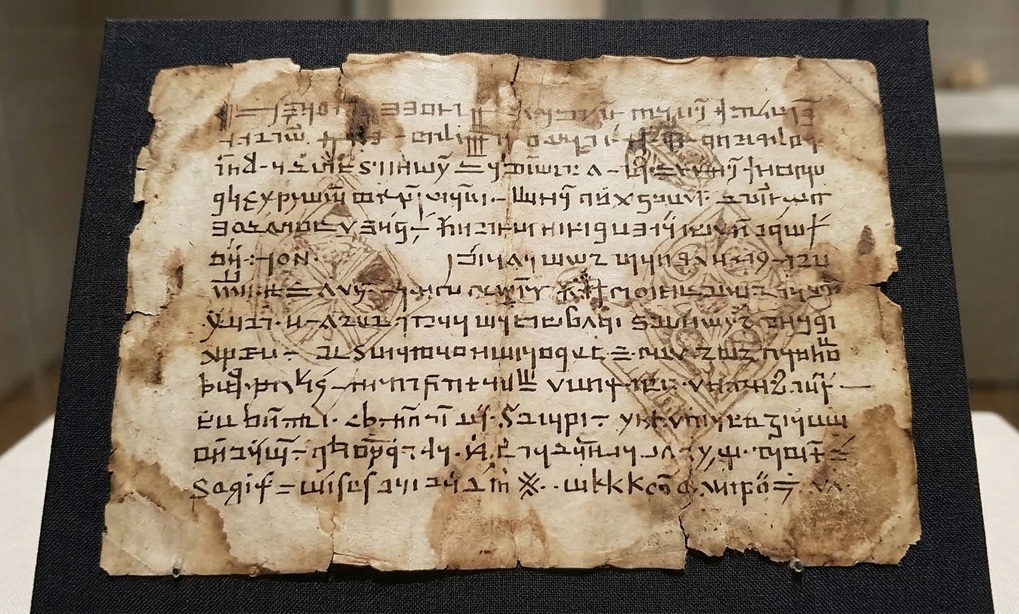
Asemic writing is a form of writing that does not adhere to traditional semantic, syntactic, or grammatical rules; its meaning is left open to the viewer’s perception and interpretation. This hybrid art form, situated at the intersection of literature and visual art, relies primarily on aesthetic, semi-calligraphic drawings and visual sign systems rather than letters or words.【1】
This structure, shaped by the culture or individual with which it interacts, is not subject to the complete set of rules of any language. The term “asemic” is derived from the Greek root “asemos,” meaning absence of sign. The term is also related to “asemia” in medical literature, which describes the inability of patients to understand, construct, or use communicative symbols. In philosophical contexts, Jacques Derrida employed the adjective “asemic” to describe the spaces between words in texts.【2】
The term “asemic writing” was introduced into literature in 1997 by visual poets Tim Gaze and Jim Leftwich to describe experimental and semi-calligraphic writings. Although the term itself is recent, the practice of writing that is non-verbal or resists semantic conventions has a much older history.【3】

Asemic Writing (Generated by Artificial Intelligence)
Chinese, Japanese, Korean, Vietnamese, and Arabic calligraphy form the historical foundations and sources of inspiration for asemic writing. In East Asia during the 8th century, calligraphers such as Zhang Xu and Huai Su produced free-form handwritten works that conveyed inner energy and abstract expression without any intent to be read. In Islamic calligraphy, the practice known as “meşk”—where calligraphers use pen or brush as a physical and spiritual extension to produce calligraphic sketches—constitutes some of the earliest historical examples of this form.【4】
In Western culture, the Voynich Manuscript, believed to date from the 16th century and containing entirely fictional language and illustrations, is one of the most well-known historical precursors of asemic texts. Similarly, Luigi Serafini’s 1976–1978 work Codex Seraphinianus, constructed with a fictional language and surreal imagery, aims to draw the reader into a mental space independent of linguistic symbols.【5】
The modern art movement’s rejection of industrialization and traditional conventions facilitated the resurgence of asemic forms in the 20th century. Art movements such as Futurism, Dadaism, and Letrism (Letterism) prepared the ground for this form by pushing typography beyond the boundaries of legibility.

Artistic Context and Experimental Typography (Generated by Artificial Intelligence)
During this period, Man Ray designed wordless poems composed of dashes, while Henri Michaux created wordless alphabets he called “internal movements,” blending Surrealism with Asian calligraphy.【6】
Although asemic writing lacks syntactic or letter-based semantics, it is not meaningless. By presenting the reader with an interpretive void, it halts the traditional act of reading as an information-seeking reflex and transforms the text into a sensory and visual exploration.【7】
Evaluated within Charles Sanders Peirce’s semiotic distinction between type and token, asemic works eliminate the dependency on standard letter forms (morphemes). Since every perceived visual structure inevitably generates an interpretant in the mind, no visual form can be entirely “signless.” These forms, upon perception, trigger a direct visual/emotional channel (Sign 1) independently of the verbal/textual channel (Sign 2), offering an aesthetic expression. For this reason, the term “nonverbal writing” has also been proposed in the literature to describe these forms. Just as legibility renders the bodily and visual materiality of the word invisible, asemic writing suspends legibility to reveal the rhythmic, tactile materiality of the letter and the gesture of writing.【8】
Asemic writing, transcending the boundaries of different languages and cultures, has become a global and international practice. Contemporary artists across various disciplines integrate this method into their works.

Psychological and Therapeutic Creative Process (Generated by Artificial Intelligence)
The use of asemic writing in clinical psychology, particularly within the context of expressive art therapy, has been the subject of research. Traditional “talk therapy” and semantically expressive “expressive writing” exercises have been found to be challenging and cognitively exhausting for individuals with alexithymia or schizophrenia spectrum disorders who struggle to define and articulate their emotions.【10】
In contrast, asemic writing does not require grammatical knowledge, linguistic proficiency, or the ability to articulate emotions through concrete words. The individual achieves emotional expression directly through hand movements and scribbles. As a closed and personal process with no obligation for interpersonal communication or decryption, this technique has become a highly safe self-help mechanism. Clinical observations indicate that because asemic writing does not require direct confrontation with trauma, it produces immediate relaxation and temporary mood improvement after the writing process.【11】
[1]
Deniz Erten ve Mehtap Uygungöz, "Yazının Amacında Aykırı Bir Üslup: Asemik Yazı," Sanat & Tasarım Dergisi 13, no. 2 (2023): 1,4,5. Erişim 10 Mart 2026.https://dergipark.org.tr/tr/pub/sanattasarim/article/1403850
Olga Wyszyńska, "Asemic writing - pisanie asemiczne," Forum Poetyki, no. 39 (2025): 1. Erişim 10 Mart 2026.https://www.researchgate.net/publication/394212897_Asemic_writing_-_pisanie_asemiczneAsemic_writing
[2]
Olga Wyszyńska, "Asemic writing - pisanie asemiczne," Forum Poetyki, no. 39 (2025): 3, Erişim 10 Mart 2026.https://www.researchgate.net/publication/394212897_Asemic_writing_-_pisanie_asemiczneAsemic_writing
Deniz Erten ve Mehtap Uygungöz, "Yazının Amacında Aykırı Bir Üslup: Asemik Yazı," Sanat & Tasarım Dergisi 13, no. 2 (2023): 5. Erişim 10 Mart 2026.https://dergipark.org.tr/tr/pub/sanattasarim/article/1403850
[3]
Olga Wyszyńska, "Asemic writing - pisanie asemiczne," Forum Poetyki, no. 39 (2025): 2. Erişim 10 Mart 2026.https://www.researchgate.net/publication/394212897_Asemic_writing_-_pisanie_asemiczneAsemic_writing
Deniz Erten ve Mehtap Uygungöz, "Yazının Amacında Aykırı Bir Üslup: Asemik Yazı," Sanat & Tasarım Dergisi 13, no. 2 (2023): 4,6. Erişim 10 Mart 2026.https://dergipark.org.tr/tr/pub/sanattasarim/article/1403850
[4]
Deniz Erten ve Mehtap Uygungöz, "Yazının Amacında Aykırı Bir Üslup: Asemik Yazı," Sanat & Tasarım Dergisi 13, no. 2 (2023): 6,7. Erişim 10 Mart 2026.https://dergipark.org.tr/tr/pub/sanattasarim/article/1403850
[5]
Deniz Erten ve Mehtap Uygungöz, "Yazının Amacında Aykırı Bir Üslup: Asemik Yazı," Sanat & Tasarım Dergisi 13, no. 2 (2023): 7. Erişim 10 Mart 2026.https://dergipark.org.tr/tr/pub/sanattasarim/article/1403850
[6]
Deniz Erten ve Mehtap Uygungöz, "Yazının Amacında Aykırı Bir Üslup: Asemik Yazı," Sanat & Tasarım Dergisi 13, no. 2 (2023): 7-9. Erişim 10 Mart 2026.https://dergipark.org.tr/tr/pub/sanattasarim/article/1403850
[7]
Olga Wyszyńska, "Asemic writing - pisanie asemiczne," Forum Poetyki, no. 39 (2025): 3. Erişim 10 Mart 2026.https://www.researchgate.net/publication/394212897_Asemic_writing_-_pisanie_asemiczneAsemic_writing
Deniz Erten ve Mehtap Uygungöz, "Yazının Amacında Aykırı Bir Üslup: Asemik Yazı," Sanat & Tasarım Dergisi 13, no. 2 (2023): 5,6. Erişim 10 Mart 2026.https://dergipark.org.tr/tr/pub/sanattasarim/article/1403850
[8]
Steven Skaggs, "The Highly Semic Processes of Asemic Writing," Cognitio: Revista de Filosofia 21, no. 2 (2020): 2,9,10,11. Erişim 10 Mart 2026.https://revistas.pucsp.br/index.php/cognitiofilosofia/article/view/52142/34469
[9]
Deniz Erten ve Mehtap Uygungöz, "Yazının Amacında Aykırı Bir Üslup: Asemik Yazı," Sanat & Tasarım Dergisi 13, no. 2 (2023): 1,9,10,11,12. Erişim 10 Mart 2026.https://dergipark.org.tr/tr/pub/sanattasarim/article/1403850
[10]
Christine N. Winston, Nazneen Mogrelia ve Hemali Maher, "The Therapeutic Value of Asemic Writing: A Qualitative Exploration," Journal of Creativity in Mental Health 11, no. 2 (2016): 3,4. Erişim 10 Mart 2026.https://www.researchgate.net/publication/303958086_The_Therapeutic_Value_of_Asemic_Writing_A_Qualitative_Exploration
Olga Wyszyńska, "Asemic writing - pisanie asemiczne," Forum Poetyki, no. 39 (2025): 5. Erişim 10 Mart 2026.https://www.researchgate.net/publication/394212897_Asemic_writing_-_pisanie_asemiczneAsemic_writing
[11]
Christine N. Winston, Nazneen Mogrelia ve Hemali Maher, "The Therapeutic Value of Asemic Writing: A Qualitative Exploration," Journal of Creativity in Mental Health 11, no. 2 (2016): 4,11,12. Erişim 10 Mart 2026.https://www.researchgate.net/publication/303958086_The_Therapeutic_Value_of_Asemic_Writing_A_Qualitative_Exploration
Olga Wyszyńska, "Asemic writing - pisanie asemiczne," Forum Poetyki, no. 39 (2025): 5. Erişim 10 Mart 2026.https://www.researchgate.net/publication/394212897_Asemic_writing_-_pisanie_asemiczneAsemic_writing

Yapay Zeka Tarafından Oluşturulmuştur.
Terminological Framework
Historical Development and Origins
Modern Art Movements and Typographic Experiments
Formal and Semiotic Analysis
Contemporary Art Practices
Psychological and Therapeutic Applications