

This article was automatically translated from the original Turkish version.
+1 More
Datura (Datura stramonium L.), a yearly herbaceous plant belonging to the Solanaceae family, is widely distributed across temperate and subtropical regions worldwide. This species, commonly known in academic literature as Jimson weed or Thorn apple, is characterized by both significant medicinal properties and high toxicity potential. Historically, the plant has held an important place in traditional medical systems and modern pharmacological research due to its secondary metabolites.

Datura (Datura stramonium) (Pixabay)
Datura stramonium has an upright, fork-branching stem that can grow between 0.5 and 2 meters in height. Its root system exhibits a thick, shallow, and highly branched morphology. The leaves are simple, approximately 20 cm long, oval-shaped, with irregularly toothed or lobed margins, dark green upper surfaces, and a characteristic odor.
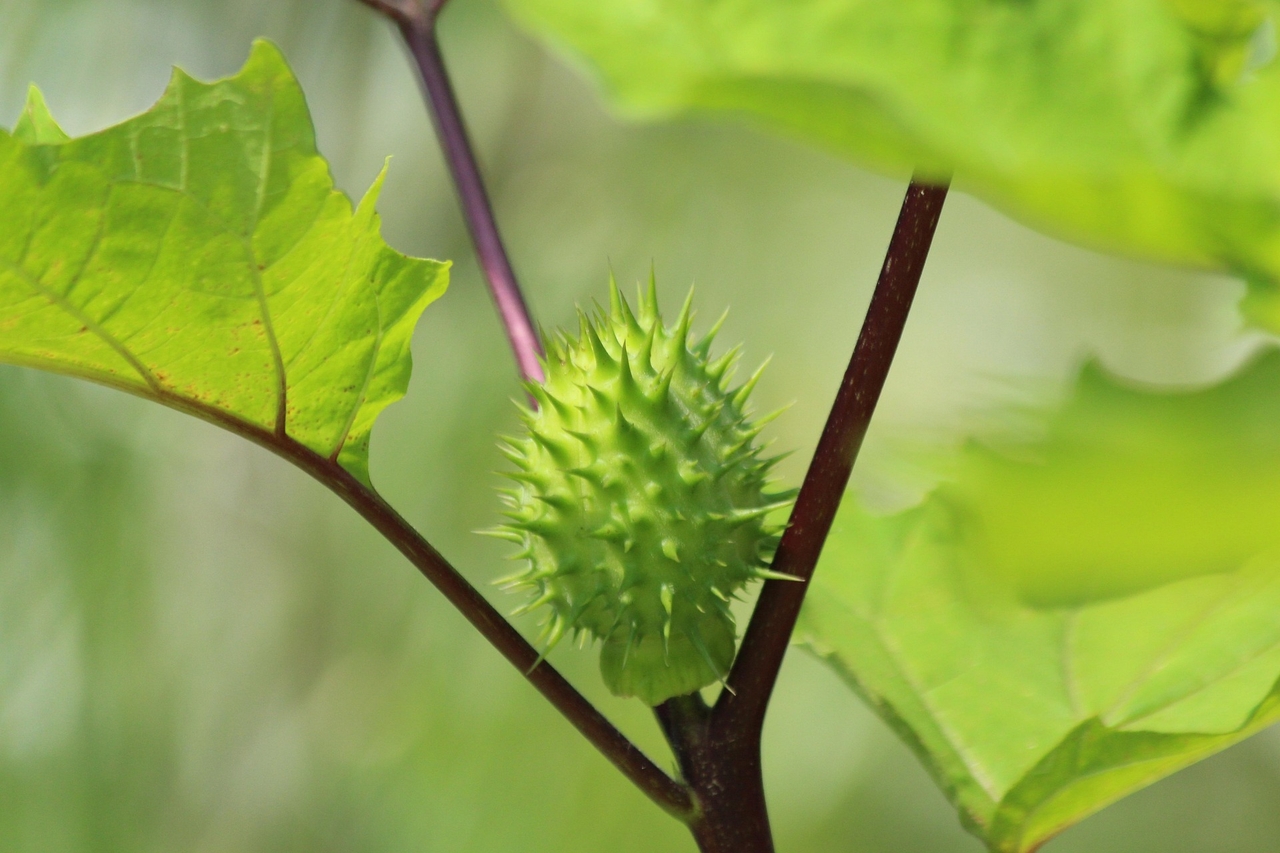
The flowers are trumpet- or funnel-shaped, 5–10 cm long, typically white or pale purple, and occur singly in the leaf axils or at branch forks. The fruit is an ovoid capsule 3–7 cm long, erect, four-valved, and densely covered with spines on its outer surface; this distinctive fruit structure is the reason for the common name Thorn apple. The seeds are black or dark brown, kidney-shaped, and approximately 3–4 mm in length.
The plant is biochemically rich and serves as a primary source of tropane alkaloids, typically present at concentrations of 0.2–0.6%. The main alkaloid components are hyoscyamine, scopolamine, and atropine, the racemic form of hyoscyamine. Phytochemical analyses have also revealed the presence of flavonoids, phenolic compounds, tannins, cardiac glycosides, carbohydrates, lipids, and various amino acids such as alanine, phenylalanine, glutamate, and tyrosine.
Alkaloid concentration varies depending on the plant part and growth stage; the highest levels are generally found in the seeds, and this concentration tends to decrease as the plant enters its reproductive phase. Additionally, calcium oxalate crystals are concentrated in plant tissues, particularly in the mesophyll in rosette aggregates.【1】
Datura stramonium is recognized as a plant with various pharmacological effects due to certain bioactive compounds. Compounds such as atropine and scopolamine are known to exert anticholinergic and bronchodilator effects by interfering with neurotransmission at specific sites in the nervous system. Because of these effects, the plant has been traditionally used in folk medicine and Ayurveda for the treatment of asthma, bronchitis, and sinus infections. Furthermore, plant extracts have been reported to reduce the activity of certain nerve endings involved in pain perception, indicating analgesic and anti-inflammatory properties. In this context, its use has been documented for conditions such as rheumatism, sciatica, and toothache.
Studies have also reported that plant extracts exhibit activity against certain microorganisms. Research has demonstrated antimicrobial effects against Escherichia coli, Staphylococcus aureus, and some Aspergillus species. Additionally, the plant has been shown to possess antioxidant properties through its capacity to neutralize free radicals and potentially support wound healing processes. Some studies further indicate that plant components may exert antiproliferative effects on certain cancer cell lines, including those of breast, lung, and stomach cancers.

Datura (Datura stramonium) Fruit (Pixabay)
Despite its pharmacological benefits, all parts of D. stramonium are highly toxic to humans and animals.
Toxicity is characterized by an anticholinergic syndrome resulting from the inhibition of central and peripheral cholinergic neurotransmission. Symptoms and signs include dry mouth and skin, tachycardia, severe pupil dilation, visual disturbances, urinary retention, high fever, hallucinations, confusion, amnesia, and in severe cases, coma and death. Clinical management of poisoning typically involves symptomatic support and, in severe cases, administration of physostigmine, a cholinesterase inhibitor.【2】
Ecologically, D. stramonium is a nitrophilic plant that prefers rich, fertilized soils. Agriculturally, it is considered a competitive weed that causes yield losses in crops such as soybean, tomato, and tobacco. Moreover, it serves as an alternative host for many insect pests and viruses that damage these crops, thereby contributing to economic losses. Nevertheless, the plant’s insecticidal and repellent properties are being investigated as a potential source for developing natural insecticides.
Warning: The content presented here is intended solely for general encyclopedic information. This information must not be used for diagnosis, treatment, or medical advice. Always consult a physician or qualified healthcare professional before making any decisions regarding health. The author and KÜRE Encyclopedia assume no responsibility for any consequences arising from the use of this information for diagnostic or therapeutic purposes.
[1]
Minakshi Sharma et al., "Phytochemistry, Pharmacology, and Toxicology of Datura Species—A Review," Antioxidants 10, no. 8 (2021): 1291, accessed 12 March 2026, https://doi.org/10.3390/antiox10081291
[2]
Minakshi Sharma et al., "Phytochemistry, Pharmacology, and Toxicology of Datura Species—A Review," Antioxidants 10, no. 8 (2021): 1291, accessed 12 March 2026, https://doi.org/10.3390/antiox10081291


No Discussion Added Yet
Start discussion for "Trumpet Flower (Datura stramonium)" article
Morphological Structure and Botanical Characterization
Phytochemical Composition and Tropane Alkaloids
Pharmacological Activities and Therapeutic Applications
Toxicology and Anticholinergic Syndrome
Ecology and Economic Importance