Bu içerik Türkçe olarak yazılmış olup yapay zeka ile otomatik olarak İngilizceye çevrilmiştir.
Recall the last thirty seconds before you boarded that iron ride at the amusement park. Your palms were sweaty, your heart had already quickened before the car even moved, and a voice inside you whispered, “You can still get off.” But you didn’t.
Moreover, when the ride ended, the first thing that came out of your mouth was most likely, “Shall we ride again?” I have long viewed this contradiction as one of humanity’s most endearing quirks: we pay money to activate an alarm system designed for escape.
Fear is not, evolutionarily speaking, a source of pleasure but a survival reflex. When the brain perceives a threat, it rapidly mobilizes the body: the heart races, blood flows to the muscles, attention narrows, and the perception of time shifts. The problem is that this system is not very good at distinguishing between real threats and simulated ones. And what I find fascinating is that I believe it is precisely this inability to differentiate that we truly enjoy.
Psychologists Paul Rozin and colleagues call this phenomenon “benign masochism”: deriving pleasure from experiences that the body misinterprets as threats.【1】Spicy peppers, melancholic films, cold water, haunted houses—all share a common thread: a signal is sent to the body indicating “danger,” but the mind knows it is not real.
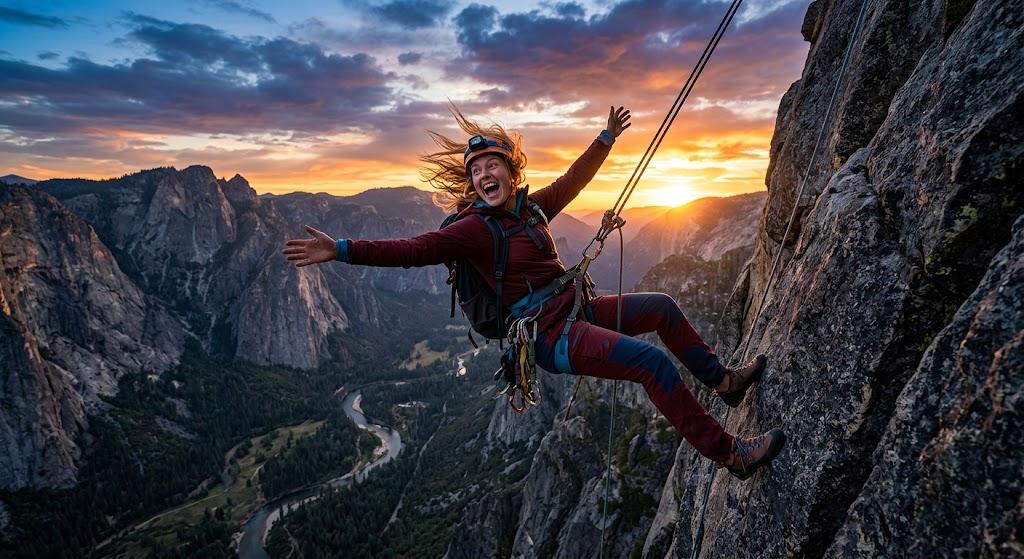
Adrenalin Bağımlılığını Temsil Eden Görsel (Yapay Zeka İle Oluşturulmuştur)
According to researchers, the source of pleasure is not fear itself but the realization that the body has been deceived—that is, the sense of “the mind’s triumph over the body” that comes from knowing there is no actual danger.【2】
This explanation resonates deeply with me because it perfectly describes what I experience while watching horror films. When a knife flashes on screen, my body panics: my breathing changes, my shoulders rise, I pull my feet up onto the chair. But at the same time, I have a bowl of chips in my hand and I know exactly who is sitting beside me. The pleasure arises precisely at the intersection of these two awarenesses—not pure fear, not pure safety, but that strange moment when both are simultaneously true.
Another point from the same study caught my attention: people do not merely enjoy the experience itself but also the body’s defensive reaction to it.【3】I believe this is the heart of the matter. No one says, “I want to have a nightmare,” and then turns on a horror film. People want their hearts to thump, their skin to shiver, that fleeting sensation of “for a moment, I forgot everything.” What we are addicted to is not fear itself but the imprint fear leaves on the body.
But is all fear good? Of course not, and I have a favorite study that demonstrates this has a measurable limit. Researchers placed heart rate monitors on visitors to a real haunted house attraction and filmed them at specific corners. They found an inverted U-shaped relationship between fear and pleasure: as fear increased, so did pleasure—but only up to a threshold, after which pleasure began to decline.【4】Moreover, the peak of pleasure occurred precisely where the heart rate showed small, well-tuned fluctuations.【5】
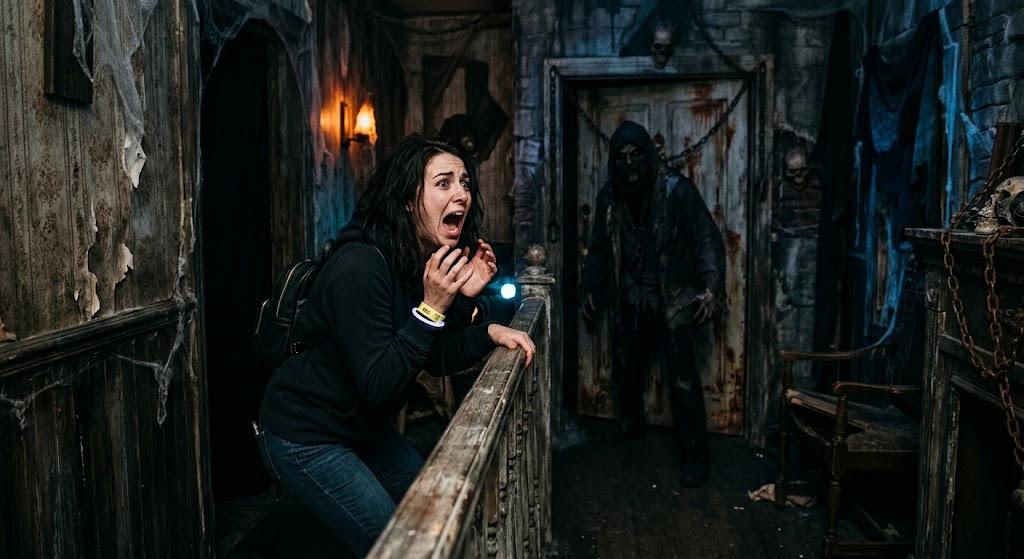
Adrenalin Bağımlılığını Temsil Eden Görsel (Yapay Zeka İle Oluşturulmuştur)
When I read this finding, I thought, “Yes, exactly.” Because each of us has our own dosage threshold. A friend skydives and it makes my stomach churn; I watch horror films alone at midnight while he hides behind a pillow on the couch. No one is simply “someone who likes adrenaline” or “someone who doesn’t.” Each person’s sweet spot lies in a different place. Cross the threshold, and pleasure instantly gives way to real stress—what remains is not “how wonderful that was” but “never again.”
And the fact that this sweet spot is not fixed is another matter entirely. I believe fear becomes familiar: a film that kept you awake the first time you watched it becomes routine by the third viewing; the height that once shook your world feels like “not bad” by the tenth jump. As the threshold rises, you must increase the dose to recapture the same sensation. I believe this is where “adrenaline addiction” truly begins—not loving fear, but being unable to feel the same fear again.
Let me state my own view outright: “adrenaline addiction” is, in my opinion, less a clinical diagnosis than a metaphor. No one is seeking adrenaline in their bloodstream; what they seek is the mental space that this chemistry opens. In moments of high risk, attention becomes astonishingly simple. Rent, exams, notifications on your phone, that thing you said three days ago—all fall silent. Only one thing remains: this moment. I believe what people are addicted to is not adrenaline but this forced presence that adrenaline delivers.
Still, not everything metaphorical is harmless. If you must continually increase the dose of a behavior, and when you don’t engage in it, life feels flat and colorless—if you take risks not to explore but to escape, then what you have is no longer curiosity but something else. The difference between controlled fear and escape may look identical from the outside, but feels entirely different from within.
In my view, the true secret of this peculiar relationship humans have with fear lies not in fear itself but in its cessation. The train stops. The film credits roll. The rope tightens. The body is still in alarm mode, but the mind is already saying, “Okay, it’s over.” It is precisely those few seconds of transition, I believe, that offer the purest sensation of relief life can give. And once a person has tasted that feeling, they seek the safest way to recreate it: deliberately frightening themselves in a controlled manner.
Perhaps that is why fear is the oldest and most loyal customer of the entertainment industry. Amusement parks, haunted houses, thriller novels, extreme sports—all promise the same thing: I will give you the fear of death without actually killing you. And we, every time, willingly accept that promise. Because fearing death is the most powerful reminder that we are alive.
Andersen, Marc Malmdorf, Uffe Schjoedt, Henry Price, Fernando E. Rosas, Coltan Scrivner, and Mathias Clasen. "Playing With Fear: A Field Study in Recreational Horror." *Psychological Science* 31, no. 12 (2020): 1497–1510. Accessed August 14, 2026.https://journals.sagepub.com/doi/10.1177/0956797620972116
Rozin, Paul, Lily Guillot, Katrina Fincher, Alexander Rozin, and Eli Tsukayama. "Glad to be Sad, and Other Examples of Benign Masochism." *Judgment and Decision Making* 8, no. 4 (2013): 439–447. Accessed August 14, 2026.https://journal.sjdm.org/12/12502a/jdm12502a.pdf
[1]
Paul Rozin vd., "Glad to be Sad, and Other Examples of Benign Masochism," Judgment and Decision Making 8, no. 4 (2013): 439, erişim 14 Ağustos 2026, https://journal.sjdm.org/12/12502a/jdm12502a.pdf
[2]
Rozin vd., "Glad to be Sad," 439.
[3]
Rozin vd., "Glad to be Sad," 445.
[4]
Marc Malmdorf Andersen vd., "Playing With Fear: A Field Study in Recreational Horror," Psychological Science 31(12), (2020): 1504, erişim 14 Ağustos 2026, https://journals.sagepub.com/doi/10.1177/0956797620972116
[5]
Andersen vd., "Playing With Fear," 1497.
The Body Is Sweating, the Mind Is Smiling
How Much Fear, How Much Pleasure?
Is an “Adrenaline Addict” Really Addicted?
Where Fear Ends