
Bu içerik Türkçe olarak yazılmış olup yapay zeka ile otomatik olarak İngilizceye çevrilmiştir.
The sea does not carry the same meaning for everyone. Some people see in it a vacation, while others see the future.
Two people standing on the same shore may look at the same waves, yet what they see is entirely different. For a fisherman, the sea is a door to bread. For an engineer, it is the birthplace of new technologies. For a nation, it is a strategic value extending from security to economy, from energy to transportation.
Perhaps the first step to understanding Mavi Vatan is this: Do not look at the sea only from the shore.
For years we have heard the phrase: “Türkiye is surrounded by seas on three sides.” Yet for most of us, this is merely a fact memorized in geography class. But when a nation looks at the sea, it does not see only water.
For a nation, the sea is:
Trade routes,
Energy sources,
Natural resources,
Scientific research.
And when necessary, a strategic area to be protected.
According to the United Nations Conference on Trade and Development, more than 80 percent of global trade by volume is carried out by sea.【1】 This shows that seas do not merely separate nations; they also connect them to the world.
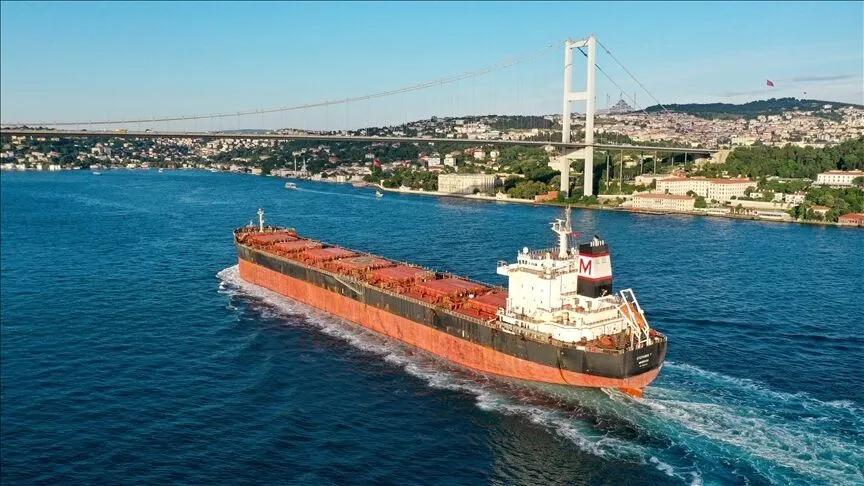
İstanbul Boğazı’nda Yük Gemisi Geçişi (Anadolu Ajansı)
Türkiye, thanks to its location between the Black Sea, the Aegean and the Mediterranean, and the Turkish Straits, occupies a vital transit point.【2】 However, geographic position alone is not enough. What truly matters is the ability to leverage this advantage through knowledge, technology and sound planning.
That is why Mavi Vatan is not merely a concept referring to maritime rights and jurisdictional areas. It is also a vision that shapes how we view the sea and calls us to think about the future in economic, technological and strategic terms.
When a ship is launched into the sea, most of us see its size, speed or power. But for an engineer, that ship is the result of years of calculations, tests, software development and design.
For an engineer, the sea is filled with problems to be solved:
Safer ships,
Smarter systems,
Tools capable of exploring depths inaccessible to humans.
Today’s domestically developed ships, unmanned marine vehicles and research systems are concrete examples of this thinking. MARLİN, an unmanned marine vehicle, is used in security operations.【3】Oruç Reis, a research vessel, contributes to the study of the seabed.【4】
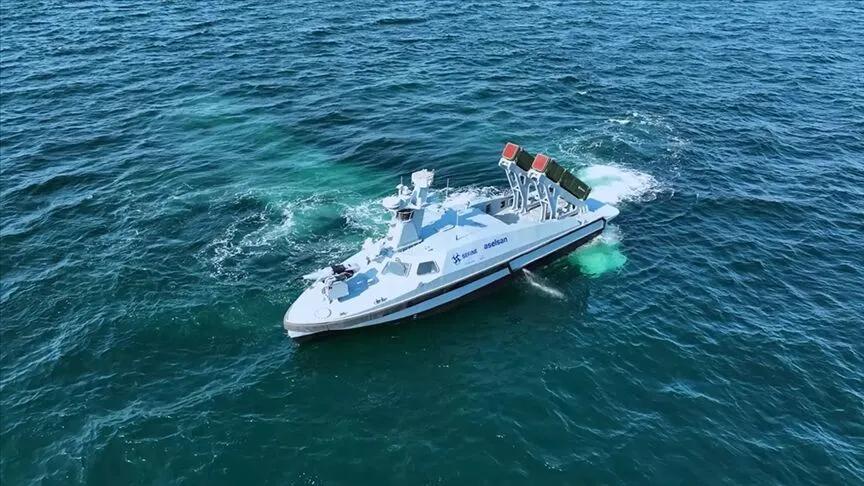
MARLİN İnsansız Deniz Aracı (Anadolu Ajansı)
Because strength at sea is not merely about possessing advanced technologies. True strength lies in being able to design and produce the systems we need with our own engineers.
The invisible side of Mavi Vatan is shaped precisely here: in the ideas generated in shipyards, laboratories and in front of computer screens.
The sea, with its vast and boundless appearance, seems invulnerable to harm. But to an environmentalist, the sea is not merely a beautiful landscape; it is a vast ecosystem that must be protected:
Coasts that must be kept clean,
Living species that must be preserved,
A shared heritage to be passed on to future generations.
A single piece of waste left on the shore, a chemical spilled into the water, or mindless fishing can leave irreversible traces for years. The United Nations Environment Programme also notes that plastics are among the most persistent and harmful components of marine debris.【5】
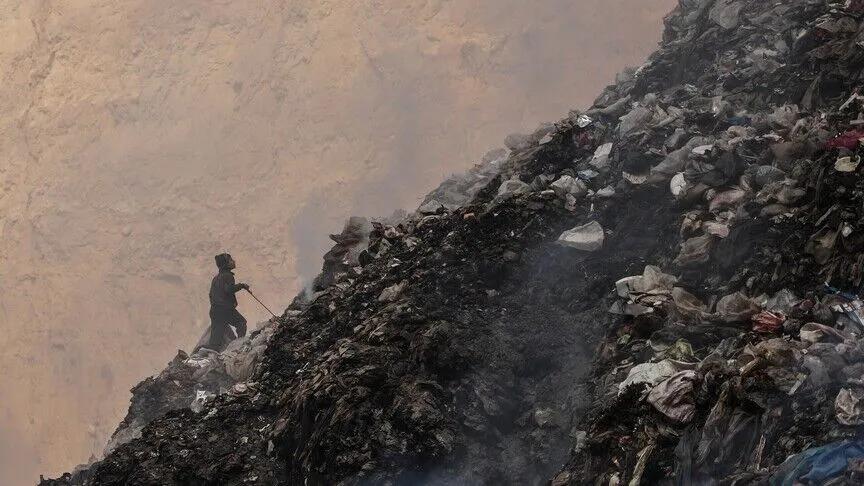
Plastik Kirliliğinin Çevre Üzerindeki Etkileri (Anadolu Ajansı)
When the sea is polluted, not only marine life suffers. Fishing, tourism, human health and communities living along the coast are also affected.
Therefore, standing up for Mavi Vatan is not only about defending our rights at sea. It is also part of the same responsibility to keep the seas clean, vibrant and preserved for future generations.
For can we truly claim ownership of a sea we fail to protect?
When we hear the term Mavi Vatan, most of us think of warships, maps and maritime borders. Yet the Mavi Vatan of the future will be built not only by ships, but by the engineers who design them, the young people who develop their software, and the scientists who study the sea.
Perhaps today we do not work in a shipyard. But the software we will develop, the sensor we will design or the environmental project we will prepare can contribute to tomorrow’s maritime endeavors.
Because the role of youth in Mavi Vatan is not limited to using ready-made technologies. It is about curiosity, research, recognizing problems and developing new solutions.
A nation’s maritime future is determined not only by the coasts it possesses, but by its youth who can think beyond those coasts.
Mavi Vatan is not merely an area defined by borders on a map. It is a shared responsibility that unites economy, technology, security, environment and future in a single point.
When we look at the sea like a nation, we see strategic power. When we look at it like an engineer, we see technologies yet to be created. When we look at it like an environmentalist, we see life that must be preserved. And when we look at it like a young person, we see a future we can change.
Perhaps the most important message of Mavi Vatan is not to remind us that we own the seas; it is to teach us how to look at them.
So, how do you look at the sea?
Anadolu Ajansı. "Türk Boğazlarından Geçen Yıl Yaklaşık 85 Bin Gemi Geçti." Anadolu Ajansı, February 7, 2026. Accessed July 30, 2026.https://www.aa.com.tr/tr/ekonomi/turk-bogazlarindan-gecen-yil-yaklasik-85-bin-gemi-gecti/3823179
Anadolu Ajansı. “DOSYA: Plastik Kirliliğinin Boyutu, Etkileri ve Çözüm Önerileri.” July 2, 2026. Accessed July 30, 2026.https://www.aa.com.tr/tr/dosya-haber/dosya-plastik-kirliliginin-boyutu-etkileri-ve-cozum-onerileri/3984464
Anadolu Ajansı. “Türkiye’nin İlk SİDA’sı MARLİN, Mayın Harbi Yeteneği Kazandı.” Anadolu Ajansı, October 20, 2025. Accessed July 30, 2026.https://www.aa.com.tr/tr/savunma-sanayisi/turkiyenin-ilk-sidasi-marlin-mayin-harbi-yetenegi-kazandi/3721617
Ministry of Foreign Affairs of the Republic of Türkiye. "Türk Boğazları." Accessed July 30, 2026.https://www.mfa.gov.tr/turk-bogazlari.tr.mfa
Presidency of Defense Industries. "İnsansız Deniz Araçları." Accessed July 30, 2026.https://www.ssb.gov.tr/proje/insansiz-deniz-araclari
T.C. Ministry of Energy and Natural Resources. "Oruç Reis Çekti Somali Denizlerinin MR’ını." June 12, 2025. Accessed July 30, 2026.https://enerji.gov.tr/haber-detay?id=21512
United Nations Conference on Trade and Development (UNCTAD). *Review of Maritime Transport 2025*. Accessed July 30, 2026.https://unctad.org/publication/review-maritime-transport-2025
United Nations Environment Programme (UNEP). *From Pollution to Solution: A Global Assessment of Marine Litter and Plastic Pollution*. October 21, 2021. Accessed July 30, 2026.https://www.unep.org/resources/pollution-solution-global-assessment-marine-litter-and-plastic-pollution
[1]
Birleşmiş Milletler Ticaret ve Kalkınma Konferansı (UNCTAD), Review of Maritime Transport 2025, erişim 30 Temmuz 2026, https://unctad.org/publication/review-maritime-transport-2025
[2]
T.C. Dışişleri Bakanlığı, “Türk Boğazları,” erişim 30 Temmuz 2026, https://www.mfa.gov.tr/turk-bogazlari.tr.mfa
[3]
Cumhurbaşkanlığı Savunma Sanayii Başkanlığı, “İnsansız Deniz Araçları,” erişim 30 Temmuz 2026, https://www.ssb.gov.tr/proje/insansiz-deniz-araclari
[4]
T.C. Enerji ve Tabii Kaynaklar Bakanlığı, “Oruç Reis Somali Denizlerinin MR’ını Çekti,” 12 Haziran 2025, erişim 30 Temmuz 2026, https://enerji.gov.tr/haber-detay?id=21512
[5]
Birleşmiş Milletler Çevre Programı (UNEP), From Pollution to Solution: A Global Assessment of Marine Litter and Plastic Pollution, 21 Ekim 2021, erişim 30 Temmuz 2026, https://www.unep.org/resources/pollution-solution-global-assessment-marine-litter-and-plastic-pollution
When You Look at the Sea Like a Nation
When You Look at the Sea Like an Engineer
When You Look at the Sea Like an Environmentalist
What About Us, the Youth?
Looking Beyond the Horizon