Bu içerik Türkçe olarak yazılmış olup yapay zeka ile otomatik olarak İngilizceye çevrilmiştir.
Can a person ever become a stranger worse than a guest at the very door where they were born, raised, and ate their bread?
As if they had chosen to come into this world… Yet who knows what place awaits them in paradise? They are brought into the world unintentionally; then time passes and they become a stranger in their own home, to their own mother, father, and sibling.
Truly astonishing.
It should not be this way, yet it is.
So what should one do in those heart-wrenching moments? How should one move forward? Is the answer simply: “Things change, accept it”? Or is everything experienced merely part of an endless human struggle?
Time flows. Cities grow. Lives change. Just as everything else changes, what we held yesterday will vanish today; what we possess today will belong to someone else tomorrow.
Family is not built solely by blood ties; it is rebuilt again and again through memories, forgiveness, and shared joy.
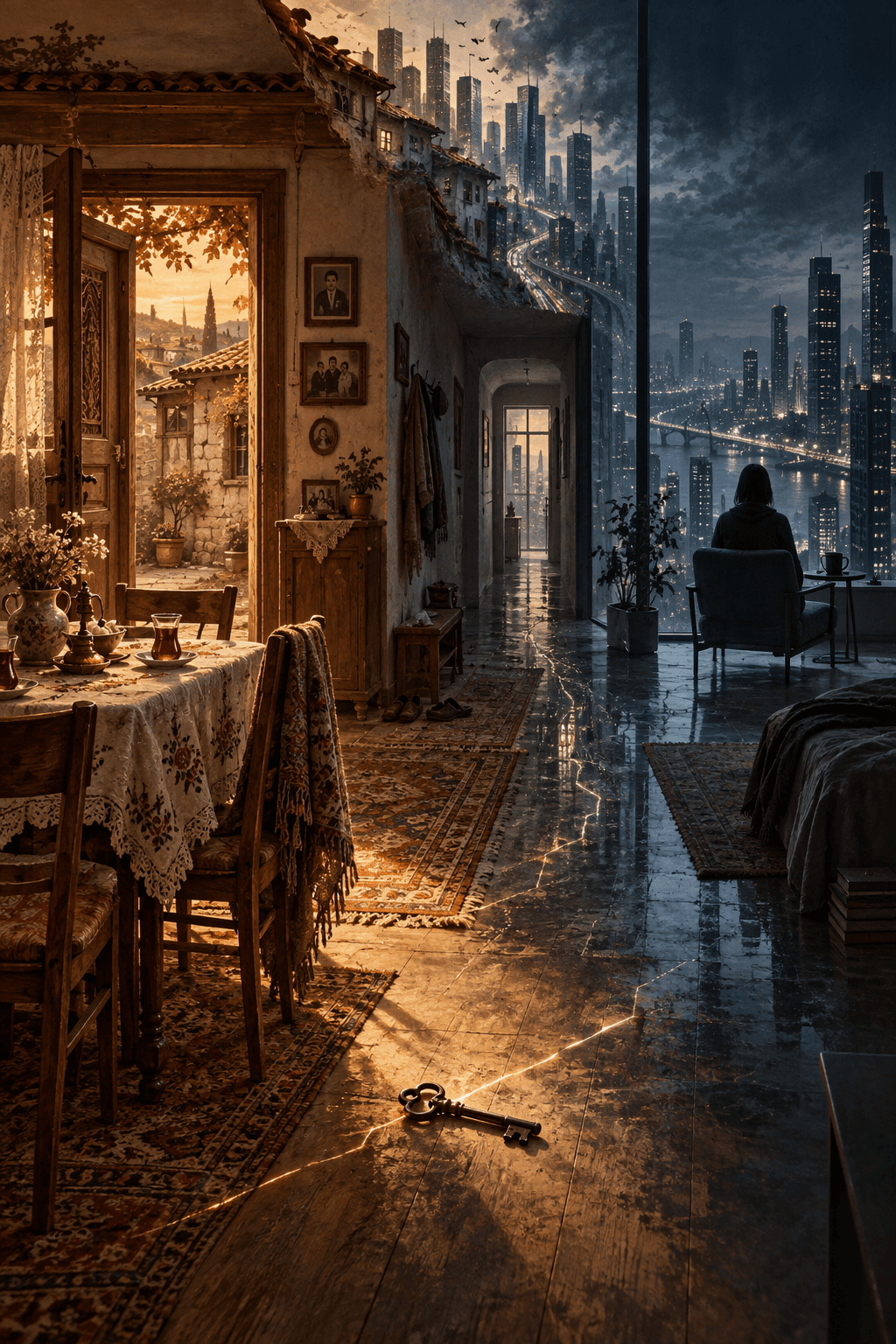
Transition from Traditional Family and Home Atmosphere to the Modern Solitary Individual (Generated by Artificial Intelligence.)
Change is inevitable.
This is a complexity that cannot be defined by good or bad. But the real question is:
While everything changes, what must we hold steady?
Perhaps we are searching for this answer too far away.
Sometimes a person can become a stranger even to those closest to them—to their own family, with whom they sit at the same table, speak the same language, and are drawn together again and again, whether they wish it or not.
How strange, how painfully piercing it is to become a stranger in the place where you were born.
A moment of anger can pass as if it never happened. Resentments can be forgotten. But alienation does not vanish easily. It begins as a painful process and continues without end. Everything flows inward—quietly, deeply, painfully.
Yet home is precisely where a person should find the greatest peace.
Perhaps this is the most painful truth:
A person feels their greatest absence precisely where they should find the most peace.
Anger fades. Resentments are forgotten. Yet alienation deepens once more and takes root.
The first thing we must hold steady are the bonds that nourish our sense of belonging.
For family is not merely biological ties. Living under the same roof does not make a family. Family is an invisible bond: one that lightens each other’s burdens, that offers silent support even when nothing can be done.
Sometimes it is an unshakable armchair in the home, the scent of bread at the table. Sometimes it is a silent, unspoken agreement, forged over countless repetitions in stillness.
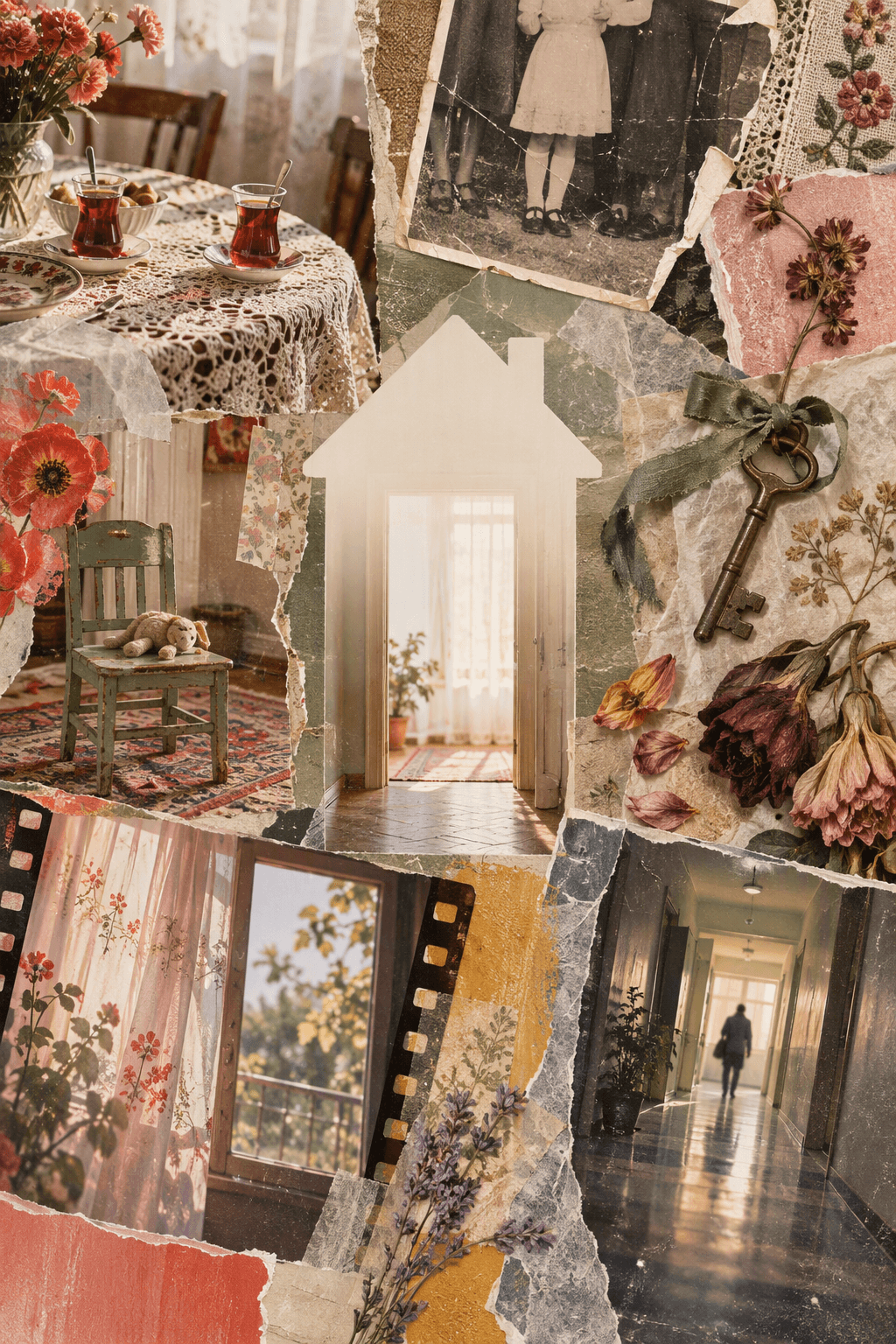
An Old Family Photograph, Dining Table, Interior Memory (Generated by Artificial Intelligence.)
Yet while we strive to strengthen these bonds, the rush of modern life, the pressure of individualism, and the noise of urbanization weaken them.
A person no longer fits within their own skin.
One day they find themselves wandering through their own home like a guest.
They live, yet feel as if lost.
Their presence is faint, their voice quiet, their soul incomplete.
Everything flows into a silent, deep, and agonizing emptiness.
Perhaps the issue is this: A person is never fully content where they are. They undervalue what they have and strive for what they imagine. They wish their family to be pristine, flawless.
Yet the sense of lack within a person sometimes becomes an unending void. They become a puzzle piece endlessly trying to fill an absence that never closes.
Everything changes, yet the person cannot accept it.
Nothing is as it once was.
No matter what they do or where they turn, they either sink inward or feel pulled inward—as if into a deep, bottomless, dark well.
This loneliness is not merely imagined; it is lived reality.
If you are angry, they say: “Don’t you remember the good times?”
If you love, they say: “You are too attached.”
If you question, you are branded ungrateful.
Yet the emptiness inside remains unfilled.
Why?
God, who created the earth and the heavens, granted humanity this vast, boundless world—yet why does the human being, within this life, find no place to fit?
Why does one become a stranger to what they gave birth to, raised, and loved?
And why do they feel trapped in a tiny, confined space?
Perhaps because of hatred, because of broken promises…
Perhaps this alienation is the echo of expulsion from paradise.
Whatever the cause, it is heartrending.
Yet some things must remain as they are, beautiful and intact.
They must simply be remembered, like a treasure.
But how can those who do not recognize a treasure know its worth?
While we constantly desire “more,” we overlook the value of those beside us.
The real issue is not failing to reach our dreams; it is failing to recognize the worth of what we already hold.
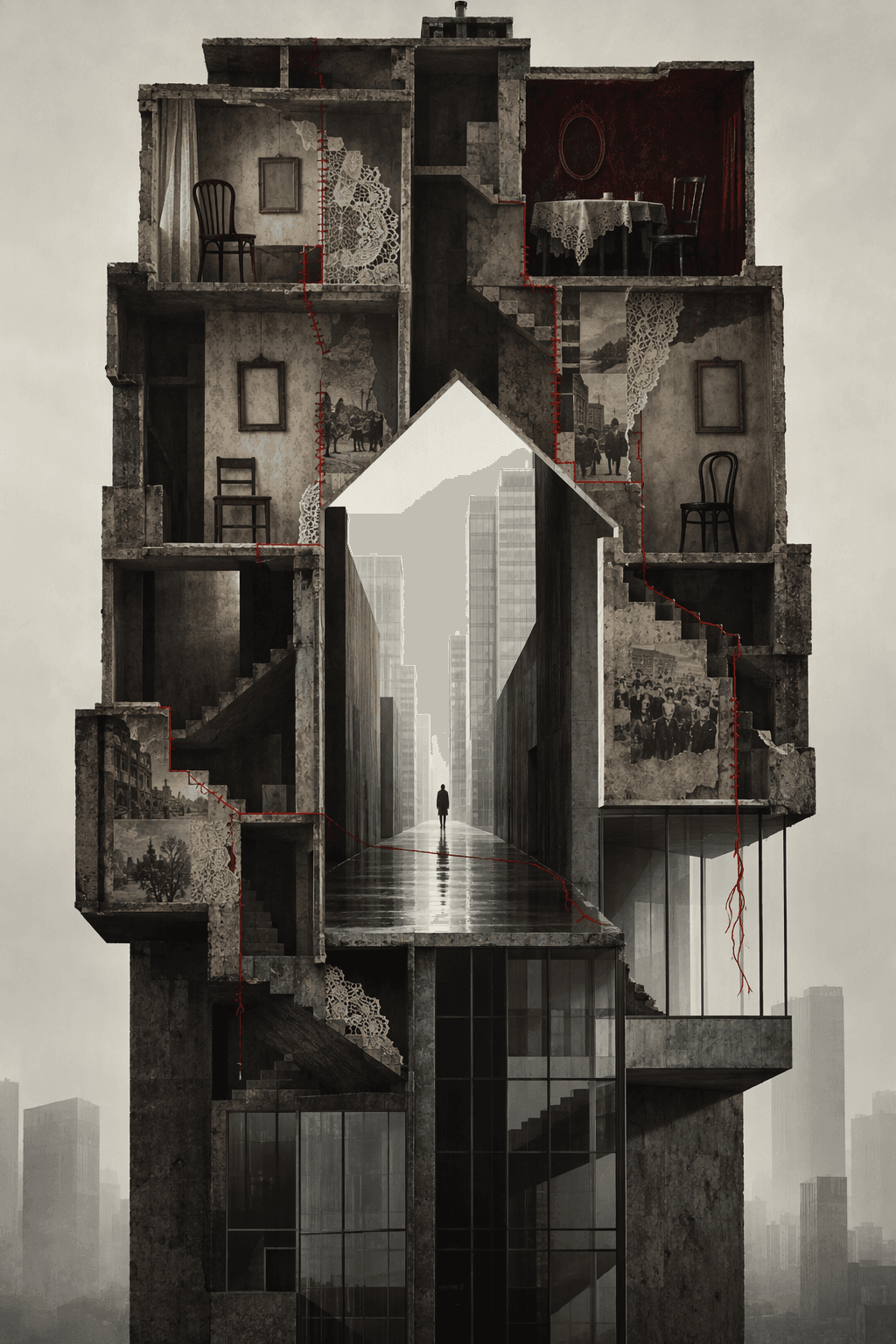
A Visual Representing the Alienation of the Home (Generated by Artificial Intelligence.)
The difficulty of holding a family together begins precisely here:
A person desires both belonging and freedom.
Modern life, however, constantly calls for “more”: more success, more busyness, more possessions, more goals…
Yet we fail to notice the bonds slipping through our fingers as we run.
What we must hold steady is not “more,” but the value of what we already have.
For everything changes.
The world changes, circumstances change, even we change; our hands are limited.
But if we preserve our roots, our values, and our bonds with one another, no sense of alienation can destroy us.
The truest pain is when a person becomes a stranger to themselves in their own home, among their own roots.
Perhaps the essence of the matter lies not in constant complaint, but in stepping back occasionally to give thanks.
The greatest prayer is to protect what we have by saying, “Let it not get worse.”
Perhaps it remains merely a wish, at the very least.
For even if a person dislikes their shell, only when they lose it do they truly understand what they needed most.
In short, one who succeeds in not becoming a stranger in their own home will never feel alone anywhere in the world.
Everything is changing, but let one thing remain unchanged:
Let no person become a stranger in their own home.