

 Son Eklenen:

Bu içerik Türkçe olarak yazılmış olup yapay zeka ile otomatik olarak İngilizceye çevrilmiştir.
Following his departure from Washington on the afternoon of September 25, Xi Jinping arrived in Beijing on September 26, 2026. Chinese Foreign Minister Wang Yi stated in his remarks on the visit: “This historic visit has enriched the constructive and stable China-US relationship, preserved the overall stability of bilateral ties, opened a new chapter in China-US relations, and will leave a profound impact on global peace and development.”
Following the completion of the visit, both countries issued separate outcome statements. The White House published a fact sheet on September 25 titled “President Donald J. Trump Advances a Fair and Reciprocal Relationship with China During Historic State Visit”. The Chinese side, in its public statement released on September 26, reported that the two leaders reached agreement on eight outcomes.
The White House fact sheet organized the visit’s outcomes under the headings “Delivering Results for Americans”, “Making the Trade and Investment Boards Operational”, and “Making the World Safer for Americans”.
Under the heading “Delivering Results for Americans”, the fact sheet highlighted the following points:
· The United States welcomed China’s decision to include orphines, a class of deadly narcotics, on its controlled substances list. The U.S. also recorded China’s new export controls on two fentanyl precursor chemicals and strongly encouraged their permanent inclusion on the control list.
· In August 2026, China arrested 21 Chinese citizens based on information provided by U.S. law enforcement agencies, who were producing and distributing precursor chemicals to illicit drug manufacturers in North America. The U.S. strongly encouraged the imposition of maximum penalties, including the death penalty, where appropriate.
· President Trump called on Xi Jinping to increase production of refined petroleum products to stabilize global supply.
· The United States welcomed the arrival of two giant pandas on loan from China to the Atlanta Zoo.
Under the heading “Making the World Safer for Americans”, the fact sheet noted that the two leaders discussed global issues including Russia, North Korea, and Iran. They agreed that Iran will never acquire nuclear weapons and that no country or entity will be permitted to impose transit fees on international waterways. The fact sheet also recorded that the two leaders recalled that China and the United States were allies during World War II and fought side by side to win the war.
The fact sheet further stated that since World War II, the United States’ forward military presence has safeguarded the Free and Open Indo-Pacific and contributed to American prosperity across generations. The fact sheet also noted that President Trump advocated for trilateral arms control negotiations among the United States, Russia, and China.
According to China’s statement, the two leaders agreed to build a constructive China-US strategic stability relationship based on mutual respect, fairness, and reciprocity. The leaders decided to support each other for China’s hosting of the 2026 APEC Economic Leaders’ Meeting in November and the United States’ hosting of the G20 Leaders’ Summit in December, and expressed their intention to attend each other’s events.
The statement noted that the two leaders agreed that Iran must fulfill its commitment not to develop nuclear weapons and that no country or entity should be allowed to charge transit fees on international waterways. Both leaders acknowledged the positive role of the China-US economic and trade consultation mechanism and endorsed the outcomes achieved by the economic and trade teams of both countries. These outcomes include the establishment and advancement of mechanisms such as the Trade Board, a mutual tariff reduction arrangement worth $30 billion, and the extension of results achieved at the Kuala Lumpur consultations. The leaders issued directives for the implementation of these outcomes.
The statement noted that both leaders appreciated concrete results in law enforcement cooperation against drugs, highlighting that in recent months the two sides jointly resolved numerous cases involving new psychoactive substances and precursor chemicals, leading to the arrest of dozens of suspects in both countries. The statement also noted that the two leaders agreed to establish a China-US Artificial Intelligence Dialogue and that China welcomed the arrival of the two giant pandas on loan from the United States to the Atlanta Zoo.
In addition to the eight outcomes, the two sides agreed to sign a memorandum of understanding as soon as possible to strengthen crisis communication and prevention between their militaries. The armed forces of both countries will continue cooperation on the search for remains of U.S. military personnel in China.
China’s statement made no explicit reference to coal imports from the United States, but confirmed the extension of the tariff reduction negotiations and trade truce without specifying a timeline.
The White House fact sheet made no mention of Taiwan. Neither did China’s eight-point statement refer to Taiwan. U.S. Ambassador to Beijing David Perdue stated on September 25 that President Trump had not altered his position on Taiwan.
In remarks to journalists on September 26, President Trump acknowledged that Taiwan had been raised in his discussions with Xi Jinping but did not clarify the U.S. stance. Trump said: “Everything is fine right now. The process is moving forward. We did not spend much time talking about Taiwan. He understands very well what I think.”
According to the White House fact sheet, the two leaders operationalized the China-US Trade Board and the China-US Investment Board, both established during the May 2026 Beijing Summit, during the visit week.
According to the fact sheet, the two countries agreed on recommendations under the Trade Board to apply more favorable tariff treatment to $30 billion worth of non-sensitive goods in both directions. The board also established a working group to address barriers to market access in the agricultural sector. According to China’s Ministry of Commerce, the agricultural working group will hold its first meeting before the end of the year to discuss mutual market access and regulations.
According to the fact sheet, U.S. exports covered by the tariff reduction include agricultural products, fish and seafood, logs and wood products, cosmetics, and medical devices. U.S. imports covered include consumer goods such as small home appliances, toys, holiday decorations, and child car seats.
According to the White House fact sheet, China will import at least 10 million metric tons of coal annually from the United States in 2027 and 2028. This volume represents approximately 2 percent of China’s annual coal imports. Liquefied natural gas and oil were not included on the list. President Trump announced in June that he would deploy hundreds of millions of dollars in public funds to strengthen the coal sector.
China’s Ministry of Commerce stated: “The import of U.S. coal not only serves as a beneficial supplement to China’s domestic coal market but also provides stable economic income and employment for the U.S. coal sector.”
According to the fact sheet, the purpose of the Investment Board is to discuss potential investment opportunities and barriers, and to provide a structured channel for both sides to address commercially meaningful investment issues. According to China’s Ministry of Commerce, the two sides will hold regular consultations on potential investment opportunities and obstacles, enhance policy transparency and predictability, and respond to corporate concerns.
The fact sheet noted that the United States and China will continue working together on U.S. concerns regarding supply chain vulnerabilities related to rare earth elements and other critical minerals, with the goal of returning shipment levels to appropriate levels.
According to China’s Ministry of Commerce, China will review and approve applications by foreign financial service institutions, including those with U.S. capital, to operate and open branches in China. Communication will also continue on increasing the number of flights between the two countries.
U.S. Trade Representative Jamieson Greer issued a statement on September 27, 2026 following the announcement of the Trade Board’s recommendations. In the statement, Greer noted that the Trade Board was established by President Trump and Xi Jinping during Trump’s May visit to Beijing to manage trade in non-sensitive products between the world’s two largest economies.
Greer stated: “As a direct result of the strong relationship between President Trump and President Xi, the United States and China have recommended $30 billion worth of non-sensitive goods from each side to benefit from more favorable tariff treatment under the new Trade Board. President Trump is opening better market access for approximately 30 percent of U.S. exports to China, ranging from agricultural products to medical devices, while U.S. consumers benefit from imports of household goods, toys, and other products that the United States typically does not import from other countries. The Trump administration will continue its pursuit of fair, balanced, and reciprocal trade with China by ensuring compliance with commitments on agricultural and energy purchases, pursuing balanced trade in non-sensitive goods, and securing market access for American farmers, producers, businesses, and workers.”
China’s Ministry of Commerce confirmed the lists on Monday, September 28, 2026. The ministry stated that both sides would negotiate a “$30 billion for $30 billion mutual tariff reduction framework” and added: “This arrangement will help stabilize China-US trade, create better conditions for the export of relevant Chinese products to the United States, meet domestic market demand, and strengthen commercial cooperation in the areas of agricultural products, energy, manufactured goods, and consumer goods.”
According to China’s Ministry of Commerce, China and U.S. economic and trade teams held consultations in New York and Washington from September 20 to 23, contributing economic and trade outcomes to the leaders’ meeting. The two sides reached agreement on a mutual $30 billion tariff reduction covering products through multiple rounds of consultations under the Trade Board framework.
According to the ministry, approximately 90 percent of products on each side will have tariffs reduced to the level of the most favored nation (MFN) rate. The United States will reduce tariffs on approximately $30 billion worth of Chinese imports, including toys, home appliances, baby products, kitchen and bathroom items, and gifts. China will reduce tariffs on approximately $30 billion worth of U.S. imports, including agricultural products, personal care products, medical devices, and coal. The reductions will take effect simultaneously after both sides complete their respective domestic legal procedures.
A total of 77 Chinese products and over 1,600 U.S. products have been identified for consideration under more favorable tariff treatment. According to one of the lists published by the White House, China plans to lower customs duties on various U.S. agricultural products including corn, wheat, sorghum, meat, dairy products, vegetable oils, and meal. Soybeans are not included. Other U.S. export products covered by the tariff reduction include poultry products, dairy products, pasta, eggs, peanuts, canned tomatoes, purebred breeding horses, and silk.
The U.S. list of reciprocal tariff reductions includes small home appliances such as coffee makers and toasters, tableware, blankets and bedspreads. The lists also include toys, fireworks, artificial flowers, Christmas tree lights, and other holiday decorations, as well as child car seats. The Chinese product list includes microwave ovens, fishing hooks, and scales.
On September 28, China’s Ministry of Commerce stated that extending the trade truce until January 10 would provide both sides with an opportunity to evaluate the current arrangement and determine how to proceed on economic and trade issues. According to the ministry, the extension provides a “relatively stable and predictable policy environment” for business cooperation and ongoing negotiations.
U.S. Ambassador to Beijing David Perdue, in an interview with Fox News on September 25, stated that the United States has evidence that China has “directly or indirectly” supported Iran in the war, and that President Trump raised this issue with Xi Jinping during the summit. Perdue stated: “President Trump clearly made clear that any interaction with Iran that could be interpreted as support for the war is unacceptable to us.” Perdue noted that China had given a “commitment not to provide assistance”.
According to the White House fact sheet, the two leaders agreed to use the term “super intelligence” instead of “artificial intelligence” to describe relevant new technologies. The fact sheet noted that the two countries have established the China-US Super Intelligence (SI) Dialogue to exchange views on the risks and benefits of super intelligence, that the next meeting will be held by November 2026, and that both sides have agreed to establish a bilateral communication channel on super intelligence events.
China’s statement, however, noted only that the two leaders agreed to establish a China-US Artificial Intelligence Dialogue to exchange views on the risks and benefits of artificial intelligence, that the next round will be held in November, and that a communication channel on artificial intelligence-related events will be established. China’s statement made no reference to the agreement on the term “super intelligence.”
A spokesperson for China’s Ministry of Foreign Affairs, when asked about the term, stated: “China attaches importance to the U.S. side’s position and respects its terminology preference.”
In a separate statement, China’s Ministry of Foreign Affairs emphasized that as artificial intelligence technology continues to advance, both sides should increase contact and work toward further agreements based on new developments.
President Trump, in a social media post, wrote that Xi Jinping appeared to appreciate “renaming poorly and incorrectly labeled Artificial Intelligence with the much more accurate and significant name SUPER INTELLIGENCE” and used the phrase “This would be ‘SUPER!’”.
On September 26, in remarks to journalists outside the White House, President Trump stated that the United States would share very little of its artificial intelligence advancements with China and that the United States would not slow its AI progress. “We are not going to stop. They want us to stop because we are far ahead. We will continue this way,” he said. Trump added: “Because we are far ahead, I prefer not to integrate. You do not open up to each other when you are ahead. We are at least a year, perhaps a year and a half ahead. Some say two years. I have no intention of opening up.”
ABC News. “Trump-Xi Takeaways: White House Touts Progress On Artificial Intelligence, Iran And Exports.” Accessed September 28, 2026.https://abcnews.com/Politics/trump-xi-takeaways-victories-trumps-sharing/story?id=136768308
Al Jazeera. “US, China List Goods Recommended For Tariff Cuts Following Trump-Xi Summit.” Accessed September 28, 2026.https://www.aljazeera.com/economy/2026/9/28/us-china-list-goods-recommended-for-tariff-cuts-following-trump-xi-summit
Associated Press. “China And US Agree To Establish AI Safety Channel And Continue Trade And Military Talks.” Accessed September 28, 2026.https://apnews.com/article/china-us-agreement-xi-trump-visit-e8f858ed9094b99bc8d3d339f9899f31
BusinessWorld. “China, US Agree Tariff Cuts On $60 Billion Of Goods Including Agriculture, Household Items.” Accessed September 28, 2026.https://bworldonline.com/world/2026/09/28/782609/china-us-agree-tariff-cuts-on-60-billion-of-goods-including-agriculture-household-items/
Embassy Of the People'sRepublic OfChina In the UnitedStates Of America. “MOFCOM Spokesperson’s Remarks OnThe United Outcomes Of China-U.S. Economic And Trade Consultations.” Embassy of the People's Republic of China in the United States of America. Accessed September 28, 2026. __
Global Times. “China, US Agree Tariff Cuts On $30 Billion Worth Of Imports, With 90% Of Products To See MFN Rates.” Accessed September 28, 2026.https://www.globaltimes.cn/page/202609/1371455.shtml
Office Of The United States Trade Representative. “Ambassador Greer Issues A Statement On Announcement Of Recommendations From The U.S.-China Board Of Trade.” Office Of The United States Trade Representative. Accessed September 28, 2026.https://ustr.gov/about/policy-offices/press-office/press-releases/2026/september/ambassador-greer-issues-statement-announcement-recommendations-us-china-board-trade
Reuters. “China, US Agree Tariff Cuts On $60 Billion Of Goods Including Agriculture, Household Items.” Accessed September 28, 2026.
Reuters. “China, US Agree To AI Dialogue, Tariff Cuts On $30 Billion
The Spokesman-Review. “Trump-Xi Summit Yields Coal Pledge As Tariff Talks Extend.” Accessed September 28, 2026.
The White House. “Fact Sheet: President Donald J. Trump Advances A Fair And Reciprocal Relationship With China While Hosting Historic State Visit.” The White House. Accessed September 28, 2026.https://www.whitehouse.gov/fact-sheets/2026/09/fact-sheet-president-donald-j-trump-advances-a-fair-and-reciprocal-relationship-with-china-while-hosting-historic-state-visit/
U.S. Embassy & Consulates In China. “Fact Sheet: President Donald J. Trump Advances A Fair And Reciprocal Relationship With China While Hosting Historic State Visit.” Accessed September 28, 2026.https://china.usembassy-china.org.cn/fact-sheet-president-donald-j-trump-advances-a-fair-and-reciprocal-relationship-with-china-while-hosting-historic-state-visit/
Xinhua. “China, U.S. Reach Consensus On Eight Outcomes In Xi's Visit.” Xinhua. Accessed September 28, 2026.https://english.news.cn/20260926/fcbbf31255054c3d80a25e6a1f38923e/c.html
U.S. President Donald Trump and his wife Melania Trump welcomed Xi Jinpingand his wife Peng Liyuan on the morning of September 25 at the South Portico of the White House. The two couples held a tea meeting in the White House’s Red Room. During the meeting, the Trumps presented Xi and Peng with a photo album featuring images from the state visit.
According to the Chinese Ministry of Foreign Affairs, the two leaders agreed during the tea meeting to further enrich the content of the positioning of China-U.S. relations and jointly establish a “constructive strategic stability relationship based on respect, fairness and reciprocity”.
According to the Chinese Ministry of Foreign Affairs, Xi Jinping said during the tea meeting: “This is my state visit to the United States, returning to Washington after an interval of eleven years. During this visit, we have further enriched the content of the positioning of China-U.S. relations, reached agreement on jointly establishing a ‘constructive strategic stability relationship based on respect, fairness and reciprocity,’ and achieved mutually beneficial outcomes in the fields of economy and trade. These results will be welcomed by the people of both countries and the international community. The future of China-U.S. relations is bright; this is the general trend of history. At the same time, the path toward clarity is often winding and will always involve various difficulties and challenges; this is consistent with the laws of development of events. Together with President Trump, I am ready to shoulder courage and responsibility with a sense of historical accountability to leave a profound mark on the history of China-U.S. relations.”
During the tea meeting, in front of the press, Xi Jinping expressed his appreciation for the hospitality he received, saying: “Everything has been carried out with the highest level of perfection, with great care shown in every small detail, and I am deeply grateful.”
Comparing himself and Trump to “two captains charting the course of the ship of China-U.S. relations”, Xi Jinping stated: “In May this year, when President Trump visited China, we agreed on a vision of building a constructive China-U.S. relationship based on strategic stability. This time, we have agreed to add a new dimension to this vision. That is, we have reached consensus that this relationship will be a constructive one based on strategic stability grounded in respect, justice and reciprocity.”
“The future of this relationship will be even brighter.”
Regarding further opportunities to meet with Trump this year, Xi Jinping said: “Looking ahead to the remainder of this year, we will have two more opportunities to meet. First, the APEC meeting in China, followed by the G20 summit in the United States.”
Xi Jinping noted that he would be pleased to welcome Trump and Melania Trump back to China. Trump responded: “Thank you very much. We will come and talk a lot.”
Before the tea meeting, Trump told journalists: “I believe our farmers will be very happy. Many positive things have happened, and America is very pleased with this visit, and I am sure China is too.” During the tea meeting, Trump also said: “We have truly enjoyed this visit by these two remarkable individuals. We have made tremendous progress. We have achieved wonderful progress that is highly beneficial to both countries.”
According to the Chinese Ministry of Foreign Affairs, Trump said during the tea meeting: “President Xi Jinping’s state visit to the United States has been constructive and highly successful. The two sides have engaged in in-depth communication on China-U.S. relations and major international and regional issues, achieving many positive outcomes beneficial to both countries. I look forward with great anticipation to maintaining close contact with President Xi Jinping and jointly guiding the development of China-U.S. relations.”
Following the tea meeting, the two couples traveled by motorcade from the White House to the National Archives in Washington. According to the Chinese Ministry of Foreign Affairs, the two leaders and their spouses entered the central hall of the National Archives together and received briefings on the institution and its principal exhibits. Accompanied by their spouses and interpreters, the two leaders examined the Declaration of Independence, the U.S. Constitution, and the Bill of Rights in the National Archives’ Rotunda.
At the National Archives, Xi Jinping said: “Archives carry the wisdom of our ancestors and inspire us toward the future. For 250 years, the American people have pursued the American Dream, building a rich and powerful nation and a beautiful homeland on the North American continent. The Chinese people, inheriting the five-thousand-year cultural tradition of the Chinese nation, are continuously achieving new successes on their new journey to realize the Chinese Dream—the great rejuvenation of the Chinese nation. China and the United States are two countries with unique characteristics; although their histories, cultures, social systems, and paths of development differ, both peoples share a common aspiration for a better life. By accepting and respecting each other’s differences, fostering mutual understanding, learning from each other, identifying the greatest common ground, expanding the list of cooperation, and properly managing disagreements, the relations between our two countries can proceed steadily and sustainably.”
As Trump left the National Archives, when asked what he and Xi Jinping had discussed, he replied: “We were just comparing our histories. Ours is 250 years old, which is a wonderful thing and we are very proud of it. Their history is 6,000 years old. There is a small difference between 6,000 and 250, but we are very proud of our 250 years.”
While examining the building’s approximately 23-meter (75-foot) high ceiling, Trump said: “This is the era when they built buildings properly.” The National Archives building was completed in 1935.
When asked whether he and Xi had discussed Iran and the Strait of Hormuz, Trump replied: “We talked. I think we will achieve great results.” Trump did not respond to questions about whether he had asked Xi Jinping to halt Iran’s oil purchases amid U.S. sanctions. The visit to the National Archives marked the final bilateral event of Xi Jinping’s state visit.
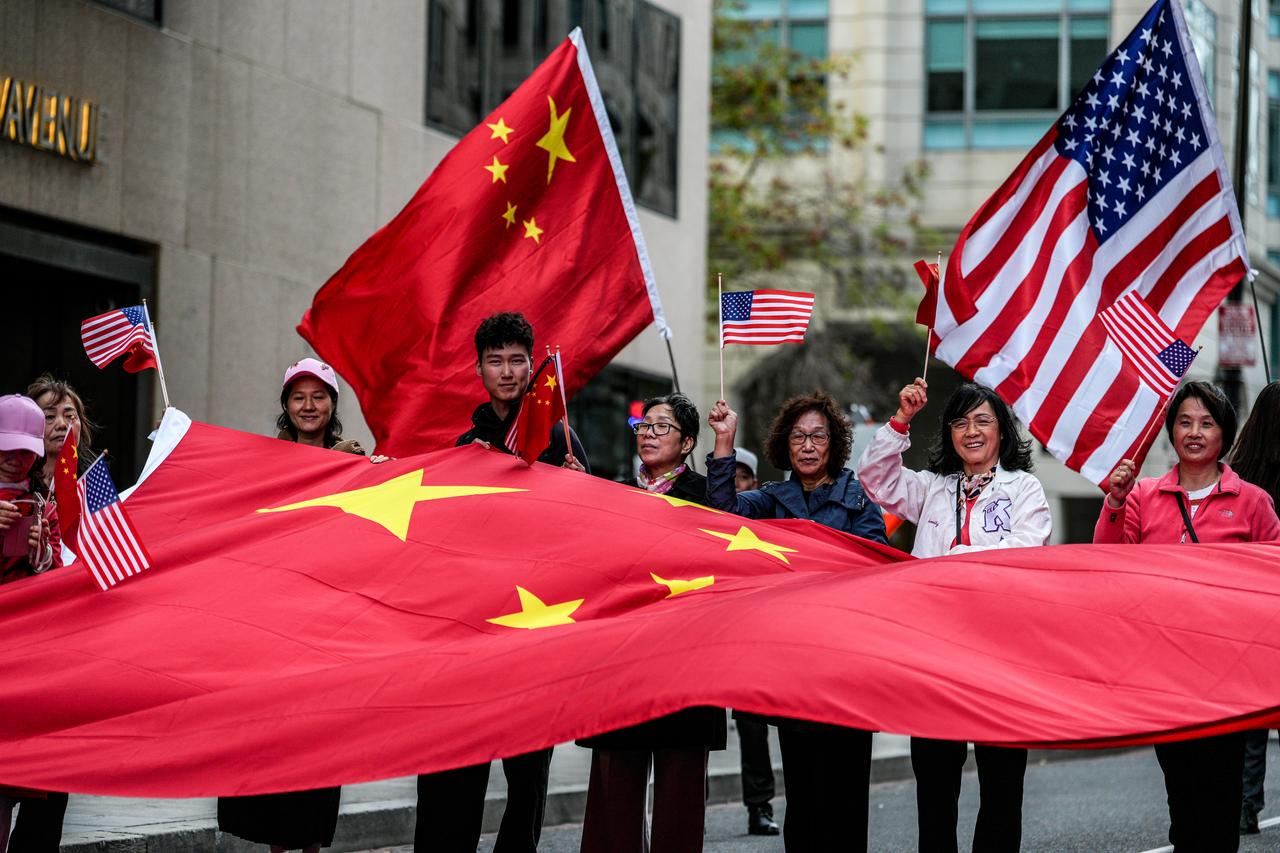
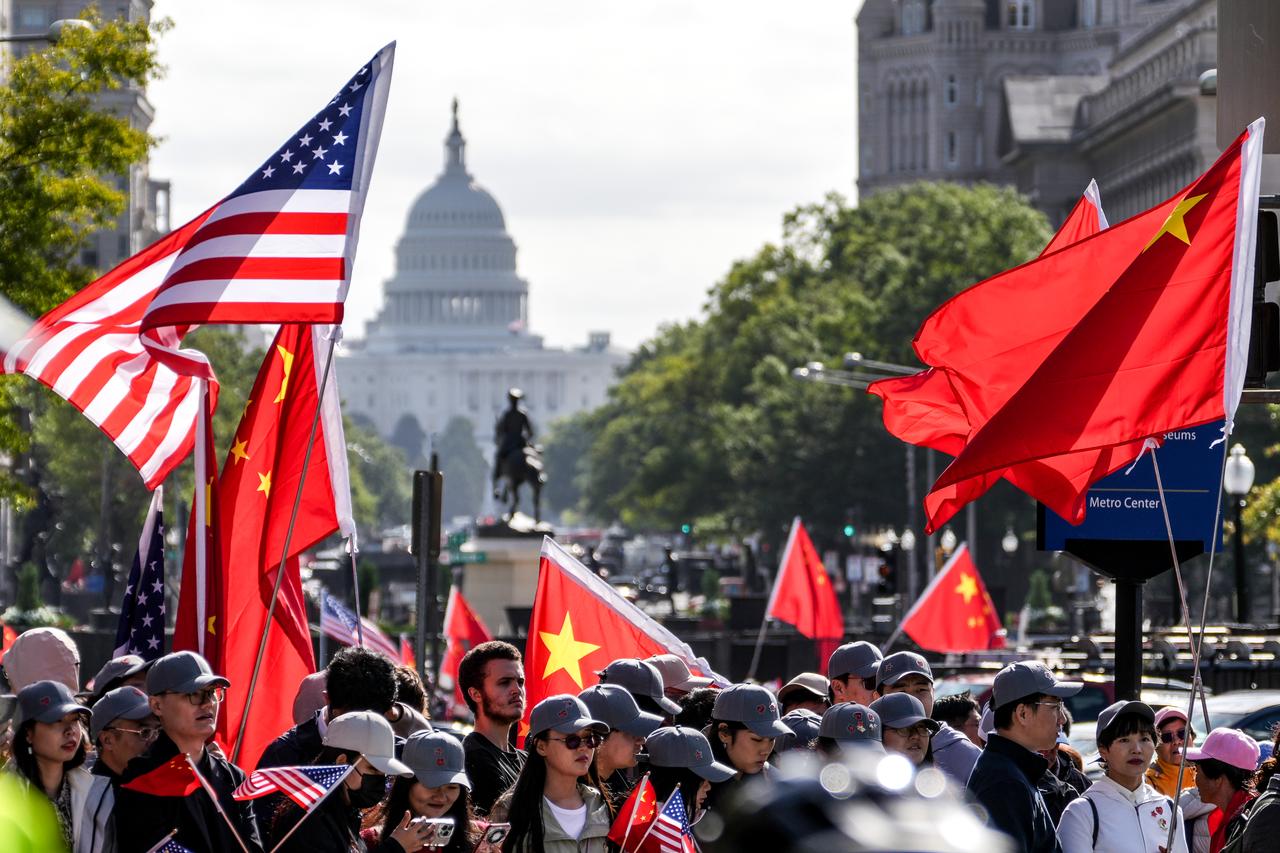
On the afternoon of September 25, Xi Jinping concluded his state visit to the United States and departed for Beijing. Xi Jinping and Peng Liyuan departed by air from Joint Base Andrews, where they were escorted on a red carpet. Senior U.S. government officials saw Xi off at the airport, and a 21-gun salute was fired. Along the route to the airport, representatives of Chinese citizens and students living abroad waved flags of China and the United States on both sides of the road.
Trump announced that he will meet with Xi Jinping two more times within 2026. The first meeting is planned for November at the Asia-Pacific Economic Cooperation (APEC) summit in China, and the second for December at the G20 Summit in Miami. The APEC Summit will be held in Shenzhen, China, on November 18–19. The G20 Summit will be hosted at the Trump National Doral Miami golf club in Florida. Trump also confirmed his attendance at the APEC Summit.
U.S. Trade Representative Jamieson Greer announced that details of the limited commercial agreements reached during the visit would be disclosed on Monday, September 28. In an interview with CNBC, Greer stated that the United States and China had agreed to exclude certain basic goods from the scope of their commercial disputes. According to Greer, these goods include U.S. exports to China such as agricultural products and medical devices, as well as U.S. imports of consumer goods and non-sensitive goods.
Ambassador Perdue, in an interview with CNBC on September 25, stated that Trump had reiterated to Xi Jinping that Iran’s direct or indirect support in the conflict is “completely unacceptable” and had received assurances from China that it would not do so. Beijing denies U.S. allegations that it has provided assistance to the Iranian regime. Xi Jinping made no public statement regarding China’s support for Iran.
On September 24, during a speech at the White House, Xi Jinping revisited the concept of the “Thucydides Trap”. The concept refers to the risk of conflict arising when a rising power threatens to displace an established power, based on the account by the ancient Greek historian Thucydides regarding the Peloponnesian War between Sparta and Athens (431–404 BCE).
The concept gained widespread recognition in international relations literature through Harvard University political scientist Graham Allison’s May 2017 book titled “Destined for War: Can America and China Escape the Thucydides Trap?” According to Allison, in the past five centuries, there have been 16 cases in which a rising power has threatened to displace a ruling power, and 12 of these cases ended in war.
During his 2015 visit to the United States, Xi Jinping stated that there is no such thing as a Thucydides Trap in the world, but warned that major powers could create such traps for themselves through strategic miscalculations. At his 2024 meeting with then-U.S. President Joe Biden in Peru, Xi Jinping emphasized that the Thucydides Trap is “not a historical inevitability,” saying: “We must not embark on a new Cold War with no winner. Attempting to encircle China is irrational and unacceptable; it is a strategy doomed to failure.”
During Trump’s visit to China in May 2026, Xi Jinping posed the question: “Can China and the United States transcend the Thucydides Trap and establish a new paradigm for great power relations?” During his September 2026 visit to Washington, Xi Jinping affirmed that the Thucydides Trap can be overcome.
Anadolu Ajansı. "ABD Başkanı Trump, Çin Devlet Başkanı Şi İle ‘Birlikte Çalışmaya Devam Edecekleri’ Mesajını Verdi." Accessed September 26, 2026.https://www.aa.com.tr/tr/dunya/abd-baskani-trump-cin-devlet-baskani-si-ile-birlikte-calismaya-devam-edecekleri-mesajini-verdi/4068116
Anadolu Ajansı. "ABD Başkanı Trump: Çin İle İlişkilerimiz Hiç Bu Kadar İyi Olmamıştı." Accessed September 26, 2026.https://www.aa.com.tr/tr/dunya/abd-baskani-trump-cin-ile-iliskilerimiz-hic-bu-kadar-iyi-olmamisti/4068691
Anadolu Ajansı. "Trump, Çin Devlet Başkanı Şi İle Görüşmesinin Oldukça Verimli Geçtiğini Belirtti." Accessed September 26, 2026.https://www.aa.com.tr/tr/dunya/trump-cin-devlet-baskani-si-ile-gorusmesinin-oldukca-verimli-gectigini-belirtti/4069315
Anadolu Ajansı. "Trump, Çin Devlet Başkanı Şi'nin Ziyaretiyle ‘Muazzam İlerlemeler’ Kaydettiklerini Belirtti." Accessed September 26, 2026.https://www.aa.com.tr/tr/dunya/trump-cin-devlet-baskani-sinin-ziyaretiyle-muazzam-ilerlemeler-kaydettiklerini-belirtti/4069539
Anadolu Ajansı. “Xi, Trump Look Ahead To More Meetings As ‘Great Strides’ White House Summit Concludes.” Accessed September 26, 2026.https://aa.com.tr/en/world/xi-trump-look-ahead-to-more-meetings-as-great-strides-white-house-summit-concludes/4069495
Anadolu Ajansı. “Çin Devlet Başkanı Şi, ABD İle ‘Yeni Bir Ticaret Düzenlemesinde Anlaştıklarını’ Duyurdu.” Accessed September 26, 2026.https://www.aa.com.tr/tr/dunya/cin-devlet-baskani-si-abd-ile-yeni-bir-ticaret-duzenlemesinde-anlastiklarini-duyurdu/4068682
Anadolu Ajansı. “Çin-ABD Rekabetinde Savaşla Sonlanan ‘Tukidides Tuzağı’ Kavramı Öne Çıktı.” Anadolu Ajansı. Accessed September 26, 2026.https://www.aa.com.tr/tr/dunya/cin-abd-rekabetinde-savasla-sonlanan-tukidides-tuzagi-kavrami-one-cikti/4069286
Anadolu Ajansı. “Şi'nin ABD Ziyaretinde, Büyük Güç İlişkisinde Siyasi İstikrarı Sürdürme Vurgusu Öne Çıktı.” Accessed September 26, 2026.https://www.aa.com.tr/tr/dunya/sinin-abd-ziyaretinde-buyuk-guc-iliskisinde-siyasi-istikrari-surdurme-vurgusu-one-cikti/4069779
BBC. "Xi Visit To Washington All Pomp But Little Progress So Far." Accessed September 26, 2026.https://www.bbc.com/news/articles/c539me79z1yno
CNBC. "Trump, Xi Wrap State Visit Centered On Spectacle Over Substance. Here Are The Top Takeaways." Accessed September 26, 2026.https://www.cnbc.com/2026/09/25/trump-xi-summit-takeaways.html
CNN. "Xi Wraps Up Trump Visit With Tea At The White House And Tour Of National Archives." Accessed September 26, 2026.https://edition.cnn.com/2026/09/24/politics/live-news/trump-meeting-china-xi-us-visit
Ministry of Foreign Affairs of the People's Republic of China. "习近平同美国总统特朗普会谈." Accessed September 26, 2026.
Ministry of Foreign Affairs of the People's Republic of China. "习近平向全球发展倡议5周年高级别对话会致贺信." Accessed September 26, 2026.https://www.mfa.gov.cn/zyxw/202609/t20260926_12031563.shtml
Ministry of Foreign Affairs of the People's Republic of China. "习近平和彭丽媛同美国总统特朗普夫妇茶叙." Accessed September 26, 2026.
Ministry of Foreign Affairs of the People's Republic of China. "习近平圆满结束对美国的国事访问." Accessed September 26, 2026.
Reuters. "Five Takeaways From Trump's Summit With Xi In Washington." Accessed September 26, 2026.https://www.reuters.com/world/china/four-takeaways-trumps-summit-with-xi-washington-2026-09-24/
Reuters. “Trump, Xi End Summit With Tea, Tour Of US Archives - And Little Sign Of Progress.” Accessed September 26, 2026.https://www.reuters.com/world/china/trump-wrap-up-xi-summit-with-tour-us-archives-2026-09-25/
South China Morning Post. “Xi Ends 3-Day Trump Visit With Promise To Meet Again In November In China – As It Happened.” Accessed September 26, 2026.https://www.scmp.com/news/china/diplomacy/article/3368858/last-day-xis-us-visit-begins-trump-white-house-tea
The Guardian. "Trump And Chinese President Xi End Summit Without Major Agreement On AI." Accessed September 26, 2026.
The Hill. “Live Updates: Xi Departs After 3-Day Trump Visit; Iran War, Economic Squeeze Weigh On GOP.” Accessed September 26, 2026.https://thehill.com/homenews/6110883-live-updates-trump-xi-summit-dc-iran-war-affordability-gop-midterms/
Chinese citizens salute the motor
Xi Jinping and his wife class="bold" style="white-space: pre
Al Jazeera. “Trump-Xi Summit: Four Key Takeaways From The Washington, DC, Meeting.” Accessed September 25, 2026.https://www.aljazeera.com/news/2026/9/24/trump-xi-summit-four-key-takeaways-from-the-washington-dc-meeting
BBC. "Trump And Xi Exchange Warm Words At State Dinner But Little Progress On Key Issues." Accessed September 25, 2026.https://www.bbc.com/news/articles/cxq63dqp93n1o
BBC. “US And China Must Act As Responsible Global
CBS News. “Live Updates: Trump Welcomes China's Xi For State Dinner At White House After Touting ‘Truly Great Friendship’.” Accessed September 25, 2026.https://www.cbsnews.com/live-updates/trump-china-xi-jinping-state-visit-dinner-tariffs-ai/
CNN. "Trump And Xi Lavish Praise On Each Other At White House State Dinner." Accessed September 25, 2026.https://edition.cnn.com/2026/09/24/politics/live-news/trump-meeting-china-xi-us-visit
Ministry of Foreign Affairs of the People's Republic of China. "习近平出席美国总统特朗普在白宫举行的欢迎仪式." Accessed September 25, 2026.https://www.mfa.gov.cn/zyxw/202609/t20260925_12031112.shtml
Ministry of Foreign Affairs of the People's Republic of China. "习近平同美国总统特朗普会谈." Accessed September 25, 2026.
Ministry of Foreign Affairs of the People's Republic of China. "习近平和彭丽媛出席特朗普总统夫妇举行的欢迎国宴." Accessed September 25, 2026.
Ministry of Foreign Affairs of the People's Republic of China. "习近平在白宫欢迎仪式上的致辞(全文)." Accessed September 25, 2026.
Ministry of Foreign Affairs of the People's Republic of China. "习近平在美国总统特朗普举行的欢迎宴会上的祝酒辞(全文)." Ministry of Foreign Affairs of the People's Republic of China. Accessed September 25, 2026.
Ministry of Foreign Affairs of the People's Republic of China. "习近平抵达美国安德鲁斯空军基地发表书面讲话." Accessed September 25, 2026.
Reuters. "Trump To Wrap Up Xi Summit With A Tour Of US Archives." Accessed September 25, 2026.https://www.reuters.com/world/china/trump-wrap-up-xi-summit-with-tour-us-archives-2026-09-25/
Reuters. “Trump Welcomes China
President Xi Jinping’s Visit to the United States
Al Jazeera. “Trump Welcomes Xi to Washington as US, China Agree to Extend Trade Truce.” Al Jazeera. Accessed September 24, 2026.https://www.aljazeera.com/news/2026/9/23/trump-meets-chinas-xi-jinping-at-us-airport-on-arrival-for-three-day-trip
Anadolu Ajansı. "ABD Başkanı Trump, Çin Devlet Başkanı Şi'yi Havaalanında Karşıladı." Accessed September 24, 2026.https://www.aa.com.tr/tr/dunya/abd-baskani-trump-cin-devlet-baskani-siyi-havaalaninda-karsiladi/4067171
Anadolu Ajansı. “Çin Devlet Başkanı Şi, ABD Ziyaretine Başladı.” Accessed September 24, 2026.https://www.aa.com.tr/tr/dunya/cin-devlet-baskani-si-abd-ziyaretine-basladi/4067184
Anadolu Ajansı. “Çin Lideri Şi, Tarifeler, İran ve Yapay Zeka Güvenliğini Görüşmek Üzere ABD’yi Ziyaret Edecek.” Accessed September 24, 2026.https://www.aa.com.tr/tr/dunya/cin-lideri-si-tarifeler-iran-ve-yapay-zeka-guvenligini-gorusmek-uzere-abd-yi-ziyaret-edecek/4063114
BBC. “Trump Offers Warm Welcome as China's Xi
CNN. “A Lot’s Changed Since Xi Jinping’s Last US State Visit. Mostly in China’s Favor.” Accessed September 24, 2026.https://edition.cnn.com/2026/09/23/china/trump-xi-summit-washington-intl-hnk
Ministry of Foreign Affairs of the People’s Republic of China. “习近平抵达华盛顿对美国进行国事访问.” Accessed September 24, 2026.https://www.mfa.gov.cn/zyxw/202609/t20260924_12030114.shtml
Ministry of Foreign Affairs of the People’s Republic of China. “习近平抵达美国安德鲁斯空军基地发表书面讲话.” Accessed September 24, 2026.https://www.mfa.gov.cn/zyxw/202609/t20260924_12030117.shtml
Ministry of Foreign Affairs of the People’s Republic of China. “习近平离京对美国进行国事访问.” Accessed September 24, 2026.https://www.mfa.gov.cn/zyxw/202609/t20260923_12029740.shtml
Reuters. “China's Xi to Visit the US from September 23–25.” Reuters. Accessed September 24, 2026.https://www.reuters.com/world/china/chinas-xi-visit-us-september-23-25-2026-09-21/
Reuters. “China's
Reuters. “China's
Reuters. “Trump Welcomes Xi to Washington Looking for a Trade Win.” Accessed September 24, 2026.https://www.reuters.com/world/china/trump-welcomes-xi-washington-looking-trade-win-2026-09-24/
Reuters. “US Says China Trade Truce Extended as Trump Welcomes Xi.” Reuters. Accessed September 24, 2026.https://www.reuters.com/world/china/trump-plans-grand-spectacle-potentially-tense-xi-talks-2026-09-23/
South China Morning Post. “China, US May Unveil Measures to Boost Military Ties When Xi Visits Washington.” Accessed September 24, 2026.https://www.scmp.com/news/china/diplomacy/article/3367849/china-us-may-unveil-measures-boost-military-ties-when-xi-visits-washington
South China Morning Post. “China’s Xi Jinping to Pay First State Visit to US in More Than a Decade.” Accessed September 24, 2026.https://www.scmp.com/news/china/diplomacy/article/3353761/xi-jinping-pay-first-state-visit-us-more-decade-trump-says
The White House. “First Lady Melania Trump Releases Details Ahead of His Excellency Xi Jinping, President of The People’s Republic of China, and Madame Peng Liyuan’s Visit to The White House.” The White House. Accessed September 24, 2026.https://www.whitehouse.gov/briefings-statements/2026/09/first-lady-melania-trump-releases-details-ahead-of-his-excellency-xi-jinping-president-of-the-peoples-republic-of-china-and-madame-peng-liyuans-visit-to-the-white-house/

The President of China, Xi Jinping, is making a state visit to the United States from 23 to 25 September 2026 at the invitation of U.S. President Donald Trump. This visit marks Xi’s first trip to Washington since 2015 and is the second face-to-face meeting between the two leaders within the same year. Discussions are expected to cover topics such as trade and tariffs rare earth elements technology restrictions artificial intelligence security Iran and Taiwan. Prior to the visit the two countries agreed to extend the trade truce until 10 January with the aim of establishing a new phase in economic and strategic relations between Washington and Beijing.
Henüz Tartışma Girilmemiştir
"China's State President Xi Jinping's Visit to the United States (2026)" maddesi için tartışma başlatın
28 Eylül 2026
Outcomes of the Visit and Subsequent Developments (September 25–28, 2026)
28 Eylül 2026
Tariff Reduction Lists
28 Eylül 2026
Artificial Intelligence
26 Eylül 2026
Tea Meeting at the White House
26 Eylül 2026
Visit to the National Archives
26 Eylül 2026
Xi Jinping’s Departure from the United States
26 Eylül 2026
Future Meetings
26 Eylül 2026
Statements on Commercial Outcomes
26 Eylül 2026
Statements on Iran
26 Eylül 2026
Xi Jinping’s Emphasis on the “Thucydides Trap”
25 Eylül 2026
Official Welcome Ceremony at the White House