

Bu içerik Türkçe olarak yazılmış olup yapay zeka ile otomatik olarak İngilizceye çevrilmiştir.
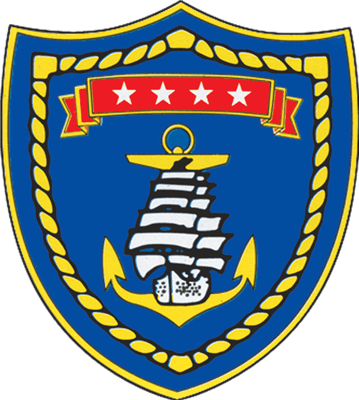
Foundation Date | 1081 | ||||||||
|---|---|---|---|---|---|---|---|---|---|
Personalities | Çaka Bey Fatih Sultan Mehmed Barbaros Hayreddin Paşa Mustafa Kemal Atatürk | ||||||||
First Kapudan Pasha | Saruca Paşa | ||||||||
Bases & Shipyards | Gelibolu Naval Base Haliç Shipyard Gölcük Naval Base | ||||||||
Ships | Nusret Mine Ship Yavuz Battleship TCG Anadolu (L-400) | ||||||||
Projects | MİLGEM Project TCG Yıldıray TCG Fatih | ||||||||
Corporate Symbols | Rope Chain Baklava Rope and Flag Shield Four-Pointed Red Flag | ||||||||
Organizational Structures | Naval Command North Sea Area Command South Sea Area Command | ||||||||
Rank Insignia | Chief of the General Staff / Admiral of the Fleet Ranks Officer Ranks Non-Commissioned Officer Ranks Expert Sergeant Ranks Sergeant Ranks | ||||||||
Class Indicators | Officer Rank Insignia Non-Commissioned Officer Rank Insignia Expert Sergeant Rank Insignia | ||||||||
The Command of the Naval Forces is the military organization responsible for safeguarding Türkiye’s rights and interests at sea, contributing to the defense of the homeland, maintaining a naval force grounded in national power, and employing this force in accordance with Türkiye’s interests across the world’s oceans.
Turkish maritime history is an extension of a military and strategic heritage that spans from Central Asia to Anatolia. This tradition, which finds expression in Turkish culture and mythology through concepts such as “tengiz” (sea) and “taluy” (ocean), and is documented in foundational texts like Divânu Lugâti't-Türk and Kutadgu Bilig with terminology related to ships and seafaring, gained new dimensions following the Turkish settlement in Anatolia after the 1071 Battle of Manzikert.【1】 The year 1081 is recognized as the official founding date of the Command of the Naval Forces.【2】 In the following centuries, the Seljuk State of Anatolia developed its maritime infrastructure with shipyards in Alanya and Sinop; after the Battle of Kösedağ, maritime principalities such as the Karesioğulları, Aydınoğulları, Saruhanoğulları, and Menteşeoğulları established dominance in the Aegean and Mediterranean Seas and passed this legacy to the Ottoman State.【3】
The Ottoman Beylik secured dominance over the Gulf of İzmit by incorporating the territories of the Karesioğulları and through the construction of the first original Turkish ship by Bey Karamürsel.【4】 Under Sultan Yıldırım Bayezid, the first naval base was established in Gelibolu, and Saruca Paşa was appointed as the first Kapudan Pasha, institutionalizing the Ottoman navy. After the conquest of Istanbul, Fatih Sultan Mehmed enhanced the navy’s effectiveness by establishing the Haliç Shipyard (Tersane-i Âmire).【5】 The Battle of Preveza on 27 September 1538, won by Barbaros Hayreddin Paşa, transformed the Mediterranean into a domain under Ottoman naval supremacy. Scholars such as Piri Reis and Seydi Ali Reis made significant contributions to global maritime history through their maps and writings; expeditions under Hadım Süleyman Paşa established control over the Indian Ocean and the Red Sea.【6】
During the 17th and 18th centuries, the navy transitioned from oared galleys (kadırga) to sailing ships (kalyon); in response to the heavy losses in campaigns such as the Cretan Campaign and the Battle of Sakız, the Cezayirli Gazi Hasan Paşa established the Hendesehane in 1775 to meet the navy’s technical education needs.【7】 In the 19th century, despite losses such as the battles of Çeşme, Navarino, and Sinop, modernization efforts were undertaken during the reigns of Sultan Mahmud II and Sultan Abdülaziz; the Ministry of the Navy was established, and new ships and armored fleets were incorporated into the navy.【8】 At the beginning of the 20th century, with the declaration of the Second Constitutional Monarchy and popular support, the Donanma Cemiyeti was formed to purchase new warships; during the Tripolitanian and Balkan Wars, the navy provided logistical support and coastal defense. During this period, the raid conducted by the Hamidiye Cruiser under Rauf Bey had strategic implications for naval doctrine.【9】
On 8 March 1915, the mines laid by the Nusret minelayer in the Dardanelles, combined with effective coastal artillery, repelled the Allied fleet on 18 March 1915. In the Black Sea, the navy ensured the logistical security of the Caucasus front and protected the Straits. Although the Armistice of Mudros after the war resulted in the Allied occupation and control of the navy’s ships, naval officers and sailors organized under the Directorate of Maritime Affairs launched a resistance during the National Struggle.【10】 Small vessels such as Alemdar, Rüsumat No: 4, Gazal, and Şahin played a vital role in transporting munitions from Russia and Istanbul to Anatolia along the coasts of Trabzon, Samsun, and Ereğli, contributing significantly to the victory of the War of Independence.【11】
With the proclamation of the Republic, emphasis on maritime affairs was guided by Mustafa Kemal Atatürk’s vision that “the navy of a Turkish state, whose borders are significantly and largely maritime, must also be significant and large.” In 1924, the Ministry of the Navy was established, followed by the Directorate of the Navy; Gölcük was designated as the navy’s main base. With German and French partnerships, shipyard infrastructure was constructed, the battleship Yavuz was repaired, and the I. and II. İnönü submarines and new destroyers were added to the inventory. By law adopted on 30 May 1949, the institution was reorganized into an independent “Command of the Naval Forces.” Following Türkiye’s accession to NATO in 1952, the Command of the Naval Forces gained operational capability in accordance with international standards; it demonstrated its military strength in practice during the 1974 Cyprus Peace Operation with an amphibious assault.【13】
Beginning in the 1980s, the goal of building a naval force based on indigenous and national capabilities was adopted; the construction of the TCG Yıldıray submarine and the TCG Fatih frigate marked the beginning of a domestic production initiative. In the 2000s, under the MİLGEM (National Ship) Project, the TCG Heybeliada, TCG Büyükada, TCG Burgazada, and TCG Kınalıada corvettes were designed and built using indigenous technology and capabilities and commissioned into service. This process was followed by amphibious assault ships, culminating in the commissioning of Türkiye’s first domestically built multi-purpose amphibious assault ship, TCG Anadolu (L-400), on 10 April 2023.
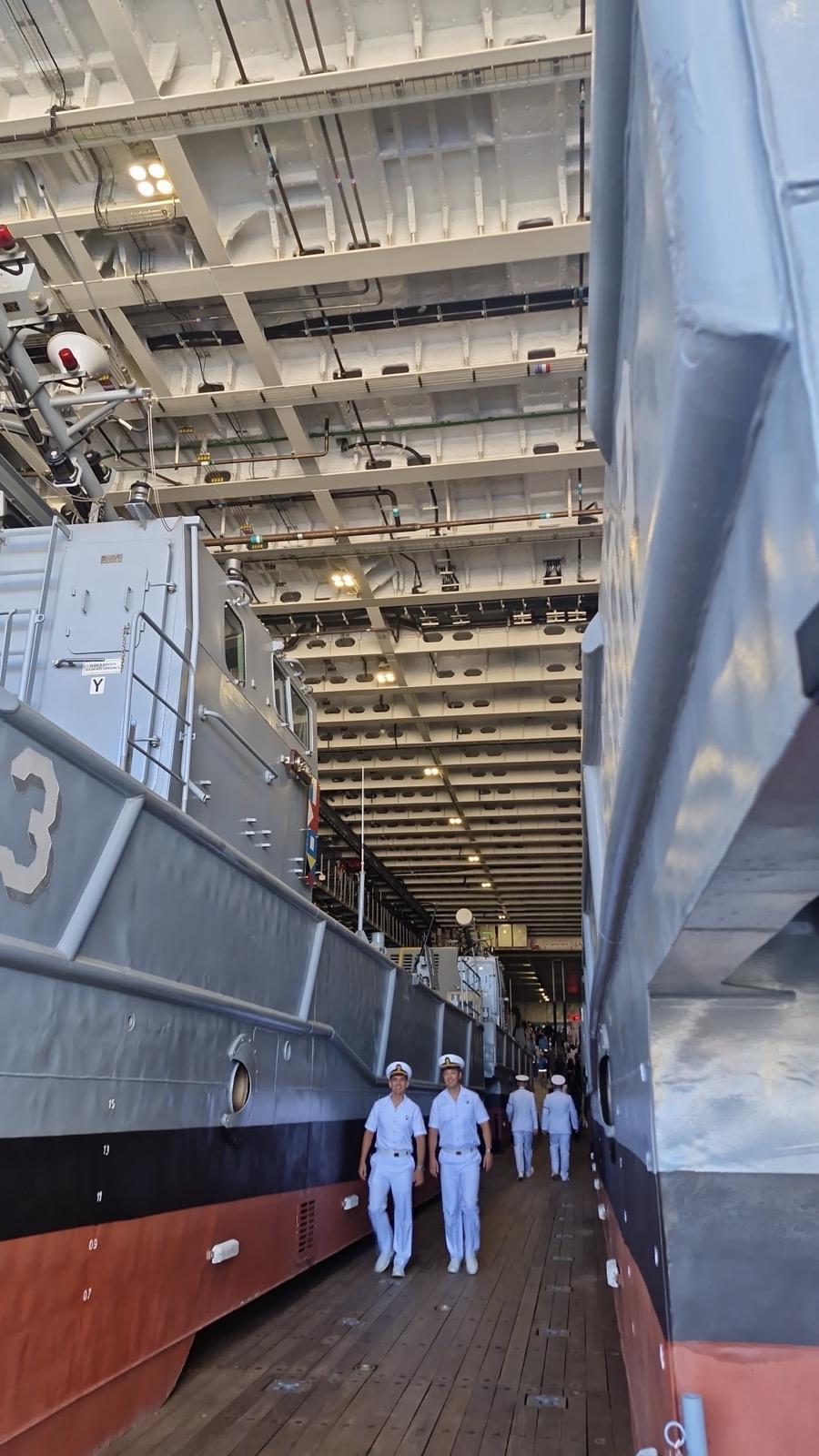
TCG Anadolu ve Bahriyeliler (Fotoğraf: Melih Kılıçlı)
One of the earliest steps in the administrative and headquarters structure of the Turkish navy dates back to the era of Fatih Sultan Mehmed. In 1455, the first Divanhane building was constructed in Kasımpaşa.【14】 The position of Kapudan-ı Derya or Kapudan Paşa, which served as the governing authority of the naval forces, was replaced in 1867 during the reign of Sultan Abdülaziz by the establishment of the Ministry of the Navy, which fulfilled this administrative role until its abolition in 1922.【15】
In response to evolving military and administrative needs, during the reign of Sultan Abdülaziz (1864), the “Erkan-ı Harbiye-i Bahriye Zabitliği,” equivalent to today’s Naval General Staff, was established within the Divanhane complex in Kasımpaşa, and the “Erkân-ı Harbiye-i Bahriye Dairesi” was created.【16】
During the National Struggle, logistical and military operations were managed under the planning of the Bahriye Dairesi, headquartered in Ankara. In the evolution of the headquarters structure, on 10 July 1920, the “Umûr-ı Bahriye Müdüriyeti” was established under the Ministry of National Defense; this directorate was transformed into the “Bahriye Dairesi Riyaseti” in 1921.【17】 Subsequently, on 11 May 1924, the Umûr-ı Bahriye Müdüriyeti was re-established, and on 29 December 1924, the Ministry of the Navy was formally created.【18】
With the abolition of the Ministry of the Navy on 16 January 1928, a “Naval Directorate” position was established under the General Staff of the Ministry of National Defense, and the Fleet Command was administratively and logistically subordinated to the General Staff.【19】 This command structure was reorganized on 30 May 1949 by Law No. 5398, which came into effect on 1 July 1949, as the “Command of the Naval Forces,” consolidating the management of all naval elements under this command.【20】
The physical realization of the headquarters structure began in 1929 with construction initiated by the German firm Gulte Hoffnung.【21】 In 1935, a reorganization formally established the first official headquarters. Despite limited personnel resources at the time, responsibilities were assumed through an administrative structure comprising six branches under the Chief of Staff.【22】
TCG Anadolu’s Flight Deck (Video: Melih Kılıçlı)
The introduction of new ships, increased operational demands, and modernization efforts led to a second staff and organizational reform in 1944. Under this new structure, a seventh branch known as “Başçarkçılık” was established to address modern naval requirements such as machinery, electronics, and radio communications, in addition to existing branches.【23】
In the early 1950s, aiming to reach the standards of other naval powers, the headquarters structure was expanded in 1953 with enhanced authority and personnel, accelerating the development process at the Gölcük Naval Facilities.【24】
Due to the growth of units and the expanding personnel cadre, the original headquarters building (now known as Villa Kalyon) became inadequate, and the headquarters relocated to a new building on 11 May 1964. This structure served until it was destroyed in the 17 August 1999 Marmara Earthquake; after the earthquake, headquarters operations continued for a time in tents and at the Preveze War Games Center, before moving to the current headquarters building on 17 July 2000.【25】
The organization, renamed Istanbul Naval Command as of 1 August 1932, was subordinated to the Chief of the General Staff for operations and training, to the Ministry of National Defense for administrative matters, and to the 3rd Army Command for military discipline and order.【26】 During this period, administrative, military, and logistical units such as the Istanbul Shipyard General Directorate, Naval Logistics Depot Directorate, Naval Sewing Workshop Command, Naval Printing Office, Naval Museum, Black Sea Strait Signal Station Command, and Naval Document Office were consolidated under this command.【27】
The establishment of the Command of the Naval Forces in 1949 and Türkiye’s accession to NATO in 1952 brought about a strategic transformation within the Command of the Naval Forces. Until 1951, the defense of the Straits had been under the jurisdiction of the 1st and 2nd Army Commands as land-based strongholds; it was transferred to the Command of the Naval Forces under the concept of “open to friends, closed to enemies,” in recognition of the strategic importance of the Mediterranean’s security and the transit of surface and submarine forces.【28】
Following the War of Independence, in 1924, as part of reforms within the navy, the first Mine Group was established at the Naldöken location in İzmir. The headquarters of the İzmir Naval Command, to which this group was attached, operated from a rented building along the coastline and was subordinate to the İzmir Fortified Position Command for operations and training. On 30 December 1924, the Law on the Ministry of the Navy established the Aegean Naval Command, with Lieutenant Colonel Necip Bey appointed as its commander and the minelayer İntibah (later renamed Uyanık) assigned as its flagship.【29】
After the abolition of the Ministry of the Navy, the unit, renamed İzmir Naval Command, was relocated to land purchased in Karşıyaka for mine operations. The administrative structure retained its status as a Naval Command until 1947; from 1947 to 1961, it operated under the title of Aegean Base Command. By order of the General Staff dated 31 October 1961, the 2nd Domestic Region Command in İzmir was abolished, and the Southern Sea Area Command was established under the Command of the Naval Forces.【30】 The structure, which assumed responsibility for the Garrison Command duties from the transferred building, transferred its Garrison Command responsibilities to the newly established Aegean Army Command in 1975.【31】
The headquarters building used by the Southern Sea Area Command in Konak since 1961 became inadequate due to organizational growth, urban development in the surrounding area, and the construction of the coastal road. To overcome these physical limitations and meet land requirements, work initiated in November 1970 culminated in the laying of the foundation of the İzmir Yenikale facilities on 27 September 2000. After completion of construction, the Southern Sea Area Command relocated to its new headquarters building on 16 June 2003.【32】
The symbols and meanings of the Command of the Naval Forces consist of elements that merge military tradition with maritime culture, symbolizing the institution’s history and strategic mission. Each visual element in the emblem and badge carries meanings representing the qualities of the navy.
Rope is a type of cable formed by twisting vegetable or synthetic fibers together, designed to withstand tension and bending forces.【33】 The rope encircling the emblem and badge serves as a symbol of continuity between the navy’s past, present, and future. The white background between the emblem and the badge represents a bright outlook toward the future. Chain is a component attached to the ship’s anchor, composed of links known as “anele,” which guide the anchor. The chain on the white background, with each link interlocking with the next, symbolizes the bond among personnel, while the entire chain represents the strength derived from this unity.【34】
The flag and red stripe detail in the emblem symbolize the presence of the commander and the authority of the command position. The four stars on the red stripe indicate that the command position holds the rank of Admiral.【35】
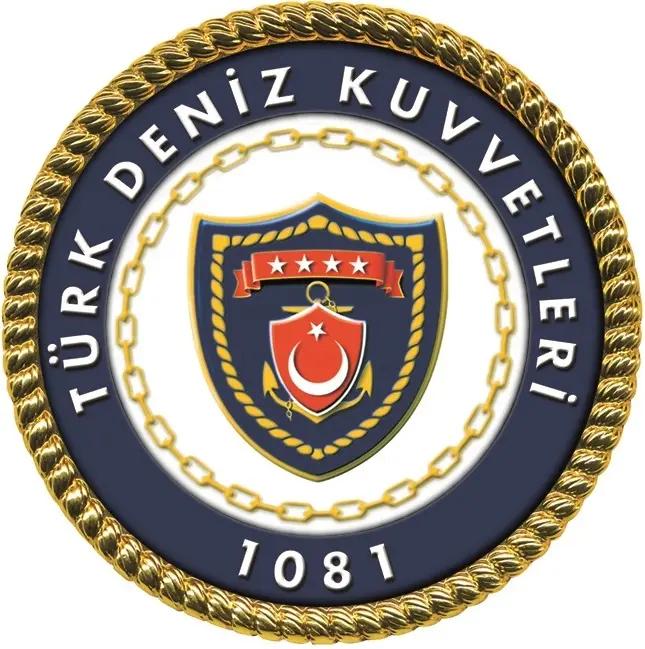
Al Bayraklı Kalkan (Deniz Kuvvetleri Komutanlığı)
The cleat is the fundamental maritime device used to secure surface vessels to the seabed. The flag-emblazoned shield positioned atop the cleat symbolizes the founding of the Turkish Naval Forces.【36】
The Command of the Naval Forces International Missions, Operations, and Exercises encompass activities conducted to preserve Türkiye’s rights and interests in the Blue Homeland, as well as to ensure regional peace, maritime security, and global stability.
The Command of the Naval Forces, operating through maritime passages and routes from the Eastern Mediterranean to the Indian Ocean, directly contributes to global security:
The Command of the Naval Forces organizes international invitation exercises with the participation of allied navies to enhance interoperability:
NUSRET 2021 Invitation Exercise (Command of the Naval Forces)
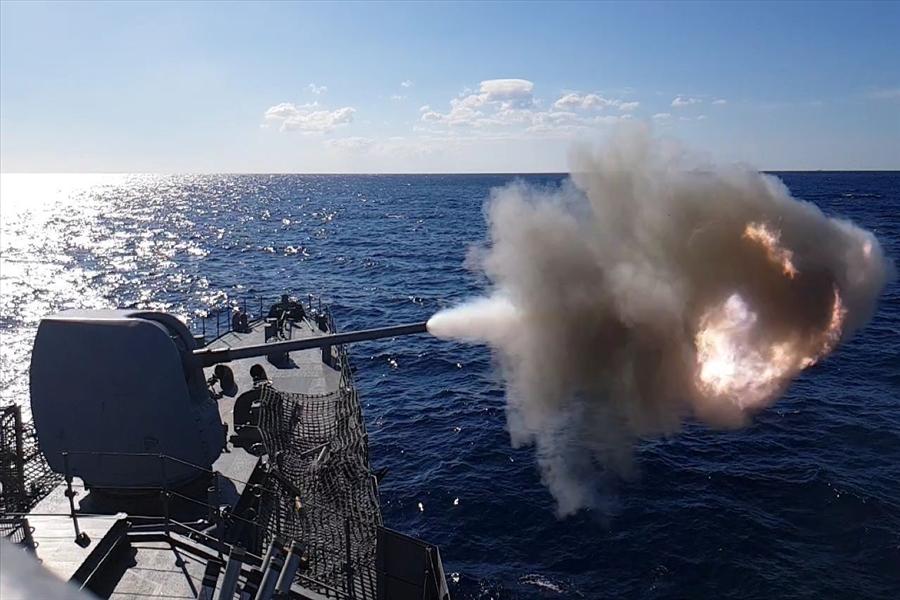
MAVİ BALİNA-2020 Davet Tatbikatı (Deniz Kuvvetleri Komutanlığı)
The Command of the Naval Forces’ defense industry, modernization, and indigenous projects encompass initiatives aimed at reducing dependence on foreign sources, enhancing deterrence through high-tech domestic and national systems, and elevating Türkiye’s defense capabilities in the Blue Homeland. Projects are implemented through collaborative efforts among military shipyards, domestic defense industry firms, and research centers in areas such as indigenous ship design, command and control infrastructure, guided munitions, and unmanned platforms.
The key surface and subsurface projects enhancing the power and operational capabilities of the Command of the Naval Forces are as follows:
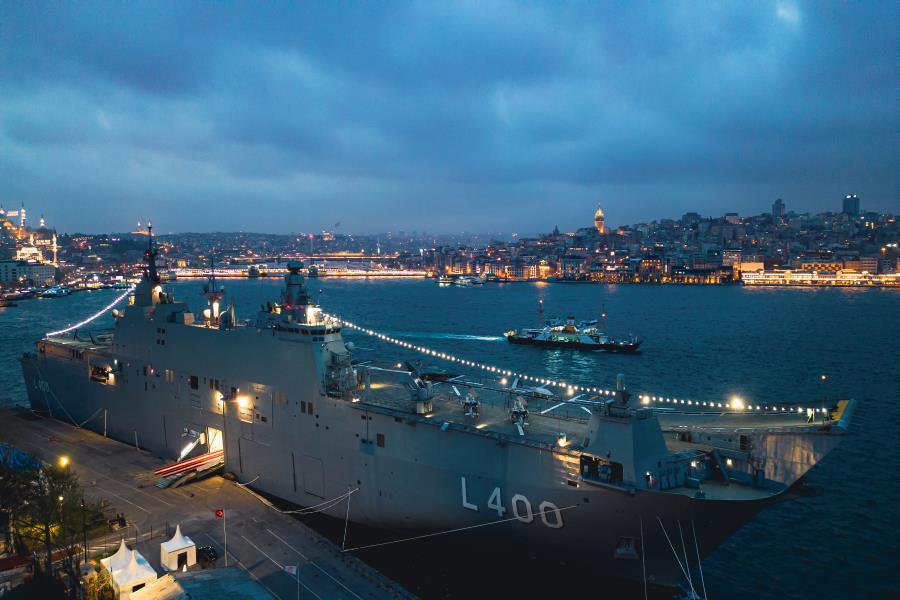
TCG Anadolu (Deniz Kuvvetleri Komutanlığı)
[1]
Deniz Kuvvetleri Komutanlığı, “Deniz Kuvvetleri Komutanlığı Tarihçesi.” s.9, Erişim Tarihi: 6 Ağustos 2026, https://www.dzkk.tsk.tr/Content/Upload/Docs/Dz.K.Tarihce.pdf.
[2]
Deniz Kuvvetleri Komutanlığı, “Deniz Kuvvetleri Komutanlığı Tarihçesi.” s.9.
[3]
Deniz Kuvvetleri Komutanlığı, “Deniz Kuvvetleri Komutanlığı Tarihçesi.” s.9-10.
[4]
Deniz Kuvvetleri Komutanlığı, “Deniz Kuvvetleri Komutanlığı Tarihçesi.” s.10.
[5]
Deniz Kuvvetleri Komutanlığı, “Deniz Kuvvetleri Komutanlığı Tarihçesi.” s.11.
[6]
Deniz Kuvvetleri Komutanlığı, “Deniz Kuvvetleri Komutanlığı Tarihçesi.” s.12.
[7]
Deniz Kuvvetleri Komutanlığı, “Deniz Kuvvetleri Komutanlığı Tarihçesi.” s.13.
[8]
Deniz Kuvvetleri Komutanlığı, “Deniz Kuvvetleri Komutanlığı Tarihçesi.” s.13.
[9]
Deniz Kuvvetleri Komutanlığı, “Deniz Kuvvetleri Komutanlığı Tarihçesi.” s.15.
[10]
Deniz Kuvvetleri Komutanlığı, “Deniz Kuvvetleri Komutanlığı Tarihçesi.” s.17-18.
[11]
Deniz Kuvvetleri Komutanlığı, “Deniz Kuvvetleri Komutanlığı Tarihçesi.” s.19.
[13]
Deniz Kuvvetleri Komutanlığı, “Deniz Kuvvetleri Komutanlığı Tarihçesi.” s.22.
[14]
Deniz Kuvvetleri Komutanlığı, “Deniz Kuvvetleri Komutanlığı Tarihçesi.” s.11.
[15]
Deniz Kuvvetleri Komutanlığı, “Deniz Kuvvetleri Komutanlığı Tarihçesi.” s.13.
[16]
Deniz Kuvvetleri Komutanlığı, “Deniz Kuvvetleri Komutanlığı Tarihçesi.” s.13.
[17]
Deniz Kuvvetleri Komutanlığı, “Deniz Kuvvetleri Komutanlığı Tarihçesi.” s.18.
[18]
Deniz Kuvvetleri Komutanlığı, “Deniz Kuvvetleri Komutanlığı Tarihçesi.” s.19.
[19]
Deniz Kuvvetleri Komutanlığı, “Deniz Kuvvetleri Komutanlığı Tarihçesi.” s.21.
[20]
Deniz Kuvvetleri Komutanlığı, “Deniz Kuvvetleri Komutanlığı Tarihçesi.” s.22.
[21]
Deniz Kuvvetleri Komutanlığı, “Donanma Komutanlığı Tarihçesi.” Erişim Tarihi: 6 Ağustos 2026, https://www.dzkk.tsk.tr/ArsivAskeriTarih/icerik/donanma-komutanligi-tarihcesi.
[22]
Deniz Kuvvetleri Komutanlığı, “Donanma Komutanlığı Tarihçesi.”
[23]
Deniz Kuvvetleri Komutanlığı, “Donanma Komutanlığı Tarihçesi.”
[24]
Deniz Kuvvetleri Komutanlığı, “Donanma Komutanlığı Tarihçesi.”
[25]
Deniz Kuvvetleri Komutanlığı, “Donanma Komutanlığı Tarihçesi.”
[26]
Deniz Kuvvetleri Komutanlığı, “Kuzey Deniz Saha Komutanlığı Tarihçesi.” Erişim Tarihi: 6 Ağustos 2026. https://www.dzkk.tsk.tr/ArsivAskeriTarih/icerik/kuzey-deniz-saha-komutanligi-tarihcesi.
[27]
Deniz Kuvvetleri Komutanlığı, “Kuzey Deniz Saha Komutanlığı Tarihçesi.”
[28]
Deniz Kuvvetleri Komutanlığı, “Kuzey Deniz Saha Komutanlığı Tarihçesi.”
[29]
Deniz Kuvvetleri Komutanlığı, “Güney Deniz Saha Komutanlığı Tarihçesi.” Erişim Tarihi: 6 Ağustos 2026, https://www.dzkk.tsk.tr/ArsivAskeriTarih/icerik/guney-deniz-saha-komutanligi-tarihcesi.
[30]
Deniz Kuvvetleri Komutanlığı, “Güney Deniz Saha Komutanlığı Tarihçesi.”
[31]
Deniz Kuvvetleri Komutanlığı, “Güney Deniz Saha Komutanlığı Tarihçesi.”
[32]
Deniz Kuvvetleri Komutanlığı, “Güney Deniz Saha Komutanlığı Tarihçesi.”
[33]
Deniz Kuvvetleri Komutanlığı, “Deniz Kuvvetleri Komutanlığı Ambleminin ve Brövesinin Anlamı.” Erişim Tarihi: 6 Ağustos 2026, https://www.dzkk.tsk.tr/Genel/icerik/deniz-kuvvetleri-komutanligi-ambleminin-ve-brovesinin-anlami.
[34]
Deniz Kuvvetleri Komutanlığı, “Deniz Kuvvetleri Komutanlığı Ambleminin ve Brövesinin Anlamı.”
[35]
Deniz Kuvvetleri Komutanlığı, “Deniz Kuvvetleri Komutanlığı Ambleminin ve Brövesinin Anlamı.”
[36]
Deniz Kuvvetleri Komutanlığı, “Deniz Kuvvetleri Komutanlığı Ambleminin ve Brövesinin Anlamı.”
[37]
Deniz Kuvvetleri Komutanlığı, “Türk Deniz Görev Grubu.” Erişim Tarihi: 6 Ağustos 2026, https://www.dzkk.tsk.tr/Harekat/icerik/turk-deniz-gorev-grubu.
[38]
Deniz Kuvvetleri Komutanlığı, “Akdeniz Kalkanı Harekatı.” Erişim Tarihi: 6 Ağustos 2026, https://www.dzkk.tsk.tr/Harekat/icerik/akdeniz-kalkani-harekati.
[39]
Deniz Kuvvetleri Komutanlığı, “Somali Deniz Görev Grubu (SDGG).” Erişim Tarihi: 6 Ağustos 2026, https://www.dzkk.tsk.tr/Harekat/icerik/somali-deniz-gorev-grubu-sdgg.
[40]
Deniz Kuvvetleri Komutanlığı, “Birleşik Görev Kuvveti.” Erişim Tarihi: 6 Ağustos 2026, https://www.dzkk.tsk.tr/Harekat/icerik/birlesik-gorev-kuvveti.
[41]
Deniz Kuvvetleri Komutanlığı, “NATO Daimi Görev Grupları.” Erişim Tarihi: 6 Ağustos 2026, https://www.dzkk.tsk.tr/Harekat/icerik/nato-daimi-gorev-gruplari.
[42]
Deniz Kuvvetleri Komutanlığı, “Deniz Muhafızı Harekatı.” Erişim Tarihi: 6 Ağustos 2026, https://www.dzkk.tsk.tr/Harekat/icerik/deniz-muhafizi-harekati.
[43]
Deniz Kuvvetleri Komutanlığı, “Karadeniz Uyumu Harekatı.” Erişim Tarihi: 6 Ağustos 2026, https://www.dzkk.tsk.tr/Harekat/icerik/karadeniz-uyumu-harekati.
[44]
Deniz Kuvvetleri Komutanlığı, “UNIFIL Deniz Harekatı.” Erişim Tarihi: 6 Ağustos 2026, https://www.dzkk.tsk.tr/Harekat/icerik/unifil-deniz-harekati.
[45]
Deniz Kuvvetleri Komutanlığı, “Doğu Akdeniz Davet Tatbikatı.” Erişim Tarihi: 6 Ağustos 2026, https://www.dzkk.tsk.tr/Harekat/icerik/dogu-akdeniz-davet-tatbikati.
[46]
Deniz Kuvvetleri Komutanlığı “Nusret Mayın Harbi Davet Tatbikatı.” Erişim Tarihi: 6 Ağustos 2026, https://www.dzkk.tsk.tr/Harekat/icerik/nusret-mayin-harbi-davet-tatbikati.
[47]
Deniz Kuvvetleri Komutanlığı, “Kurtaran Davet Tatbikatı.” Erişim Tarihi: 6 Ağustos 2026, https://www.dzkk.tsk.tr/Harekat/icerik/kurtaran-davet-tatbikati.
[48]
Deniz Kuvvetleri Komutanlığı, “Mavi Balina Davet Tatbikatı.” Erişim Tarihi: 6 Ağustos 2026, https://www.dzkk.tsk.tr/Harekat/icerik/mavi-balina-davet-tatbikati.
[49]
Türk Silahlı Kuvvetlerini Güçlendirme Vakfı, "Türk Donanması’nın Caydırıcı Gücü: MİLGEM Projesi." Erişim Tarihi: 6 Ağustos 2026. https://tskgv.org.tr/savunmasanayiigundem/turk-donanmasinin-caydirici-gucu-milgem-projesi.
[50]
GZT. "Türkiye'nin ilk hava savunma muhribi TF-2000: Tamamen yerli imkanlarla üretilecek." Accessed August 5, 2026.
[51]
Deniz Kuvvetleri Komutanlığı, “Denizaltı İnşa Projeleri.” Erişim Tarihi: 6 Ağustos 2026, https://www.dzkk.tsk.tr/Arge/icerik/denizalti-insa-projeleri.
[52]
Deniz Kuvvetleri Komutanlığı, “Fırkateyn Muhrip Projeleri.” Erişim Tarihi: 6 Ağustos 2026, https://www.dzkk.tsk.tr/Arge/icerik/firkateyn-muhrip-projeleri.
[53]
Deniz Kuvvetleri Komutanlığı, “Değerlerimiz.” Erişim Tarihi: 6 Ağustos 2026, https://www.dzkk.tsk.tr/Komutanlik/Degerlerimiz.

Foundation Date | 1081 | ||||||||
|---|---|---|---|---|---|---|---|---|---|
Personalities | Çaka Bey Fatih Sultan Mehmed Barbaros Hayreddin Paşa Mustafa Kemal Atatürk | ||||||||
First Kapudan Pasha | Saruca Paşa | ||||||||
Bases & Shipyards | Gelibolu Naval Base Haliç Shipyard Gölcük Naval Base | ||||||||
Ships | Nusret Mine Ship Yavuz Battleship TCG Anadolu (L-400) | ||||||||
Projects | MİLGEM Project TCG Yıldıray TCG Fatih | ||||||||
Corporate Symbols | Rope Chain Baklava Rope and Flag Shield Four-Pointed Red Flag | ||||||||
Organizational Structures | Naval Command North Sea Area Command South Sea Area Command | ||||||||
Rank Insignia | Chief of the General Staff / Admiral of the Fleet Ranks Officer Ranks Non-Commissioned Officer Ranks Expert Sergeant Ranks Sergeant Ranks | ||||||||
Class Indicators | Officer Rank Insignia Non-Commissioned Officer Rank Insignia Expert Sergeant Rank Insignia | ||||||||
Henüz Tartışma Girilmemiştir
"Command of the Naval Forces" maddesi için tartışma başlatın
History and Establishment
Fleet Command
Northern Sea Area Command
Southern Sea Area Command
Ranks and Insignia
Rank Insignia
Classification Insignia
Symbols and Meanings
Rope, Chain, and Emblem Background
Flag, Red Stripe, and Stars
Cleat and Flag-Emblazoned Shield
International Missions, Operations, and Exercises
Regional and Global Naval Operations
International Invitation Exercises
Defense Industry and Indigenous Projects
Surface and Subsurface Combat Platform Projects
Core Values【53】