


Bu içerik Türkçe olarak yazılmış olup yapay zeka ile otomatik olarak İngilizceye çevrilmiştir.

When thinking of Southeastern Anatolia, most of us immediately recall the Euphrates and Tigris rivers. Around these two rivers, which have sustained the region’s land for centuries, civilizations emerged, cities grew, and a culture of production developed over generations. With the construction of dams, irrigation canals, and hydroelectric power plants under the GAP initiative, a new force is now emerging in this geography: technology. The region’s future is no longer shaped solely by how much its soil produces, but also by how knowledge and technology guide this production. Can Southeastern Anatolia add to its deep-rooted heritage the identity of a region that produces technology?
In seeking an answer to this question, we encounter the National Technology Initiative. This approach, aimed at developing Turkey’s critical technologies through its own capabilities and strengthening technological independence, is not merely about creating new products. Technological independence finds expression not only in aerial vehicles we see in the sky or satellites launched into space, but also in a farmer using sensors to monitor his land, a student developing their own software, and a young entrepreneur turning an idea into a product. Therefore, cultivating the human resources capable of designing, developing, and adapting these technologies to the nation’s needs is equally vital. The true power of the National Technology Initiative will emerge when the mindset of production reaches every corner of the country.
The National Technology Initiative can make significant contributions to the development of Southeastern Anatolia, and the region itself can become a model implementation area for achieving the initiative’s goals. This is because the region possesses significant development potential through its vast agricultural lands, water resources, and solar energy sources, as well as its young population. However, for these opportunities to translate into lasting development, they must be supported by technology. More efficient water use, digital monitoring of agricultural production, and providing young people with environments where they can develop technology are among the key steps that can shape the region’s future. Moreover, involving people who intimately understand the region’s needs in the solution-generation process can make the developed technologies more practical. To understand the foundations of this transformation, we must first examine the process that began with GAP.
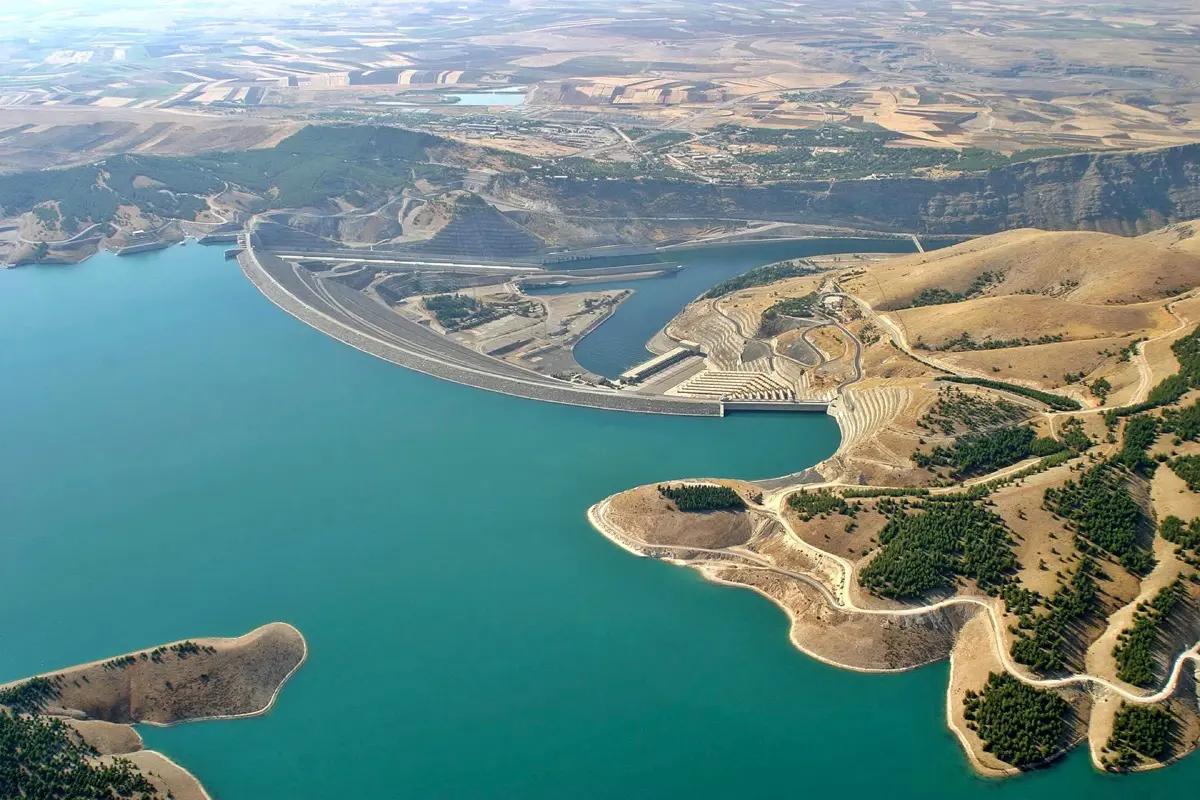
Atatürk Barajı ve Hidroelektrik Santrali (HES) - (EÜAŞ)
To understand Southeastern Anatolia’s current technological potential, we must first examine the transformation brought about by GAP. Although GAP is often remembered for its dams and irrigation canals, it is not merely an energy and irrigation project. The project adopts a comprehensive regional development approach that integrates agriculture, energy, industry, infrastructure, and social development.【1】 The dams and hydroelectric power plants built on the Euphrates and Tigris have contributed to energy production, while the expanding irrigation infrastructure has enhanced the region’s agricultural production capacity. Thus, a vital infrastructure has been established to enable more planned utilization of the region’s water and soil resources.
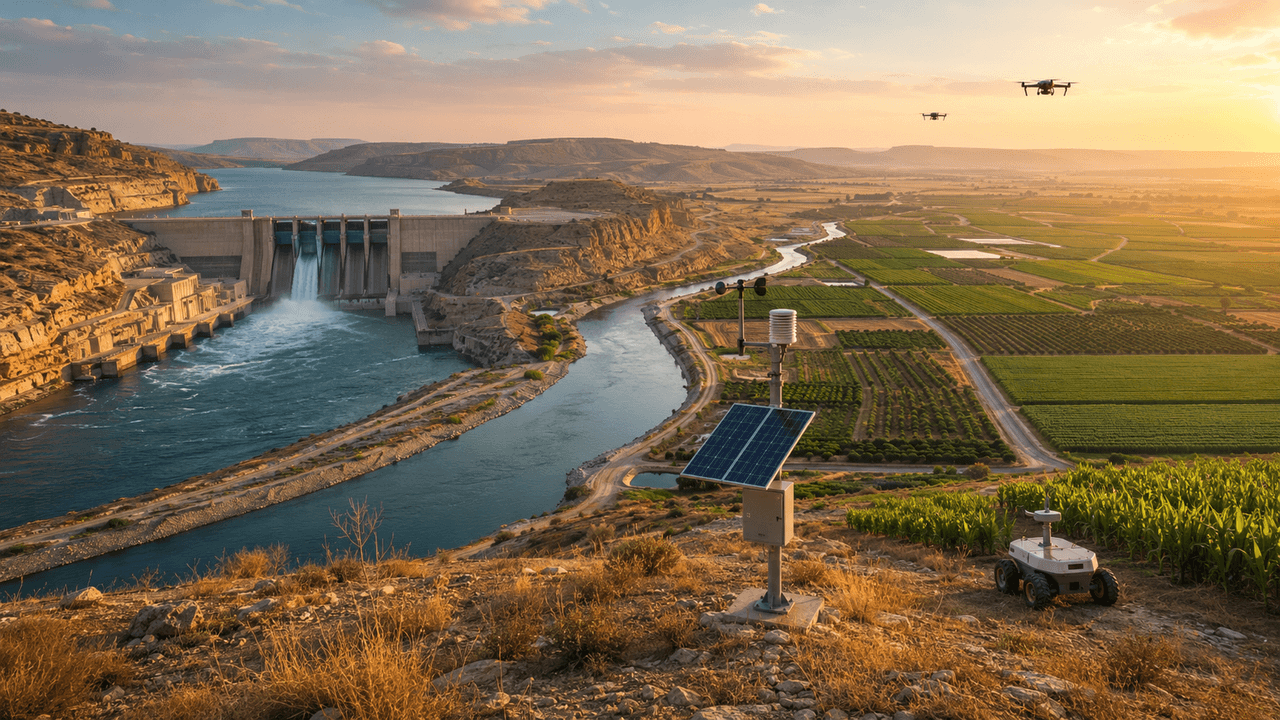
GAP’ın Oluşturduğu Altyapının Akıllı Tarım Teknolojileriyle Desteklenmesini Gösteren Temsili Görsel (Yapay Zekâ ile Oluşturulmuştur.)
Although this infrastructure has laid a strong foundation for regional development, it is no longer sufficient under today’s conditions. The pressure of climate change on water resources and the growing demand for increased agricultural productivity require more conscious management of existing capabilities. At this point, sensors, satellite imagery, data analysis, and domestic software come into play. While GAP enables the conversion of water and energy resources into production, next-generation technologies can help ensure these resources are used at the right time, in the right place, and in the right amount. Thus, the physical transformation initiated by GAP can gain a new dimension by aligning with goals of domestic production and digitalization. One notable example of this transformation in agriculture is smart farming applications that monitor soil conditions and plant growth through data.
A farmer may come to know his land through years of experience—observing the arrival of rain, the moment crops need water, or changes in plant development. However, climate change, drought, and increasing pressure on water resources make it necessary to supplement this experience with up-to-date data. The approach known as precision agriculture uses sensors, satellite imagery, and data analysis to closely monitor soil moisture, crop development, and field variations. This enables farmers to make more accurate decisions about when to irrigate or intervene in the production process. This method can also reduce unnecessary use of water, energy, and fertilizer. Here, technology is not meant to replace the farmer, but to support his decades-long experience with more accurate and current information.
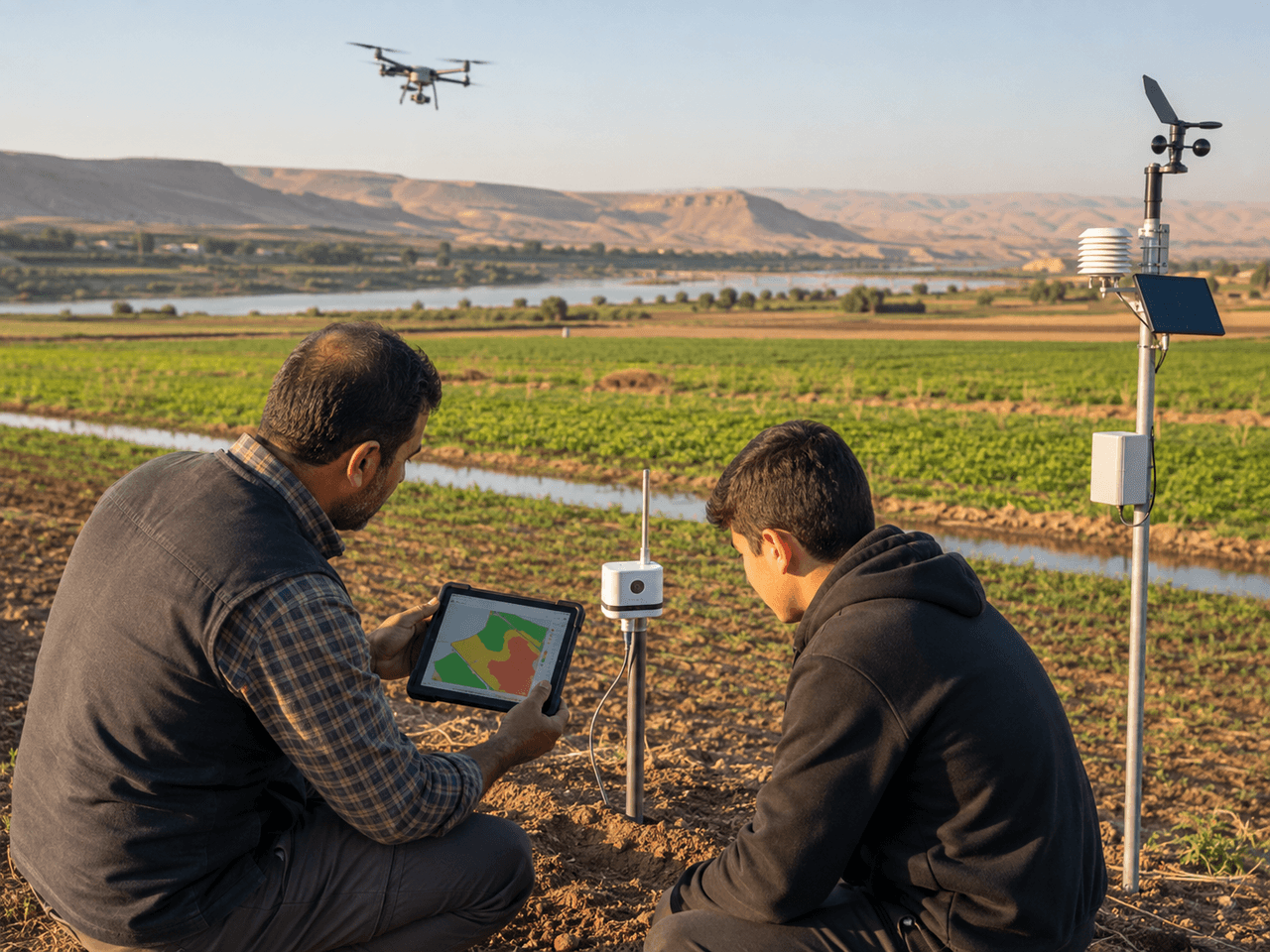
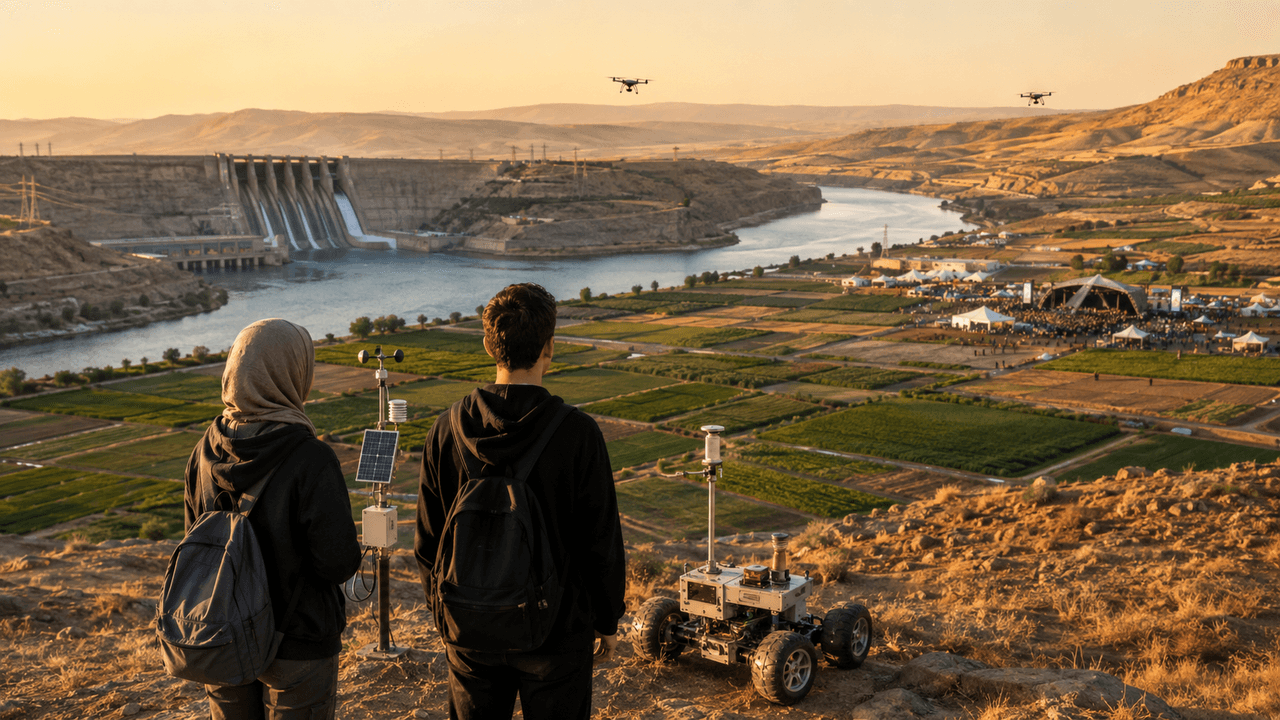
Sensör, Veri Analizi ve İnsansız Hava Araçlarıyla Desteklenen Akıllı Tarım Uygulamalarının Temsili (Yapay Zekâ ile Oluşturulmuştur.)
One concrete example of these technologies in Southeastern Anatolia is the “Project for the Dissemination of Precision Agriculture and Sustainable Practices in the GAP Region,” coordinated by the GAP Regional Development Administration. Briefly called GAP HASSAS, the project was developed through collaboration between TÜBİTAK UZAY, HAVELSAN, Harran University, and related institutions.【2】 The system analyzes data collected from satellite imagery and various cameras and sensors through a domestic and national software platform, helping to regularly monitor agricultural production. Farmers can share their findings with agricultural advisors registered in the system and receive guidance on production processes.【3】 Thus, space and software technologies are not only used in scientific research but also to solve everyday problems faced by farmers in the region. GAP HASSAS’s domestic software brings together satellite technology and the knowledge accumulated by various institutions to address a regional need, aligning perfectly with the National Technology Initiative’s philosophy of developing technology according to the country’s needs. This example demonstrates that technological independence can also be realized in agricultural production, not just in defense and space sectors. However, the development and widespread adoption of these systems depend on the emergence of young people capable of adapting them to the region’s needs.
While providing technological capabilities to a region is important, true transformation begins with the emergence of people capable of developing those technologies. Southeastern Anatolia’s young population is one of the region’s most important assets in this regard. A young person who intimately understands the challenges of their environment can generate practical solutions for efficient water use, improved agricultural production, or greater utilization of solar energy. Thus, young people can move beyond being mere users of technologies developed elsewhere and actively participate in designing systems tailored to their region’s needs. The lasting impact of this transformation in Southeastern Anatolia will emerge when young people adopt the mindset of “I can also produce.”
One structure responding to this need is the Turkey Technology Team Foundation, which aims to cultivate the human resources required by the National Technology Initiative. At DENEYAP Technology Workshops, among whose stakeholders the foundation participates, students gain education in fields such as design, robotics, coding, electronics, artificial intelligence, and aviation, and have the opportunity to turn their ideas into practice.【4】 BİLSEM centers under the Ministry of National Education also support students in conducting scientific research and developing original projects.【5】 The knowledge and skills acquired in these workshops and centers can be transformed into projects seeking solutions to real-world problems through TEKNOFEST competitions. An idea developed by a student in Southeastern Anatolia can address regional needs—from an irrigation system that conserves water to a product powered by solar energy. A small idea that begins in a workshop can thus evolve into a domestic technology that contributes to the region’s future, rather than remaining merely a competition project.

TEKNOFEST 2026 Şanlıurfa Duyurusu (TEKNOFEST).
When we think of Şanlıurfa, most of us immediately recall Göbekli Tepe, one of the most important archaeological sites in human history.【6】 However, the city is preparing to connect its historical legacy with the technologies of the future between September 30 and October 4, 2026.【7】 Hosting TEKNOFEST in Şanlıurfa means more than just bringing a large festival to the region; it signifies the convergence of the National Technology Initiative’s philosophy of domestic production and technological independence with the youth of Southeastern Anatolia. A child in the region, seeing aerial vehicles, robots, and projects developed by young people in their own city, may realize they too can be part of this production process. Thus, the National Technology Initiative will find its true meaning in the region not only through the technologies developed but also through more young people adopting the mindset of “I can also produce.”
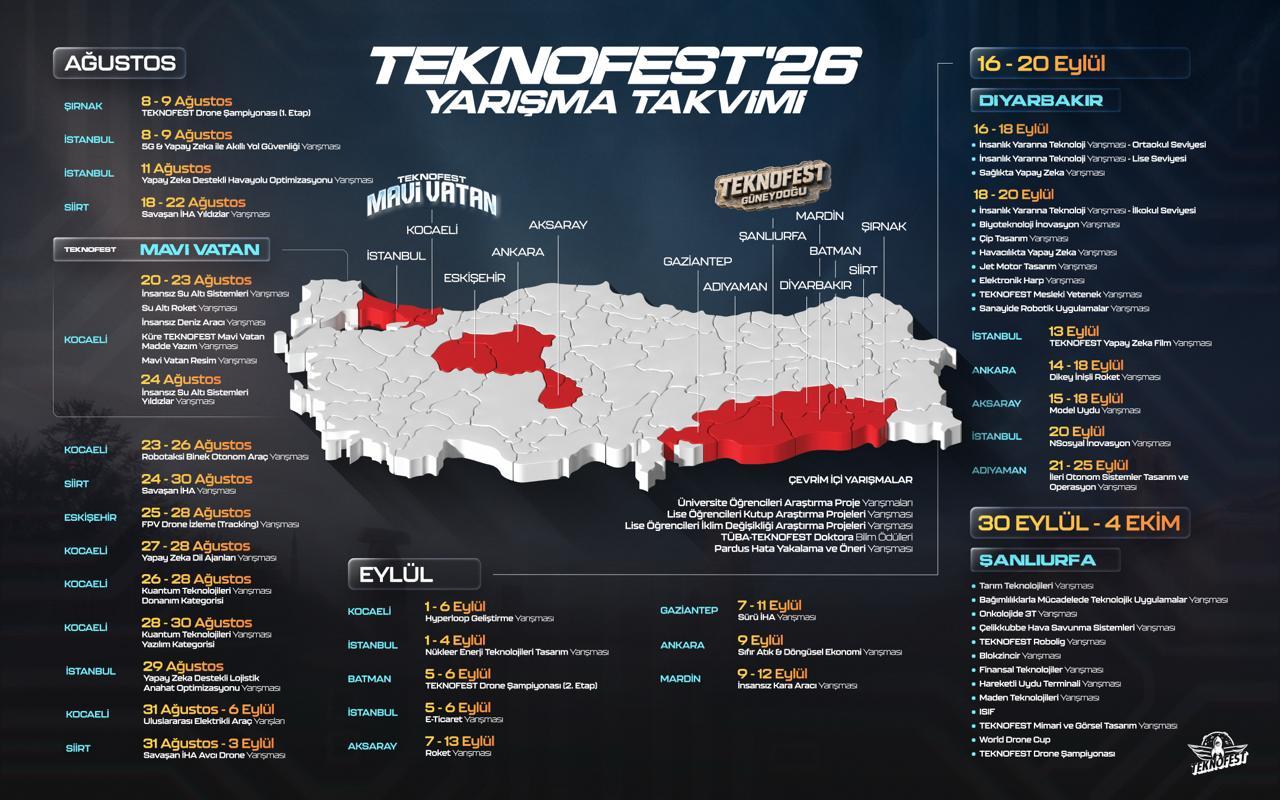
TEKNOFEST 2026 Teknoloji Yarışmalarının Farklı İllerde Gerçekleştirilecek Etaplarını Gösteren Yarışma Takvimi (TEKNOFEST).
The fact that some technology competitions under the TEKNOFEST umbrella are held in different provinces demonstrates that the event is not confined solely to the festival grounds in Şanlıurfa.【8】 In the cities where competitions take place, local communities have the opportunity to closely observe the tools, software, and various technology projects developed by young people, while children witness the excitement of creation in their own towns. Perhaps a child who today wanders curiously through the competition area will return in a few years with a project they themselves have developed. These encounters can transform the National Technology Initiative from an abstract goal into a tangible process that people can see, experience, and participate in. However, true success will lie in sustaining the curiosity and enthusiasm generated by the competitions through continued education, workshops, and new projects.
TEKNOFEST’le Oluşan İlginin Gençlerin Üretim Kültürüne Dönüşmesini Gösteren Temsili Görsel (Yapay Zekâ ile Oluşturulmuştur.)
When the festival grounds are empty and the competitions end, what will remain in Southeastern Anatolia? For the curiosity and excitement generated by TEKNOFEST to lead to lasting transformation, children and young people must be supported through education, workshops, and mentoring programs. It is also essential that projects developed during competitions are adapted to regional needs such as agriculture, water management, energy, and the environment, rather than being remembered only during exhibition days. Thanks to the continuity provided by DENEYAP workshops, BİLSEM centers, schools, and universities, young people can continue researching and producing in their own cities. Because the success of the National Technology Initiative in the region must be measured not by the number of events held or participants involved, but by the culture of production that continues to thrive after the festival.
Southeastern Anatolia can add to its deep-rooted heritage the identity of a region that produces technology. However, achieving this will not be possible merely by introducing new devices and systems to the region. The infrastructure created by GAP must be enhanced through smart farming applications, young people must be provided with opportunities to produce in environments like DENEYAP and BİLSEM, and the enthusiasm generated by TEKNOFEST must be sustained beyond the festival. The true success of the National Technology Initiative in the region will be evident when a farmer benefits from domestic technologies, a student develops their own software, and a young person finds solutions to the challenges of their environment. In this way, Southeastern Anatolia can transform from a region that merely uses technology into a production center contributing to Türkiye’s technological independence. The life that the Euphrates and Tigris have given to the land for centuries can today be transferred to a new future through knowledge and the technologies produced by its youth.
DENEYAP Teknoloji Atölyeleri. "Hakkımızda / Sıkça Sorulan Sorular." deneyap.org.tr. Accessed September 2, 2026.https://www.deneyap.org/tr/hakkimizda/sss/
Elektrik Üretim A.Ş. "Atatürk HES." EÜAŞ. Accessed September 2, 2026.https://www.euas.gov.tr/santraller/ataturk-hes.
Güneydoğu Anadolu Projesi Bölge Kalkınma İdaresi Başkanlığı. "GAP Hassas." gap.gov.tr. Accessed September 2, 2026.
Güneydoğu Anadolu Projesi Bölge Kalkınma İdaresi Başkanlığı. "GAP Nedir?" gap.gov.tr. Accessed September 2, 2026.
Güneydoğu Anadolu Projesi Bölge Kalkınma İdaresi Başkanlığı. "Hassas Tarım ve Sürdürülebilir Uygulamaların Yaygınlaştırılması Projesi." gap.gov.tr. Accessed September 2, 2026.
Ministry of National Education of the Republic of Turkey, General Directorate of Special Education and Guidance Services. *Regulation on Science and Art Centers of the Ministry of National Education*. Ankara: Ministry of National Education, 2025. Accessed September 2, 2026.https://orgm.meb.gov.tr/meb_iys_dosyalar/2025_11/11113603_milliegitimbakanligibilimvesanatmerkezleriyonergesi.pdf
TEKNOFEST. "TEKNOFEST 2026 Yılında Şanlıurfa'da!" TEKNOFEST. Accessed September 2, 2026.https://www.teknofest.org/tr/duyurular/teknofest-2026-yilinda-sanliurfada/
TEKNOFEST. "Yarışma Takvimi." TEKNOFEST. Accessed September 2, 2026.https://www.teknofest.org/tr/yarismalar/yarisma-takvimi/.
Türkiye Teknoloji Team Foundation. "Millî Teknoloji Hamlesi." T3 Vakfı. Accessed September 2, 2026.https://t3vakfi.org/tr/hakkimizda/mth/.
UNESCO. "Göbekli Tepe." UNESCO World Heritage Centre. Accessed September 2, 2026.https://whc.unesco.org/en/list/1572/.
[1]
Güneydoğu Anadolu Projesi Bölge Kalkınma İdaresi Başkanlığı, "GAP Nedir?," gap.gov.tr, erişim 2 Eylül 2026, https://www.gap.gov.tr/sayfa/gap-hakkinda/gap-nedir/.
[2]
Güneydoğu Anadolu Projesi Bölge Kalkınma İdaresi Başkanlığı, "GAP Hassas," gap.gov.tr, erişim 2 Eylül 2026, https://www.gap.gov.tr/sayfa/basari-hikayeleri/basarilar/gap-hassas/
[3]
Güneydoğu Anadolu Projesi Bölge Kalkınma İdaresi Başkanlığı, "Hassas Tarım ve Sürdürülebilir Uygulamaların Yaygınlaştırılması Projesi," gap.gov.tr, erişim 2 Eylül 2026, https://www.gap.gov.tr/sayfa/plan-ve-program/programlar/ekonomik-kalkinma-projeleri/devam-eden-projeler/hassas-tarim-ve-surdurulebilir-uygulamalarin-yayginlastirilmasi/
[4]
DENEYAP Teknoloji Atölyeleri, "Hakkımızda / Sıkça Sorulan Sorular," deneyap.org.tr, erişim 2 Eylül 2026, https://www.deneyap.org/tr/hakkimizda/sss/.
[5]
T.C. Millî Eğitim Bakanlığı Özel Eğitim ve Rehberlik Hizmetleri Genel Müdürlüğü, Millî Eğitim Bakanlığı Bilim ve Sanat Merkezleri Yönergesi (Ankara: Millî Eğitim Bakanlığı, 2025), erişim 2 Eylül 2026, https://orgm.meb.gov.tr/meb_iys_dosyalar/2025_11/11113603_milliegitimbakanligibilimvesanatmerkezleriyonergesi.pdf.
[6]
UNESCO, "Göbekli Tepe," UNESCO World Heritage Centre, erişim 2 Eylül 2026, https://whc.unesco.org/en/list/1572/.
[7]
TEKNOFEST. "TEKNOFEST 2026 Yılında Şanlıurfa'da!" Accessed September 2, 2026.
[8]
TEKNOFEST, "Yarışma Takvimi," TEKNOFEST, erişim 2 Eylül 2026, https://www.teknofest.org/tr/yarismalar/yarisma-takvimi/.
The Transformation That Began with GAP
Reading the Soil with Technology
A Generation Growing with Technology
The Future Meets in Şanlıurfa Through TEKNOFEST
What Will Remain After the Festival?
A Southeastern Anatolia That Produces, Not Just Uses, Technology