+2 Daha

Date of Birth | 1980 | ||||||||
|---|---|---|---|---|---|---|---|---|---|
Place of Birth | Üsküdar, İstanbul | ||||||||
Profession | Clinical psychologist, academic | ||||||||
Education | Marmara University (Bachelor's, Doctorate) RMIT University (Master's) Okan University (Master's) University of Melbourne (Master's) | ||||||||
Title | Assoc. Prof. Dr. | ||||||||
Position | General President of Türkiye Green Crescent Society | ||||||||
Areas of Work | Digital addictions Psychological resilience Narrative Therapy | ||||||||
Marital Status | Married and father of two children | ||||||||
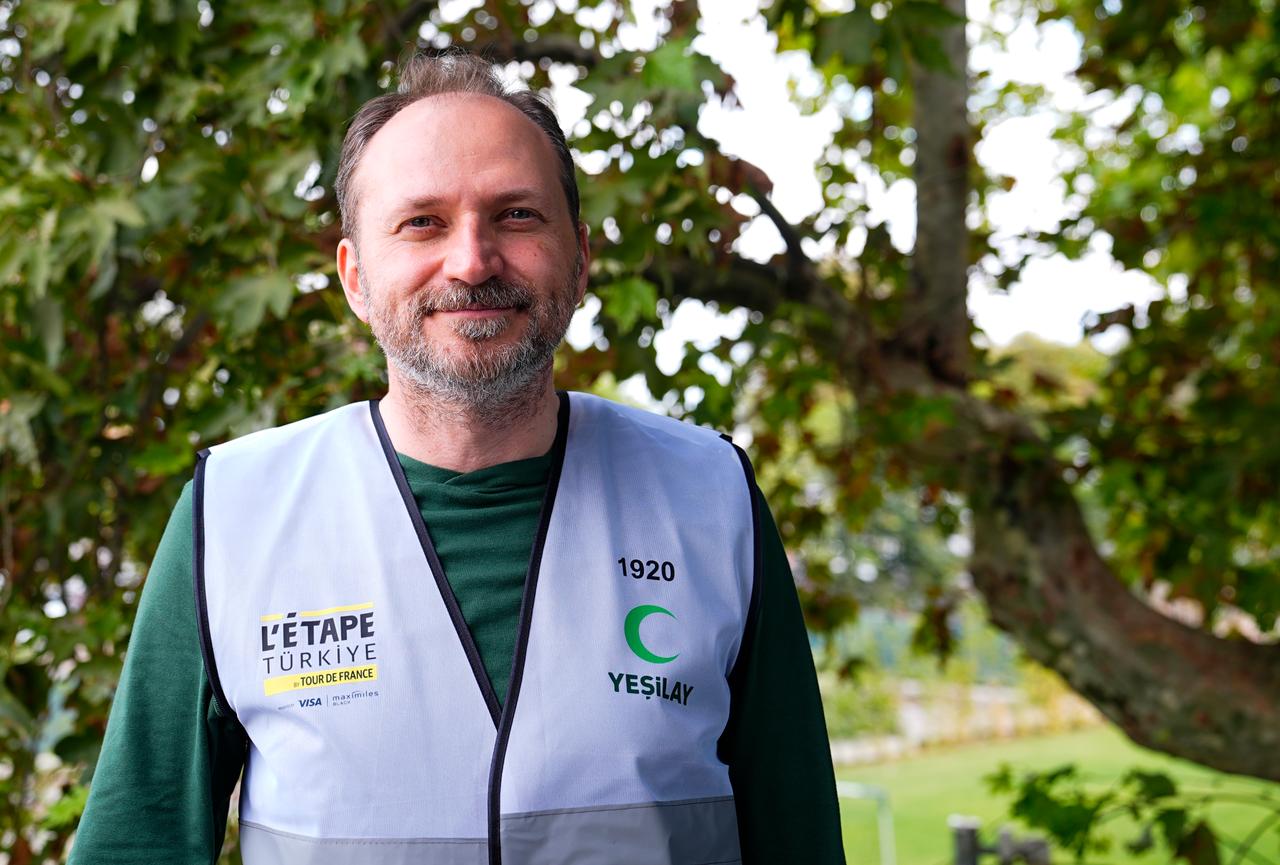
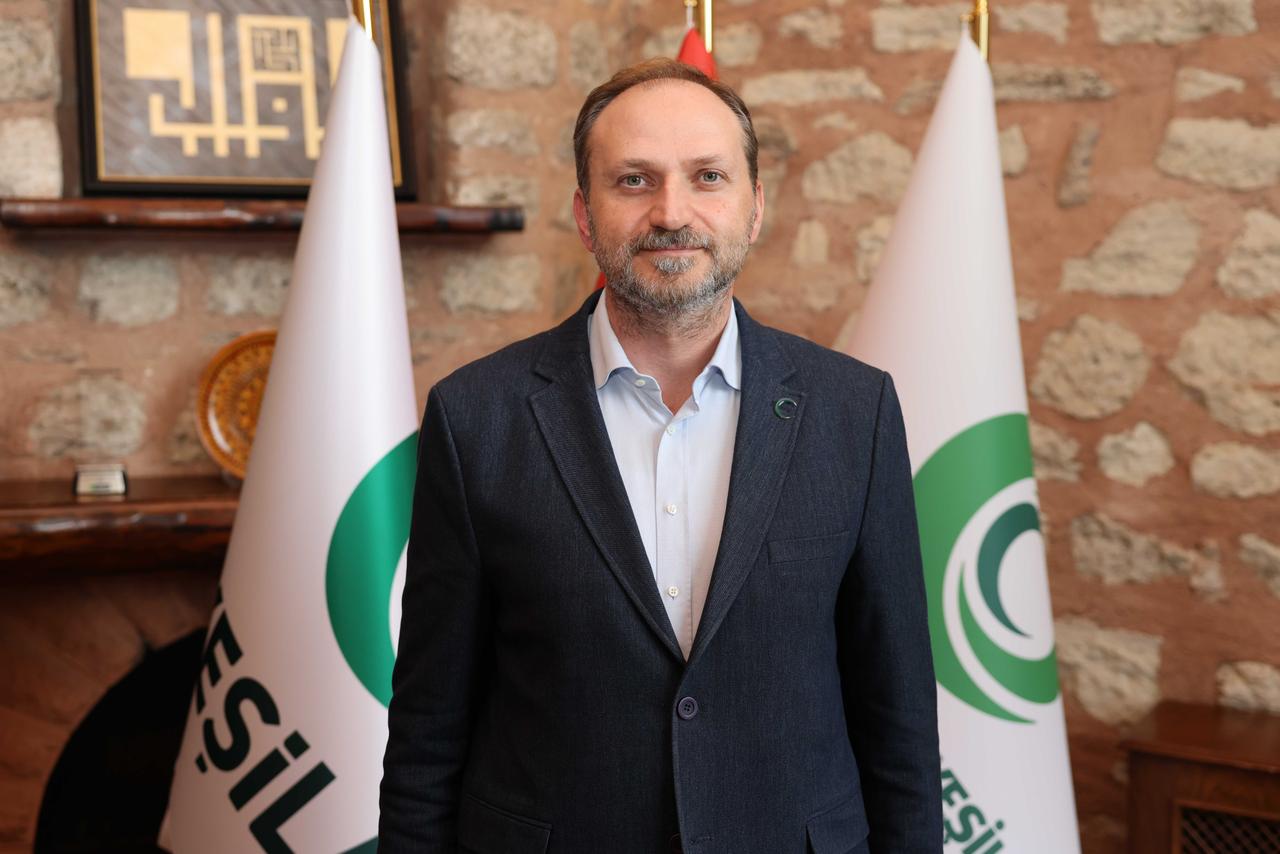
Mehmet Dinç (born 1980, Üsküdar, Istanbul) is a Turkish clinical psychologist, academic, and General President of the Türkiye Yeşilay Society. He completed his undergraduate education in Psychological Counseling and Guidance; pursued postgraduate studies at various universities in Türkiye and Australia; and earned his doctorate with a thesis on internet addiction. He serves as a faculty member in the Department of Psychology at Hasan Kalyoncu University and is a member of the International Faculty Council of Dulwich Centre. His research focuses on digital addictions, psychological resilience, and Narrative Therapy. His academic title is associate professor.
Mehmet Dinç was born in 1980 in the Üsküdar district of Istanbul. He grew up in Istanbul and completed his university education there. He is married and a father of two children.
At the time he chose the Psychological Counseling and Guidance (PDR) department at Marmara University, he noted that guidance activities were limited, he had no prior knowledge of the field, and his decision was made by chance. In subsequent years, he described this choice as “divine guidance.” After entering the field, he stated that what excited him most was the opportunity to touch a person’s life.【1】
Mehmet Dinç’s academic journey consists of the following stages:
After completing his master’s degrees, Mehmet Dinç began his career at Hasan Kalyoncu University in Gaziantep. He continues to teach as a faculty member in the Department of Psychology at the same university.
He works one day per week at a private psychiatric hospital, providing counseling and therapy services. He is known as a clinical psychologist.
Whenever possible, he gives lectures, writes articles, and produces radio programs. His work focuses on child and adolescent mental health and addiction psychology.
Mehmet Dinç serves as the General President of the Türkiye Yeşilay Society.
Mehmet Dinç began researching internet addiction in 2006. From the outset of his work, he has centered his inquiry on this question: Why do people become addicted to a behavior and structure their lives around it?【2】He completed his doctoral thesis on internet addiction at Marmara University. He continues his research in this area under the broader heading of digital addictions. In a promotional text, he described internet addiction as one of the greatest threats of the current era.【3】
During his research on internet addiction, he concluded that when individuals are psychologically vulnerable, they develop a need to cling to something. This insight brought the concept of psychological resilience to the forefront of his work. He began studying psychological resilience in 2010.
His views on this subject can be summarized as follows:
Dinç has also expressed this approach as “living according to factory settings.” He argues that from birth, humans are equipped with fundamental criteria for what is beneficial to them, and that shaping one’s lifestyle according to these criteria enhances psychological strength. He asserts that there are responsibilities related to physical, psychological, social, mental, and moral development; when these responsibilities are fulfilled, there is no reason for a person to be psychologically weak. He emphasizes that everything given to a person is a trust, and that these trusts must be preserved, cared for, and not wasted.【4】
He also conducts research in the field of child and adolescent mental health. He delivered a lecture titled “Society’s Rewritten Childhood: New Risks, New Opportunities.” The summary of the lecture is as follows: In the modern world, child-rearing is no longer solely a family-based process. Digital culture, media, peer networks, and consumption patterns have become social factors shaping childhood experiences. This transformation has generated new risks on one hand—such as attention problems, loneliness, digital addiction, and mental health issues—and on the other, it has opened up new opportunities in learning, communication, and self-expression. The lecture examined the impact of modern society on child development through current research and proposed a practical framework for protective social environments built collaboratively by families, schools, and communities, emphasizing digital balance, play, and relationship-based childhood approaches.【5】
In the early years of his tenure at Hasan Kalyoncu University, Mehmet Dinç planned a “Psychotherapy Writing Camp” for those interested in psychotherapy. The camp hosted three guests: Professor Jaswant Guzder from McGill University, Dr. Sadeq Rahimi from Harvard University, and Dr. Radhika Shanthanam Martin from the University of Melbourne. Over ten days, various areas of psychotherapy were discussed. During these sessions, Radhika Shanthanam Martin briefly mentioned Narrative Therapy.
Until that time, Dinç had spent many years receiving training and supervision in Cognitive Behavioral Therapy (CBT). He noted that certain aspects of CBT did not resonate with him and initially attributed this mismatch to personal shortcomings. After hearing about Narrative Therapy, he found the approach warm and personally meaningful and expressed a strong desire to learn more.【6】
Radhika Shanthanam Martin connected Dinç with Cheryl White and David Denborough, who lead the Narrative Therapy Centre. Following these discussions, Narrative Therapy training programs were initiated in Türkiye. Dinç traveled with Cheryl White and David Denborough to Palestine and Rwanda to conduct fieldwork. At their invitation, he completed a master’s degree in Narrative Therapy in Australia. He participated in research activities in Australia and collaborated with them on four projects.
During this period, he joined the International Faculty Council of the Dulwich Centre and remains a member today. This collaboration began in 2013 and continues to this day. He delivers training in various parts of the world, including Brazil, the United States, Australia, and Rwanda.
Dinç represents Narrative Therapy in Türkiye. He works to ensure that practitioners in Türkiye are familiar with the approach and that it is made accessible to the Turkish population. To this end, he organizes training programs and promotes the inclusion of Narrative Therapy as a course in university curricula.
Feyzanur Taştekne. "Mehmet Dinç." *Hüma Dergisi*, February 21, 2024. Accessed September 29, 2026.https://humadergisi.com/mehmet-dinc/
Palet Montessori Akademisi. "Doç. Dr. Mehmet Dinç." Accessed September 29, 2026.https://matepp.net/4umz/doc-dr-mehmet-dinc/
Türk Maarif Ansiklopedisi. "Mehmet Dinç." Accessed September 29, 2026.https://turkmaarifansiklopedisi.org.tr/yazar/mehmet-dinc
Yeşilay. "Yönetim Kurulu." Accessed September 29, 2026.https://www.yesilay.org.tr/kurumsal/yonetim/yonetim-kurulu/
[1]
Feyzanur Taştekne. "Mehmet Dinç" Hüma Dergisi, Erişim tarihi: 29 Eylül 2026. https://humadergisi.com/mehmet-dinc/
[2]
Feyzanur Taştekne. "Mehmet Dinç"
[3]
Feyzanur Taştekne. "Mehmet Dinç"
[4]
Feyzanur Taştekne. "Mehmet Dinç"
[5]
Feyzanur Taştekne. "Mehmet Dinç"
[6]
Feyzanur Taştekne. "Mehmet Dinç"

Date of Birth | 1980 | ||||||||
|---|---|---|---|---|---|---|---|---|---|
Place of Birth | Üsküdar, İstanbul | ||||||||
Profession | Clinical psychologist, academic | ||||||||
Education | Marmara University (Bachelor's, Doctorate) RMIT University (Master's) Okan University (Master's) University of Melbourne (Master's) | ||||||||
Title | Assoc. Prof. Dr. | ||||||||
Position | General President of Türkiye Green Crescent Society | ||||||||
Areas of Work | Digital addictions Psychological resilience Narrative Therapy | ||||||||
Marital Status | Married and father of two children | ||||||||
Henüz Tartışma Girilmemiştir
"Mehmet Dinç" maddesi için tartışma başlatın
Life
Birth and Family
Career Choice
Education
Academic and Professional Career
Role at the Türkiye Yeşilay Society
Research Areas
Internet Addiction and Digital Addictions
Psychological Resilience
Child and Adolescent Mental Health
Narrative Therapy Research
Introduction to the Approach
International Collaboration
Activities in Türkiye
Positions and Memberships