

Bu içerik Türkçe olarak yazılmış olup yapay zeka ile otomatik olarak İngilizceye çevrilmiştir.
It is three o’clock in the morning. Most cities are asleep, but life in the seas has not stopped. One ship is docking at a port, another is heading out into the open sea; fishermen are preparing for work, sailors are changing shifts, and activities continue at the harbors. We rarely see any of this. Because we usually speak of the Blue Homeland during the day—describing it through maps, borders, and ships. Yet one of the most important features of the Blue Homeland is that life there continues uninterrupted, even when we are unaware of it.
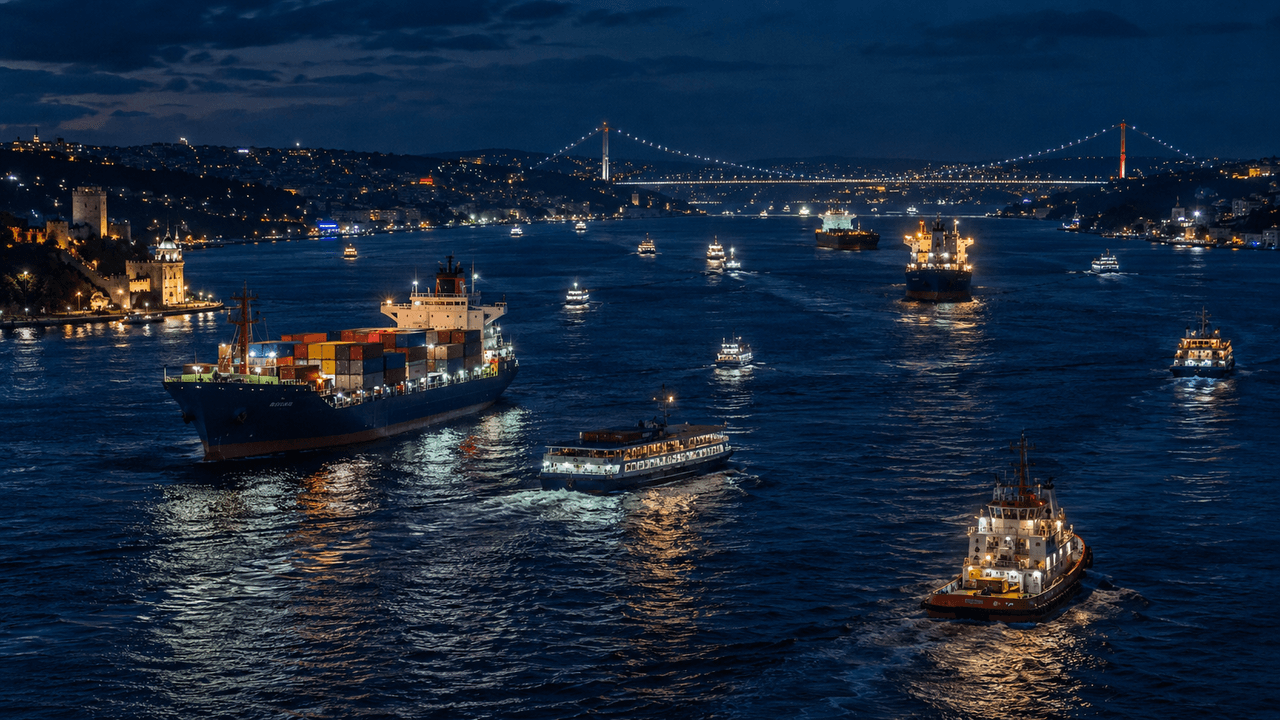
Gece Saatlerinde Türk Boğazları’ndaki Gemi Trafiğini Temsil Eden Görsel (Yapay Zekâ ile Oluşturulmuştur.)
When we hear the term “Blue Homeland,” our minds first turn to maritime jurisdiction zones, security, energy resources, and our navy. These are certainly essential components, but describing the Blue Homeland solely through these elements falls short. Holding rights over a maritime area is not the same as truly being present there. If we wish to be strong at sea, knowing our boundaries is not enough; we must work, produce, trade, conduct research, and, when necessary, ensure security within those waters.
Night is one of the clearest times to see this. Vessel traffic through the Turkish Straits continues intensively throughout the year; official statistics published by the Ministry of Transport and Infrastructure reveal this activity in the Bosporus and Dardanelles. 【1】While cargo movements continue at ports, fishermen set out to sea and sailors carry out their duties. Thus, the Blue Homeland is not merely an area we defend when needed; it is a homeland we use every day and constantly inhabit.
I believe the real issue begins here. It is easy to say that an area belongs to us; the difficult part is building the enduring power and capacity to sustain our presence there. Our presence in the Blue Homeland is determined not only by the borders we draw but also by how deeply we are embedded within them and what we produce there.
In seafaring, “shift” refers to a work system in which tasks or duties are carried out by different individuals in scheduled rotations. 【2】When one person completes their duty, another takes over, and the ship continues its course. A similar dynamic exists for the Blue Homeland: the work performed today by those serving at sea cannot be sustained indefinitely by the same people. Maritime knowledge, experience, and technology must be passed on to new generations.
In the early years of the Republic, seafaring was not viewed merely as a military matter; it was recognized as a field requiring development across political, economic, and cultural dimensions. 【3】Today, to remain strong at sea, we need not only a navy but also shipyards, engineers, sailors, fishermen, port workers, and young people developing technology. For me, the word “shift” gains a deeper meaning here: one generation takes up its responsibility, improves upon what it inherited, and then passes it on to the next. The continuity of the Blue Homeland depends in part on this process.
We cannot remain strong at sea merely by boasting about past achievements. We must produce new ships, new systems, new ideas, and the people capable of advancing them. Taking over a shift means more than preserving what already exists; it means building upon it so that the next generation inherits something stronger.
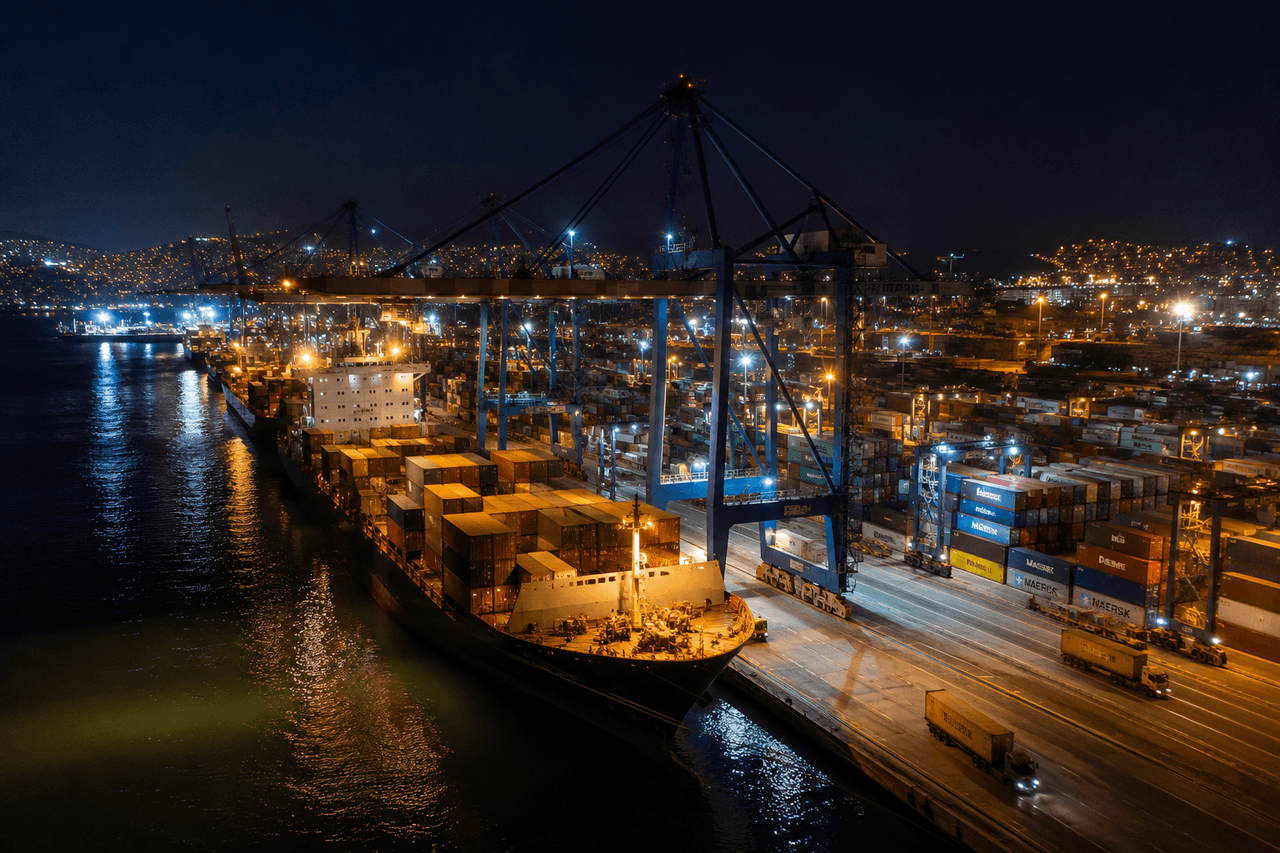
Gece Saatlerinde Liman ve Denizcilik Faaliyetlerini Temsil Eden Görsel (Yapay Zekâ ile Oluşturulmuştur.)
I also find it inadequate to present the Blue Homeland solely as an area that must be defended. A homeland is not merely a place to be protected; it is also a place to be lived in, worked in, and produced in. On land, we build cities, operate factories, cultivate agriculture, and construct roads. At sea, our ports, shipyards, fishing industry, maritime trade, research, and developed technologies constitute the same kind of presence.
A boundary on paper is important, but it is not sufficient on its own. What we do within that boundary matters just as much. If we are not present at sea, not producing, and not advancing maritime knowledge, merely looking at a map and believing we are strong is insufficient. Truly embracing the Blue Homeland means making the sea an integral part of the nation’s daily life and future.
Therefore, it is not enough to remember our presence in the Blue Homeland only during crises or special occasions. Seafaring is a field that demands continuity. A technology used today will become outdated tomorrow; the person on duty today will soon pass their role to someone else—but Türkiye’s need to be present at sea endures. The concept of the night shift perfectly captures this continuity.
When morning comes, cities come alive again, but for the sea, a new day has not truly begun—because activity there never fully ceased. The idea of the Blue Homeland’s night shift reminds me of precisely this. Türkiye’s presence at sea is not a matter of a few hours, a few years, or specific periods; it is a responsibility that demands continuity. This continuity is made possible only when one generation passes its legacy to the next.
Those who are on duty today are carrying out their responsibilities; tomorrow, those duties will pass to other people. Therefore, young people must see the Blue Homeland not merely as a concept they hear about in the news, but as a real field in which they can work, produce, and assume responsibility in the future. Designing a new ship, developing marine technology, serving in open seas, or working in a port are all parts of this shift. Cities may sleep, ports may slow down at times, and individuals may rotate their shifts.
But the shift of the Blue Homeland never ends.
Songur, Funda. “Atatürk İçin Türk Denizciliğinin Anlamı ve Erken Cumhuriyet Dönemindeki Yansımaları.” *Yakın Dönem Türkiye Araştırmaları*, no. 41 (2022): 141–177. Accessed August 8, 2026.https://doi.org/10.26650/YTA2022-1039639
T.C. Ministry of Transport and Infrastructure. "Türk Boğazları Gemi Geçiş İstatistikleri." *Denizcilik İstatistikleri*. Accessed August 8, 2026.https://denizcilikistatistikleri.uab.gov.tr/turk-bogazlari-gemi-gecis-istatistikleri
“Vardiya.” *Türk Dil Kurumu Güncel Türkçe Sözlük*. Accessed August 8, 2026.https://sozluk.gov.tr/?ara=vardiya
[1]
T.C. Ulaştırma ve Altyapı Bakanlığı, “Türk Boğazları Gemi Geçiş İstatistikleri,” Denizcilik İstatistikleri, Son erişim 8 Ağustos 2026, https://denizcilikistatistikleri.uab.gov.tr/turk-bogazlari-gemi-gecis-istatistikleri
[2]
“Vardiya,” Türk Dil Kurumu Güncel Türkçe Sözlük, Son erişim 8 Ağustos 2026, https://sozluk.gov.tr/?ara=vardiya
[3]
Funda Songur, “Atatürk İçin Türk Denizciliğinin Anlamı ve Erken Cumhuriyet Dönemindeki Yansımaları,” Yakın Dönem Türkiye Araştırmaları, no. 41 (2022): 141, https://doi.org/10.26650/YTA2022-1039639
The Blue Homeland Is Not Just on a Map
Shifts Do Not Change Only on Ships
A Homeland We Use as Much as We Defend
The Shift Continues