


Bu içerik Türkçe olarak yazılmış olup yapay zeka ile otomatik olarak İngilizceye çevrilmiştir.
+1 Daha
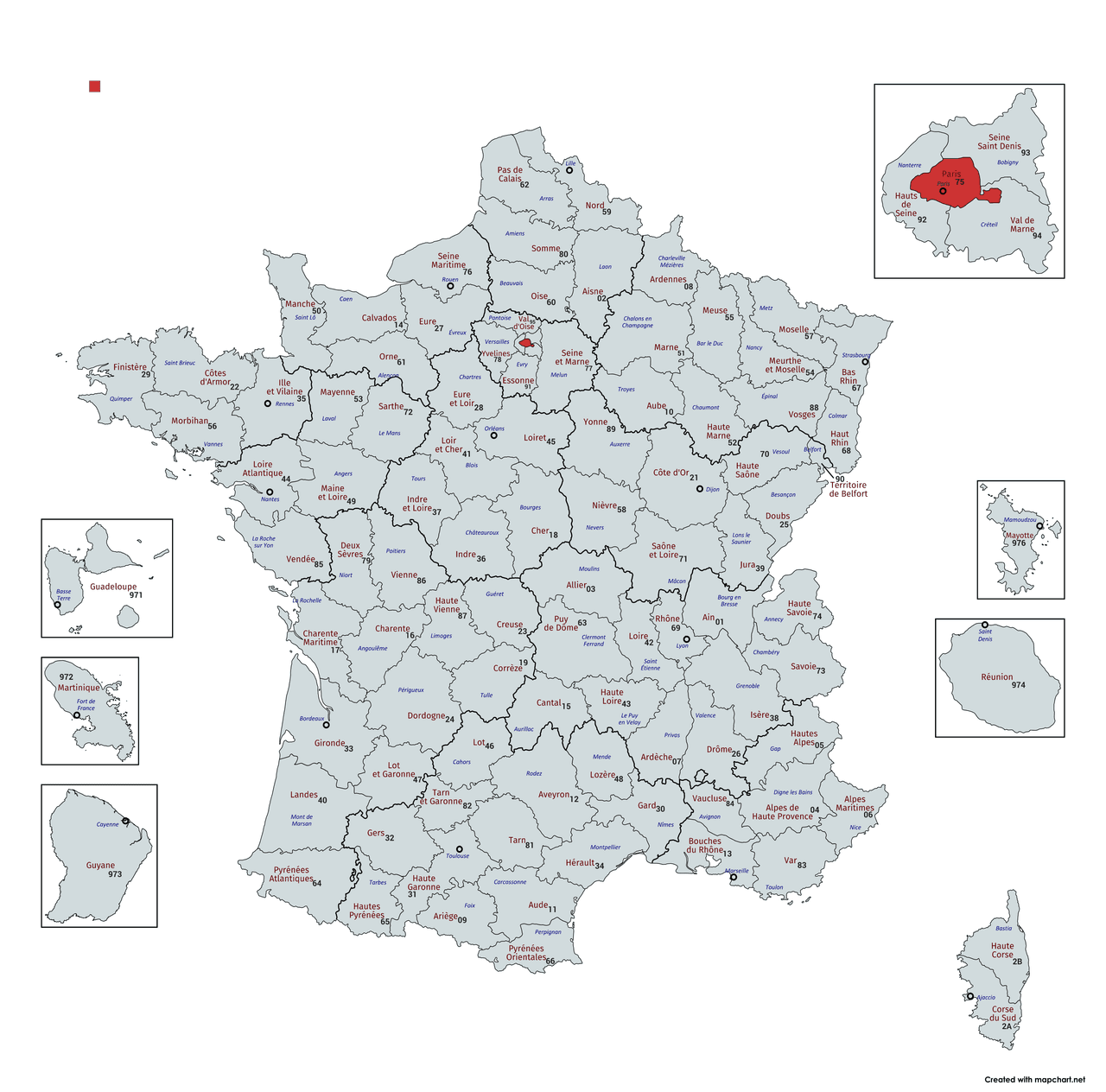
Paris
Country | France | ||||||||
|---|---|---|---|---|---|---|---|---|---|
Population | 2,140,526 | ||||||||
Area | 105.4 km² | ||||||||
Climate | Temperate Climate | ||||||||
Important Structure | Palace of Versailles Musée d'Orsay Champs-Élysées Louvre Museum Notre-Dame Cathedral Eiffel Tower | ||||||||
Telephone Code | +33 | ||||||||
Paris is a major metropolis located in the north of France and serves as the country’s capital. Renowned for its historical and cultural richness, Paris has been the center of art, fashion, and politics for centuries. As France’s largest urban settlement, it had a population of approximately 2.1 million as of 2023. Paris is visited annually by millions of local and international tourists due to its significant economic and tourist importance.
Paris has been one of Europe’s most important cultural and commercial centers throughout history. Strategically situated along the Seine River, it is a French city that has been influenced by numerous civilizations from antiquity to the present day and has served as a hub for art, politics, and economics.
Paris’s history extends back to Lutetia Parisiorum, founded by the ancient Romans in the 3rd century BCE. The settlement grew within the territory of Gaul and became part of the Roman Empire. During the Roman period, Lutetia was a major trade center and gradually developed into the foundation of modern Paris. Following the collapse of the Roman Empire, the city came under the control of the Frankish Kingdom and by the 10th century had become the center of the Kingdom of France.
Throughout the Middle Ages, Paris emerged as one of Europe’s largest and most advanced cities, making significant advances in science, art, and architecture. The University of Sorbonne, founded in the 12th century, established Paris as an intellectual center. Although occupied by the English during the Hundred Years’ War in the 14th and 15th centuries, the city was eventually reclaimed by the French.
During the Renaissance and the Enlightenment, Paris became a center of art and philosophy, where thinkers such as Voltaire, Rousseau, and Montesquieu produced their works. During the French Revolution of 1789, the city became the stage of political upheaval, and the storming of the Bastille Prison became a symbol of the revolution.
In the 19th century, under Napoleon’s rule, Paris underwent major modernization. Baron Haussmann’s urban planning introduced wide boulevards, parks, and iconic structures. At the beginning of the 20th century, Paris experienced significant changes during both World War I and World War II, falling under Nazi occupation before being liberated by Allied forces in 1944.
Today, Paris continues to be a major global center for fashion, art, and politics. The city welcomes millions of tourists each year through its historic buildings, museums, and cultural heritage.

Louvre Museum. (Source:
Paris is the capital of France, located in the north of the country along the Seine River, between 48°51′ north latitude and 2°21′ east longitude. The city lies within the Île-de-France region and stands out as the administrative, economic, and cultural center of France. Paris is surrounded by important urban centers such as Marne-la-Vallée to the east, Versailles to the west, Orléans to the south, and Amiens to the north. This strategic location has made Paris one of Europe’s most important transportation and trade hubs.
Geographically, Paris lies on a relatively flat terrain with an average elevation of 35 meters. The highest point in the city is Montmartre Hill, reaching 130 meters. The Seine River flows through the center of Paris, dividing it into distinct districts. The city’s waterways have played a vital role in the development of trade and transportation.
Paris has a temperate oceanic climate, characterized by mild temperatures throughout the year. Summer months see average temperatures of around 25°C, while winter temperatures typically range between 3°C and 5°C. Although rainfall occurs year-round, spring and autumn are the wettest seasons. This climate structure has limited agricultural activity in the city but has contributed to the development of green spaces and parks.
Paris is a major transportation hub. The city has one of Europe’s largest railway networks and is connected by high- speed rail lines to other French cities and major European metropolises. Additionally, Charles de Gaulle and Orly airports are among the busiest international air traffic hubs in the world.
These geographic features have made Paris a vital city both within France and globally, endowing it with significant economic, cultural, and tourist potential.
Paris is France’s most populous city and stands out as a metropolis due to its high population density and demographic diversity. With an area of 105 km², Paris had a population of approximately 2.1 million as of 2023. However, the Île-de-France metropolitan region, which encompasses Paris, has a population of around 12 million and is one of Europe’s largest urban areas.
Paris’s population structure exhibits great diversity in terms of gender, age groups, and ethnic origins. Approximately 52% of the city’s population is female and 48% is male. In terms of age distribution, Paris has a relatively young population, with individuals aged 20 to 39 forming the largest demographic group. One of the main reasons for this is Paris’s appeal as a center for education, art, culture, and employment opportunities.
Paris is one of France’s most cosmopolitan cities and provides a home to immigrant communities from around the world. Around 20% of the city’s population holds foreign nationality, and Paris has become a major settlement area for immigrant communities from Africa, the Middle East, and Asia. Migration waves since the mid-20th century have significantly shaped the city’s cultural fabric.
Paris has a very high population density. The city has approximately 20,000 inhabitants per square kilometer, making it one of Europe’s most densely populated cities. However, there is a significant population difference between the city center and its suburbs. The city center is more densely populated, while the suburbs are spread over larger areas with lower population densities.
Changes in Paris’s demographic structure are closely linked to political, economic, and social developments throughout history. Population density increased during Haussmann’s urban planning projects in the 19th century, while migration movements in the 20th century enhanced the city’s ethnic diversity. In the 21st century, Paris has acquired a more international identity under the influence of globalization.
In terms of its demographic structure, Paris stands out as one of the most important cities in Europe and the world, and its population composition remains a fundamental factor shaping the city’s cultural and economic dynamics.
As one of the world’s largest metropolises, Paris has a strong and diversified economy. Recognized as a leading city in global finance, trade, tourism, and technology, Paris is considered one of Europe’s key economic centers.
The city has an economic structure heavily concentrated in finance and services. The La Défense district is one of Europe’s largest business centers and hosts the headquarters of many international banks, insurance companies, and multinational corporations. Paris also hosts Euronext Paris, one of the world’s largest stock exchanges, further strengthening its position in the financial sector.
Tourism is one of the most important components of Paris’s economy. The city attracts millions of visitors annually through globally famous landmarks such as the Eiffel Tower, the Louvre Museum, and Notre-Dame Cathedral. Paris’s significance in fashion and luxury goods also makes a major contribution to its economy. Brands such as Louis Vuitton, Chanel, and Dior have established the city as a global center for luxury fashion and cosmetics.
Moreover, Paris is rapidly developing as one of Europe’s centers for technology and innovation. Large startup hubs such as Station F make the city attractive for entrepreneurship. Investments by the French government in the digital economy and artificial intelligence are positioning Paris as a competitive player in the global technology sector.
Paris is also of great importance for business tourism as one of Europe’s largest convention and exhibition centers. Through its international events, the city continues to serve as a global meeting point for economic and commercial activity.

Eiffel Tower. (Source: Yovan Verma)
For centuries, Paris has been renowned as the center of art, literature, and cultural movements, becoming one of Europe’s most important cultural capitals. Since the Middle Ages, the city has served as a source of inspiration for artists, thinkers, and writers and has hosted major works from movements such as the Baroque, Rococo, Neoclassicism, and Modernism.
Paris’s artistic heritage is shaped by numerous world-renowned museums. The Louvre Museum, founded in 1793 and home to one of the world’s largest art collections, houses thousands of works from ancient Greece and Rome, the Renaissance, and 19th-century art. The Pompidou Center, which showcases prominent works of modern art, guides Paris’s contemporary art scene by exhibiting 20th- and 21st-century works. The Musée d’Orsay displays masterpieces of 19th-century Impressionist and Post-Impressionist painting, illuminating the evolution of French art.
In literature, Paris has been the creative hub of numerous authors including Victor Hugo, Émile Zola, Marcel Proust, Jean-Paul Sartre, and Simone de Beauvoir. Movements such as existentialism, surrealism, and modern literature emerged or developed in Paris during the 19th and 20th centuries. In the 1920s, the city became a literary center for American writers such as Ernest Hemingway, F. Scott Fitzgerald, and Gertrude Stein, whose most important works were written here and who came to be known as the “Lost Generation.”
Architecturally, Paris unites a wide range of styles from Gothic cathedrals to Haussmann-era boulevards, from Art Nouveau buildings to modern skyscrapers. The Notre-Dame Cathedral, constructed in the 12th century, and the Arc de Triomphe, completed in the early 19th century, are among the city’s iconic structures. The Eiffel Tower, built for the 1889 World’s Fair, has become Paris’s most recognizable symbol. In the 21st century, modern buildings in the La Défense district and cultural centers such as the Fondation Louis Vuitton demonstrate the continuation of Paris’s architectural evolution.
In theater and music, Paris is one of the major centers for classical music and ballet, with venues such as the Opéra Garnier and Opéra Bastille. Since the 19th century, the city has also been famous for its cabaret culture; the Moulin Rouge in Montmartre has become one of the symbols of Paris’s entertainment life. Today, Paris continues to be one of Europe’s leading centers for theater, jazz, and electronic music festivals.

Notre-Dame Cathedral. (Source: Adrienn)
For centuries, Paris has been one of Europe’s cultural capitals through its art, architecture, and historical heritage. Among its most famous structures are Notre-Dame Cathedral, the Louvre Museum, the Eiffel Tower, and the Palace of Versailles. The Notre-Dame Cathedral, built in the 12th century, is one of the most important examples of Gothic architecture, noted for its stained glass windows and sculptural decorations. Although damaged during the French Revolution, it was restored in the 19th century and continues to reflect Paris’s religious and historical identity.
The Louvre Museum, one of the world’s largest art museums, was originally built as a royal palace. Converted into a museum in 1793, it houses numerous masterpieces including Leonardo da Vinci’s Mona Lisa and ancient Egyptian artifacts. The museum’s modern face, the Louvre Pyramid, constructed in 1989, stands as one of the most prominent symbols of how Paris blends classical and modern architecture.
The Eiffel Tower, Paris’s most recognizable symbol, was designed by Gustave Eiffel for the 1889 World’s Fair. Originally intended as a temporary structure, the tower gradually became one of the city’s most famous tourist attractions and one of the defining elements of its skyline.
Paris’s cultural heritage is not limited to structures in the city center. Just outside the city lies the Palace of Versailles, commissioned by King Louis XIV in the 17th century and one of the most magnificent examples of French Baroque architecture. With its Hall of Mirrors, gardens, and royal apartments, it became a symbol of monarchical power and grandeur in Europe. Today, this palace is preserved as one of France’s most important cultural heritage sites.

Palace of Versailles. (Source: Siva Seshappan)
For centuries, Paris has been a global center of art and aesthetics, guiding the world’s artistic movements. The city has hosted great masters in painting, sculpture, theater, and music and is also distinguished by its traditional crafts and haute couture.
Paris is the birthplace of Impressionism and has housed works by artists such as Claude Monet, Edgar Degas, and Pierre-Auguste Renoir. The Musée d’Orsay and the Louvre Museum are among the most important centers displaying these works. While the Louvre is renowned for classical art, the Musée d’Orsay focuses on 19th-century modern art. Additionally, the Pompidou Center holds one of the world’s most important collections of contemporary art, including works by Pablo Picasso, Henri Matisse, and Salvador Dalí.
Paris also has a strong tradition in craftsmanship and artisanal trades. The city is home to some of Europe’s oldest workshops in ceramics, stained glass, and carpentry. The stained glass windows of Notre-Dame Cathedral and the furniture of the Palace of Versailles are among the most prestigious examples of these art forms.
Another area where Paris is synonymous with art is music and performing arts. World-famous cabarets such as Moulin Rouge and Lido are key components of French entertainment culture. The Opéra Garnier and Opéra Bastille are vital venues that continue to contribute to Paris’s classical music and ballet traditions. In addition, street artists and painters in Montmartre sustain the city’s artistic spirit.
Paris is not only a guardian of traditional artistic heritage but also a center of modern and contemporary art. The city has a vibrant cultural atmosphere filled with art galleries, museums, and events that attract artists from around the world. Paris played a major role in the rise of modern art, particularly hosting art movements such as Cubism, Dadaism, and Surrealism in the 20th century.
One of the most important venues for modern art in the city is the Pompidou Center. Opened in 1977, it houses one of the world’s largest collections of modern art, including works by Pablo Picasso, Wassily Kandinsky, and Jackson Pollock. Additionally, the Fondation Louis Vuitton was established to support contemporary art and provides a broad platform for exhibitions by today’s artists.
Numerous art festivals and cultural events take place in Paris throughout the year. The Fête de la Musique (Music Day), held every year in June, is a major music event where amateur and professional musicians perform free concerts in the streets. Paris Fashion Week is one of the world’s most important fashion events and serves as a platform uniting the worlds of art and design. Additionally, events such as the Paris Film Festival and Nuit Blanche (White Night) are key organizers of the city’s cultural life.
The city’s historic structures also serve as venues for modern art events. The Louvre Museum, Musée d’Orsay, and Grand Palais host both classical and modern art exhibitions, welcoming the most important names in the art world. In addition, open-air art displays and street performances in various districts of Paris are vital elements in making modern art accessible to the public.

Thanks to its advanced transportation infrastructure, Paris is not only one of France’s but also one of Europe’s most important transportation hubs. The city is a critical node in international transportation, connected by road, rail, sea, and air networks. Paris’s transportation network provides great convenience for tourists, business travelers, and local residents, making it a global transportation center.
As the capital of France, Paris has an extensive road network connecting it to major cities across the country. Important intercity routes such as Paris-Istanbul and Paris-Lyon make the city a strategic transportation hub both within France and across Europe. The Périphérique, a ring road encircling central Paris, plays a vital role in managing traffic in large cities. Although traffic in Paris is sometimes challenging due to high density and narrow roads, innovations and regulations in the transportation infrastructure aim to minimize congestion.
Paris is an international hub for rail transport. Major train stations such as Gare du Nord and Gare de Lyon provide direct connections to neighboring countries such as the United Kingdom, Germany, and Belgium. The TGV (High-Speed Train) is a vital transport link connecting Paris rapidly to other major French cities. The city’s rail network facilitates local transit while significantly contributing to regional and international connectivity.
Paris relies on nearby maritime ports such as the Normandy Ports for sea freight and maintains inland waterway connections. In addition, tourist cruises along the Seine River introduce visitors to the city’s historical and cultural heritage while transforming river transport into a tourist attraction. Through major ports, maritime transport supports Paris’s foreign trade and strengthens its economic structure.
Paris has a rich infrastructure of airports. Major international airports such as Charles de Gaulle Airport (CDG) and Orly Airport make Paris one of the world’s busiest passenger cities. These airports serve both international and domestic flights, establishing Paris as a global transportation hub. Innovations at the airports and increased passenger capacity have further improved the efficiency of air travel in the city.
Paris’s urban transportation network is highly developed, offering options such as the Metro, buses, trams, and bike-sharing systems. The Paris Metro effectively connects different parts of the city, while the RER train lines provide access to the suburbs. Paris is progressing toward becoming a bicycle-friendly city, and the Velib bike-sharing system offers an alternative transport option for both tourists and residents. City transport is also available via taxis and Uber, but public transit remains one of the most preferred options in Paris’s transportation system.
Paris is one of Europe’s most important cities due to its strong infrastructure and facilities in health and education. The city functions as a regional hub with advanced healthcare services and high-quality educational institutions. Paris’s health and education infrastructure meets the needs of both the local population and international students.
Paris provides world-class healthcare services. Public hospitals, private clinics, and university hospitals in the city are equipped with modern medical technology and offer high-quality services across numerous specialties. Assistance Publique - Hôpitaux de Paris (AP-HP), one of the city’s largest and most prestigious hospital networks, provides services in areas such as cardiology, oncology, and neurology. The Paris University Medical Faculty integrates clinical and academic activities to support advancements in healthcare. The city’s healthcare services are not only vital for the local population but also serve as a major destination for international medical tourism. Aesthetic surgery, dental treatments, and general healthcare services form a significant part of Paris’s medical tourism industry.
Paris also has a strong education infrastructure. The city hosts numerous educational institutions from primary school to university. Paris’s education system aims to provide students with high-quality education according to international standards. Prestigious universities and institutions such as École Normale Supérieure and the Sorbonne University, and Sciences Po offer attractive options for both French and international students. Schools in Paris place great importance on modern teaching methods, scientific research, and arts education.
Parisian universities offer strong programs in fields such as medicine, engineering, art, and social sciences. The Sorbonne University is one of France’s oldest and most prestigious universities and is internationally recognized for its contributions to science and culture. Other institutions such as Paris-Sud University and Paris Sciences et Lettres Research University also make significant academic contributions to the city. Moreover, Paris’s educational institutions do not merely provide theoretical education but also offer students opportunities for internships, collaborations, and engagement with emerging industries.
Paris continuously enhances the quality of its education by signing on to various research projects. International seminars, conferences, and cultural events are organized to provide students with opportunities for personal and professional development. The city’s universities, through various research projects and academic initiatives, have established Paris as a globally recognized scientific center. Investments in new educational buildings and schools significantly improve the quality of education for students.
As one of Europe’s leading cultural and economic cities, Paris offers diverse accommodation and social life opportunities for both residents and visitors. The city’s accommodation infrastructure is developed to meet the needs of tourists and long-term residents. Moreover, Paris’s social life, shaped by its rich cultural diversity, historical fabric, and modern lifestyle, provides numerous opportunities for social interaction and community engagement.
Due to its importance in tourism, Paris offers a wide variety of accommodation options. In the city center and surrounding areas, visitors can find luxury hotels, boutique hotels, apartment hotels, guesthouses, and private rentals. Paris offers accommodation options for every budget, and these options have diversified as tourist interest in the city has grown. In popular areas such as the Eiffel Tower and Montmartre, accommodations feature distinctive architecture that reflects the city’s character.
The hotel industry in Paris continuously evolves to meet the accommodation needs of both local and international tourists. Furthermore, the modernization of Paris’s hotel infrastructure enhances the city’s competitiveness in the international tourism market. Accommodation services in Paris are enriched by hospitality, high-quality service standards, and experiences enhanced by French cuisine.
Paris’s social life is shaped by its rich cultural heritage, artistic activities, and traditions. Daily life in the city blends traditional local customs with modern lifestyles. Paris is known for the refined and hospitable attitude of its residents, and its social spaces cater to a broad spectrum of needs for both locals and visitors.
Paris is rich in social activities. Theater performances, concerts, cultural events, and exhibitions in the city attract both local and international tourists. Paris’s traditional music, especially street performances featuring instruments such as the accordion, holds an important place in social life. Additionally, art exhibitions in Paris contribute significantly to visitors’ cultural experiences.
Cuisine plays a major role in Paris’s social life. Parisian cuisine supports social interaction with its rich and varied dishes, renowned worldwide. Traditional foods such as croissants, escargot, and crème brûlée are indispensable elements of the city’s social life. Moreover, Paris’s café culture is one of the key social spaces where both young people and tourists gather and interact.

Croissant. (Source: Valeria Boltneva)
Paris, as the capital of France and one of Europe’s most important cities, has a strong governance structure rooted in its historical and cultural heritage. In terms of local administration, Paris has an active structure at both central and local levels. Since 1977, Paris has been recognized as a metropolitan municipality, and this status has led to significant changes and developments in its local governance system.
Paris’s local governance structure is based on a model in which both central and local administrations play important roles, similar to other major French cities. The Paris City Hall serves as the highest administrative body responsible for managing local governance and public services. With its metropolitan status, the Paris City Hall has expanded its jurisdiction over a wide range of municipal services. It is responsible for organizing infrastructure services in the city center and districts, organizing social and cultural activities, and implementing local policies in education and healthcare.
Although the local governance system in Paris operates in accordance with general rules and laws set by the central government, local applications and decisions hold great importance. The Mayor of Paris, elected by the public, is the head of local governance and oversees planning, service delivery, and other administrative functions. The City Council also plays a vital role in the decision-making process.
Paris’s local government takes into account demands from neighborhoods and develops projects to meet the specific needs of each district. Paris has 20 arrondissements, each of which independently manages its own administrative processes while remaining aligned with the overall strategies of the metropolitan city hall. Each arrondissement has its own mayor and council, but these local bodies provide services in accordance with the broader strategies of the metropolitan city hall.
The Paris City Hall organizes numerous services including urban infrastructure projects, urban transportation, sanitation, and the management of parks and gardens. It also organizes social responsibility initiatives and cultural activities to improve the quality of life for residents. The Paris City Hall actively works to address various urban issues by maintaining frequent communication with the public.
The Metropolitan City Hall signs initiatives in tourism, health, education, sports, and environment to make Paris a more livable city for both residents and tourists. Among the projects undertaken by the city hall are efforts to preserve the city’s historical heritage while balancing modernization processes.
Ayers, Andrew. The Architecture of Paris. Stuttgart: Edition Axel Menges, 2004.
Ballon, Hilary. The Paris of Henri IV: Architecture and Urbanism. Cambridge: MIT Press, 1991.
Bernard, Isabelle. Urban Development and Administration in Paris. Paris: City Studies Publishing, 2022.
Blayac, Thierry. Paris Transport and Urban Planning: The Evolution of Mobility in the French Capital. London: Routledge, 2017.
Blom, Philipp. The Vertigo Years: Change and Culture in the West, 1900–1914. London: Weidenfeld & Nicolson, 2008.
Bouillon, Jean-Paul. Art Nouveau et Art Déco à Paris. Paris: Éditions du Patrimoine, 2012.
Brettell, Richard R. Impression: Painting Quickly in France, 1860–1890. New Haven: Yale University Press, 2000.
Cachin, Françoise. Manet: Painter of Modern Life. New York: Thames & Hudson, 1995.
Chinar Minar. "@chinar-minar-1265133847." Pexels. Accessed February 25, 2025.https://www.pexels.com/tr-tr/@chinar-minar-1265133847/
Clark, T. J. The Painting of Modern Life: Paris in the Art of Manet and His Followers. Princeton: Princeton University Press, 1985.
Cowling, Elizabeth. Picasso: Style and Meaning. London: Phaidon Press, 2002.
Doyle, William. The Oxford History of the French Revolution. Oxford: Oxford University Press, 2002.
Dupont, Claire. Local Governance in France: The Case of Paris. Paris: University of Paris Press, 2020.
Dupont, Marie. Paris: A Culinary Journey. Paris: Gastronomy Press, 2021.
Duru, Romain. Health Systems and Services in France: Insights on Paris. Paris: La Documentation Française, 2020.
Emmanuel Le Roy Ladurie. Histoire du Climat Depuis l'An Mil. Paris: Flammarion, 2009.
Euronext Paris. Annual Financial Report 2023. Paris: Euronext, 2023.
Fierro, Alfred. Histoire et Dictionnaire de Paris. Paris: Robert Laffont, 1996.
Fourquin, Guy. The Anatomy of Paris: An Urban History of the Middle Ages. New York: Blackwell, 1996.
French Ministry of Industry. French Industrial Policy and Paris’ Role in Innovation. Paris: Government of France, 2023.
Hall, Peter. Cities in Civilization: Culture, Innovation, and Urban Order. London: Weidenfeld & Nicolson, 1998.
Hall, Peter. Cities in Civilization: Culture, Innovation, and Urban Order. London: Weidenfeld & Nicolson, 1998.
Harvey, David. Paris, Capital of Modernity. New York: Routledge, 2003.
Hazard, Paul. The European Mind, 1680-1715. New York: Penguin Books, 2013.
INSEE. Recensement de la population 2023. Paris: Institut National de la Statistique et des Études Économiques, 2023.
Jackson, Julian. France: The Dark Years, 1940-1944. Oxford: Oxford University Press, 2001.
Jones, Colin. Paris: Biography of a City. New York: Penguin Books, 2006.
Jordan, David P. Transforming Paris: The Life and Labors of Baron Haussmann. New York: Free Press, 1995.
Jordy, William H. Gothic Revival and the Architecture of Paris. Princeton: Princeton University Press, 1971.
Kervégant, Isabelle. Educational Excellence in Paris: A History of the Capital's Universities. Paris: Editions de la Revue Française, 2018.
Le Goff, Jacques. Intellectuals in the Middle Ages. Oxford: Blackwell, 1993.
Lefevre, Marc. Paris: The Capital of France. Paris: Paris Editions, 2021.
Mapchart. "France Departments." Mapchart. Accessed February 25, 2025.https://www.mapchart.net/france-departments.html.
McAuliffe, Mary. Dawn of the Belle Epoque: The Paris of Monet, Zola, Bernhardt, Eiffel, Debussy, Clemenceau, and Their Friends. Lanham: Rowman & Littlefield, 2011.
McGregor, Richard. Versailles: A Biography of a Palace. London: Vintage, 2016.
Milza, Pierre. L'Art à Paris de la Belle Époque à l'Entre-deux-guerres. Paris: Perrin, 2015.
Noiriel, Gérard. Le Creuset Français: Histoire de l'Immigration XIXe-XXe Siècle. Paris: Seuil, 1988.
OECD. Paris Region Economic Outlook 2023. Paris: OECD Publishing, 2023.
Paris Airports Authority. Annual Airport Traffic Report 2023. Paris: ADP Group, 2023.
Pexels. "Altın Saate Şeffaf Cam Müzesi." Accessed February 25, 2025.https://www.pexels.com/tr-tr/fotograf/altin-saatte-seffaf-cam-muzesi-2363/.
Pexels. "Beyaz Beton Bina." Accessed February 25, 2025.https://www.pexels.com/tr-tr/fotograf/beyaz-beton-bina-1460145/.
Pexels. "Eyfel Kulesi." Accessed February 25, 2025.https://www.pexels.com/tr-tr/fotograf/eyfel-kulesi-2082103/.
Pexels. "Versay Sarayı." Accessed February 25, 2025.https://www.pexels.com/tr-tr/fotograf/versay-sarayi-29467748/.
Pinkney, David. Napoleon III and the Rebuilding of Paris. Princeton: Princeton University Press, 1958.
Pinçon, Michel and Monique Pinçon-Charlot. Sociologie de Paris. Paris: La Découverte, 2014.
Salomon, Jean-Pierre. Paris as a Healthcare Hub: Medical Innovation and Health Tourism. Paris: International Medical Press, 2017.
Sante, Lucy. The Other Paris. New York: Farrar, Straus and Giroux, 2015.
Shraibman, Claire. Urban Mobility and Sustainability: The Case of Paris. Paris: Editions Odile Jacob, 2013.
Smith, John. The History of Paris Tourism. Paris: Paris Press, 2022.
Station F. French Tech and Startup Ecosystem Report 2023. Paris: Station F, 2023.
Sutcliffe, Anthony. The Autumn of Central Paris: The Defeat of Town Planning 1850-1970. Montreal: McGill-Queen’s University Press, 1971.
UNWTO. World Tourism Barometer 2023. Madrid: United Nations World Tourism Organization, 2023
Valentin, Claude. Innovations in Education: The Case of Paris Schools and Universities. Paris: Education Publications, 2019.
Valeriya, "@valeriya." Pexels. Accessed February 25, 2025.https://www.pexels.com/tr-tr/@valeriya/.
Walker, Alice. Cultural Diversity and Social Life in Paris. New York: Global Publishing, 2020.
Weiss, Allen S. The Aesthetics of Excess. Albany: SUNY Press, 1989.
Woolf, Greg. Rome: An Empire’s Story. Oxford: Oxford University Press, 2012.
Wrigley, Richard. The Politics of French Culture: Politics and the Arts in Postwar France. London: Palgrave Macmillan, 1995.
Wrigley, Richard. The Politics of French Culture: Politics and the Arts in Postwar France. London: Palgrave Macmillan, 1995.
Zeidman, Lawrence. Brain Culture: Neuroscience and Popular Media. Oxford: Oxford University Press, 2018.
Zengler, Jacqueline. The Evolution of Urban Mobility in Paris: A Historical Overview of Transportation Systems. Paris: Le Monde Publishing, 2018.
van der Molen, Robert. Paris: City of Trains and Buses: An Overview of Public Transport in the French Capital. Paris: Paris Transit Press, 2020.


Paris
Country | France | ||||||||
|---|---|---|---|---|---|---|---|---|---|
Population | 2,140,526 | ||||||||
Area | 105.4 km² | ||||||||
Climate | Temperate Climate | ||||||||
Important Structure | Palace of Versailles Musée d'Orsay Champs-Élysées Louvre Museum Notre-Dame Cathedral Eiffel Tower | ||||||||
Telephone Code | +33 | ||||||||
History
Geography
Demographics
Economy
Tourism
Culture and Art
Cultural Heritage and Structures
Art and Craftsmanship
Modern Art and Cultural Events
Infrastructure and Transportation
Road Transportation
Rail Transportation
Maritime Transportation
Air Transportation
Urban Transportation
Health and Education
Health Infrastructure
Education Infrastructure
Innovative Education Projects
Accommodation and Social Life
Governance
Local Governance Structure
Metropolitan City Hall and Administrative Services