

 Son Eklenen:

Bu içerik Türkçe olarak yazılmış olup yapay zeka ile otomatik olarak İngilizceye çevrilmiştir.
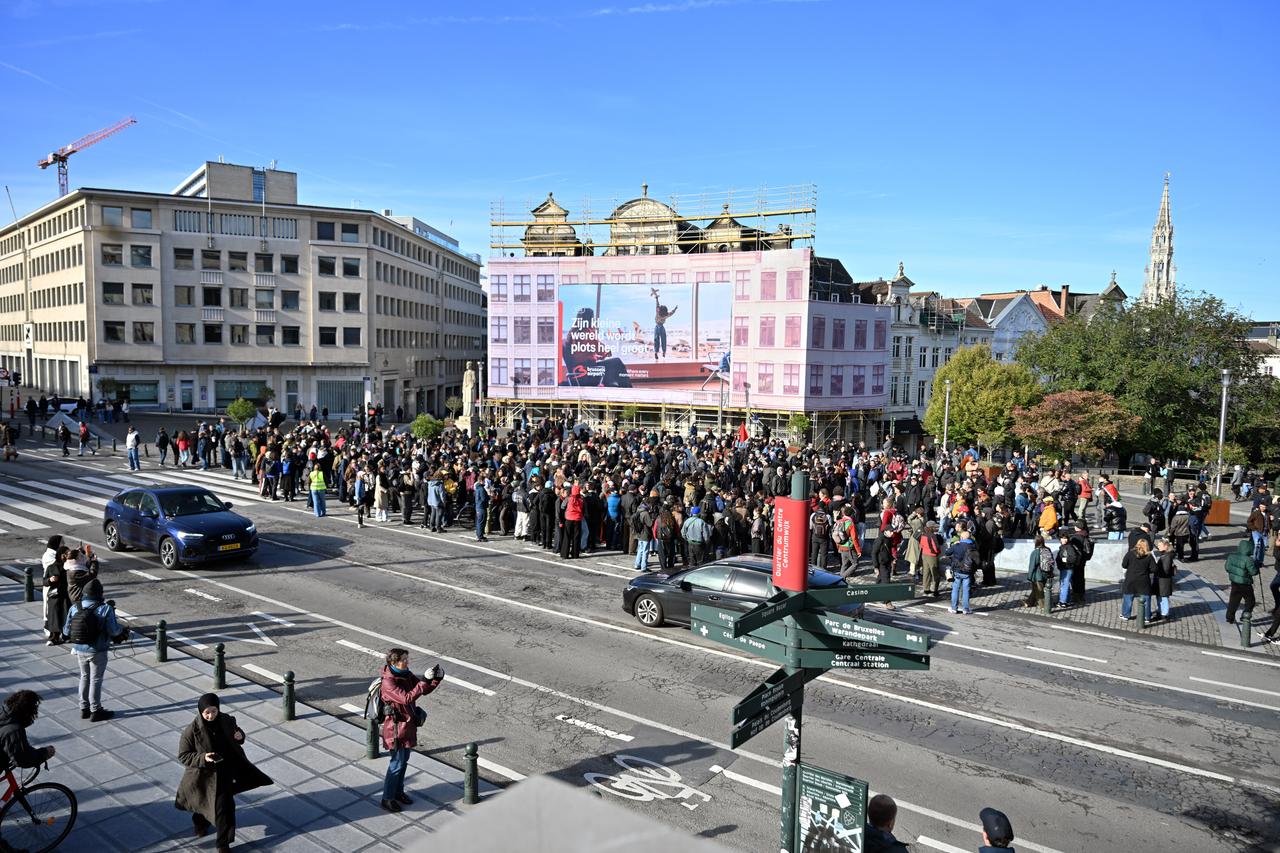
On 24 October 2026, protests were held in Brussels, the capital of Belgium, to oppose federal government policies, education reforms, and police interventions. Demonstrators, convened at the call of various organizations, gathered at Albertine Square in the afternoon.
Protesters chanted slogans against the federal government’s austerity measures and the reforms introduced by the Ministry of Education, responsible for the French-speaking community. They demanded improved working conditions, preservation of purchasing power, and stronger public services.
Participants also protested against police interventions, alleging disproportionate use of force during previous demonstrations. Demonstrators raised slogans against police violence and conducted marches along various routes.
During the protests, police cordons were established in different areas of Brussels, and several streets were closed to traffic by security forces. Police units monitored the demonstrators’ movements and conducted searches of some participants’ bags.
End of the Protests in Belgium (24 October 2026) Anadolu Ajansı
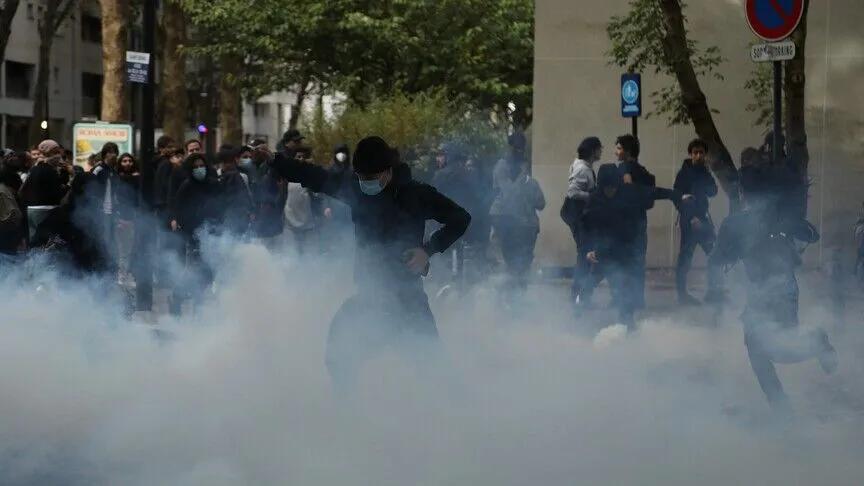
Tensions arose between protesters and security forces in the Saint-Gilles district of Brussels on 24 October. Around 13:00 local time, police intervened against a group marching through the area.
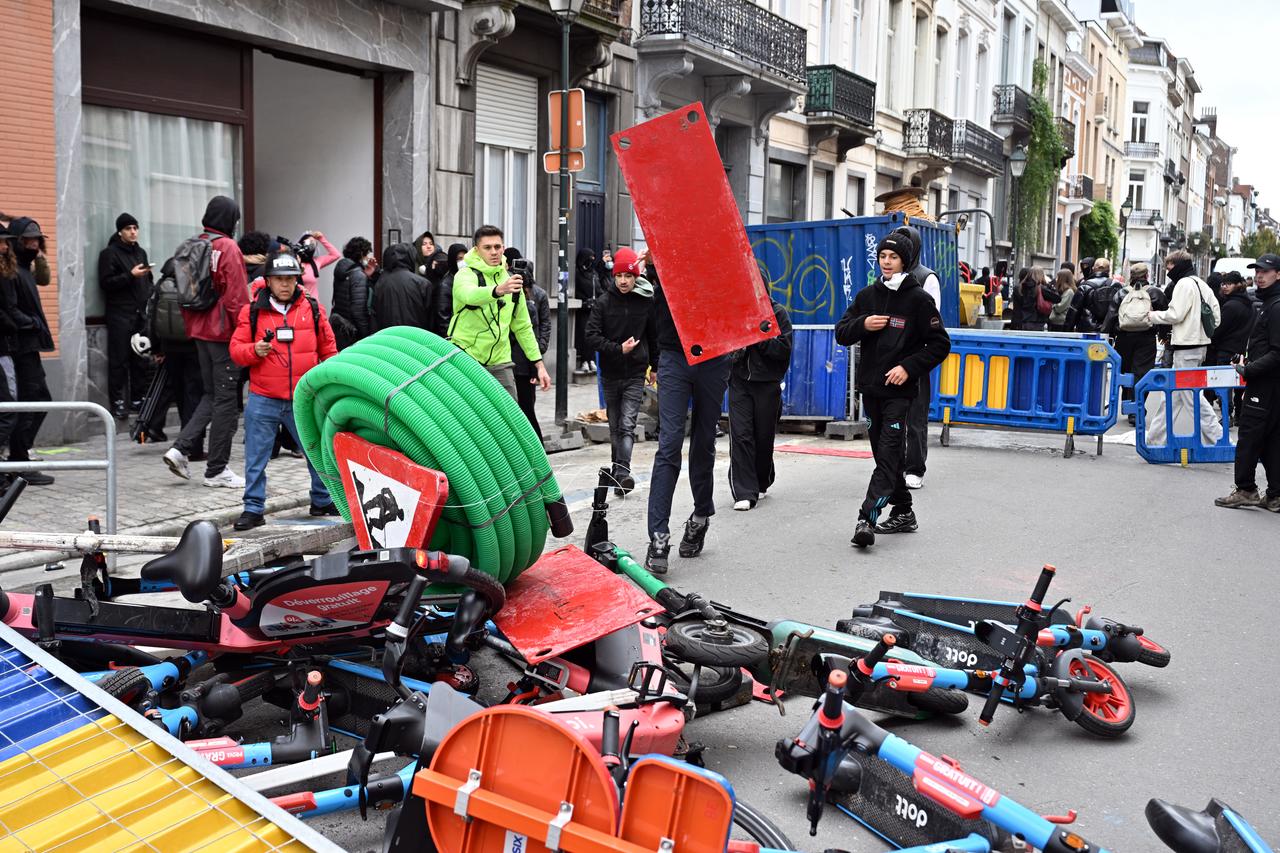
After some demonstrators attempted to breach police lines by setting up barricades on fire, security forces deployed tear gas near Forest Avenue. Protesters tried to construct barricades using electric scooters and construction materials placed in the middle of roads.
During the incidents, a group of demonstrators set fire to an area where shared electric scooters were parked. Police units implemented security measures on various streets to block the protesters’ advance.
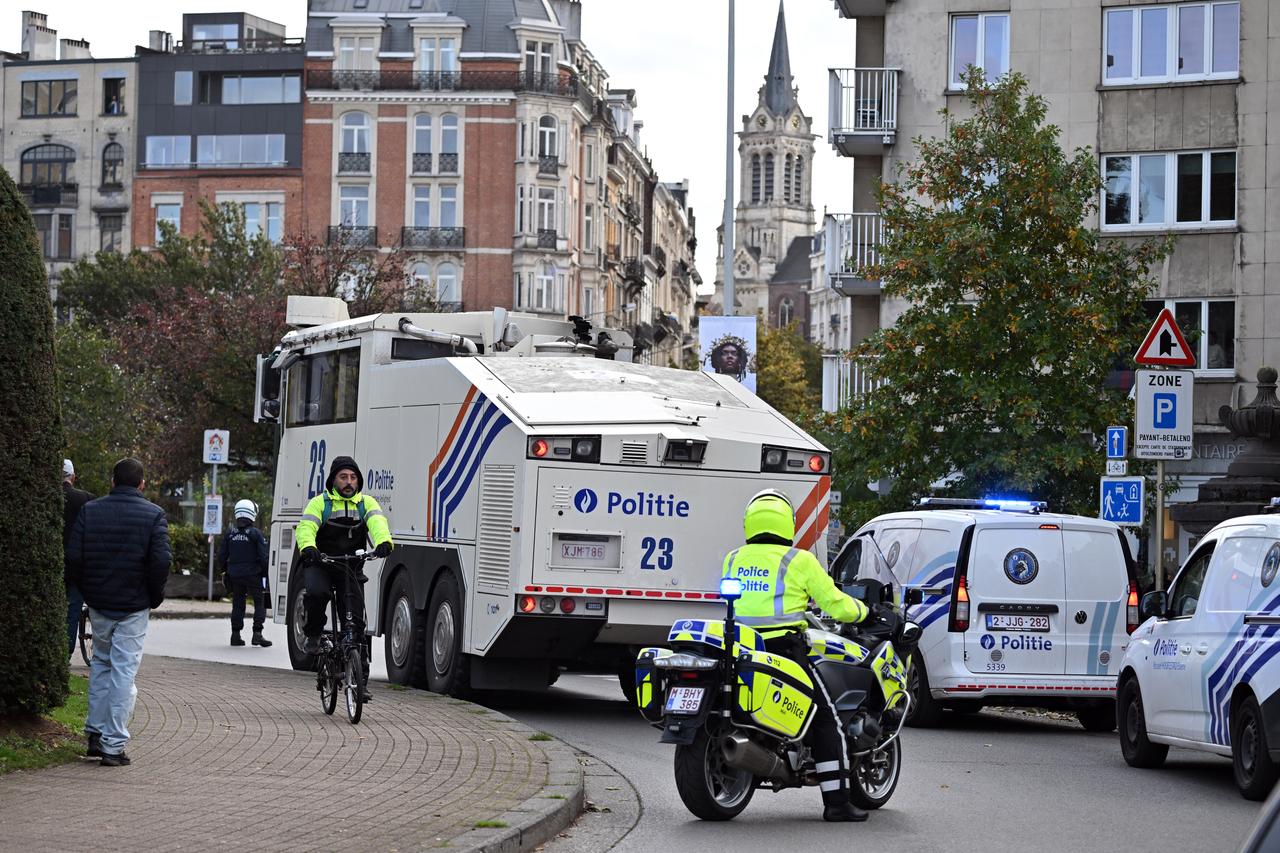
It was reported that some protesters moved through underground metro tunnels, while police units tracked them along alternative routes. Security forces operated in the area using armored vehicles and bicycle-mounted police units.
The protests ended at 15:30 local time. Police stated that although tensions occurred during the demonstrations, the situation remained under control.
End of the Protests in Belgium (24 October 2026) Anadolu Ajansı
Celia Ponce, speaking on behalf of the protesters in Brussels, stated that the demonstrations were organized to protect the future of young people, improve working conditions, and strengthen public services.
Ponce affirmed opposition to federal government policies and education reforms, arguing that the protests must continue. She emphasized that the demonstrators’ demands extended beyond education to include economic conditions and public services.
Ponce called for a general strike involving all sectors on 17 November 2026, following the ongoing protests in October, to mount a broader work stoppage against government policies.
End of the Protests in Belgium (24 October 2026) Anadolu Ajansı
On 25 October 2026, Belgian Interior Minister Bernard Quintin issued a statement regarding the anti-government protests held the previous day in Brussels and Liège.
Quintin, in a statement posted on the US-based social media platform X, noted that the protests had ended without serious incidents and thanked the security forces for their service.
Quintin stated that individuals involved in acts of property damage and arson during the protests must be identified and punished.
The Interior Minister used the following words in his statement:
"Those responsible for property damage and arson must be identified and severely punished. Those who cause damage must pay the price."
Quintin affirmed his support for the right to protest but opposed any disruption of public order or damage to property. In this context, he used the phrase: "Yes to protest, no to chaos."
Belgian security forces released information regarding arrests made following the protests in Brussels and Liège on 24 October.
According to a police statement, nine individuals were taken into custody on grounds including disturbing public order, possession of prohibited weapons, and incitement to violence.
It was reported that clashes occurred between some protesters and police, and that barricades and various materials were set on fire. However, security forces stated that no large-scale incidents occurred during the protests.
Interior Minister Bernard Quintin confirmed that the protests had ended following police intervention and called for legal action against those involved in property damage.
Anadolu Ajansı. "Belçika'da hükümet karşıtı gösteri gerginliklerin ardından polis müdahalesiyle sona erdi." Accessed October 27, 2026.https://aa.com.tr/tr/dunya/belcikada-hukumet-karsiti-gosteri-gerginliklerin-ardindan-polis-mudahalesiyle-sona-erdi/4099680
On October 17 a new demonstration was held in Brussels against education reforms and budget cuts. Hundreds of young people gathered at Brussels Central Station at local time 10.00. Protesters voiced opposition to cuts in education and chanted anti-fascist and anti-police slogans during the march. Some teachers and union members joined the demonstration. Posted markdown
The demonstrators intended to march from Albert Square toward Mont des Arts but police halted their advance at the stairs. After a brief period of tension the protesters withdrew.
Following negotiations between teachers and union representatives and the police the group then marched toward Brussels South Station. Protesters passed along Maurice Lemonnier Boulevard around 11.30 but police again blocked their advance at South Station.
Brussels Mayor Philippe Close announced a day before the event that no demonstrations scheduled for Saturday October 17 had been granted permission. Nevertheless hundreds of young people teachers and union members gathered around Central Station.
As part of security measures shared bicycles and electric scooters were requested to be removed from the areas around Central and South Stations. French-speaking students made protest calls via social media and some social media channels linked to the Yellow Vests movement also posted calls for the demonstrations.
After police repeatedly blocked the march in Brussels tensions escalated during the day. Some protesters used construction barriers to advance en masse toward police lines and threw various objects at security forces. Police used tear gas and water cannons to repel the demonstrators.
The incidents later spread to other parts of Brussels. In the evening clashes continued around Bourse Square and its surroundings. Around 17.00 after a partial calming of the situation a crowd reassembled in the square and chanted anti-police slogans.
In the evening renewed clashes occurred between protesters and security forces; police used tear gas and water cannons multiple times. Civil police units reportedly arrested several individuals from within the crowd. Initial reports indicated that several people had been injured.
As the protests progressed the incidents spread to Central Station and the Marolles neighborhood. According to Belgium’s official news agency Belga some protesters attacked the building of the Socialist Party (PS) and smashed its windows.
The incident was one of several direct material damages inflicted on political party buildings during the protests.
During the Brussels incidents a waste container in the city center and three cars in the Marolles neighborhood were set on fire. Some protesters who moved to the Anderlecht district used shared bicycles and electric scooters to construct barricades. These vehicles were later set on fire.
Brussels police later confirmed that electric scooters and construction materials had been used to build barricades during the events.
The clashes in Brussels also affected the city’s public transport system.
Brussels Public Transport Company (STIB) announced that at the request of police some stations were fully closed and others partially closed. Due to the events some bus and tram routes were suspended.
Thus the demonstrations affected not only the squares and streets where protests took place but also parts of the city center’s transport network.
On October 17 in addition to Brussels a demonstration was also held in Liège against education policies and budget cuts. A group of 200 to 250 people mostly young people gathered at approximately 10.00 local time in front of Guillemins Train Station. Protesters expressed opposition to austerity measures in education.
Starting around 11.00 the demonstrators began marching toward the city center and later conducted a sit-in that blocked bus traffic.
In Liège protesters closed various roads including a highway connection at approximately 13.15. When some demonstrators attempted to move road barriers to build barricades police intervened and dispersed the crowd. Police used water cannons during the intervention.
During the intervention bystanders shouted slogans such as “Release our friends” in reference to those arrested.
Following the events Brussels police announced on October 18 that a total of 150 people had been arrested during the protests in the city.
Of these individuals 118 were held under administrative detention and 32 under judicial detention.
According to police statements judicial detentions were linked to acts such as throwing objects at security forces resisting arrest and deliberate arson.
It was reported that 15 of those under judicial detention were minors. Police stated that investigations were ongoing to identify additional suspects and that the announced numbers could change.
Brussels police announced that serious material damage occurred in the city center during the protests. According to police statements five police officers sustained minor injuries.
It was also confirmed that electric scooters and construction materials had been used to build barricades. While initial reports mentioned injuries to several people the subsequent police statement provided further details on the number of injuries among security forces.
According to a statement by Liège police released by Belga on October 19 the total number of arrests in the city was confirmed. Liège police reported that 45 people had been arrested during the protests. It was announced that 12 of those arrested were minors.
Adding this number to the 150 arrests in Brussels the total number of arrests across Belgium related to the October 17 protests rose to 195.
Belgian Interior Minister Bernard Quintin condemned the violence that occurred during the protests in Brussels and Liège. Quintin stated that he did not view the events as legitimate protest actions but rather as repeated acts of violence aimed at destabilizing society. He confirmed that federal police were supporting local police units and that available resources would be used to restore public order.
Following the protests a new debate emerged in the Belgian government regarding the structure of security forces.
Belgian Defense Minister Theo Francken stated in an interview with RTL television on October 18 that in light of the violent incidents a new gendarmerie unit trained by the military should be established. Francken announced that the government was actively working on this issue. Posted markdown
The proposed structure would operate under the supervision of the Ministry of the Interior and function as a reserve security force with military training and high operational mobility.
Francken argued that in the event of violence escalating to high levels a reserve force capable of restoring public order and protecting citizens would be necessary.
According to the model proposed by Theo Francken the planned gendarmerie unit would have a hybrid structure. Francken indicated that the unit could be deployed under the authority of the Ministry of the Interior for public order situations but could fall under the jurisdiction of the Ministry of Defense in the event of a geopolitical conflict. He cited a potential conflict with Russia as an example of this second mode of operation.
The Defense Minister also stated that Prime Minister Bart De Wever had been informed of the plan and supported the proposal.
The debate over the new gendarmerie unit has revived discussion about the history of the former gendarmerie organization in Belgium.
Belgium’s former gendarmerie organization was disbanded on April 1 2001 following criticism over lack of coordination with police in certain investigations.
The 2026 proposal is presented not as a direct reinstatement of the former organization but as a plan to create a new security unit trained by the military and operating under the supervision of the Ministry of the Interior.
Student protests against planned budget cuts and education reforms in Belgium began in October 2026 and expanded significantly in the French-speaking Wallonia-Brussels Federation. The protests, which started in the city of Liège and included incidents of violence during some demonstrations, spread to French-language schools in Brussels. Following the events in Liège, Interior Minister Bernard Quintin claimed that an “Antifa-style movement” was involved in the demonstrations, prompting the imposition of a ban on public gatherings in the city.
During the same period, a different public safety measure was debated in Antwerp. At the directive of Antwerp Police Chief Serge Muyters, individuals previously identified as having caused disturbances could be administratively detained for up to 12 hours even if they had not committed any new crime or offense. This measure was criticized by opposition parties as unlawful.
Student protests in the Belgian city of Liège began as a response to budget cuts and education reforms proposed by the government of the French-speaking Wallonia-Brussels Federation. After student protests against education conditions in France spread to Belgium on 1 October 2026, Liège became one of the main centers of protest activity in the country.
Following the start of the demonstrations, students gathered in front of various educational institutions, with some groups erecting barricades and setting fire to garbage containers. Reports indicated that some youths attempted to forcibly enter educational facilities, objects were thrown at school buildings, and several businesses suffered damage.
As the incidents escalated into a security concern, numerous secondary schools in both municipal and independent education networks in Liège were closed on 2 October on grounds of safety.
The protests were not confined to the city center of Liège. On 2 October, student actions also took place in Huy, Ans, Waremme, and Herstal, all within the province of Liège, as well as in Charleroi.
The Liège police announced that since the beginning of October, a total of 107 individuals were detained and 27 of them arrested in connection with the ongoing student protests.
Despite the detentions and arrests, students continued their protests. They regathered in front of various educational institutions including the HEPL University campus and Leonie de Waha Secondary School.
Police officials reported that since 1 October, the level of violence and the number of individuals involved in the demonstrations had increased. Security forces also noted that more people with no direct connection to student groups were beginning to participate in the protests.
This development caused the student movement initiated in response to education policies to evolve into a broader debate on public order and security.
Belgian Interior Minister Bernard Quintin claimed that an “Antifa-style movement” was involved in the violent incidents during the student protests in Liège.
At a press conference in Liège, Quintin stated that authorities had information indicating the presence of an active Antifa-style movement in the city. He argued that adults were directing students and children to deliver violent political messages.
Quintin used the following statement regarding the situation: “Adults are manipulating children to deliver violent political messages. This is completely unacceptable.”
The statements by local police officials that more individuals unrelated to students were participating in the demonstrations coincided with the Interior Minister’s claims.
However, no conclusive evidence has been presented to confirm that specific violent incidents during the protests were organized by Antifa; the Antifa connection remains an allegation made by Quintin.
Following violent incidents during the protests, Liège Mayor Jean-Marc Demelenne decided to impose a ban on public gatherings in the city.
The regulation prohibits more than three people from gathering in public spaces. It was implemented during a period when student protests continued and security authorities assessed that non-students were increasingly participating in the demonstrations.
Thus, demonstrations that began as student responses to education budget cuts and reforms have evolved into a broader security debate involving detentions, arrests, and restrictions on public assembly.
The term “Antifa” is an abbreviation of “anti-fascist.” Antifa is defined as a movement composed of various autonomous groups without a centralized organizational structure or single leadership, generally associated with far-left political tendencies.
In Belgian debates, Antifa has been brought into discussion in relation to claims that outsiders participated in the violent incidents during the Liège protests. Interior Minister Quintin’s statement triggered a debate over whether organized political groups were operating behind or within the student demonstrations. In September 2025, U.S. President Donald Trump designated Antifa in the United States as a terrorist organization.
As protests continued in Liège, demonstrations against education policies also spread to Brussels. In the capital, students and teachers at 11 French-language schools staged strikes and protests against budget cuts and education reforms.
Students and teachers gathered at the entrances of various schools from early morning to express their opposition to the education policies of the Wallonia-Brussels Federation government.
Sebastien Demarche, coordinator of the protest group Mars Attacks, confirmed that the actions had spread to 11 schools in Brussels.
The entrance to the Athenee Charles Janssens School in the municipality of Ixelles has been blocked by students since 5 October. The General Union of Public Services (CGSP) announced that classes had been suspended again to allow school authorities to meet with students. It is expected that students and teachers will continue their protests until the nationwide strike planned for 9 October 2026.
As part of the protests in Brussels, Mars Attacks called on students and teachers to gather at 14:00 local time in front of the French Community Parliament.
The Wallonia-Brussels Federation government planned for Deputy Prime Minister and Education Minister Valerie Glatigny to answer questions regarding teacher salary regulations in parliament.
At the same time, students were scheduled to gather at Brussels Central Railway Station, and Glatigny was expected to meet with a student delegation at 17:30.
The demonstrations in Brussels were not an isolated protest movement emerging in October 2026. Students and teachers in Belgium’s French-language education system have carried out various protests since the beginning of the year against planned austerity measures in education.
Separate from the student protests, a new police practice regarding public order became a subject of debate in the Belgian city of Antwerp. Antwerp Police Chief Serge Muyters issued an internal directive to police personnel, instructing them to “maximize the use of administrative detentions” to maintain public order, particularly in the area known as “North Antwerp.”
Under the new measure, individuals previously identified as having caused disturbances are to be listed in a special police database.
If individuals on this list are identified during police checks, they may be administratively detained for up to 12 hours even if they have not committed any crime or public order offense at that moment.
The application is not limited to those already on the list. Individuals not yet listed but who have been documented by police for public disturbances such as intoxication, fighting, illegal activity, or causing environmental nuisance are also to be included under the same measure.
Behaviors such as using public spaces for sleeping, begging, shouting at people, and littering are also to be considered as “nuisance.”
The new administrative detention directive by Antwerp police has drawn criticism from opposition parties in the city.
Green Group Chair Bogdan Vanden Berghe argued that the measure is “clearly unlawful.” Berghe noted that the directive issued by the police chief and mayor could expose police officers implementing it to legal risks.
Berghe asserted that the directive could lead to legal consequences for individual officers if a person resists detention. He demanded the immediate withdrawal of the directive, its legal review, and its inclusion on the agenda of the Antwerp City Council.
Belgian Workers’ Party City Council Member Peter Mertens also labeled the measure as “completely unlawful.” Mertens argued that depriving individuals of their freedoms without concrete justification constitutes a violation of fundamental human rights and warned that the directive could set a dangerous precedent enabling abuse.
Christian Democratic and Flemish (CD&V) Group Chair Pieter De Cock also opposed the measure. De Cock stated: “Detaining people without concrete justification borders on a police state. This provides no solution for our police force or for eliminating disturbances.”
In opposition statements, the legal basis of the measure, its impact on fundamental rights and freedoms, and the limits of police authority have become central points of debate.
Developments in Belgium in October 2026 have brought student movements against education policies and security measures targeting public order onto the national agenda simultaneously.
In Liège, violent incidents during demonstrations against budget cuts and education reforms, the detention of 107 individuals and arrest of 27, Interior Minister Bernard Quintin’s claim of an “Antifa-style movement,” and the imposition of a ban on gatherings of more than three people in public spaces have given the protests a security dimension.
In Brussels, protests spread to 11 French-language schools, where students and teachers conducted strikes and school actions, while a meeting between Education Minister Valerie Glatigny and student representatives was planned.
In Antwerp, the administrative detention directive introduced during the same period, while separate from the student protests, has sparked political and legal debates over the scope of police powers granted to maintain public order in Belgium.
Al Jazeera. “Over 100 arrested in Belgium student protests over education costs.” Accessed October 9, 2026. October 7, 2026.
Anadolu Ajansı. "Belgium's Liege bans street gatherings of more than 3 people amid student protests." Accessed October 9, 2026. October 8, 2026.
Reuters. “Belgian students rally over education costs in protests echoing France.” Accessed October 9, 2026. October 7, 2026.
The student protests in Belgium began on 1 October 2026 with actions initiated by students in secondary schools in the city of Liège, demanding improvements to educational conditions. The demonstrations, which were not organized by teachers or unions but launched spontaneously by students, led to the blocking of entrances to some schools, the prevention of classes from starting, and tensions between police and demonstrators at various locations. Material damage occurred during the events, and six people were taken into custody.
On the morning of 1 October, students in Liège gathered in front of various secondary schools to hold demonstrations. Due to the protests, classes at several schools were prevented from starting in the morning hours.
Numerous educational institutions were affected by the actions, including Athénée de Fragnée, Athénée Royal de Montegnée, Institut Maria Goretti, Collège Saint-Barthélemy, Saint-Laurent, Saint-Sépulcre and Institut Marie-Thérèse.
Protests were also observed at some schools in the towns of Esneux, Visé, Angleur and Soumagne outside Liège. While students in Visé, Angleur and Soumagne eventually returned to their schools, guard lines were established at some educational institutions to prevent both students and teachers from entering.
Police and local sources reported that the demonstrations were not organized by teachers or unions but were initiated as a spontaneous movement by students.
Students participating in the actions made various demands aimed at improving educational conditions. In particular, they called for a reduction in the number of students per class and the assignment of sufficient numbers of teachers and staff.
Their demands also included greater consideration of students and parents in decision-making processes related to education and ensuring equal access to education for all.
Students further argued that decisions in the field of education must not negatively affect their futures and stated that such decisions must “build the future, not destroy it”.
In the later hours of the demonstrations, tensions and incidents of material damage occurred around some educational institutions in Liège.
Police reported that fireworks-type explosives, eggs, apples and security barriers were thrown at the entrances of certain schools. Large numbers of police officers were deployed around the schools where the incidents intensified.
At the Institut Marie-Thérèse in Liège’s Hors-Château district, a fire was set, and scooters and security barriers were reportedly thrown into the flames. At Collège Saint-Barthélemy, one of the school’s glass doors was broken with an iron bar. In response to these incidents, police increased security measures around the affected schools.
Liège police announced that six individuals were taken into custody during the student protests. Three of those detained were placed under judicial custody. An investigation was launched into the acts of violence and material damage that occurred during the protests. Following these developments, authorities in Liège decided to suspend classes the following day.
Valérie Glatigny, Minister of Education of the Wallonia-Brussels Federation, condemned the acts of violence and material damage that occurred during the protests.
Glatigny acknowledged that students have the right to protest against decisions but emphasized that demonstrations must not turn violent. She deemed it unacceptable to block access to schools, throw objects at police officers, or cause material damage under pressure from individuals outside the school community.
Glatigny also assessed that students had been “used as a tool” and defended the position that measures in the education sector had not reduced the support provided to students.
The actions in Belgium followed approximately one week of ongoing high school student protests in France. The French protests initially concentrated in high schools in Paris and its surrounding areas before spreading to other regions of the country.
French students also demanded a reduction in the number of students per class, the assignment of sufficient numbers of teachers, and the improvement of educational conditions. Students carried out blockades by closing entrances to various schools.
On 29 September, hundreds of high schools were affected by protests and blockades, and tensions arose between students and security forces in some cities.
Anadolu Ajansı. "Fransa'daki lise öğrencilerinin eylemleri Belçika'ya sıçradı." Accessed October 2, 2026.https://www.aa.com.tr/tr/dunya/fransadaki-lise-ogrencilerinin-eylemleri-belcikaya-sicradi/4074833
Anadolu Ajansı. “6 arrested after student protests at schools in Belgium's Liege.” Accessed October 2, 2026.https://www.aa.com.tr/en/europe/6-arrested-after-student-protests-at-schools-in-belgiums-liege/4074997
Euronews. "French protests over school conditions spread as students set fires and put up blockades." Accessed October 2, 2026.https://www.euronews.com/2026/10/01/french-protests-over-school-conditions-spread-as-students-set-fires-and-put-up-blockades
Milliyet. "Öğrenci eylemleri Belçika'ya da sıçradı." Accessed October 2, 2026.https://www.milliyet.com.tr/dunya/ogrenci-eylemleri-belcikaya-da-sicradi-7671312
NTV. "Fransa'daki lise eylemleri Belçika'ya da sıçradı: Yüzlerce gözaltı ve yaralılar var." Accessed October 2, 2026.https://www.ntv.com.tr/dunya/galeri-fransadaki-lise-eylemleri-belcikaya-da-sicradi-yuzlerce-gozalti-ve-yaralilar-var-1744378

Student protests in Belgium were actions carried out by students in the city of Liège on 1 October 2026, demanding a reduction in class sizes adequate numbers of teachers and staff greater inclusion of students and parents in decision-making processes and equal access to education. During the spontaneously initiated protests some school entrances were blocked property damage occurred and six people were taken into custody.
Henüz Tartışma Girilmemiştir
"Student Protests in Belgium (October 2026)" maddesi için tartışma başlatın
27 Ekim 2026
Anti-Government Protests in Brussels
27 Ekim 2026
Police Intervention and Tensions (24 October)
27 Ekim 2026
Call for a General Strike (24 October)
27 Ekim 2026
Belgian Interior Minister Bernard Quintin’s Statement (25 October)
27 Ekim 2026
Arrests and Security Measures During the Protests (25 October)
19 Ekim 2026
October 17 Brussels Protest
19 Ekim 2026
Denial of Permission for Demonstrations
19 Ekim 2026
Clashes Between Police and Protesters in Brussels
19 Ekim 2026
Attack on the Socialist Party Building
19 Ekim 2026
Setting Vehicles and Electric Scooters on Fire
19 Ekim 2026
Disruption of Public Transport
19 Ekim 2026
Liège Protest
19 Ekim 2026
Road Closures and Police Intervention in Liège
19 Ekim 2026
150 People Arrested in Brussels
19 Ekim 2026
Injuries to Police and Damage in the City Center
19 Ekim 2026
45 People Arrested in Liège
19 Ekim 2026
Statement by Interior Minister Bernard Quintin
19 Ekim 2026
Proposal for a New Gendarmerie Unit
19 Ekim 2026
Hybrid Structure of the Proposed Gendarmerie Unit
19 Ekim 2026
Disbandment of the Gendarmerie in Belgium in 2001
9 Ekim 2026
Student Protests and Public Order Debates Against Education Reforms in Türkiye
9 Ekim 2026
Student Protests Against Education Policies in Liège
9 Ekim 2026
107 Detentions and 27 Arrests in Liège Protests
9 Ekim 2026
Interior Minister Bernard Quintin’s Claim of an “Antifa-Style Movement”
9 Ekim 2026
Ban on Gatherings in Liège
9 Ekim 2026
The Antifa Debate
9 Ekim 2026
Expansion of Student Protests to 11 Schools in Brussels
9 Ekim 2026
Negotiation Process with Education Minister Valerie Glatigny
9 Ekim 2026
New Administrative Detention Directive in Antwerp
9 Ekim 2026
Opposition Reactions to the Antwerp Measure
9 Ekim 2026
Overall Context of Education Protests and Public Order Debates
2 Ekim 2026
Beginning of Student Actions in Liège
2 Ekim 2026
Students’ Demands
2 Ekim 2026
Events at School Entrances
2 Ekim 2026
Arrests and Investigation
2 Ekim 2026
Statement by Education Minister Valérie Glatigny
2 Ekim 2026
Spread of Student Protests from France to Belgium