


Bu içerik Türkçe olarak yazılmış olup yapay zeka ile otomatik olarak İngilizceye çevrilmiştir.

A fixed alarm sound, clothes hastily put on, a child sitting at the breakfast table with half-asleep eyes, and the familiar crisis at the door: "I don’t want to go to school today." For many parents, this sentence triggers concern far deeper than just the disruption of morning peace. Often, the situation is labeled directly as "school laziness" or indulgence.
Yet the truth is far more layered and awaits understanding within the child’s world.
What are the real reasons behind this resistance?
By nature, children are curious, exploration-oriented beings programmed for play. The school system, however, invites them to sit in the same seat for hours, adhere to strict rules, and constantly exert mental effort.
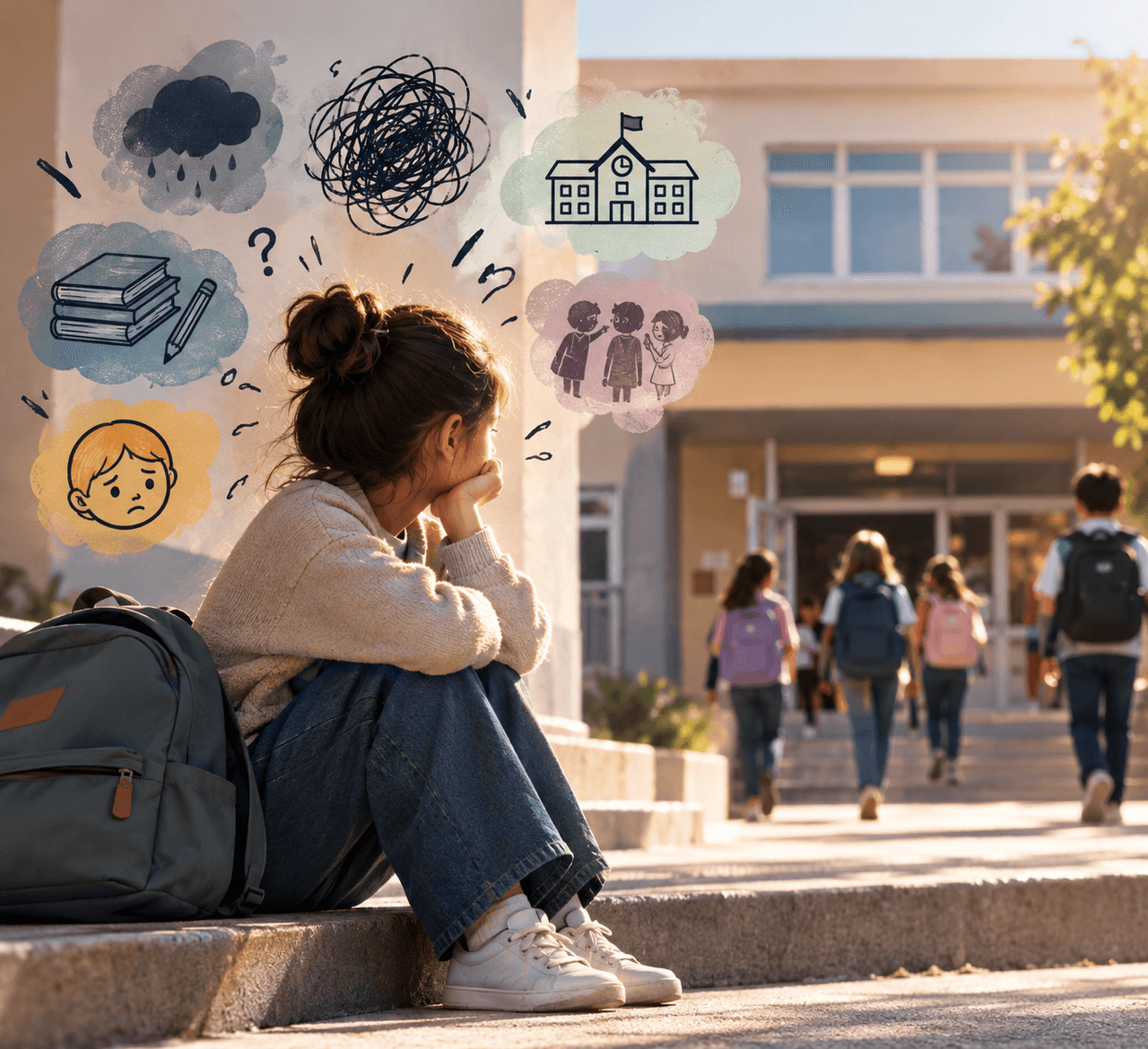
Okul Önünde Düşünceli Çocuğu Temsil Eden Görsel (Yapay Zeka İle Oluşturulmuştur)
Transitioning from being masters of their own time to entering a schedule governed by bell sounds represents a significant adjustment for them. The reluctance to leave the warmth of bed in the morning is sometimes nothing more than a simple, innocent reaction to the shrinking of their freedom.
As adults, we sometimes tend to view school merely as an academic institution; yet for children, it is also a survival arena where they first take on social roles outside the family. Bullying, fear of exclusion, conflicts with close friends, or even a teacher’s unintentional hurtful remark can play a major role in a child’s reluctance to attend school. Children often cannot express these complex emotions in words; instead, they communicate through physical signals such as "My stomach hurts" or "I feel sick," or simply by outright refusing to go to school.
We live in a performance-driven world, and unfortunately this pressure is placed on children’s shoulders at very young ages. Anxieties such as "What if I can’t finish my homework?", "What if I get a bad grade on the test?", or "What if my friends make fun of me?" can transform school in a child’s mind from a safe learning space into a threatening environment. In settings where making mistakes is almost treated as a sin, children prefer not to go at all rather than face failure.
A child’s reluctance to go to school is not a problem in itself, but rather a valuable signal communicating something important. When faced with this situation, our first instinct should not be to punish or ignore it.
Children do not grow to dislike school; rather, the school experience sometimes becomes too heavy for them. As long as we can see the world through their eyes and gently ease this experience together, the crises at the door each morning will give way to steps filled with confidence.
The Monotony of Routine and Loss of Freedom
Social Dynamics and Peer Relationships
Expectations and Fear of Failure
What Should Parents Do?