



Adélie Penguin
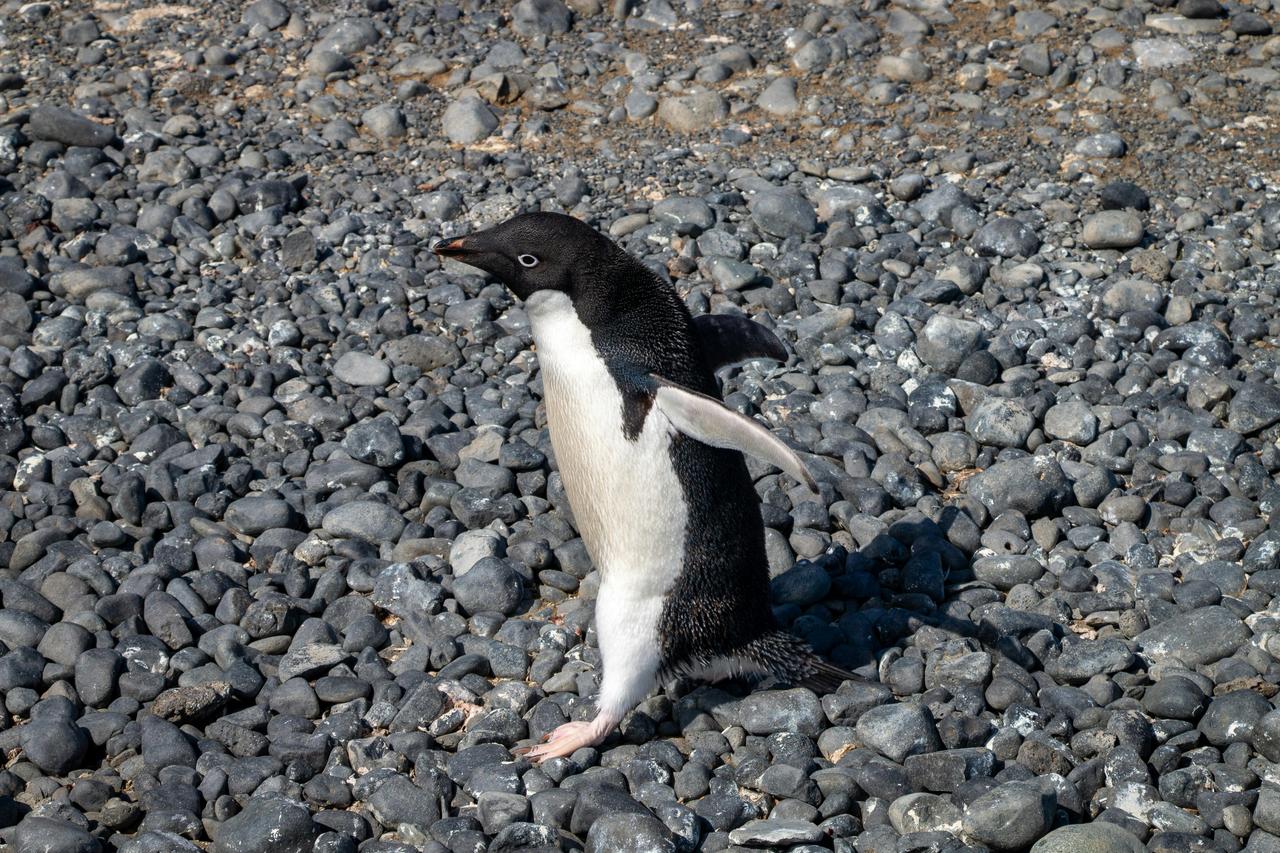
The Adélie penguin (Pygoscelis adeliae) belongs to the family Spheniscidae. It is a charming and agile bird of cold, icy coastlines. One of its most distinguishing features from other penguins is the prominent white ring around its eyes. It also uses its short, powerful flipper-like wings to adapt for swimming and rapid movement across ice.

Adélie Penguins (Pexels)
What Are Their Colors?
The plumage coloration of Adélie penguins is very distinct and generally does not vary. Their backs are glossy black, providing camouflage in the ocean. Their undersides are entirely white.
They have a prominent white ring around their eyes. Their beaks are black, with slightly lighter tones at the tip. Juveniles typically have grayish, fluffier feathers.

Adélie Penguin Family (Unsplash)
How Large Do They Grow?
Adélie penguins typically reach a height of 70–73 cm. Their weight varies between 3.5–6 kg depending on the season and feeding conditions.
How Long Do They Live?
The average lifespan of Adélie penguins in the wild is 10–15 years. However, under favorable conditions, some individuals can live up to 20 years. Harsh climate conditions, predators, and food shortages are the main factors that shorten their lifespan.

Adélie Penguin (Pixabay)
What Do They Eat?
In the wild, Adélie penguins feed on small crustaceans (especially krill), fish, and occasionally small mollusks. Krill is their primary food source and constitutes the bulk of their diet.
Where Do They Live?
Adélie penguins inhabit coastal areas and surrounding islands of Antarctica. During the breeding season, they prefer ice-free rocky areas. In winter, they venture out to sea in search of food and spend extended periods drifting across the ocean.

Adélie Penguins (Unsplash)
Conservation Status
The Adélie penguin is classified as “Least Concern” by the International Union for Conservation of Nature (IUCN), indicating that the species generally has a healthy population. However, climate change and the melting of sea ice are significant factors that could threaten their habitat in the future.