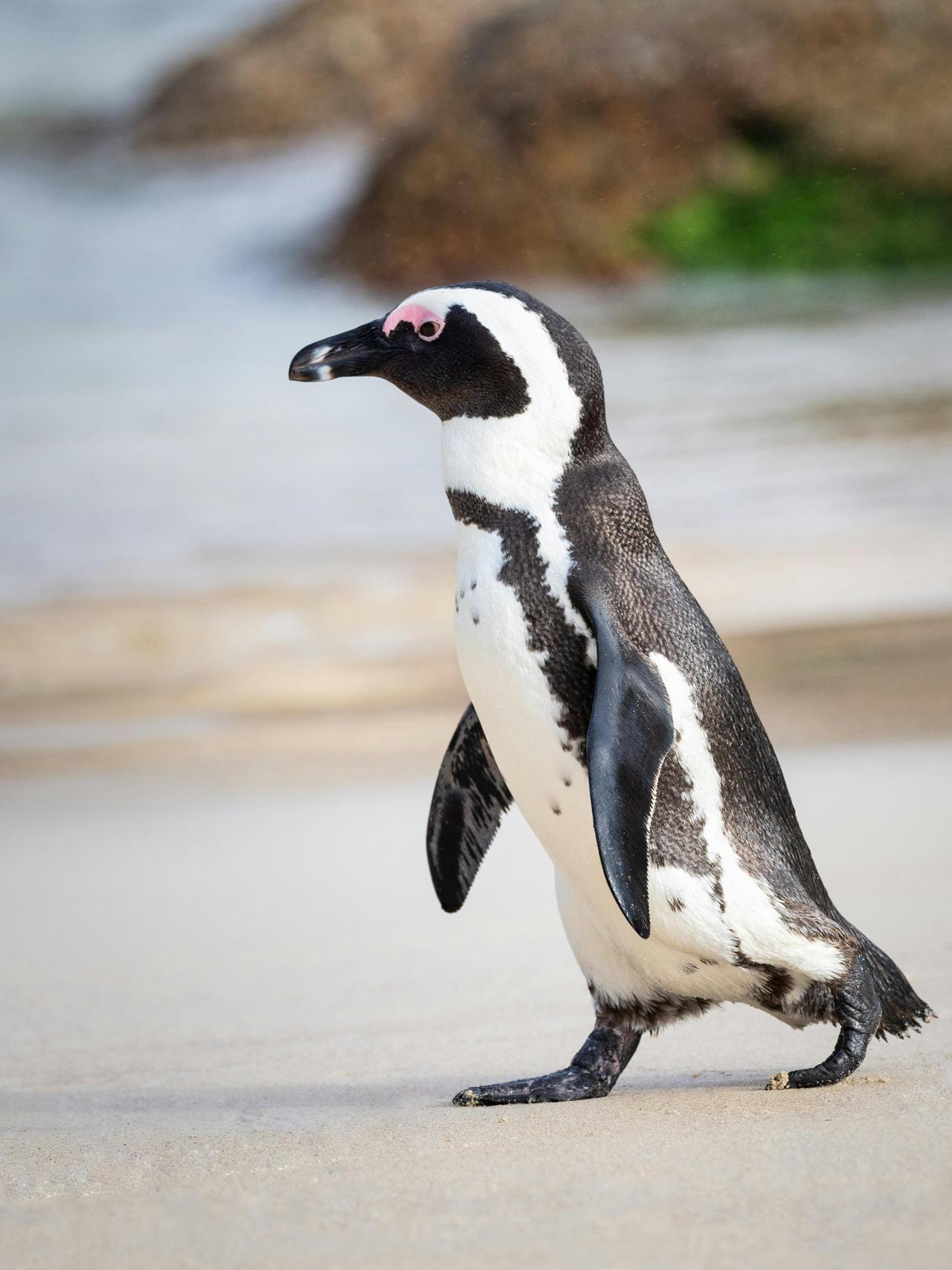




African Penguin
The African penguin or jackass penguin (Spheniscus demersus) belongs to the family Spheniscidae. It is one of the charming and agile seabirds found along coastal regions. One of the most distinguishing features that set it apart from other penguins is the pink patch above its eyes. It also has a short, densely feathered body and a distinctive waddling gait. It uses its flipper-like wings to swim swiftly and hunt for prey in the water.

African Penguins (Pexels)
What Are Their Colors?
The plumage coloration of African penguins can vary slightly depending on their habitat. Generally, their backs and upper heads are black or dark gray, while their bellies and undersides are white. They have black spots on their chests and sides, and the pattern of these spots is unique to each individual. The prominent black ring around their eyes and the pink patch of skin on their faces are key features that distinguish African penguins from other penguin species.
How Large Do They Grow?
African penguins are approximately 60–70 cm in height. Their weight typically ranges between 2.2 and 3.5 kg.

African Penguins (Pexels)
How Long Do They Live?
The average lifespan of African penguins in the wild is 10 to 15 years. However, under favorable conditions, some individuals can live up to 20 years. Predators, diseases, food shortages, and human-induced threats are the main factors that shorten their lifespan.
What Do They Eat?
In the wild, African penguins primarily feed on fish and small marine creatures. They prefer small fish such as sardines, anchovies, and pilchards. Occasionally, they also consume squid and crustaceans as part of their diet.

African Penguins (Pexels)
Where Do They Live?
African penguins inhabit the coastal areas of South Africa and Namibia. They prefer nesting on rocky shorelines, small islands, and sandy coastlines. They build their nests among rocks and shrubs to protect themselves from predators.
Conservation Status
African penguins are classified as Endangered by the International Union for Conservation of Nature (IUCN). This classification indicates that their wild populations have declined significantly and that their conservation is of great importance.