



Ahlat (District)
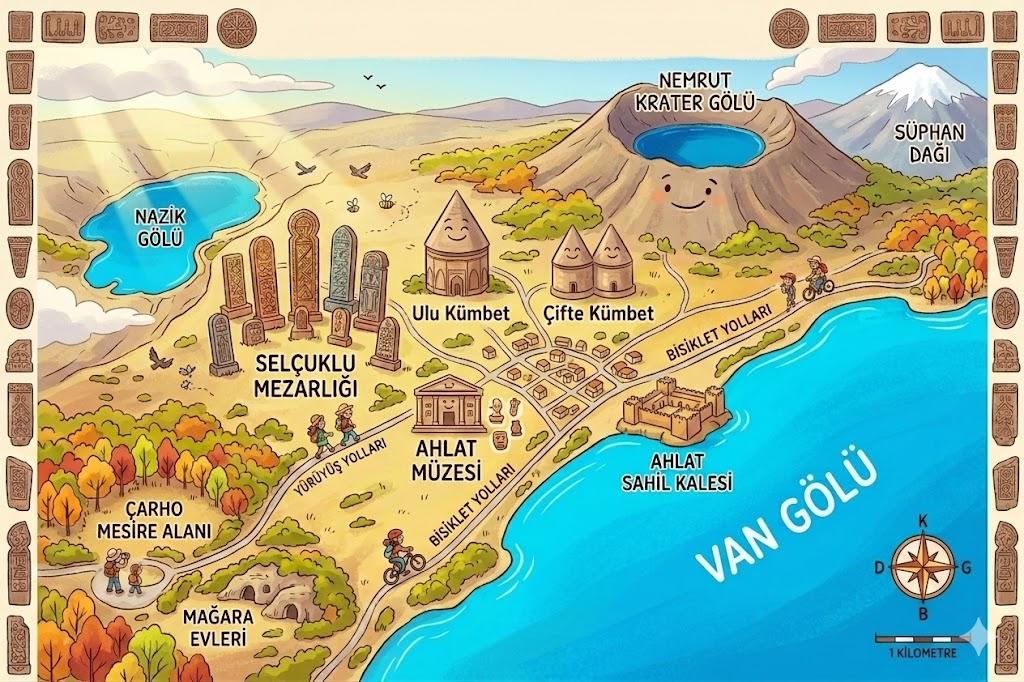
Ahlat is a district of Bitlis Province in the Eastern Anatolia Region. Located on the shores of Lake Van, this settlement has hosted numerous civilizations throughout history. Due to its historical structures and natural beauty, it is referred to as an “open-air museum.”
Where is Ahlat and Why is it Important?
Ahlat is situated between Mount Nemrut and Mount Süphan, on the northwestern shore of Lake Van. Throughout history, its location along key trade routes from Asia to Anatolia granted it strategic importance. The city served as a gateway for the Turkic settlement of Anatolia and is one of only three cities historically known as “Kubbet-ül İslam” (Dome of Islam). Today, it is part of the global Cittaslow network of slow cities.
Great Tombstones: The Seljuk Square Cemetery
The Seljuk Square Cemetery in Ahlat is the largest historical cemetery in the Turkish-Islamic world. Spanning approximately 210 decares, the site contains more than 8,000 tombstones, some of which exceed four meters in height. The ornamental carvings and inscriptions on these stones reflect the continuation of Central Asian Turkic culture in Anatolia. Because of these features, the area is listed on UNESCO’s Tentative World Heritage List.

Seljuk Square Cemetery (generated by artificial intelligence)
Stone Tents: Kümbets
The most striking structures in the town are the monumental tombs known as kümbets. These buildings resemble the tents of Central Asian Turks in form. Typically built in two stories, the lower level contains the burial chamber while the upper level serves as a place of worship.
Some of the most important kümbets in Ahlat include:
- Emir Bayındır Kümbeti: Its architecture, resting on eight short columns, has become a symbol of the town.
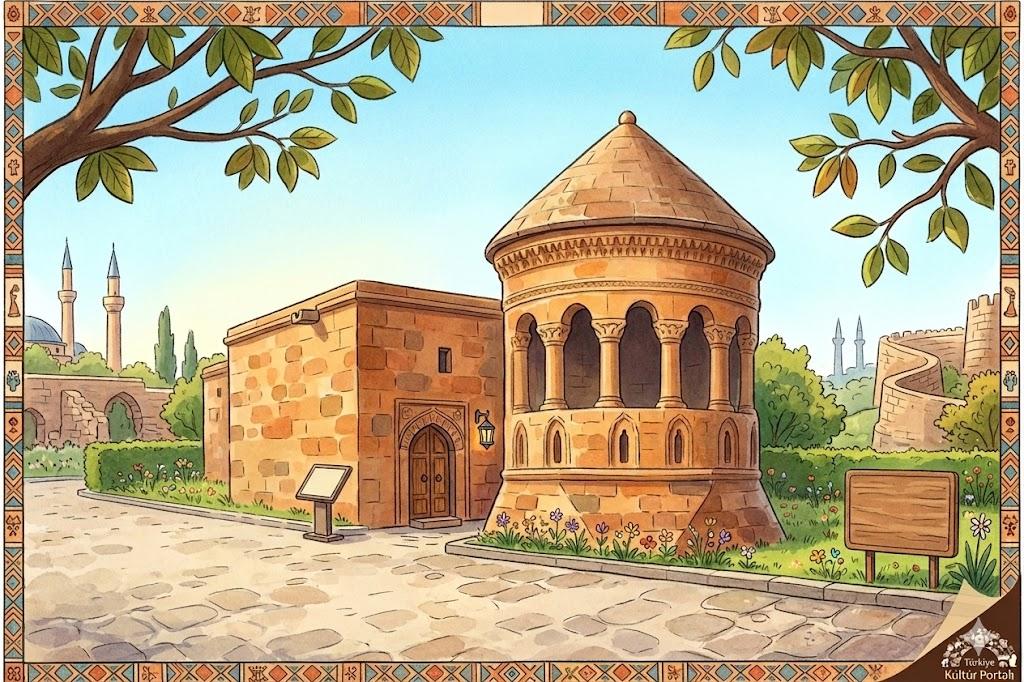
Emir Bayındır Kümbeti (generated by artificial intelligence)
- Ulu Kümbet: The largest kümbet in the district.
- Erzen Hatun Kümbeti: A structure notable for its intricate decorations.
Natural Beauty and Traditional Crafts
Ahlat is significant not only for its history but also for its natural environment. Nemrut Crater Lake, Türkiye’s largest crater lake, lies atop an extinct volcano within Ahlat’s boundaries. This area features both hot and cold lakes in close proximity. Moreover, over 100 bird species protected under conservation programs inhabit the region.

Nemrut Crater Lake (generated by artificial intelligence)
Two important traditional crafts have been practiced in the district for centuries:
- Ahlat Bastonu: These walking sticks, made from walnut wood and carved with historical motifs, were officially registered as a geographical indication in 2017.
- Ahlat Stonecraft: This tradition of working with local volcanic stone has been recognized by UNESCO as a World Heritage craft.
A Journey Through Time
Ahlat’s history extends far into antiquity. The Cave Houses found in the district date back to the Neolithic Age (thousands of years before the present). These caves were used throughout history both as dwellings and storage spaces. It is also known that Seljuk forces camped here prior to the Battle of Manzikert in 1071.