




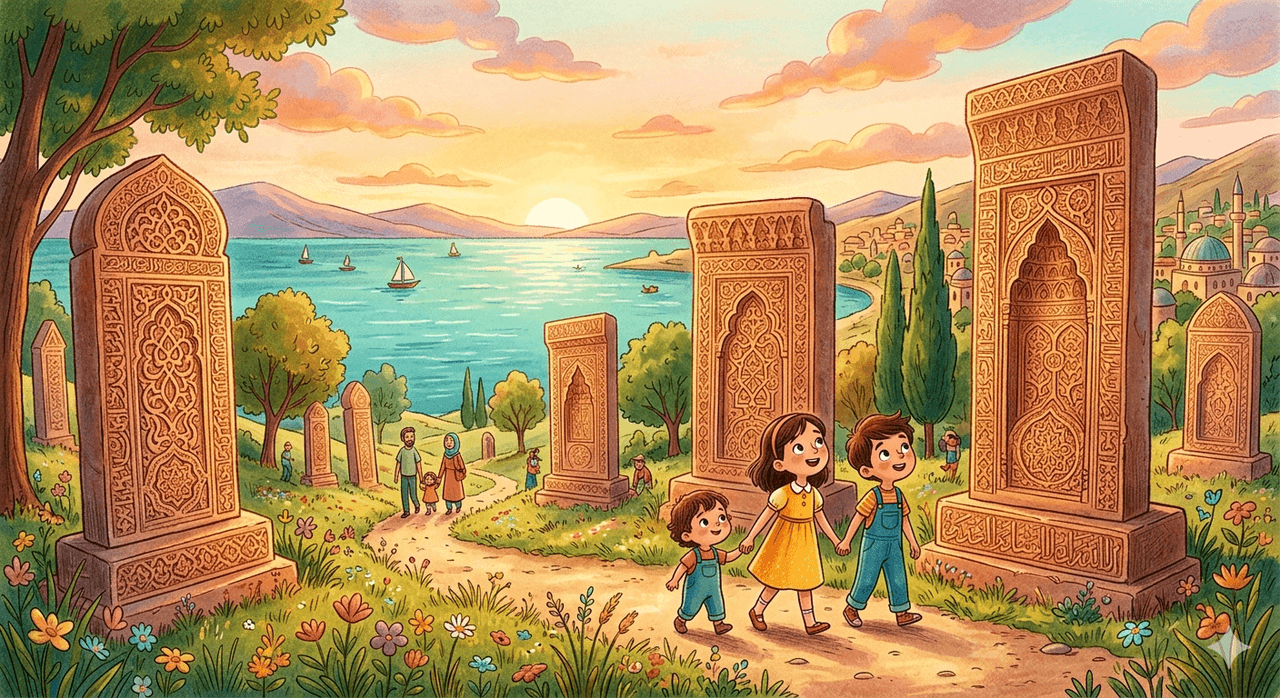
Ahlat Seljuk Cemetery
Have you ever imagined walking through an open-air museum made entirely of massive stones? Bitlis's Ahlat district, on the shores of Lake Van, is precisely such a magical place. Ahlat Selçuklu Mezarlığı is not merely a cemetery; it is a vast artistic garden where stones are carved like lace, whispering the secrets of history.
The Seal of Anatolia: Ahlat
Ahlat holds a very special place in Turkish history. After the 1071 Battle of Manzikert opened the gates of Anatolia, Ahlat became one of its most important centers. So advanced was this city that it earned the title “Kubbet-ül İslam,” meaning “Dome of Islam,” as a center of science and culture.
This cemetery covers an area of 210,000 square meters. With this scale, it is considered one of the largest in Türkiye and the most significant historical cemetery in the Turkish-Islamic world. Its value is so great that it is listed on UNESCO’s World Heritage Tentative List as part of humanity’s shared heritage.
The Garden of Giants
As you walk through this cemetery, you may feel tiny, as some gravestones approach four meters in height. These stones are like colossal monuments carrying the power and grandeur of their era. The cemetery contains 8,169 registered gravestones. Here you will find not only upright stones (şahideler), but also chest-shaped graves and mysterious underground chamber tombs called “akıt.” These varied structures reveal the traditions and beliefs of the people who lived during that time.
Mysterious Symbols Carved in Stone
Stone artisans carved intricate patterns into hard stone as if it were paper. What designs adorn these stones?
Double-Headed Dragon: In ancient Turkic belief, it symbolizes abundance, prosperity, and power.
Lamp: Represents light and illumination, believed to guide the way.
Geometric and Floral Motifs: Palmettes and rumi patterns, symbolizing infinity and the beauty of nature, adorn every surface.
These decorations are so distinctive that they show strong similarities to the oldest known Turkic inscriptions, the Orkhon Monuments of Central Asia. This demonstrates how our culture traveled from distant lands to Anatolia.
The Master of Stone: Ahmed bin Hüseyin
Who created these magnificent works? Inscriptions on the stones reveal the names of renowned artisans of the period. For example, Ahmed bin Hüseyin, who lived in the 15th century, was one of the master craftsmen who left remarkable works in this cemetery. Like him, these artisans learned their skills from their fathers and passed them on to their children, sustaining a thousand-year-old tradition.
A Journey Through Time
Approximately 900 years ago, in the 12th century, during the Ahlatshahs period, the first stones were erected in this cemetery. Since then, these stones have continued to tell us who lived in Anatolia and what magnificent civilization they built.

Ahlat Selçuklu Mezarlığı (Generated by artificial intelligence.)