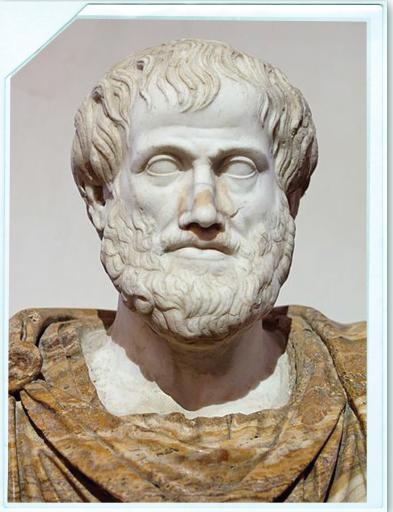




Aristotle
Aristotle, or simply Aristotle, was a renowned philosopher and sage who lived in ancient Greece in very distant times. A philosopher is someone who seeks to understand life, nature, and humanity. Aristotle was curious about many subjects: the sky, animals, cities, and even how people achieve happiness…
Have you ever tried different approaches while searching for an answer to a question? Aristotle did exactly that: he began to think by asking, “How can I understand this?”
Childhood and Education
Aristotle was born in 384 BCE in the city of Stageira, located in Thrace. His father was a physician, someone who healed people. From an early age, he greatly enjoyed observation.
In his youth, he traveled to Athens and became a student of the famous philosopher Plato. He studied Plato’s ideas for many years, but over time he developed his own original thoughts.
Teacher of Alexander the Great
One of Aristotle’s students was Alexander the Great, one of history’s most famous generals. He taught Alexander from childhood, introducing him to science and the arts. For this reason, Aristotle was called “the master who educated the emperor of the world.”

Aristotle teaching Alexander the Great. (Generated by artificial intelligence.)
His Own School: The Lyceum
Aristotle later returned to Athens and founded a school called the Lyceum. There, he taught his students while walking, which is why his school became known as the Peripatetic School, meaning “the school of those who walk.”
In his lessons, Aristotle did not merely speak—he also observed nature: he studied animals, examined the sky, and analyzed cities.

(Generated by artificial intelligence.)
Aristotle’s Ideas
- Logic: He was the first to systematize the rules of reasoning. Even today, when people say “logic,” Aristotle is the first name that comes to mind.
- Science: He classified animals, studied the heavens, and sought to understand nature.
- Ethics: He argued that people achieve happiness by finding the “golden mean”—neither too much nor too little. The best course of action lies in balanced judgment.
- Politics: He reflected on how states and societies should be governed.