
KURE Kids Header Line
badge icon

This content was originally written in Turkish for children and is automatically translated into English using artificial intelligence.

Battle of Katvan

Last Updated: 09/10/2026

In very ancient times, approximately 900 years ago, a powerful and vast Turkish state known as the Great Seljuk State ruled over Central Asia. At its head was Sultan Sanjar, renowned for his courage and wisdom. In his realm, mosques, madrasas (schools), and grand libraries were established, allowing scholars to work freely. Yet a great danger was approaching from distant lands...


Behind the Scenes of the War: Who Were the Qara Khitai?

From the east, near Mongolia, a warrior group known as the Qara Khitai, who were not Muslim, grew in strength and began advancing toward Central Asian territories. The Qara Khitai captured cities they encountered and threatened the Muslim population of the region. Wealthy Turkic cities along the Silk Road such as Bukhara and Samarkand were now in danger. Sultan Sanjar gathered his army and embarked on a long campaign eastward to protect his people and lands.
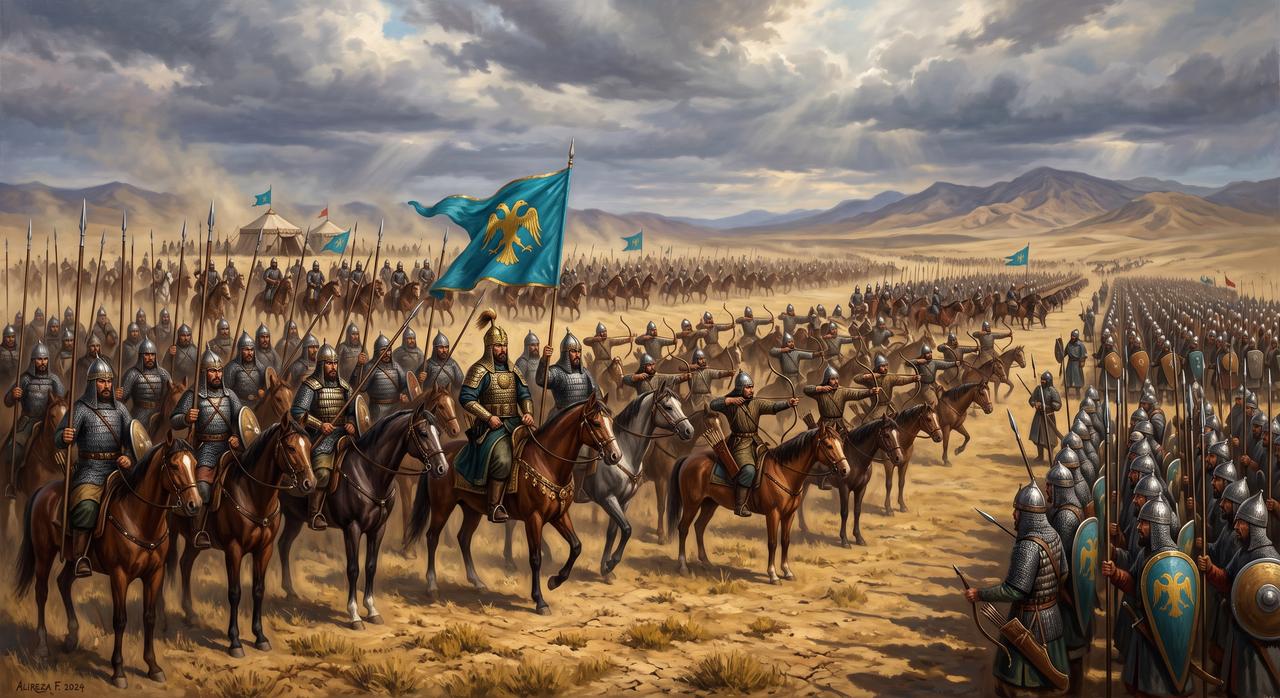


Selçuklu ordusunun muharebeye hazırlanışı. (Yapay zeka ile oluşturulmuştur)


The Great Confrontation at the Katvan Steppe

On a sunny day in the year 1141, the two great armies faced each other on a plain near the city of Samarkand known as the Katvan Steppe.

  • On one side stood the Seljuk Army, with its horse archers and armored cavalry,
  • On the other side, the much larger and tactically diverse Qara Khitai Army.

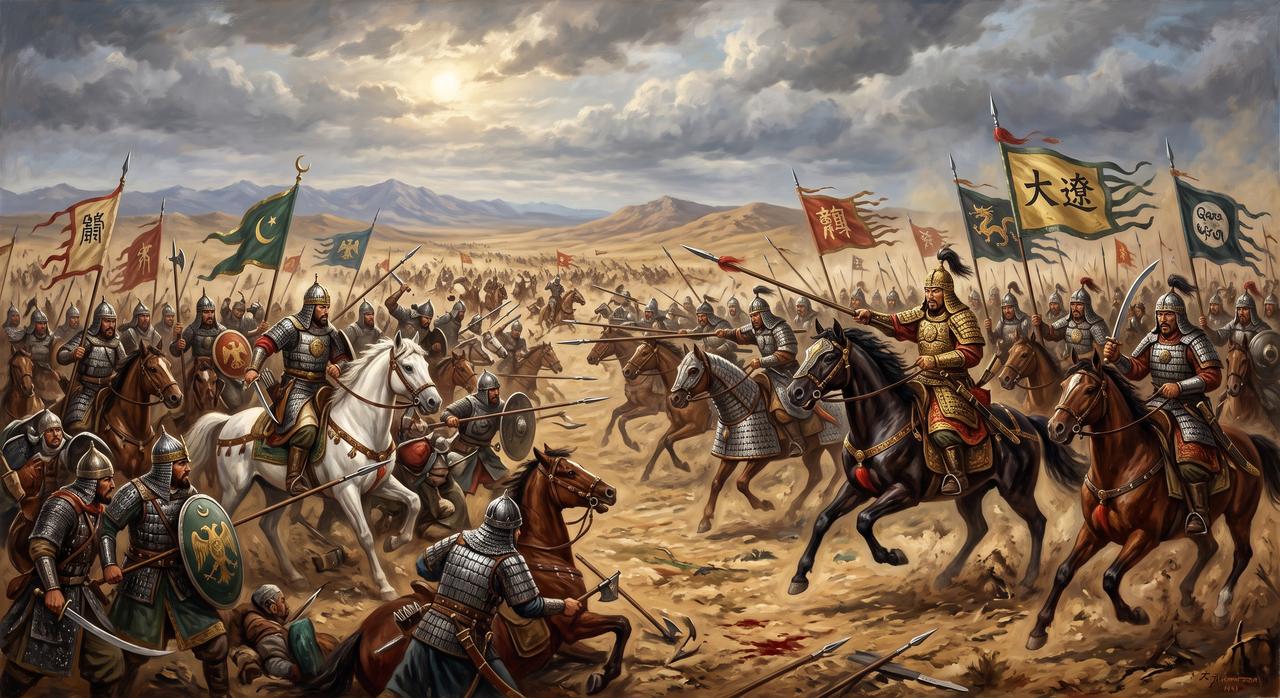
War horns blared, arrows darkened the sky, and a fierce battle began! However, the Qara Khitai’s overwhelming numbers and their use of ambush tactics placed the Seljuk forces in a dire situation. Despite great efforts, Sultan Sanjar lost the battle and was forced to retreat with his staff under difficult conditions.


The Consequences of the War: What Changed?

The Battle of Katvan was not merely the loss of a single conflict—it marked a turning point in history:

  1. Loss of Beautiful Cities: The region of Transoxiana, home to centers of learning and culture such as Samarkand and Bukhara, fell into Qara Khitai hands.
  2. Weakening of the Seljuks: This heavy defeat began to shake the power of the once-mighty Great Seljuk State.
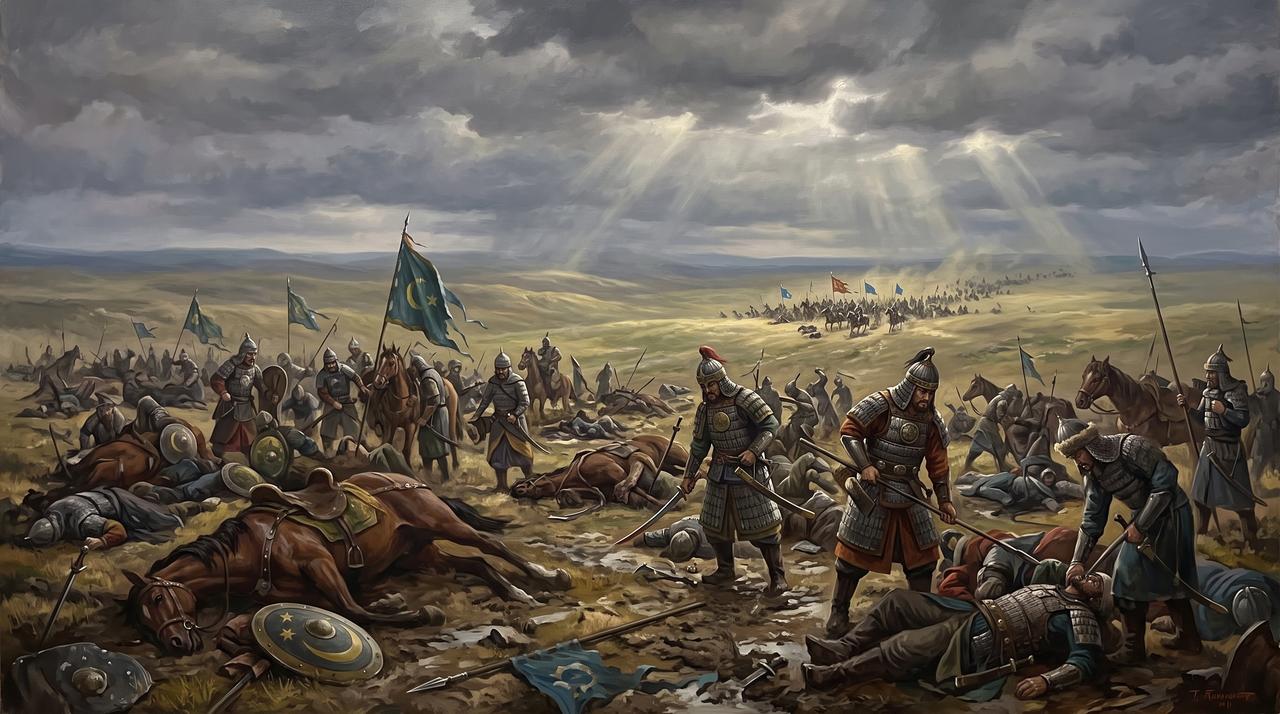


An image representing the outcome of the Battle of Katvan. (Generated by artificial intelligence)


What Does the Outcome of the War Tell Us?

The Battle of Katvan teaches us that no matter how powerful one may be, it is essential never to underestimate one’s enemies and always remain prepared. Although the Seljuks lost this battle, the scientific, cultural, and architectural legacies they left behind continue to live on as golden pages in Turkish-Islamic history!

Don't Forget to Look at These!
Science and Technology
cat img
Natural Sciences
cat img
Art and Literature
cat img
image
Most Read
Yanmayan El Deneyi
arrow
image
Last Added
21 Haziran Yaz Gündönümü
arrow
ilham-notu-bg
INSPIRATION NOTE FOR CURIOUS KIDS!

Just as great victories teach us much, so too do the difficulties and defeats we experience. Sultan Sanjar fought a great battle at Qatwan; although things did not always go as planned, the Turkish people never gave up, continuing to preserve their deep-rooted civilization and centers of learning! When you encounter obstacles in your own life, never give up—learn from your mistakes and take stronger steps forward!

KURE Kids Kure Card Pin Icon
KURE Kids Kure Card Book Icon

Battle of Katvan

History

1141

Place

Katvan Plain (near Samarkand)

Parties

Great Seljuk State and Qara Khitai

Leaders

Sultan Sanjar and Gurkhan

Cause of the War

Struggle to protect eastern territories and the Silk Road

Winner

Qara Khitai

Most Important Result

Samarkand and Bukhara were lost, the Seljuk State weakened

Who Wrote?
Kids Writing
AuthorMustafa Cem İnciSeptember 10, 2026
bottom-bg-effect-bottom
bottom-bg-effect-top

Battle of Katvan was fought in 1141 between the Great Seljuk Empire under Sultan Sanjar and the Kara-Khitai led by Gurkhan. The conflict arose over the defense and assertion of control over eastern territories. The Kara-Khitai's large army and ambush tactics provided them with their greatest advantage. The battle ended in defeat for the Seljuks, resulting in the loss of the Mawarannahr region and a weakening of the Great Seljuk Empire's power

Bibliographies

Orak, Ömür. "Moğol İstilasına Kadar Türkistan." *Tarih Kritik* 8, no. 1 (January 2022): 20–22. Accessed September 8, 2026.https://d1wqtxts1xzle7.cloudfront.net/83188069/

Vurgun, Nagehan. "Hârezmşah Atsız'ın Abbâsî Halifesi Muktefî Liemrillâh'a Gönderdiği Mektuplar Üzerine Kısa Bir Değerlendirme". *Tarihin Peşinde: Uluslararası Tarih ve Sosyal Araştırmalar Dergisi*, no. 30 (October 2023): 153–161. Accessed September 8, 2026.https://www.tarihinpesinde.com/dergimiz/sayi30/10.pdf

Özkuzugüdenli, Osman G. "Sultan Sencer ve Kara-Hıtaylar, Katavan Savaşı." Master's thesis,Marmara Üniversitesi, 1994. ProQuest (2579396038). Accessed September 8, 2026.

ilham-notu-bg
ilham-notu-bg
ilham-notu-bg
HEYY!
Did You Know?
These?
Lamb
Lamb
Ask to Küre