



Bursa Ulu Camii
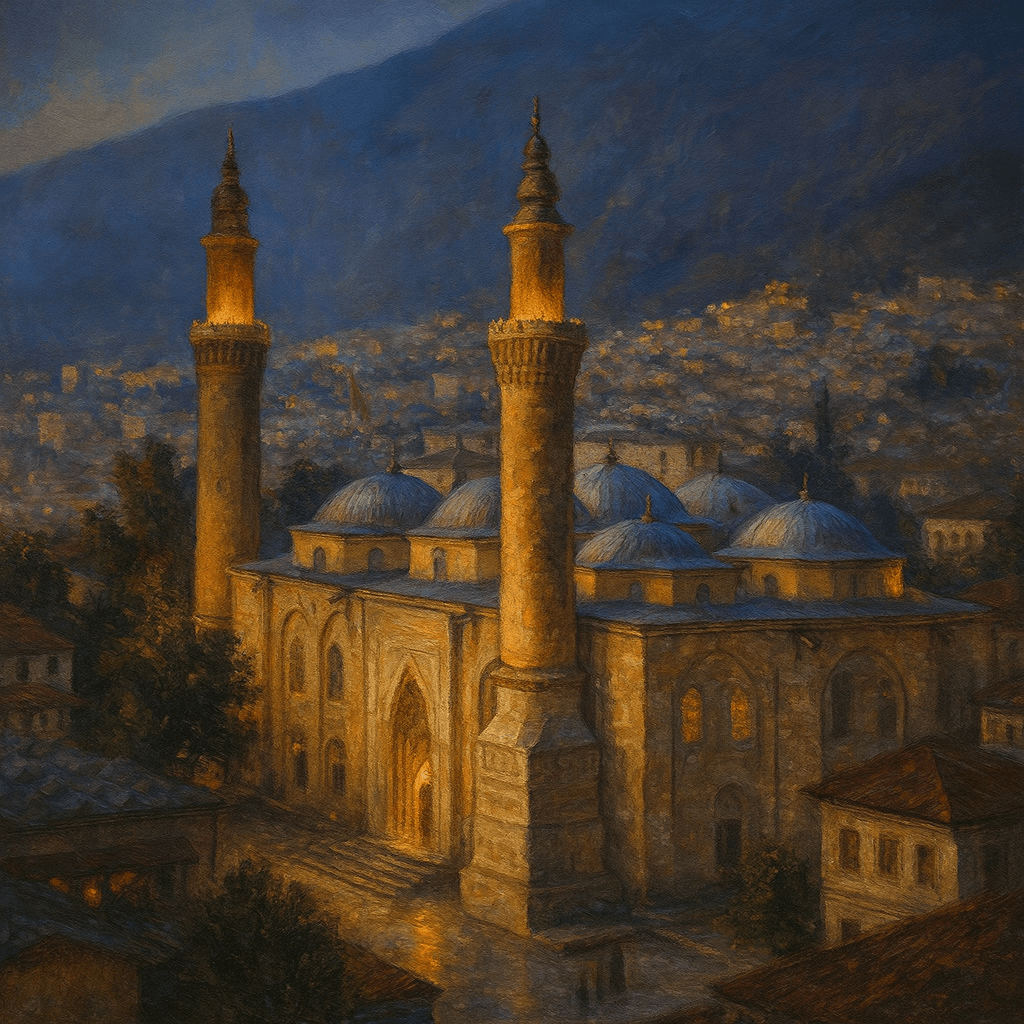
Bursa Ulu Cami is a mosque notable for its size and architecture, constructed during the early Ottoman period. Built by Yıldırım Bayezid between 1396 and 1400, it is known as the "father of Ottoman mosques." Its fountain, pulpit, and monumental calligraphy make it an important work both historically and artistically.

(Generated by Artificial Intelligence)
Where and When Was It Built?
The mosque is located in the center of Bursa on Atatürk Avenue. Construction began after the Battle of Nicopolis and was completed in 1400. The architect is believed to be Ali Neccar. Yıldırım Bayezid commissioned the mosque using spoils acquired from warfare.
Architectural Features
- Dimensions: 55 by 69 meters, rectangular plan.
- Number of Domes: Twenty domes rest on twelve large pillars.
- Fountain: Located beneath the central dome, originally constructed with an open top; later enclosed with glass.
- Pulpit: Crafted from walnut wood using the "kündekâri" technique without nails. It features bas-reliefs of the solar system.
- Doors: Three entrances face east, west, and north. The wooden doors of the eastern entrance are original.

(Generated by Artificial Intelligence)
Restorations Throughout History
The Ulu Cami suffered damage during events such as the Timurid invasion, the Karamanid attack, the 1855 earthquake, and the 1889 fire, and has been restored multiple times. The most significant restorations occurred in the 19th century.
Spiritual Significance
- The first prayer was led by Somuncu Baba.
- The first imam was Süleyman Çelebi, the author of the Mevlid.
- Yavuz Sultan Selim presented the old door covering of the Kaaba as a gift to this mosque.
- It is reported that Hızır Aleyhisselam prayed in front of the letter "vav" here.

(Generated by Artificial Intelligence)