



Charlie's Chocolate Factory
Charlie and the Chocolate Factory is one of the most beloved classics of children’s literature, written by British author Roald Dahl. The book narrates themes such as poverty, honesty, family love, imagination, and luck in a humorous and captivating style. At its center is Charlie Bucket, a humble and kind-hearted boy raised in extreme poverty within a loving family. Charlie’s life changes completely when the world-famous and mysterious chocolate maker Willy Wonka announces that he has hidden five Golden Tickets inside his chocolate bars, to be found by five lucky children who will be granted a tour of his vast factory and rewarded with enough chocolate for life.
Plot
Charlie Bucket lives in extreme poverty with his parents and four elderly grandparents in a small wooden hut. The family’s only income comes from his father’s job as a screw cap turner in a chocolate factory, and Charlie is lucky to receive only one small chocolate bar each year, on his birthday.
One day, Willy Wonka, the owner of the factory, announces that he has hidden five Golden Tickets inside the wrappers of his chocolate bars. The five children who find these tickets will be granted a tour of the factory and rewarded with enough chocolate to last a lifetime. The tickets are found by gluttonous Augustus Gloop, spoiled Veruca Salt, gum-chewing arrogant Violet Beauregarde, and television-addicted Mike Teavee. The final ticket is miraculously found by Charlie. During the factory tour, the children’s negative behaviors are humorously and instructively punished, while Charlie, distinguished by his honesty and respect, receives a surprising reward at the end of the story.
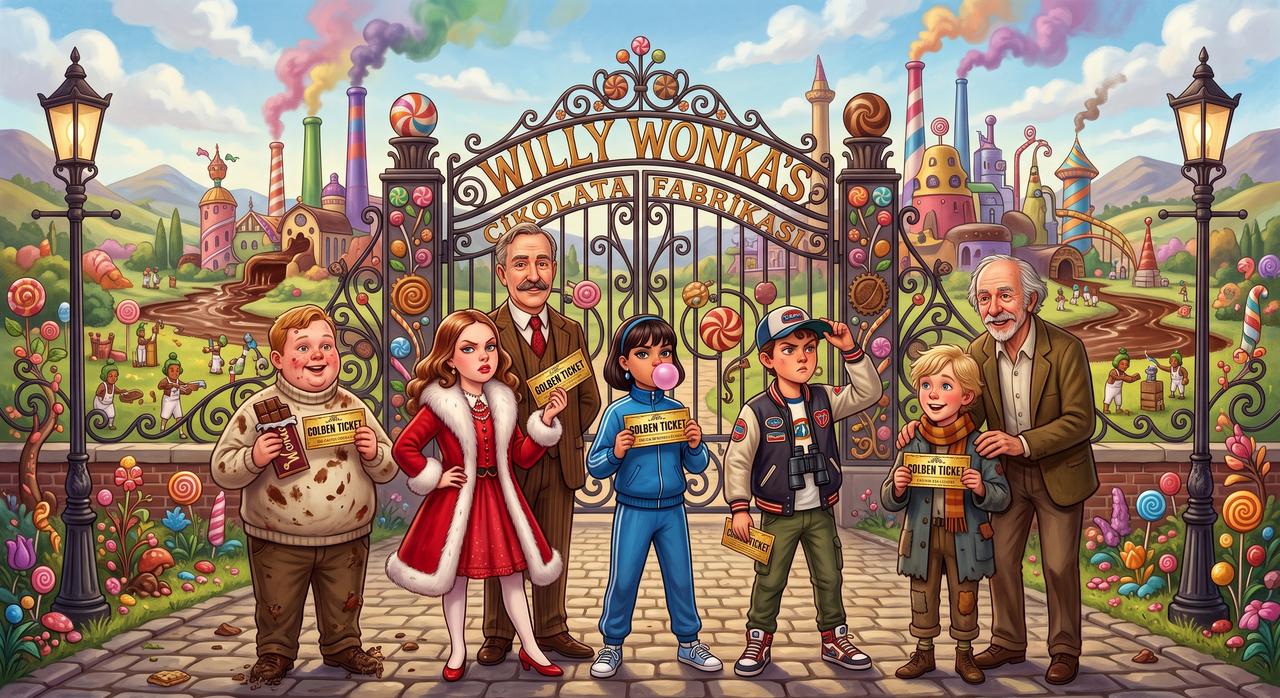
Children meet at the Chocolate Factory. (Generated by artificial intelligence)
Themes
- Honesty Against Greed and Bad Habits:
The story humorously explores the consequences of negative traits in children such as gluttony, selfishness, greed, and addiction. It emphasizes that honesty, humility, and respect always bring the greatest rewards. - Family Love and Solidarity:
Although Charlie’s family is poor, they are deeply loving and devoted to one another. Even in hardship, the moral support and sense of togetherness provided by the family are portrayed as far more valuable than material wealth. - Imagination and Unconventionality:
The chocolate rivers, delicious inventions, and mind-bending rooms inside Willy Wonka’s factory stimulate the children’s curiosity and demonstrate that the limits of imagination are boundless. - Justice and Merit:
Throughout the story, children who display greed and disrespect suffer the consequences of their own actions, while Charlie, patient, humble, and well-intentioned, earns the ultimate reward, symbolizing that justice prevails.
Characters
- Charlie Bucket:
The protagonist of the story. Despite coming from extreme poverty, he is an exemplary child—highly well-mannered, patient, humble, devoted to his family, and grateful. - Willy Wonka:
The eccentric, mysterious, and colorful owner of the chocolate factory and a genius confectioner. He organizes the special tour to test the children and choose the future heir to his factory. - Grandpa Joe:
Charlie’s 96-year-old grandfather. Although he has been bedridden for years, he shares Charlie’s excitement, supports him, and accompanies him on the factory tour. - The Other Lucky Children (Augustus, Veruca, Violet, Mike):
Each represents a different negative child archetype and poor upbringing. Augustus embodies gluttony, Veruca represents insatiable spoiling, Violet symbolizes arrogant competitiveness, and Mike stands for technology and screen addiction. - Oompa-Loompas:
The small indigenous workers of Willy Wonka’s factory who love music and dance. After the misbehaving children face their consequences, they sing educational and entertaining songs that deliver moral lessons.
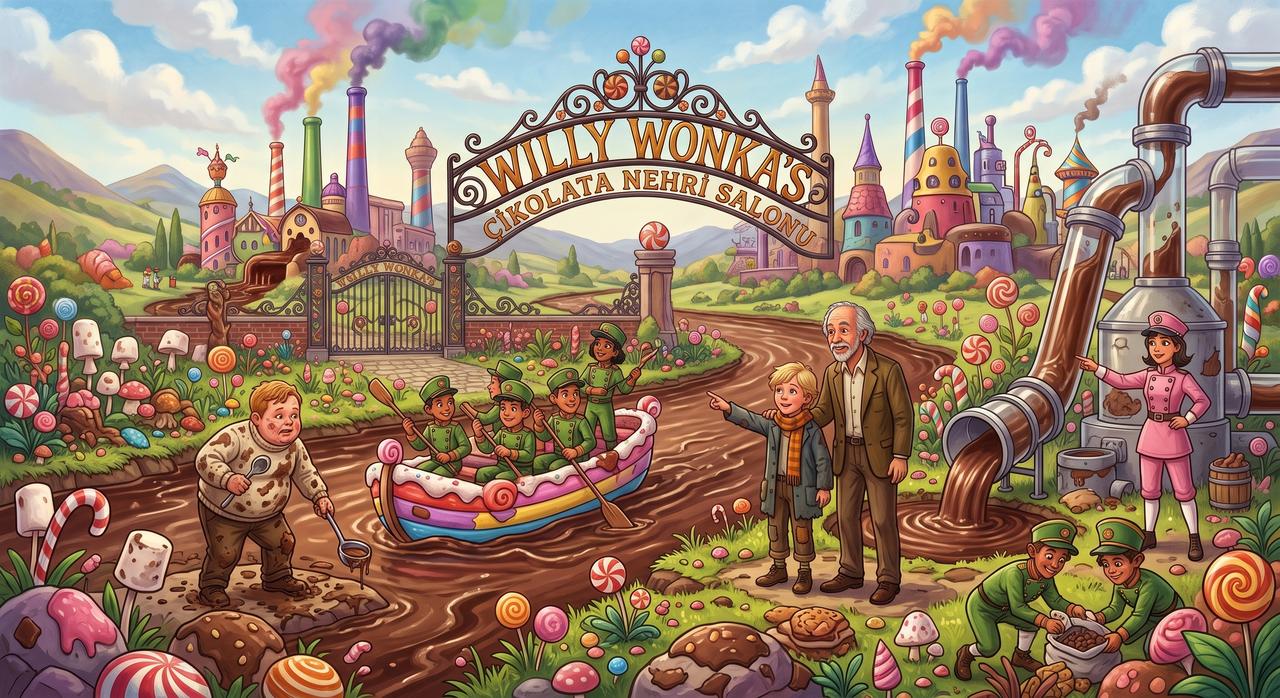
A cross-section from inside the Chocolate Factory. (Generated by artificial intelligence)
Style
The book’s language is exceptionally clear, lively, fluent, and accessible to children. Roald Dahl masterfully employs humor, exaggeration, and satire to both entertain and provoke thought. Realistic social issues such as poverty and family dynamics are seamlessly blended with fantastical elements. The catchy, rhyming songs sung by the Oompa-Loompas add rhythm to the narrative, while the exaggerated and thrilling storytelling keeps children engaged, fostering a love of reading and curiosity.