



Deer
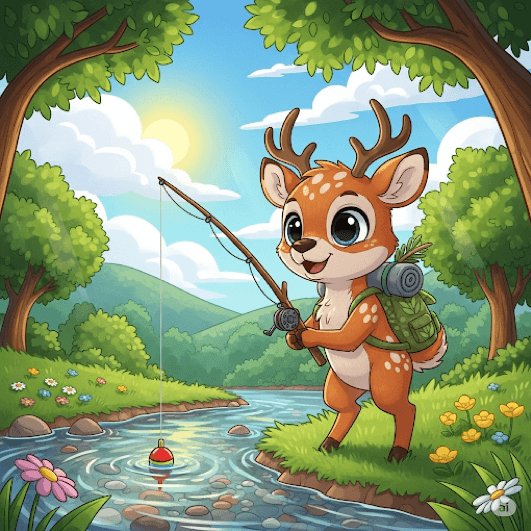
Deer are elegant creatures of forests and nature. We most commonly recognize them by their impressive antlers and long, powerful legs. Deer are an important part of nature and help maintain balance within ecosystems. Why not take a closer look at the world of these fascinating animals?
Where Do They Live? 🏞️
Deer can be found on nearly every continent, naturally occurring only in places other than Antarctica and Australia. They typically prefer forested areas, grasslands, mountains, and wetlands. Smaller deer species tend to live in dense forests, while some species can even be seen in desert regions.
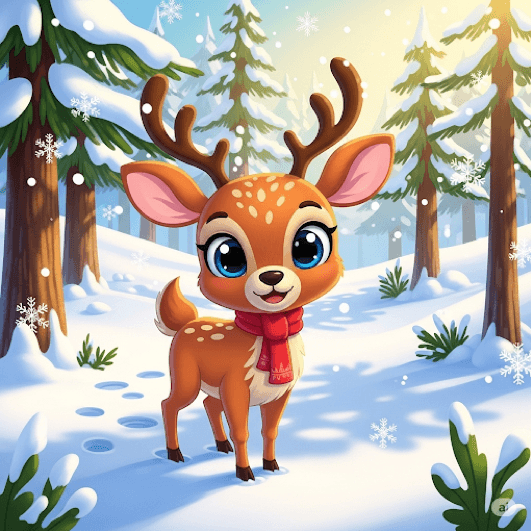
Deer (Generated by Artificial Intelligence.)
What Do They Eat? 🥕
Deer are herbivores, meaning they feed exclusively on plants. Their stomachs have four chambers, allowing them to digest plant material more efficiently. Like cows, they can regurgitate their food back into their mouths to chew it again—a process known as "chewing the cud." Their diet typically consists of fresh grasses, tree leaves, shrubs, fruits, and mushrooms.
Physical Characteristics? 🌿
The most distinctive feature of deer is their antlers, found in males. These antlers are made of bone and are shed and regrown every year. Male deer use their antlers to fight other males and to attract females during the mating season. Thanks to their strong legs, deer can run swiftly and are also excellent swimmers.
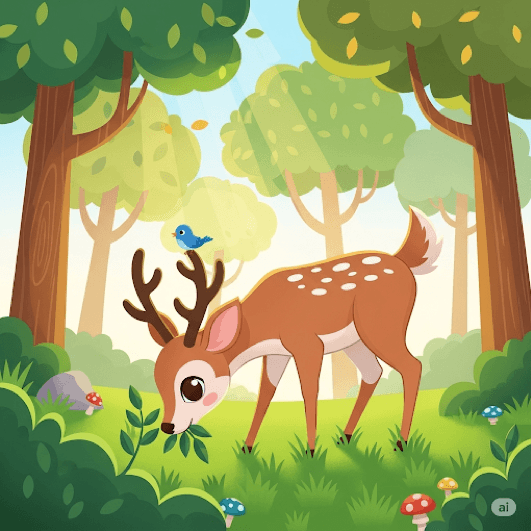
Deer (Generated by Artificial Intelligence.)
How Do They Grow? 🍼
Female deer usually give birth to one or two fawns. When born, fawns have white spots on their fur, which help camouflage them in the forest. Only roe deer retain these spots for life. Fawns can stand and walk just 20 minutes after birth! The mother deer protects and nurses her young for about a year. As the fawn grows, if it is male, antlers begin to develop, and it eventually leaves its mother to live independently.