





Dibek Kahvesi
Have you ever seen how coffee beans are crushed inside a large stone? Dibek coffee is not actually a method of brewing coffee, but rather the process of grinding coffee beans into powder by pounding them in stone containers. Before coffee mills were invented, people prepared their coffee using this traditional and labor-intensive method.
The Journey in Stone Containers
To make dibek coffee, coffee beans are first slowly roasted. These roasted beans are then placed into hollow stone vessels called dibek. Here, the beans are ground by hand using heavy mallets. This pounding process allows the coffee to fully blend with its own natural oils, resulting in a much richer and more flavorful brew when prepared. Historical records indicate that in some traditional facilities, the beans were struck exactly 10,000 times per day with the mallet to ensure complete durability and consistency.
The Secret of Dibek Coffee: The Power of Aromatic Herbs
One of the greatest secrets of this special coffee is the addition of marjoram during the pounding process. This herb imparts a distinctive, fragrant aroma and unique flavor to the coffee. If the pounded coffee is left to rest for one or two days before use, its taste becomes even more delightful.
Dibek Coffee: A Health Reserve
Dibek coffee is known not only for its taste but also for its health benefits. It helps soothe the stomach, maintains concentration, and has skin-protective properties. Additionally, it promotes the reduction of noise sensitivity and relaxation of muscles.
Consume with Care
Because excessive consumption may cause rapid heartbeat, it is recommended not to consume more than three cups per day. When consumed in large quantities, it is necessary to drink plenty of water to help the body eliminate it. Moreover, overconsumption may lead to insomnia and a feeling of fatigue.
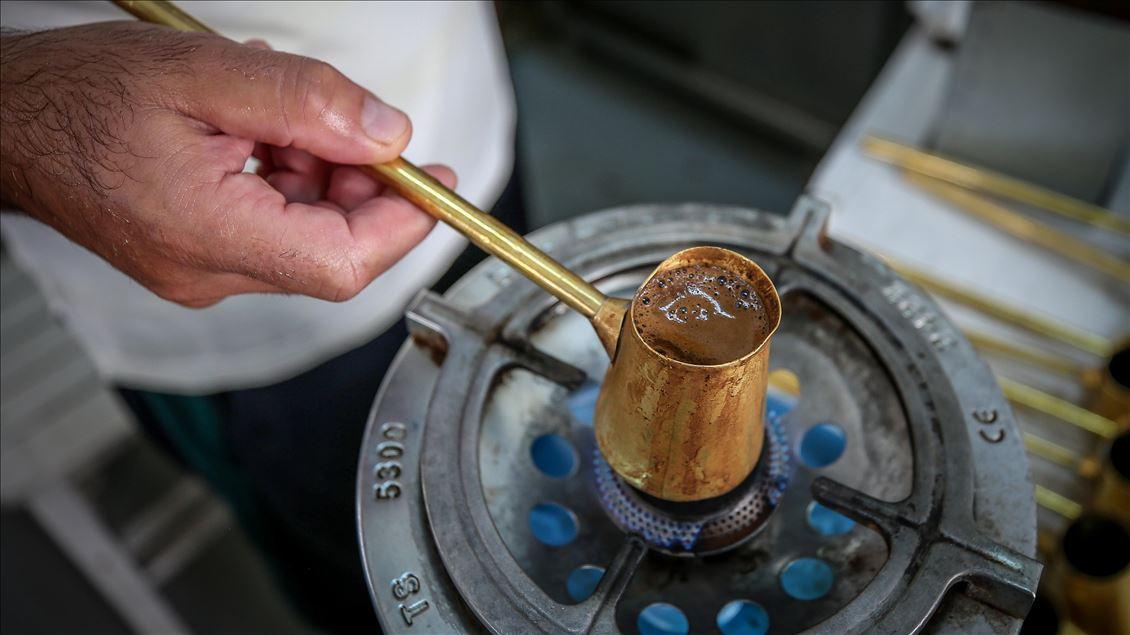
Representative Image of Dibek Coffee Brewed on a Stove(AA)
A Journey Through Time
Approximately 150 years ago, families migrating from islands such as Crete to Anatolia brought their special dibek stones with them. The invention of coffee mills in the 19th century led to a decline in the practice of grinding coffee in dibek. However, in places such as İzmir’s Kemeraltı and Cunda Island, this beautiful tradition has continued for three generations.