





Diyarbakır Gazi Köşkü
In Diyarbakır, right beside the brilliant blue Tigris River, imagine a massive, ancient house built entirely from pitch-black stone. This is the Gazi Köşkü! This pavilion has stood here for hundreds of years, telling us stories of both old empires and our Republic’s founder, Atatürk.
Have you ever wondered what it feels like to walk through a building this old? Let us embark on a journey through its rooms and uncover its mysteries together.
📜 What Is the Secret of This Historical Building?
The original name of the Gazi Köşkü is actually Samanoğlu Köşkü. This magnificent structure was built around 600 years ago, in the 15th century, during the era of the Akkoyunlu State. Thus, this building predates even our grandparents’ grandparents.
The most striking feature of the pavilion is its construction from Diyarbakır’s famous black basalt stones. These stones make the building exceptionally sturdy. In this two-story structure, one can observe how people in earlier times lived and understood architecture.
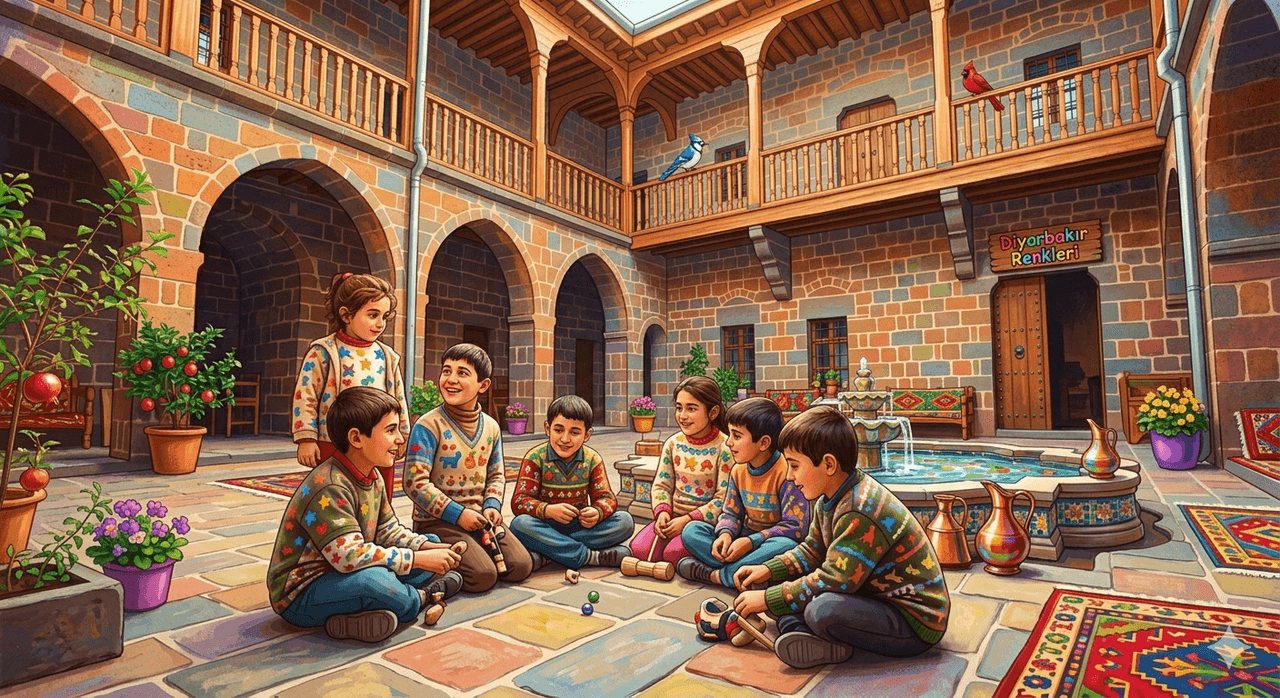
Gazi Köşkü (Generated by artificial intelligence)
🎖️ Where Did Atatürk Stay in Diyarbakır?
Why is it called the “Gazi” Köşkü? During the years of the First World War, Mustafa Kemal Atatürk used this pavilion as his headquarters—the center for his work and command—while serving in Diyarbakır. It was in these rooms that Atatürk made important decisions.
The people of Diyarbakır loved Atatürk so deeply that in 1937, the municipality purchased the pavilion and gifted it to him. Since then, this beautiful structure has been known as the “Gazi Köşkü.” Today, it opens its doors to us as a museum.
🎨 Why Is the Pavilion’s Architecture So Special?
On both floors of the Gazi Köşkü, there are large, open-air sitting areas called eyvan. These spaces were specifically designed to capture the cool breezes flowing from the Tigris River during Diyarbakır’s hot summer days.
The view from the pavilion’s windows can be mesmerizing. From here, you see the Hevsel Gardens, the historic On Gözlü Köprü, and Kırklar Dağı directly opposite. Inside the pavilion, you can closely examine photographs of Atatürk, his personal belongings, and important documents.
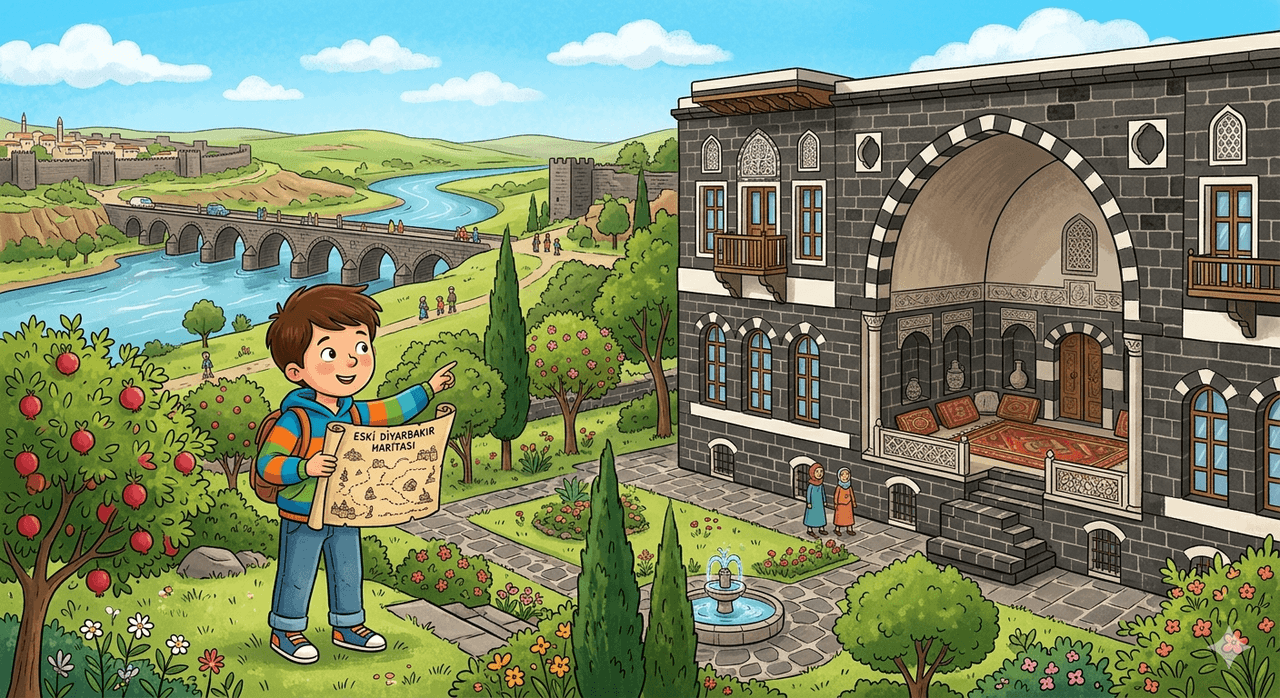
Visual depiction of Gazi Köşkü (Generated by artificial intelligence)
⏳ A Journey Through Time
When the Gazi Köşkü was first built, the calendar showed the 1400s. There were no electric lights or automobiles. People sat in this cool pavilion by the river, watching the flow of the Tigris under the glow of oil lamps.