

Emir Timur
Emir Timur (1336–1405) is one of history’s most significant rulers and military geniuses. In the late 14th century, he established a vast empire across Asia. He is also renowned for his patronage of science and the arts, alongside his military successes.
Due to a leg injury sustained in battle during his youth, he became known by the Persian name Timurlenk, meaning “the lame.” However, this did not hinder his pursuit of grand ambitions. The state he founded rapidly became one of the most powerful in Asia.
Life and Military Achievements
Timur was born in 1336 in Shahrisabz, located in what is now Uzbekistan. His father, Taragay, was a leader of the Barlas tribe. From an early age, he received training in leadership and the art of warfare. He united the surrounding tribes to strengthen his power and in 1370 established his own state with Samarkand as its capital.
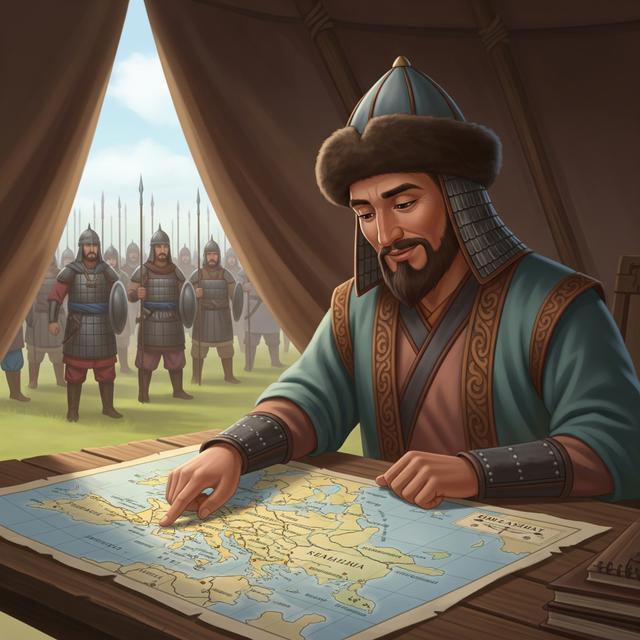
A highly capable commander, Timur led a disciplined and well-organized army. He won nearly all of his military campaigns, expanding his empire’s borders from India to Anatolia and from southern Russia to Syria.
One of his most important military victories was the Battle of Ankara in 1402 against the Ottoman Sultan Yıldırım Bayezid. This battle significantly altered the balance of power among the states of the era.
Governing Philosophy and Patronage of the Arts
Timur did not merely conquer territories militarily; he also devoted great attention to their administration and development. He based his governance on justice, and it is said that the inscription “Salvation lies in truth” adorned his seal ring.
As a leader, he was deeply interested in the arts and sciences, in addition to his identity as a warrior. He worked to transform Samarkand into one of the world’s foremost centers of culture and learning. He invited the most talented architects, artists, and scholars from the regions he conquered to settle in Samarkand.
During his reign, Samarkand was adorned with mosques, madrasas, and palaces. Structures such as the Bibi Khanym Camii and the Gur-i Amir are significant examples reflecting the architectural and artistic richness of this period. Timur’s intellectual exchanges with prominent scholars of his time, including the historian Ibn Khaldun, further illustrate his engagement with the intellectual currents of the era.