



Emperor Penguin
The Emperor Penguin (Aptenodytes forsteri) belongs to the family of penguins. It is the largest penguin species in the world and lives in the cold, ice-covered regions of Antarctica.
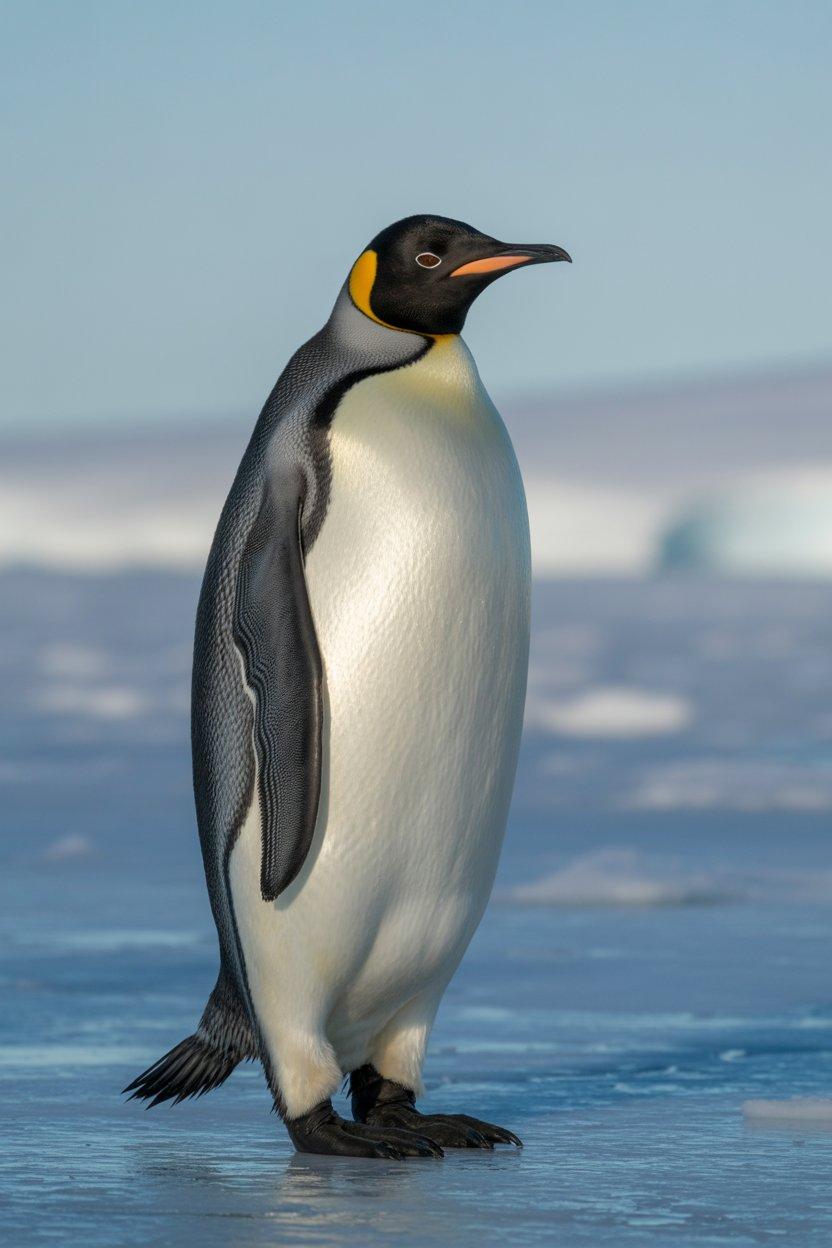
It is easily recognized by its long neck, black head, and bright yellow-orange cheeks. Although they cannot fly, they are excellent swimmers, using their flipper-like wings to navigate through water. They feed on fish, squid, and krill in the cold seas.

Penguins Standing on the Ice (Pexels)
What Are Their Colors?
Emperor penguins have feathers in black, white, and yellow. Their backs are black, their bellies are pure white, and they have bright yellow-orange hues on their cheeks. These colors help them blend into their icy environment while also attracting mates during breeding season.
How Large Do They Grow?
Emperor penguins are approximately 1.1 meters tall and weigh between 20 and 40 kilograms. This makes them the largest of all penguin species.

Emperor Penguin Family (Generated by Artificial Intelligence)
What Do They Eat?
Emperor penguins feed on fish, squid, and krill, small marine organisms. They can dive for long periods and hunt their prey while swimming in frigid waters.
Where Do They Live?
Emperor penguins live only on the icy coasts of Antarctica. Despite extremely harsh winter conditions, they live in large colonies where they huddle together for warmth. Females lay only one egg; males incubate it by balancing it on their feet and covering it with a fold of skin, keeping the developing chick safe from the cold.
Contributions to the Ecosystem
By hunting fish in the ocean, emperor penguins help maintain the balance of the marine ecosystem. Additionally, their eggs and chicks serve as a food source for certain Antarctic birds and seals.
Conservation Status
Emperor penguins are classified as “Near Threatened” by the International Union for Conservation of Nature (IUCN). This indicates that their populations have declined in some areas and that conservation efforts are needed to protect them.