




First Eye Pain
The expression “first eye pain” is a fixed idiom in Turkish that helps convey a situation briefly and effectively. It is commonly used to refer to the “firstborn child” or the “first love,” representing the unique and unforgettable individuals in a person’s life. As one of the rich expressions built around body parts, this idiom reflects the expressive power of our language, our cultural heritage passed down through generations, and the accumulated experiences of daily life.
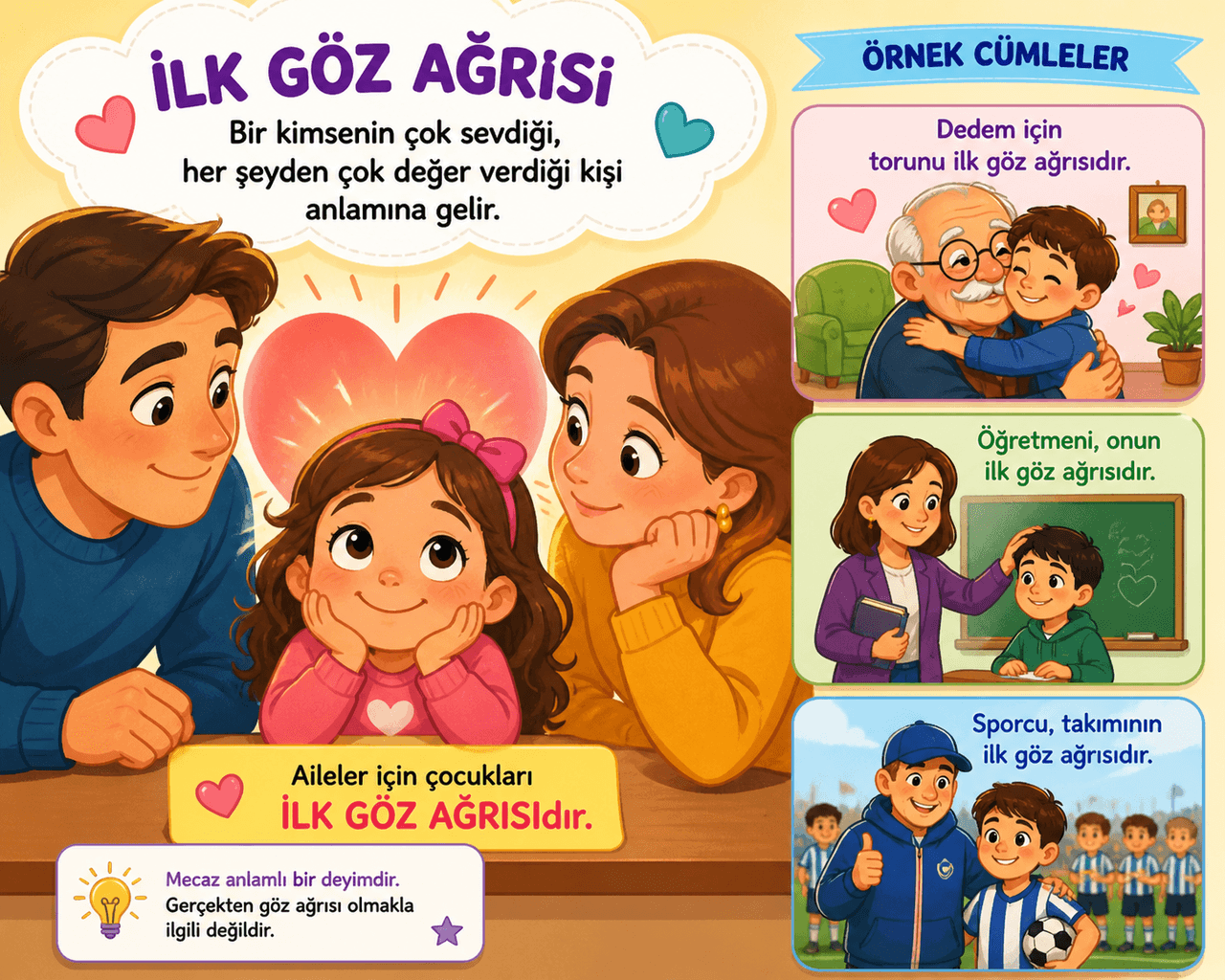
(Generated by artificial intelligence.)
Origin and Meaning of This Idiom
Turkish contains many idioms built around the word “göz” (eye), and these expressions formed from body part names are among the most frequently used modes of expression in the language. The idiom “first eye pain” is a particularly distinctive example of this rich linguistic structure.
This idiom is primarily used to express the firsts in people’s lives and the enduring emotional bonds associated with them. Concepts such as the “firstborn child” or the “first love” always hold a unique and lasting significance for individuals. The idiom captures this singular value and affection through the power of language.
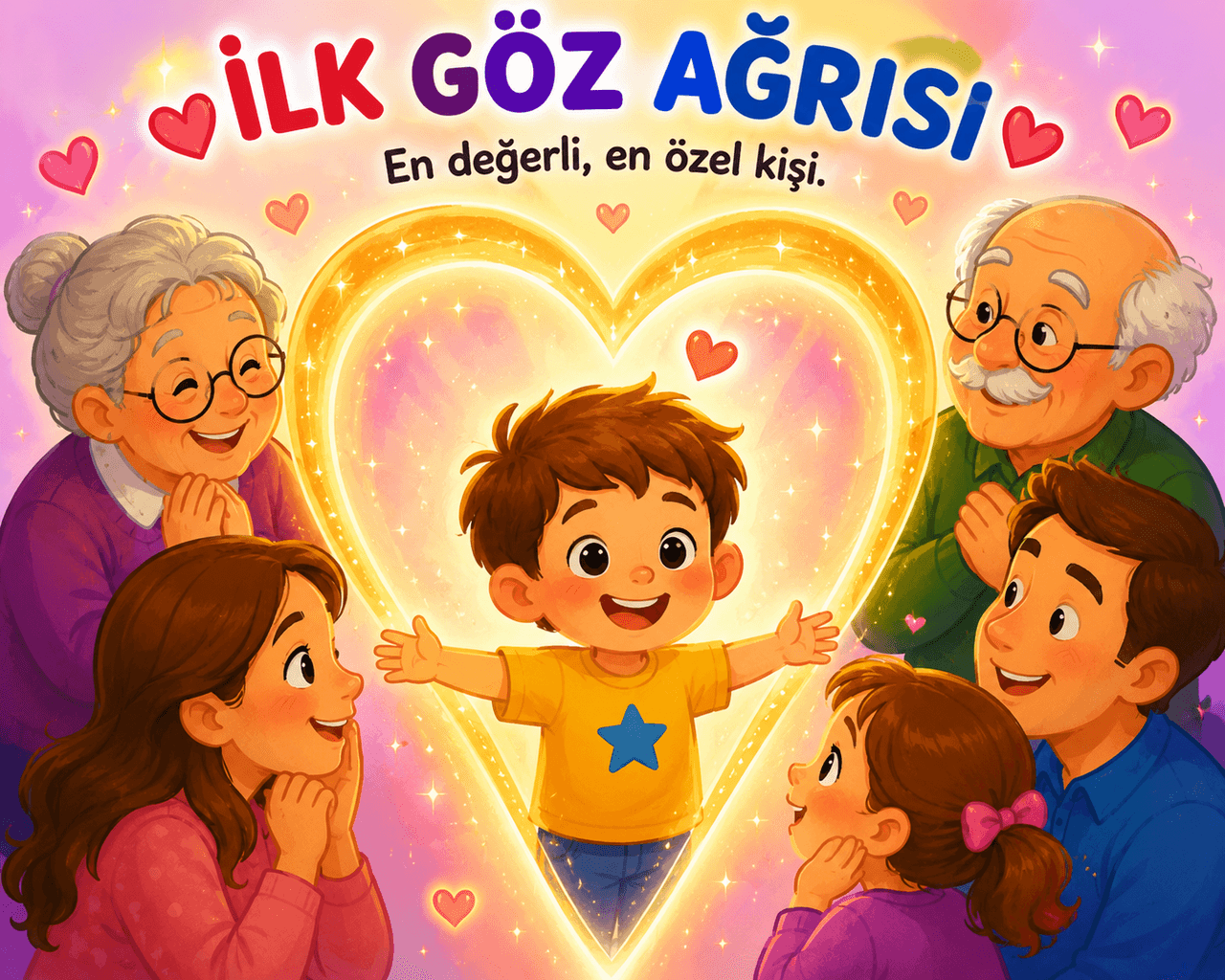
(Generated by artificial intelligence.)
Its Place, Importance and Cultural Dimension in Turkish
Idioms are vital linguistic elements that enhance the expressive power of a situation by combining words in meaningful ways. These expressions transmit a society’s shared past, observations and cultural accumulation from one generation to the next, enriching Turkish conceptual frameworks.
Turkish also features numerous idioms constructed with the word “göz” (eye). For example, the idiom “kaş yapayım derken göz çıkarmak”, meaning to worsen a situation while trying to fix it, or “gözü görmez olmak”, meaning to pretend not to see something or to no longer value it, clearly demonstrate the flexibility, effectiveness and richness of Turkish expression.
Usage in Daily Life and Literature
In daily life, deep thoughts that would otherwise require lengthy explanations can be conveyed concisely and powerfully through this idiom. It is frequently used, especially within family contexts, to express the special importance of the firstborn child to parents.
The title of Nurullah Ataç’s first theater critique, published in 1921, is “First Eye Pain in Turkish Theater.” This usage clearly illustrates the idiom’s profound cultural and linguistic significance and its established place in literary works.