



Folk song
Türkü is a unique folk melody that expresses human emotions, experiences, and dreams through both poetry and music. Türküs may appear as a joyful dance tune, a sorrowful lament, or a heroic tale. They are sung and played, often accompanied by the bağlama (saz).
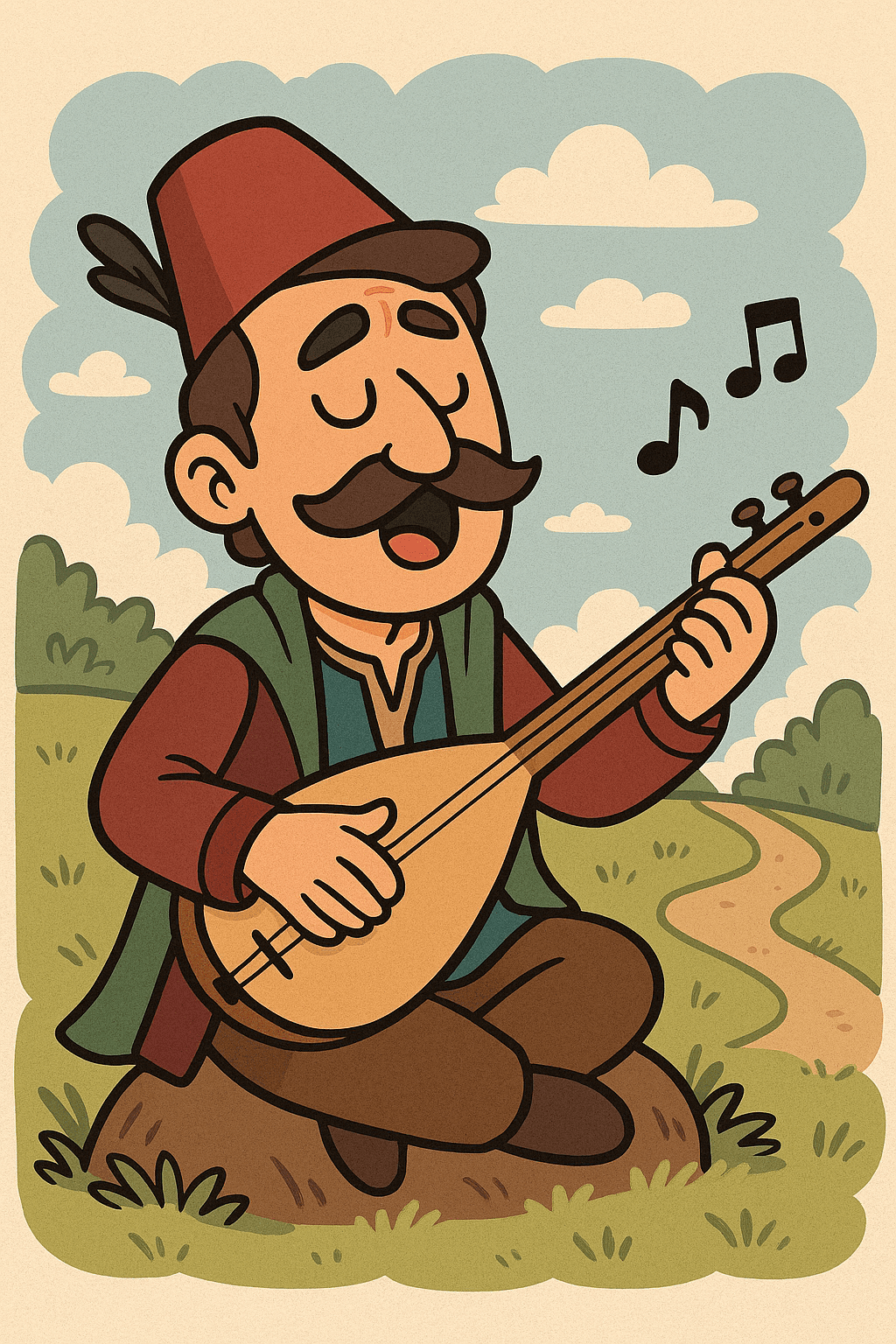
Someone Playing the Bağlama and Singing a Türkü (Generated by artificial intelligence)
Where Does the Türkü Come From?
The word “türkü” derives from “Türk.” In the past, it was called “Türkî.” Different Turkic communities use different names for these melodies: in Azerbaijan they are called “mahnı,” the Kazakhs say “halık ani,” and the Tatars call them “halk cırı.” In Anatolia, in some regions, they are even referred to as “yır”!
Who Sings the Türküs?
Türküs are sometimes sung by a folk poet, and sometimes by an anonymous individual. When an event occurs—such as a love affair, a separation, a war, or a natural disaster—it touches someone’s heart, and that person expresses their feelings through poetry and melody. Over time, the song leaves the original singer and becomes the common property of the people. Everyone sings it, everyone hears it, and it belongs to everyone.
Folk poets known as âşıks also sing türküs. They take up their saz and express what they see, hear, and experience through poetry. In the past, soldiers, travelers, and artists who accompanied caravans carried these songs to distant lands.
What Are the Themes of Türküs?
Türküs encompass all kinds of emotions:
- Nostalgia and exile
- Love and longing
- Heroism and war
- Natural phenomena
- Happiness, regret, hope, and sorrow
Structure of Türküs
Türküs are typically composed in quatrains, with the final lines repeated. Sometimes additional lines are added, forming refrains. If the poet cannot fully express their emotions, they may add fifth or sixth lines. This structure distinguishes türküs from other forms of folk poetry such as koşma and destan.
The poetic part of a türkü is called the “bent,” and the repeated section is known as the “kavuştak.” They are written in syllabic meter, most commonly using the 11-syllable meter, though 8-syllable or other meters are also used.
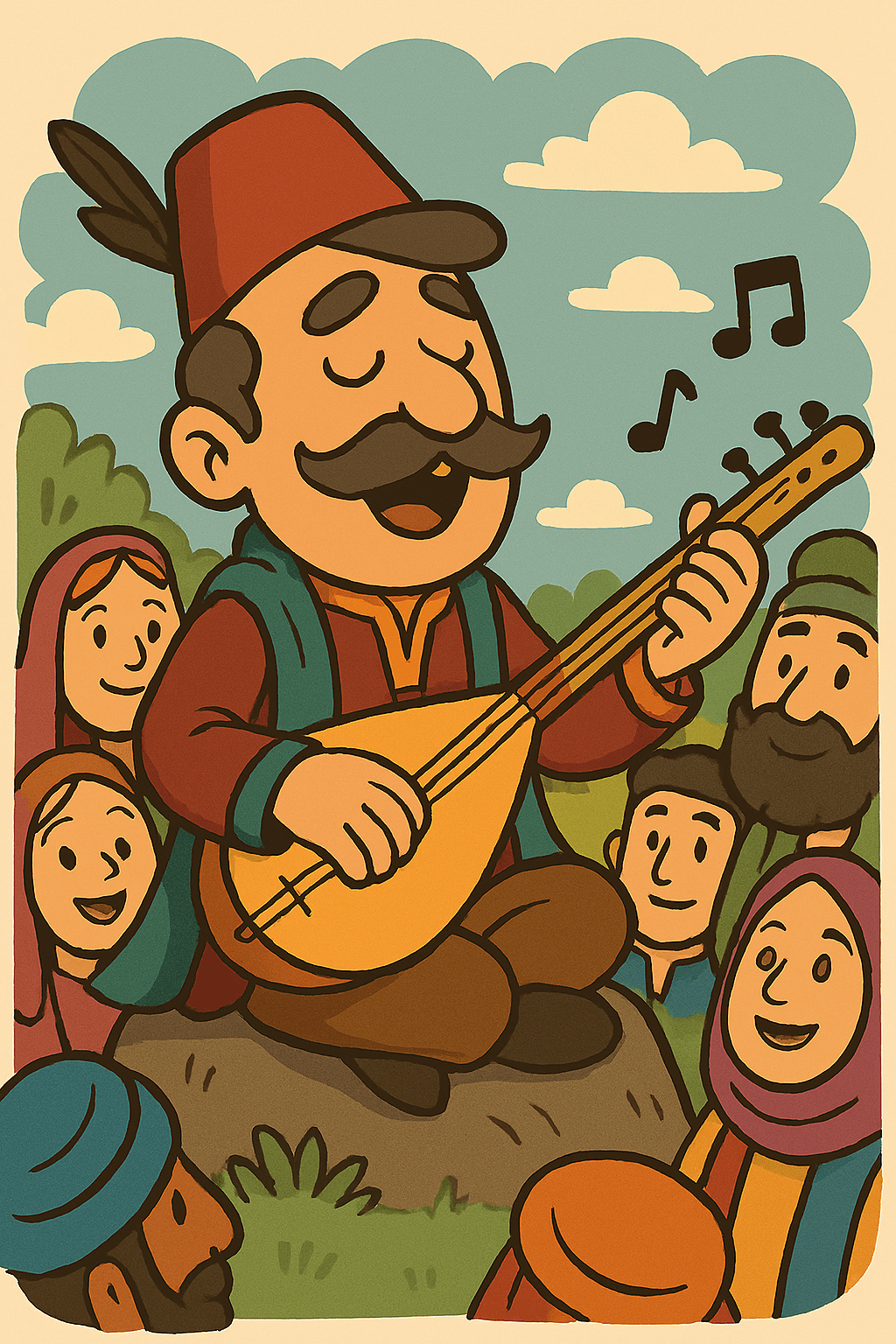
People Listening to a Türkü (Generated by artificial intelligence)
Why Are Türküs Important?
Türküs are not merely music—they are a cultural treasure.
- They narrate the events people have lived through.
- They unite emotions with poetry and melody.
- They reflect the artistic power of the people.
- They carry the past into the present.
- They keep forgotten words alive.
Türküs are of great importance in ethnological studies. When collecting them, care must be taken to accurately record both the lyrics and the melodies, because each türkü is like the voice of a story.
Türküs are emotional companions passed down from the past to the present. When we listen to them, we do not simply hear a melody—we hear a story, a feeling, a life. Perhaps it is the longing carried on the wings of a crane, or the courage echoing through the voice of a hero. Türküs also find a place in children’s imaginations, because every türkü is born from one heart and reaches another.